
🌺 Mexican Honeysuckle
What it looks like
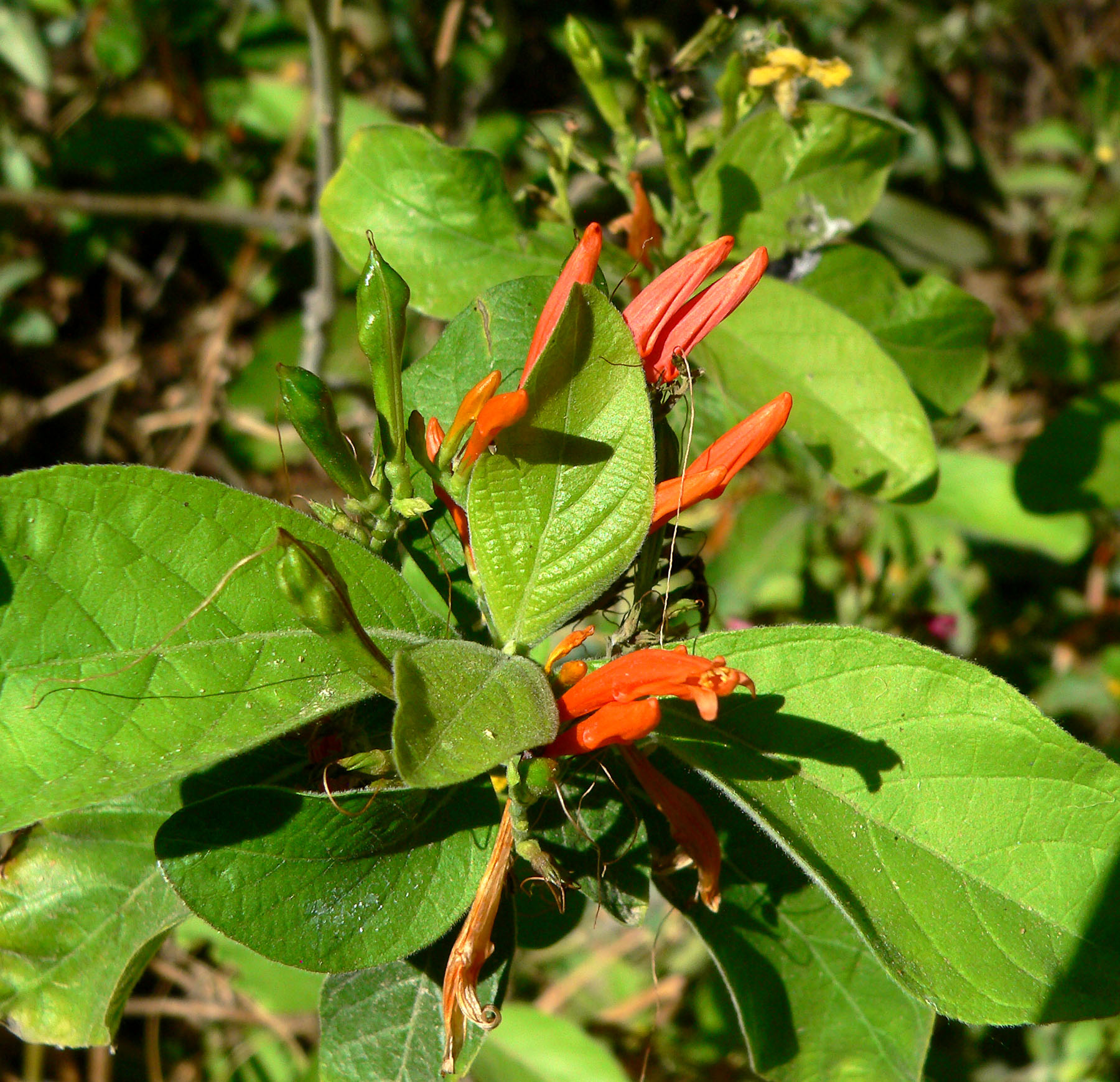
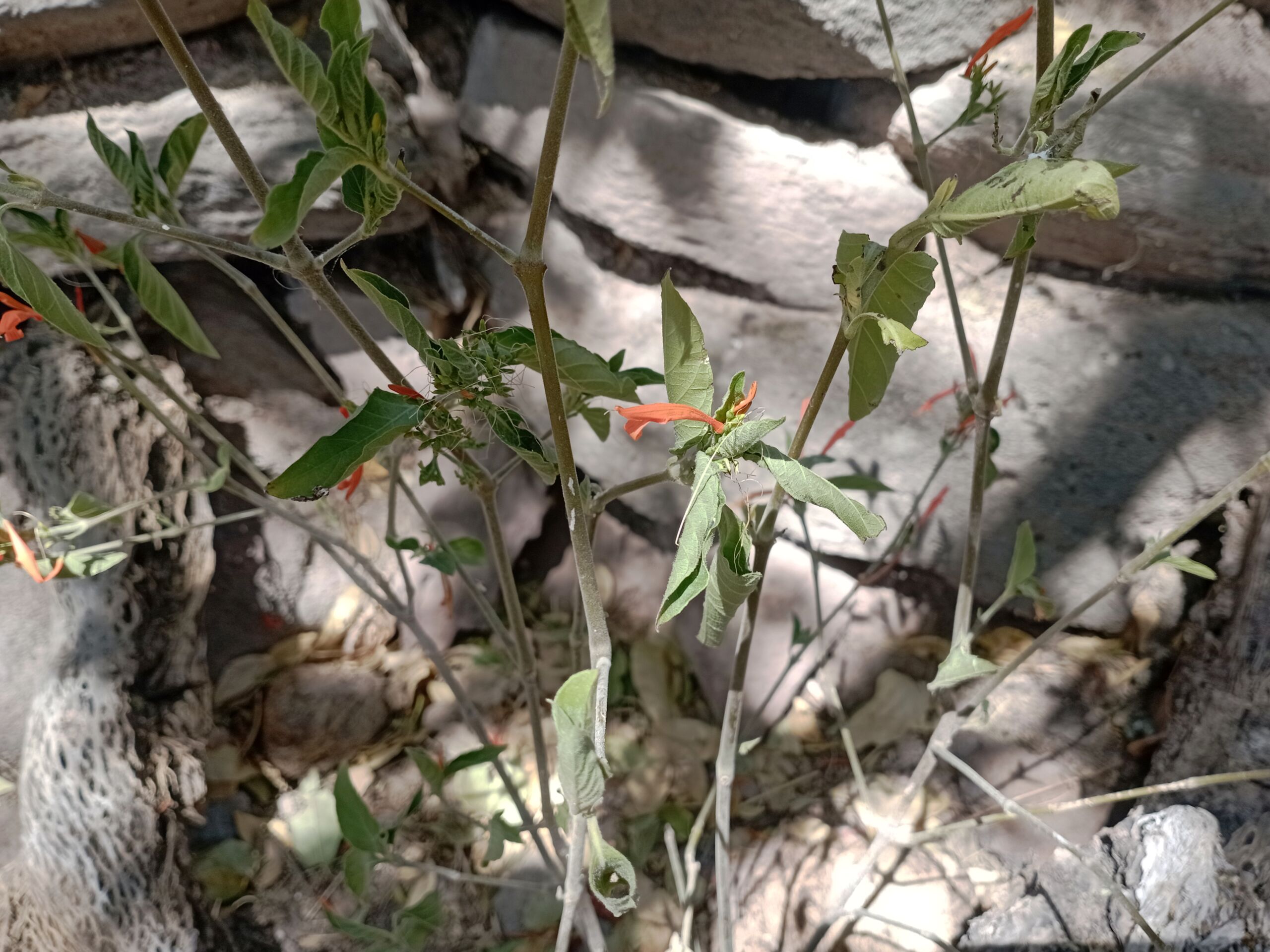
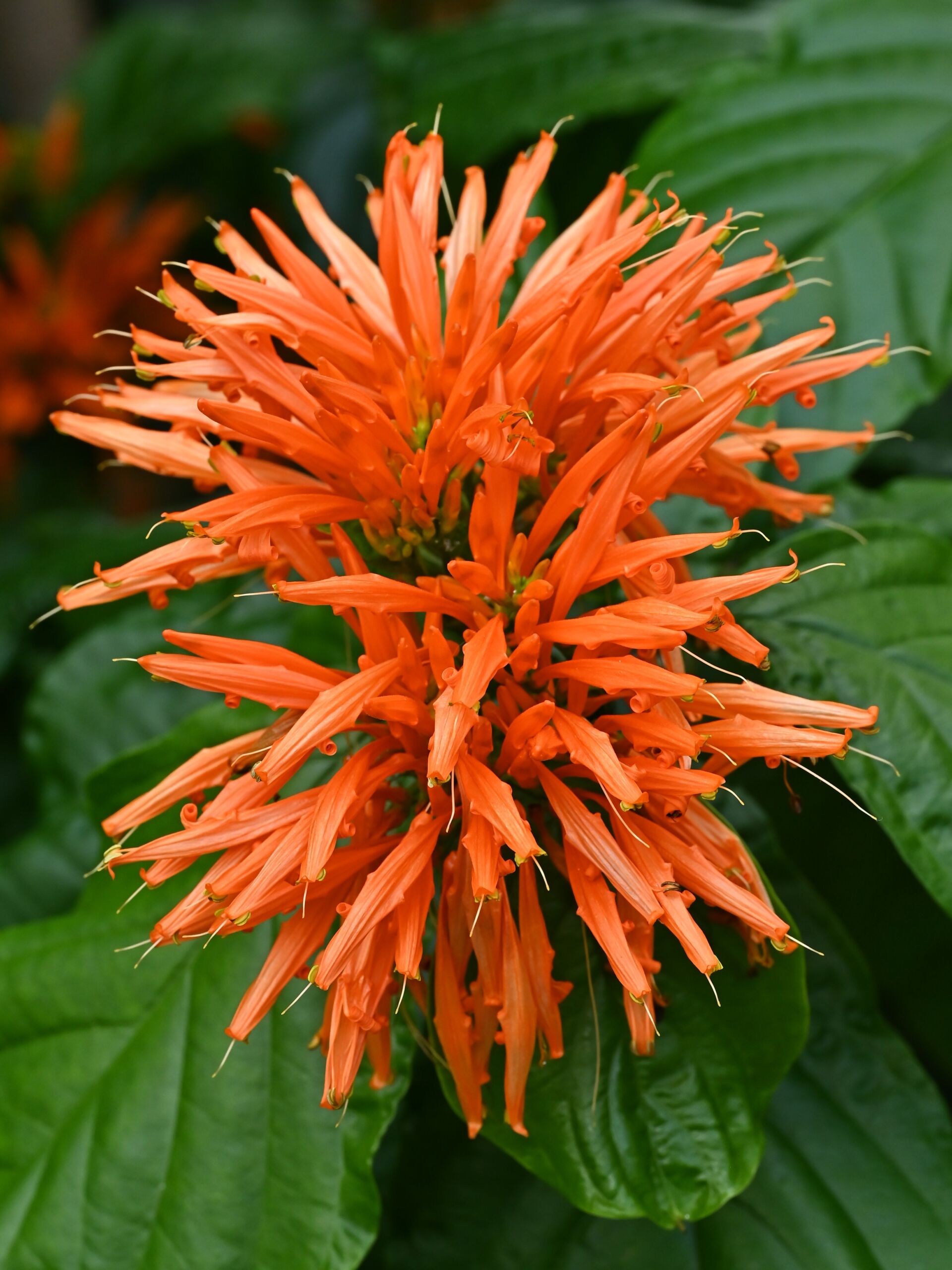
Mexican honeysuckle is a shrubby herb of the acanthus family, Acanthaceae, native to Mexico and Central America, and the common name is the first thing to correct: it is not a honeysuckle. True honeysuckles are Lonicera, in a different family altogether; this plant is a Justicia, a cousin of shrimp plants and tube-tongues, and it got its common name because its orange, tubular flowers look and act like honeysuckle flowers — long tubes, nectar at the bottom, hummingbird manners. In Mexico it is better known as muicle, or by a string of other names — hierba azul, hierba tinta, moyotli — several of which refer to its other talent, which is dye.
The plant itself is a soft, upright, shrubby perennial, usually 3 to 5 feet tall in gardens, with opposite, lance-shaped leaves and spikes of two-lipped, orange to salmon-pink tubular flowers that bloom through the warm months and, in frost-free climates, much of the year. Hummingbirds visit constantly; butterflies visit too; and the flowers are followed by small capsules that pop seed a short distance when ripe, which is how acanthus plants politely colonise a bed. The leaves, steeped in water, release a blue-purple dye that has been used traditionally for colouring food, drink, and cloth — muicle is as much a dye plant as an ornamental, and the same compounds that colour the dye are part of its traditional medicinal reputation, which this guide reports as tradition rather than recommending as medicine.
In the garden it is a warm-climate plant, zones 9 to 11, hardy through light frosts and cut back by hard freezes, resprouting from the roots in spring where winters are mild. In Florida it suits the central and southern parts of the state, in sun or part shade, and it is a genuinely useful plant there: long-blooming, hummingbird-rich, drought-tolerant once established, and unbothered by the heat that defeats many temperate shrubs. Further north it is a container plant that comes inside for winter, or a summer annual treated as a seasonal hummingbird magnet.
How to grow
Start with sun and warmth. Mexican honeysuckle wants full sun to part shade — full sun for the most flowers, part shade where summers are brutal — and warmth year-round, or at least a mild winter it can resprout from. A sunny border, a hummingbird garden, a courtyard, or a large container are all right. A shady corner will give you leaves and few flowers, and a hard freeze will cut it to the ground; in marginal zones, plant it against a warm wall and mulch the crown heavily in autumn.
Soil should be well-drained and humusy — ordinary garden soil with compost worked in suits it fine, and it tolerates a range of soils provided drainage is good. It does not want waterlogged roots, and it does not want bone-dry, impoverished soil either; the middle ground, moist but free-draining, is the sweet spot. Space plants 3 to 4 feet apart; a mature plant spreads to a loose, multi-stemmed mound, and in a hummingbird border you can plant tighter and prune to shape.
Plant in spring, after the last frost, from a nursery plant — seed is available but variable, and cuttings root readily, which is the easy way to multiply a plant you like. Water well at planting and through the first growing season. In zones where it dies back in winter, cut the dead stems back in early spring once new growth shows from the base, and do not panic in April if nothing has appeared yet: it resprouts late. In frost-free zones, prune lightly after a flowering flush to shape it and encourage more blooms, and cut back hard every few years if it gets leggy — it resprouts vigorously from old wood.
Water & feeding
Water steadily through the growing season, then let it toughen up. Mexican honeysuckle likes consistent moisture while it is flowering — a deep soak once or twice a week in dry weather, with mulch to hold it — and it sulks, dropping buds, if it dries out repeatedly while in bloom. Once established, it is drought-tolerant for a tropical shrub, handling dry spells that would defeat a fuchsia, but “tolerant” is not “fond”: regular water means regular flowers.
Feeding is light and regular. A mulch of compost each spring and a balanced fertiliser in spring and midsummer is plenty; over-feeding with nitrogen gives you leaves at the expense of flowers, which defeats the purpose of planting it. In a container, feed more often and more lightly, since watering washes nutrients out of the pot. If the leaves yellow, suspect over-watering or cold damage before hunger.
Maintenance is mostly pruning and patience: deadhead if you like tidiness, though it is not required for rebloom; cut back dead stems in spring in cold zones; and thin out the oldest stems every few years to keep the plant vigorous. It self-sows lightly where it is happy, and seedlings are easy to move or remove.
Common problems
- Freeze damage. A hard freeze cuts it to the ground. In marginal zones, mulch the crown, plant against a warm wall, and wait until late spring before declaring it dead — it resprouts from the roots.
- Bud drop. Usually dry soil while flowering, or a sudden cold snap. Keep moisture steady through bloom.
- Leggy growth in shade. Too little light gives long stems and few flowers. Move it to brighter light or prune hard to force bushy regrowth.
- Whiteflies and aphids. Soft acanthus growth attracts sap-suckers, especially in warm, sheltered spots. Wash off with a strong jet of water and encourage ladybirds; avoid broad-spectrum sprays that kill the hummingbirds’ food along with the pests.
- Root rot. Waterlogged soil, especially in a container without drainage. Improve drainage and replant only firm roots.
Harvest & wildlife
The traditional harvest is the dye and the tea: leaves steeped in water release a blue-purple colour used traditionally to colour food and drink, and muicle tea is a traditional Mexican remedy whose reputation this guide reports without endorsing as medical advice — if you want the dye, steep the leaves; if you want medicine, talk to a clinician, not a plant guide. The flowers are the ornamental harvest, and they are best left on the plant, where hummingbirds work them all day.
The butterfly connection is a thorn-scrub story. The Elada Checkerspot’s Host plants section names hairy tubetongue in Texas and yellow composites in Mexico, and adds that acanthus-family plants including Mexican honeysuckle (Justicia spicigera) are also used. That “also used” matters: this is a secondary host in a butterfly that uses several acanthus-family plants, not a single-host specialist, and the butterfly’s range — central Texas and central Arizona, north from southern Mexico, in subtropical thorn forest and scrub — is the context for planting it. In its range, a Mexican honeysuckle in a sunny, unsprayed border is a genuine checkerspot plant as well as a hummingbird plant; outside its range, it is still a fine hummingbird shrub, and this guide does not pretend it will summon a checkerspot it cannot reach.
Browse all plant & pest guides
Saving seeds
Mexican honeysuckle is an easy seed-saver, which suits a shrub that is easy in most other ways too. The flowers give way to small dry capsules, and the capsules split when they are ready. Collect them just as they turn dry and papery, before they pop open and scatter — a paper bag held under the stem while you tip it catches most of them. The seed inside is small and dark, and a pinch of it goes a long way.
Sow the seed fresh in warm, moist soil, barely covered. It wants warmth to wake up, so spring and summer sowings do best, and germination usually comes within a few weeks. There is no stratification and no scarification to fuss over — just warmth, moisture, and patience. Keep the tray out of full blazing sun until the seedlings have true leaves, then grow them on in the same bright spot the parent enjoys.
Seedlings will not be identical to the parent if you grow a named form, and cuttings are the cloning route for those — take a softwood cutting in spring and it roots readily. But for the species itself, seed is the honest way, and the seedlings are vigorous. Thin them early, because a crowded tray of honeysuckle seedlings will shade each other out before you notice.
Self-seeding is modest, not a takeover: a few volunteers near the parent in a moist bed, easy to pull or transplant while small. If you want seed and no volunteers, deadhead the spent flowers before the capsules dry. Stored dry, the seed keeps for a year or two. Florida humidity is the enemy of stored seed, so dry it thoroughly, jar it with a silica gel packet, and keep it cool and dark.
Varieties & relatives
No named garden varieties of Mexican honeysuckle are in general cultivation under stable names, though a cultivar named ‘Sidicaro’ appears in botanical garden lists; gardeners grow the species, and a good species plant is the whole point. Related plants with their own guides, listed here in plain text only and not claimed as this plant, include white shrimp plant (Justicia betonica), a different Justicia species with white bracted spikes — do not merge the two, as an earlier draft nearly did; tube-tongue (Justicia spp.), this site’s genus guide for Justicia as a clan, which does not cover this species in full; and flame acanthus (Anisacanthus wrightii), a different acanthus-family shrub that is not a Justicia and not a honeysuckle. True honeysuckles (Lonicera spp.) are a different family altogether, and a plant labelled Mexican honeysuckle with twining stems and paired, trumpet-shaped Lonicera flowers is mislabelled.