
💜 Milk Thistle
What it looks like
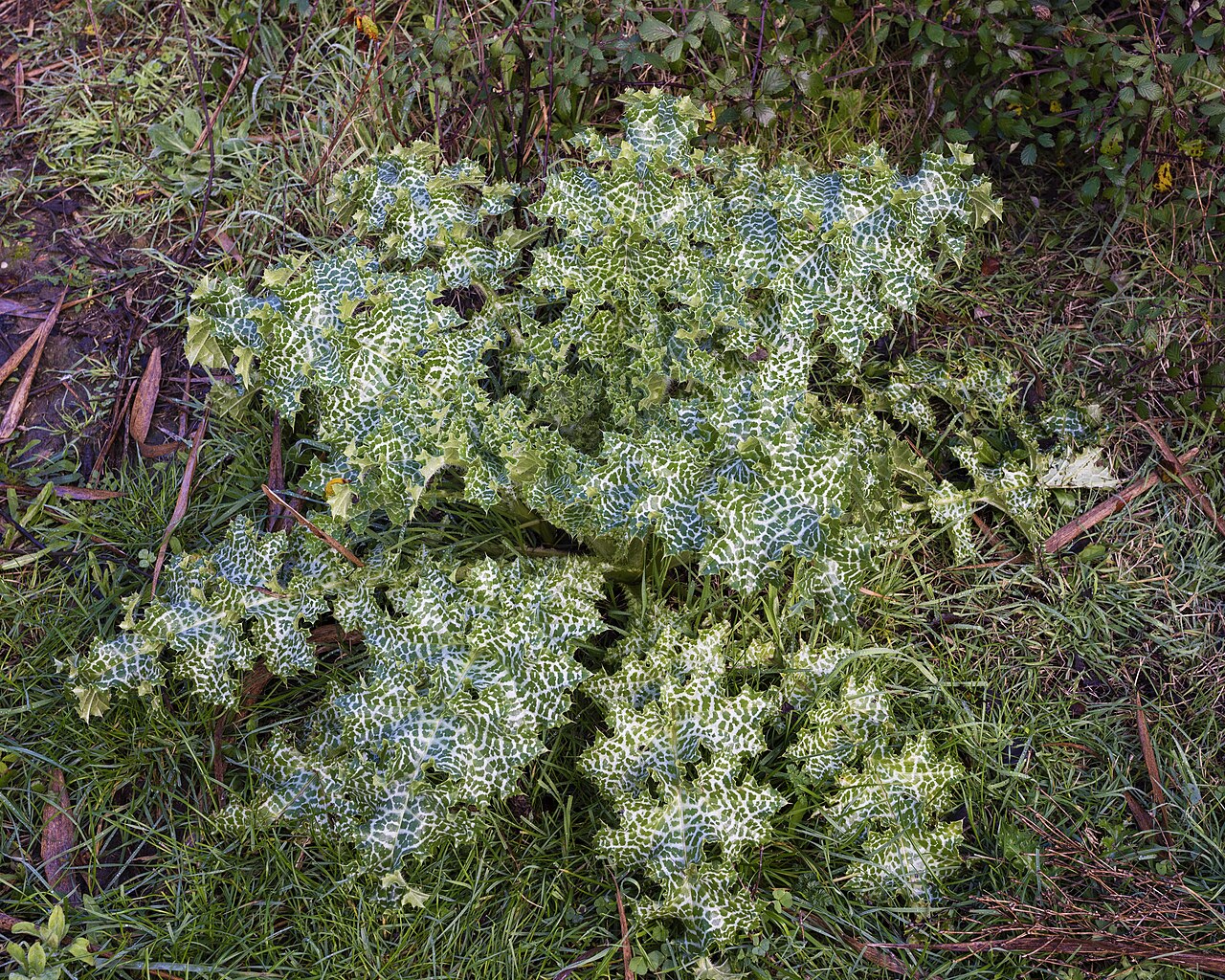
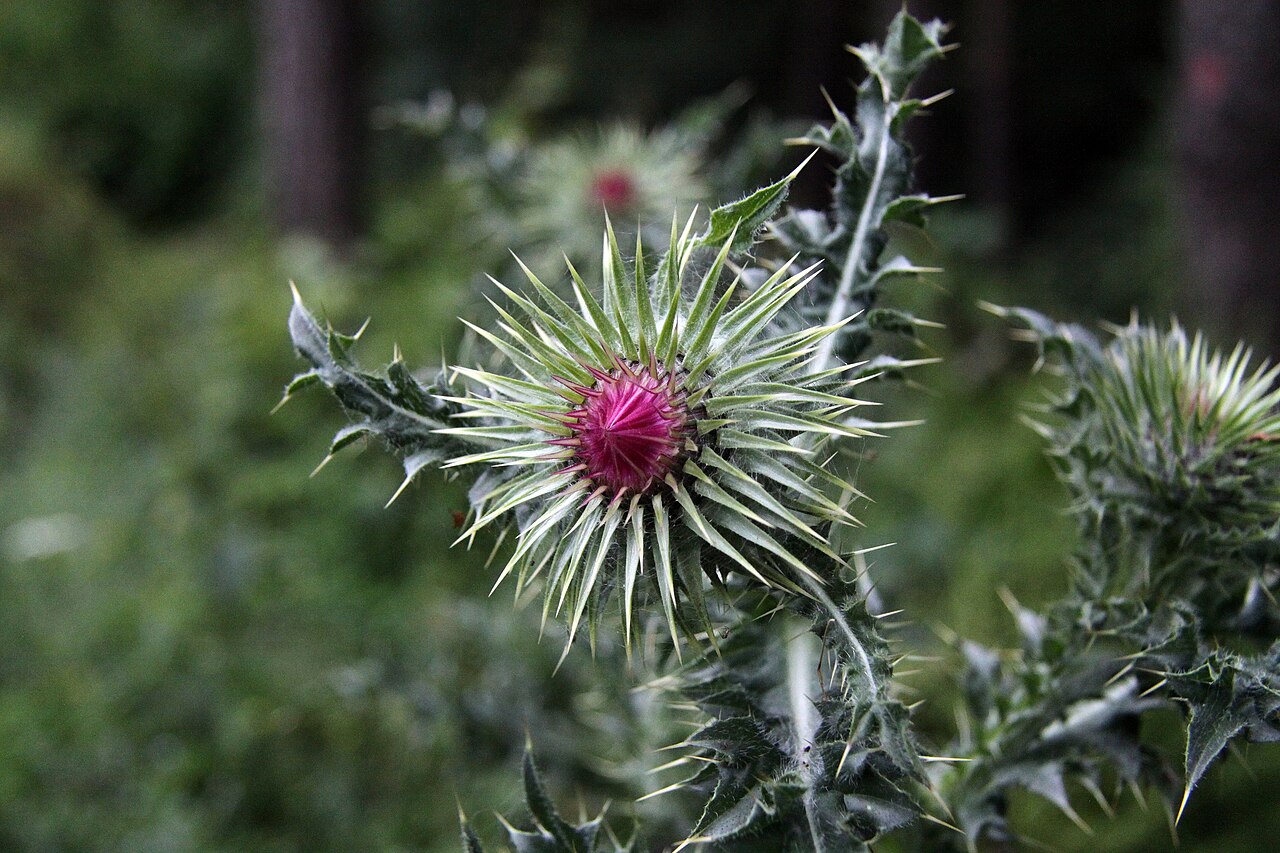
How to grow
Milk thistle is a big, bold biennial: in year one it forms a rosette of glossy, white-veined, spiny leaves, and in year two it rockets to 3-6 feet and tops itself with magenta-purple thistle flowers that bees love. Sow seed directly outdoors in fall or early spring, a quarter inch deep, where it will grow — it has a taproot and resents transplanting. It wants full sun and well-drained soil, tolerates poor and rocky ground, and actually prefers lean conditions to rich ones. Give it room and give it respect: the leaves are genuinely spiny, so plant it at the back of the bed or in a wild corner, not beside a path where bare legs pass. Check your state’s weed list before planting — milk thistle is listed as a noxious weed in some states, and where it is listed, do not plant it.
Water & feeding
Water until established, then water sparingly — milk thistle is drought-tolerant and overwatering in heavy soil causes rot faster than drought causes trouble. It needs no fertilizer; in fact, nitrogen pushes leafy growth at the expense of seed. Mulch is optional, and in wet winters, sharp drainage matters more than any feeding schedule.
Common problems
- Self-seeding — a single flower head makes hundreds of seeds; cut heads before they fluff out, or you will be weeding thistles for years.
- Spines — wear thick gloves and long sleeves for any work near mature plants, and warn children that this is not a petting plant.
- Root rot in heavy, wet soil — plant on a mound or in a raised bed with gritty soil if your ground holds water.
- Aphids on flower heads — usually minor; blast with water and let beneficial insects handle the rest.
Harvest
Cut flower heads in mid-to-late summer of year two, when the purple florets fade and the white pappus just starts to show, and finish drying them in a paper bag — the seeds shake out as they dry. Wear gloves: everything about harvest is spiny. This guide is about growing only, and it makes no liver or detox claims: milk thistle seed has a long traditional herbal history, but if you are considering it for health reasons, talk to a clinician first, especially since it can interact with some medicines. Compost the spiny stalks rather than handling them more than necessary.
Browse all plant & pest guides
Saving seeds
Milk thistle is a biennial that saves its own seed with enthusiasm, and the seed is the whole point — the silymarin in the seed is what the herbalists are after. Let a plant go to flower in its second year and watch the purple thistle head fade and dry. When the white pappus — the fluffy parachute — starts to show, the seed is ripe. Cut the whole head, drop it in a paper bag, and let it dry for a week before you thresh it.
Threshing is simple: crush the dried head in the bag, shake it, and pour the contents through a kitchen strainer. The seed is dark, striped, and hard; the fluff blows away and the chaff stays in the strainer. Wear gloves and long sleeves for all of this — the plant is a thistle, and it defends its seed the way thistles do.
Self-seeding is vigorous, which is both the gift and the warning. A plant left to ripen will sow itself everywhere next spring, and the seedlings are prickly from the start. If you want seed and no colony, cut the heads as they ripen and deadhead the rest. If you want a colony, do nothing at all — milk thistle will oblige. It is not listed as invasive in Florida, but it is a thistle, so give it a corner where its enthusiasm is welcome and keep it out of the vegetable beds.
Stored dry, the seed keeps for several years, and it keeps its medicine with it. Florida humidity is the enemy of stored seed, so dry it thoroughly before jarring it, add a silica gel packet, and keep the jar cool and dark. Sow in fall or early spring, barely covered, and thin the seedlings to a foot apart. The seed you save is next year’s medicine chest, grown from a plant that asked for almost nothing.