
🥒 Monticello White Chayote
What it looks like
Why this variety
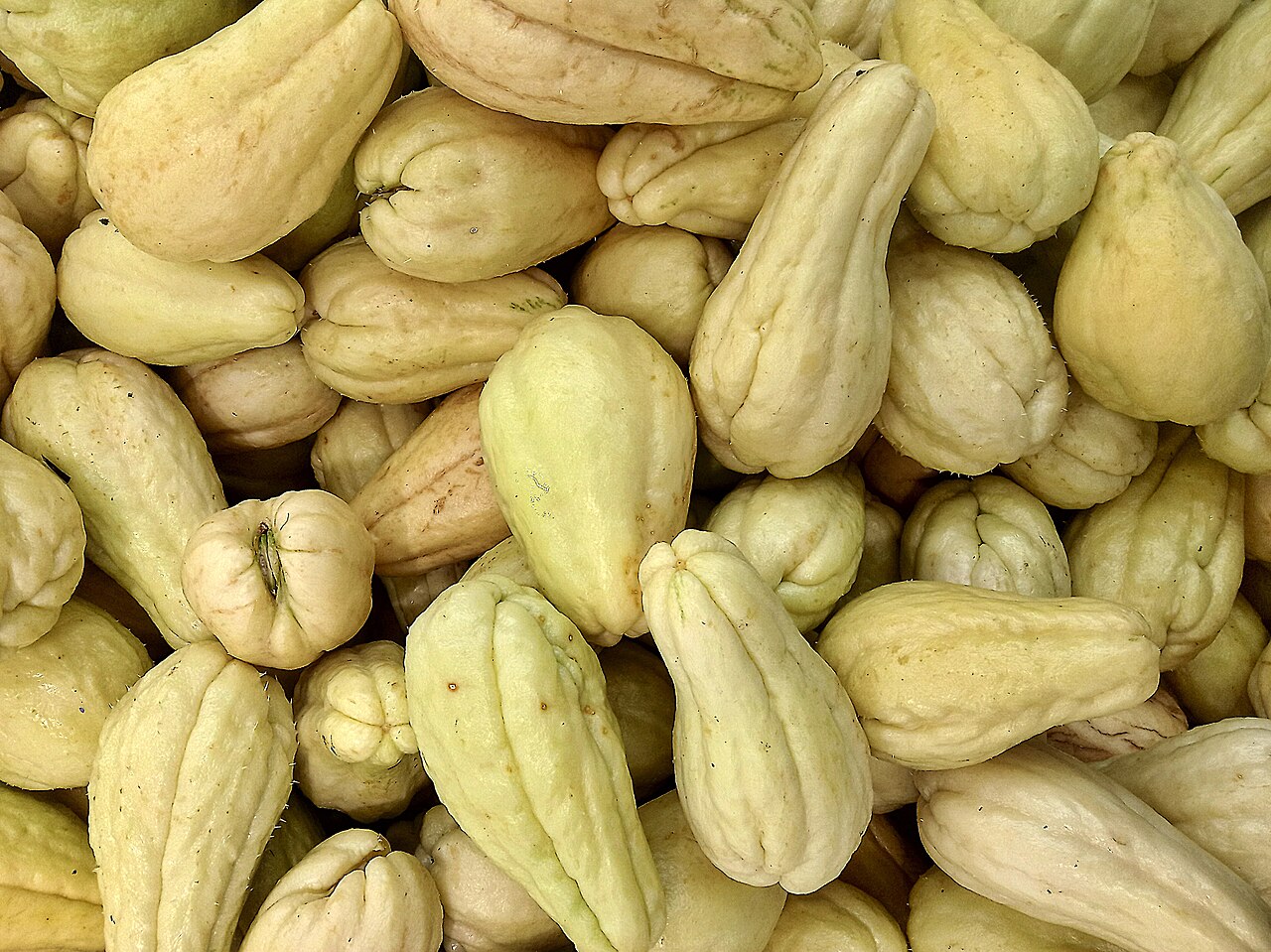
Monticello White is the second variety UF/IFAS names alongside Florida Green: a white or very pale green chayote, milder and a little more tender than the green market type. White chayotes are generally prized for a softer bite and a flavor that leans gentle rather than squashy.
In the kitchen, that mildness is a feature: white chayote disappears into soups, gratins, and stuffed preparations, taking on the flavors around it while adding body and a clean, crisp texture. It is the chayote for cooks who want the yield without a strong squash flavor.
If you are new to choosing between cultivars, the Varieties Matter guide explains why the name after the plant matters as much as the plant itself. And if you want the whole clan at a glance, the broader Chayote guide covers chayote generally.
How to grow
In Florida, chayote is a perennial vine that can feed a neighborhood: plant a sprouting fruit in spring, give it the strongest trellis or fence you own, and pick fruit from late summer into fall. In the warmest parts of the state the root overwinters and the vine comes back bigger the next year.
Culture is identical to other chayotes: plant a whole sprouting fruit in spring, give it a serious trellis, water deeply, and mulch. A white chayote vine is just as vigorous as a green one, so do not let the pale fruit fool you into giving it a small support.
Water & feeding
Chayote drinks heavily once it is running — a vine that size is moving a lot of water. Water deeply, mulch the root zone, and feed with compost through the season. A vine that wilts in afternoon heat and recovers by evening is normal; one that stays wilted needs water now.
Common problems
Same pests and troubles as other chayotes: fruit flies late in the season, drought dropping young fruit, and frost killing the top growth (the root usually survives under mulch in warm zones). Pick young and pick often to keep the vine setting fruit.
Harvest
Harvest at 4–6 inches, while the skin is tender and the seed is soft. White chayote is excellent raw in salads at this stage — sliced thin, it is crisp and mild — and it cooks in minutes.
Nerdy fact: White chayote’s paleness is not unripeness: it is the variety’s own color, and it stays pale even when fully mature — a useful reminder that in chayote, as in much of gardening, color is a cultivar trait, not a ripeness gauge.
Saving seeds
Monticello White is the second variety UF/IFAS names alongside Florida Green: a white or very pale green chayote, milder and a little more tender than the green market type. White chayotes are generally prized for a softer bite and a flavor that leans gentle rather than squashy. In the kitchen, that mildness is a feature: white chayote disappears into soups, gratins, and stuffed preparations, taking on the flavors around it while adding body and a clean, crisp texture. Chayote is grown by planting a whole sprouting fruit, not by seed: plant a sprouting fruit in spring, give it the strongest trellis or fence you own, and pick fruit from late summer into fall. The full method is in the Propagation section of the Chayote guide.