
🌅 Morning Glories
What it looks like
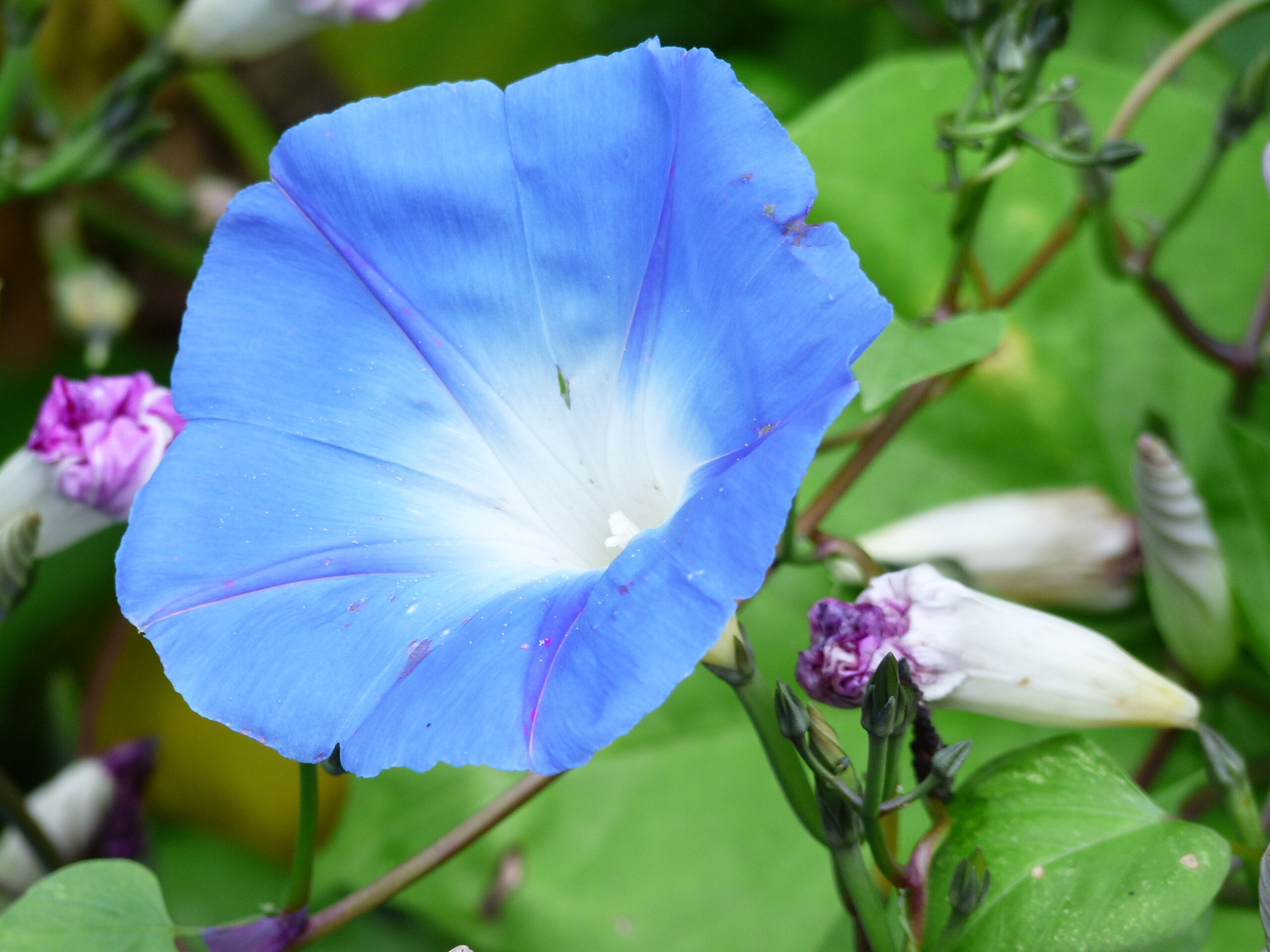
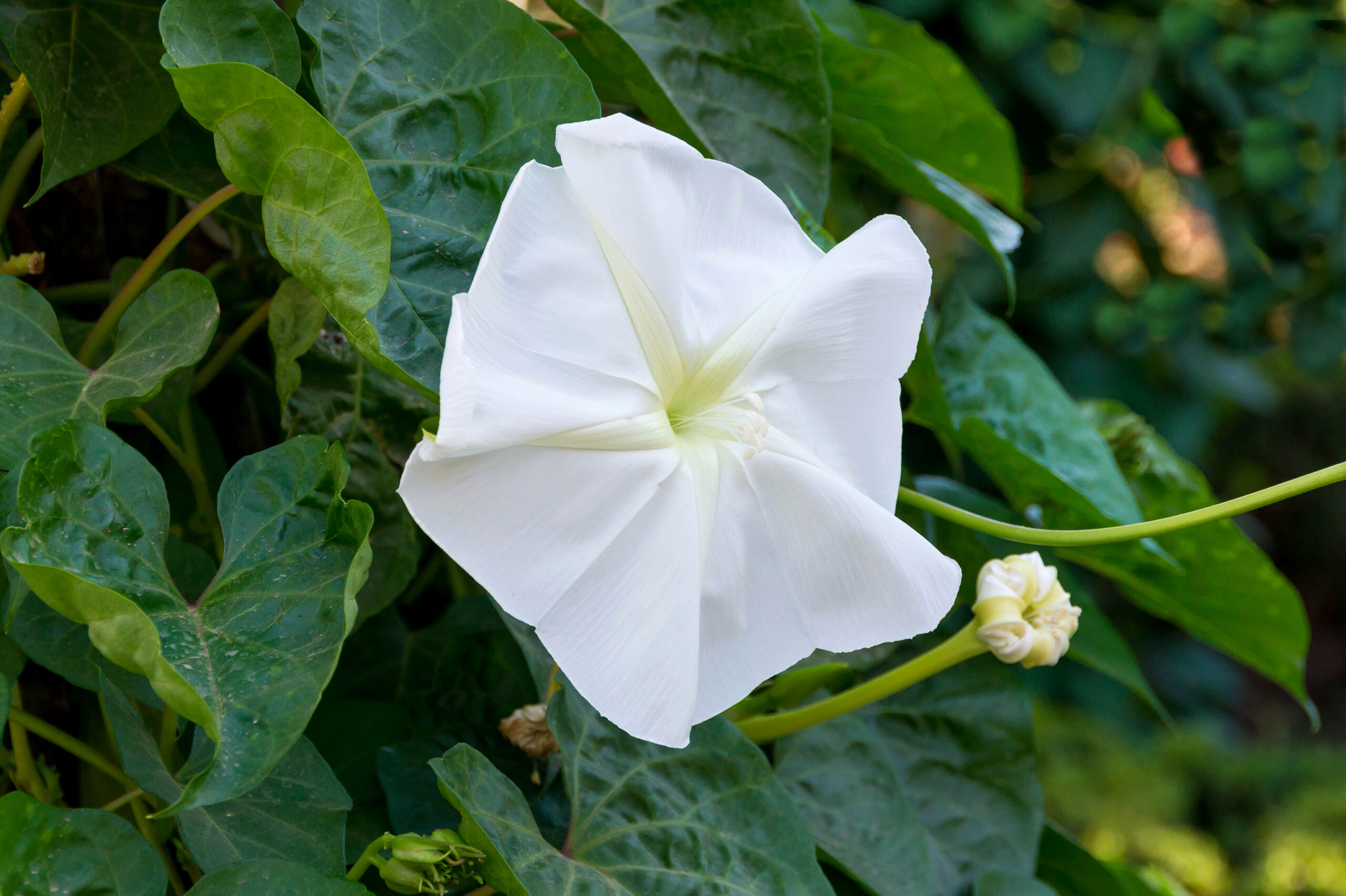
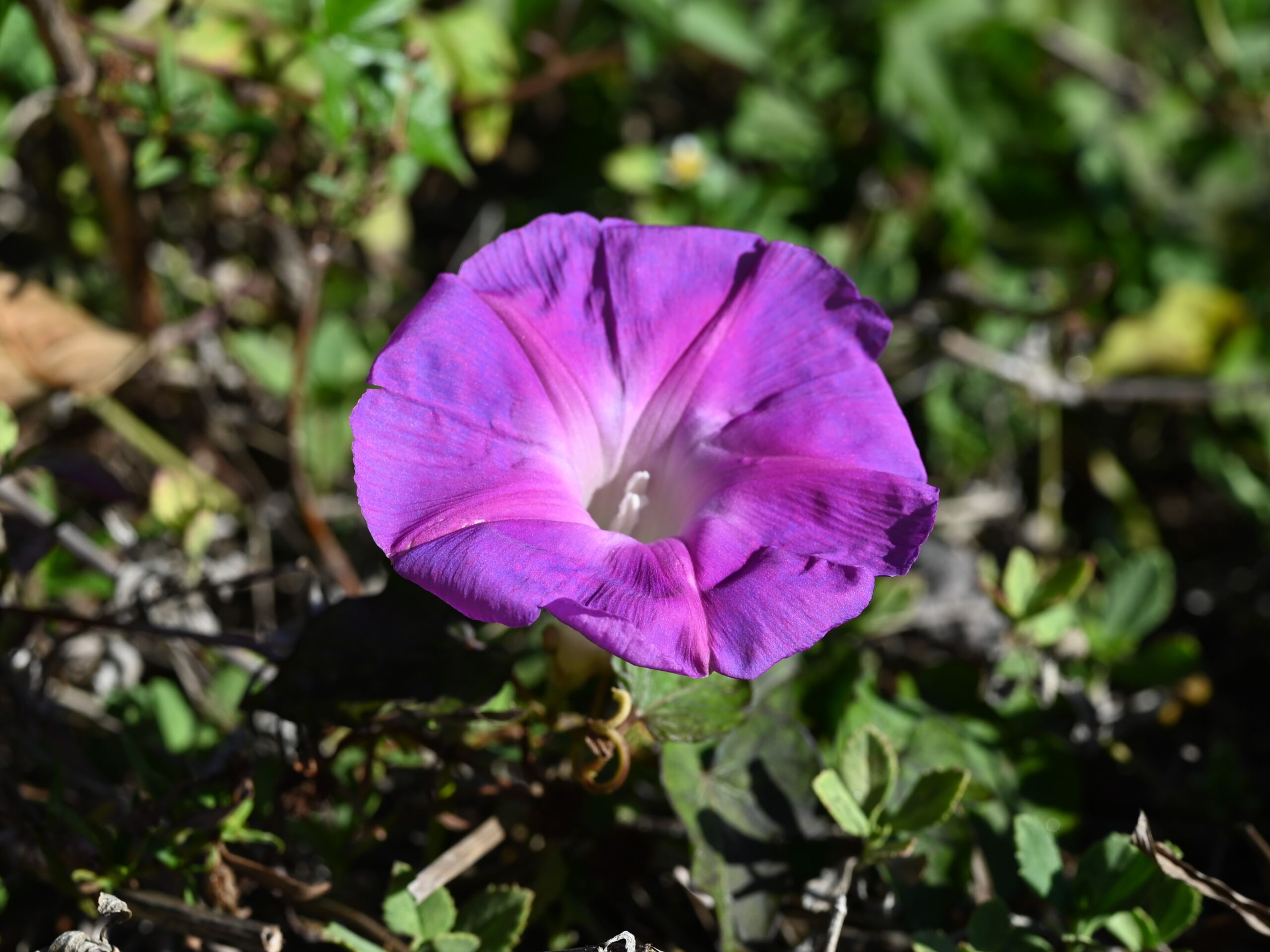
Morning glories are the genus Ipomoea, the largest genus in the morning glory family, Convolvulaceae. How large, exactly, is a question botanists answer differently depending on when you ask: Plants of the World Online, run by the Royal Botanic Gardens, Kew, currently accepts 642 species, while an older Horticulture magazine account put the genus at 450. Either way, it is a huge clan, spread through the tropical and subtropical regions of the world, and most of its members are twining climbers. The name itself is a joke about the habit: Ipomoea comes from the Greek ips, meaning woodworm, and homoios, meaning resembling — a worm-like stem that winds around whatever it can grab. No tendrils, no suckers, no claws. Just a stem with ambition and a spiral.
The classic morning glory look is a funnel- or trumpet-shaped flower, often several inches across, in blue, purple, pink, red, or white, over heart-shaped or lobed leaves. But a genus this big refuses to sit still for one portrait. Some members are annual vines that rocket up a fence in a single summer. Others are perennials that come back from tubers. A few are shrubs, and a couple are small trees. One of them is dinner. The flower you picture when someone says “morning glory” is only the most famous face of a very large family, and the family resemblance is the twining stem and that unmistakable trumpet.
The one-day flower
Here is the deal that gives the whole genus its name: most morning glory flowers open at dawn and close by midday or early afternoon. Each individual bloom lasts a single day. On a cloudy or cool morning, the show runs a little longer; on a hot, bright afternoon, it shuts down early. This is not the plant being lazy. It is the plant being efficient. The flower pours its nectar and pollen into the cool morning hours, when bees, butterflies, and hummingbirds are actively foraging, and then it folds up before the heat of the day can wring the moisture out of it. The vine compensates for the short life of each flower with sheer volume: a healthy vine opens a fresh batch every morning, so the fence looks different — and just as covered — day after day, all summer until frost.
There is a glorious exception, and it is the one that proves the rule is about timing, not about the flower itself. The moonflower, Ipomoea alba, opens at dusk, perfumes the whole yard through the night, and closes at dawn. Same genus, opposite shift, working the night pollinators — especially sphinx moths — while its cousins sleep. If you plant both a morning glory and a moonflower on the same trellis, you get a fence that never really clocks out: trumpets at breakfast, trumpets after dark.
For butterflies, morning glories pull double duty. The open trumpets are nectar stops for daytime butterflies, and the leaves are caterpillar food for a few species — the genus shows up on both the host-plant lists and the nectar-plant lists of butterfly guides. A vine that feeds both the caterpillar and the adult is doing the whole life cycle a favor, which is more than most ornamentals can say.
How to grow
Morning glories are famously easy, which is gardener-speak for “they will grow in spite of you, and possibly in spite of your neighbors.” Give them full sun — six or more hours of direct light — and a support to climb, and they mostly take it from there. A trellis, a fence, an arbor, a mailbox post, a sunflower stalk: if it stands still, a morning glory will consider it a trellis. North Carolina Extension describes the common morning glory as a twining annual vine reaching 6 to 10 feet tall and 3 to 6 feet wide in a single season, and some species run to 20 feet or more. Plan the support for the vine you actually planted, not the vine you imagined, and put the support up before the seedlings need it. A morning glory without something to climb will climb its neighbors instead, and then you will have opinions about it.
Start from seed, which is how nearly all garden morning glories are grown. The seeds wear a hard coat, and the classic trick — the one every extension service repeats because it works — is to nick the coat with a file or nail clippers and soak the seeds overnight before planting. Sow after the last frost, when the soil is warm, about a quarter inch deep, and keep the soil moist until the seedlings are up. In warm climates you can also let them self-sow: leave some seed capsules on the vine in fall, and volunteers will appear next spring. Whether that is a feature or a problem depends on how you feel about surprise vines, which brings us to the cautions section below.
Morning glories tolerate average to poor soil, and this is one of the rare cases where being a generous gardener backfires. Heavy nitrogen fertilizer tends to produce a magnificent pile of leaves and very few flowers. The vine is showing off its foliage because you fed it like a leafy green. Lean soil, moderate water, and full sun are the recipe; the plant flowers hardest when it is slightly stressed rather than richly fed. Water to establish and during dry spells, and give the vines airflow rather than a crowded, damp tangle. Mulch helps hold soil moisture, but keep the mulch off the stems.
In Florida, the calendar is kind to morning glories. Plant in spring after the soil warms, and expect bloom from early summer until frost — or, in frost-free South Florida, for a much longer stretch, since the perennial species never get the killing signal. North and Central Florida gardeners can treat the annual kinds as warm-season vines and the perennial kinds as plants that may sulk through a hard freeze and return from their roots. If a vine is still blooming in December in your yard, congratulations: you live in the part of the range where morning glory never really learned what winter is.
Notable species
Common morning glory, Ipomoea purpurea, is the one most gardeners mean when they say “morning glory,” and it has its own species guide. It is a twining annual from Mexico and Central America, naturalized around the world in warm temperate and subtropical regions, with flowers in purple, pink, blue, magenta, or white, blooming continuously from early summer to fall.
Mexican morning glory, Ipomoea tricolor, is the sky-blue classic of seed packets, the one with the famous “Heavenly Blue” flowers that open blue and shift color as the day goes on. Japanese morning glory, Ipomoea nil, is its close cousin and the species behind much of the spectacular breeding work in Japan, where morning glory flowers have been selected into forms that look like they escaped from a fireworks catalog.
Moonflower, Ipomoea alba, is the night-shift member of the family: huge white trumpets that open at dusk, close at dawn, and perfume the air in between. Oceanblue morning glory, Ipomoea indica, is a vigorous perennial vine with blue-to-purple flowers, found in Florida as well as through the tropics. Beach morning glory, Ipomoea imperati, and saltmarsh morning glory, Ipomoea sagittata, are Florida natives that belong to dunes and salt marshes rather than garden trellises, and they are best admired where they grow wild.
Bush morning glory, Ipomoea carnea, breaks the vine mold by growing as a shrub, and tie vine, Ipomoea trichocarpa, is a smaller native vine. And then there is the plot twist: sweet potato, Ipomoea batatas, is a morning glory. The tuber on your Thanksgiving table is the swollen root of a plant in this exact genus. Ornamental sweet potato vines are bred for their leaves, and food varieties are bred for their tubers, so do not dig up your ornamental vine expecting dinner — but the next time someone says morning glories are just pretty faces, you can tell them one of them feeds millions of people.
Water & feeding
Water to establish, then water during dry spells; morning glories prefer moist but well-drained soil and do not like sitting in water. Once they are running, they are fairly forgiving of a missed watering, though drought stress will cut the bloom. Feed lightly or not at all. If you must fertilize, use a low-nitrogen, bloom-friendly feed sparingly, and skip the rich compost-and-manure banquet you would give a tomato. The goal is flowers, not a hedge. A light mulch layer holds moisture and keeps the roots cool, which matters more in a Florida summer than any fertilizer will.
Common problems
- Self-seeding everywhere — the classic morning glory complaint. Vines reseed readily, especially in warm climates, and volunteers pop up in beds, paths, and lawn edges. Deadhead seed capsules before they split if you want one season of glory instead of a dynasty.
- Smothering neighbors — a vigorous vine will climb over shrubs, small trees, and other plants and shade them out. Give morning glories their own support and prune wandering stems back to it.
- Too many leaves, too few flowers — usually too much nitrogen or too little sun. Move the vine into full sun and stop feeding it like a vegetable.
- Seed toxicity — the seeds of some Ipomoea species contain ergoline-type alkaloids, and eating them can cause serious unpleasantness. Not every species carries these compounds, but the safe rule covers the whole genus: ornamental morning glory seeds are not food, and seed packets should be kept away from children and pets.
Florida cautions
Florida gardeners should know which morning glories to admire from a distance. Mile-a-minute vine, also called Cairo morning glory, Ipomoea cairica, is rated by the UF/IFAS Assessment as a high invasion risk in all three Florida zones and is not recommended for planting — it smothers vegetation and is already widespread across the state. Water spinach, Ipomoea aquatica, is a prohibited aquatic weed in Florida, so it has no place in or near waterways, no matter how good it looks in a stir-fry. And the common morning glory itself, while a beloved garden annual, reseeds with enthusiasm in warm climates, so deadheading is not just tidiness here — it is how you keep a garden plant from becoming a neighborhood project. Check the current UF/IFAS guidance before planting any Ipomoea you have not grown before, because a genus with 600-plus species contains both treasured garden plants and genuine troublemakers, and the difference is the species, not the family name.
Browse all plant & pest guides
Saving seeds
Morning glories are a genus, not a single plant, so this section is genus-level on purpose: the seed habits hold across Ipomoea, from the common morning glory to the moonflower to the sweet potato vine’s wild cousins. The seed wears a hard coat, and that coat is the whole story. Nick it with a file or sandpaper, or soak it overnight in warm water — the seeds that swell are ready, and the ones that stay hard can be soaked again. Sow in warm soil after the last cold snap, barely covered, and germination usually comes within one to two weeks.
Collect the seed when the pods are dry and papery and rattle when you shake them. A paper bag held under a ripening cluster catches what would otherwise scatter, and a single vine gives you far more seed than you need — a tablespoon is a season of vines. The seed is small, dark, and hard, and it keeps well if you keep it dry.
Self-seeding is the thing to respect. Morning glories sow themselves with enthusiasm in Florida, and a vine left to ripen will come back next spring in places you did not intend — the fence, the shrub, the vegetable bed. Some species are genuinely invasive in Florida, and the line between a garden vine and a weed is how much seed you let fall. Deadhead the spent flowers if you do not want volunteers, or let a few pods ripen and pull the extras while they are small.
Crossing is a small matter for the common kinds, which mostly self-pollinate, but the fancy cultivars will not come true from seed — a seedling from a striped or doubled flower may bloom plain blue. Cuttings are the cloning route for those. One caution, stated plainly: morning glory seed is toxic if eaten, so keep saved seed labeled and out of reach of children and pets. Stored dry, the seed keeps for several years. Florida humidity is the enemy of stored seed, so dry it thoroughly, jar it with a silica gel packet, and keep it cool and dark.