
🌿 Native Doctorbush
What it looks like
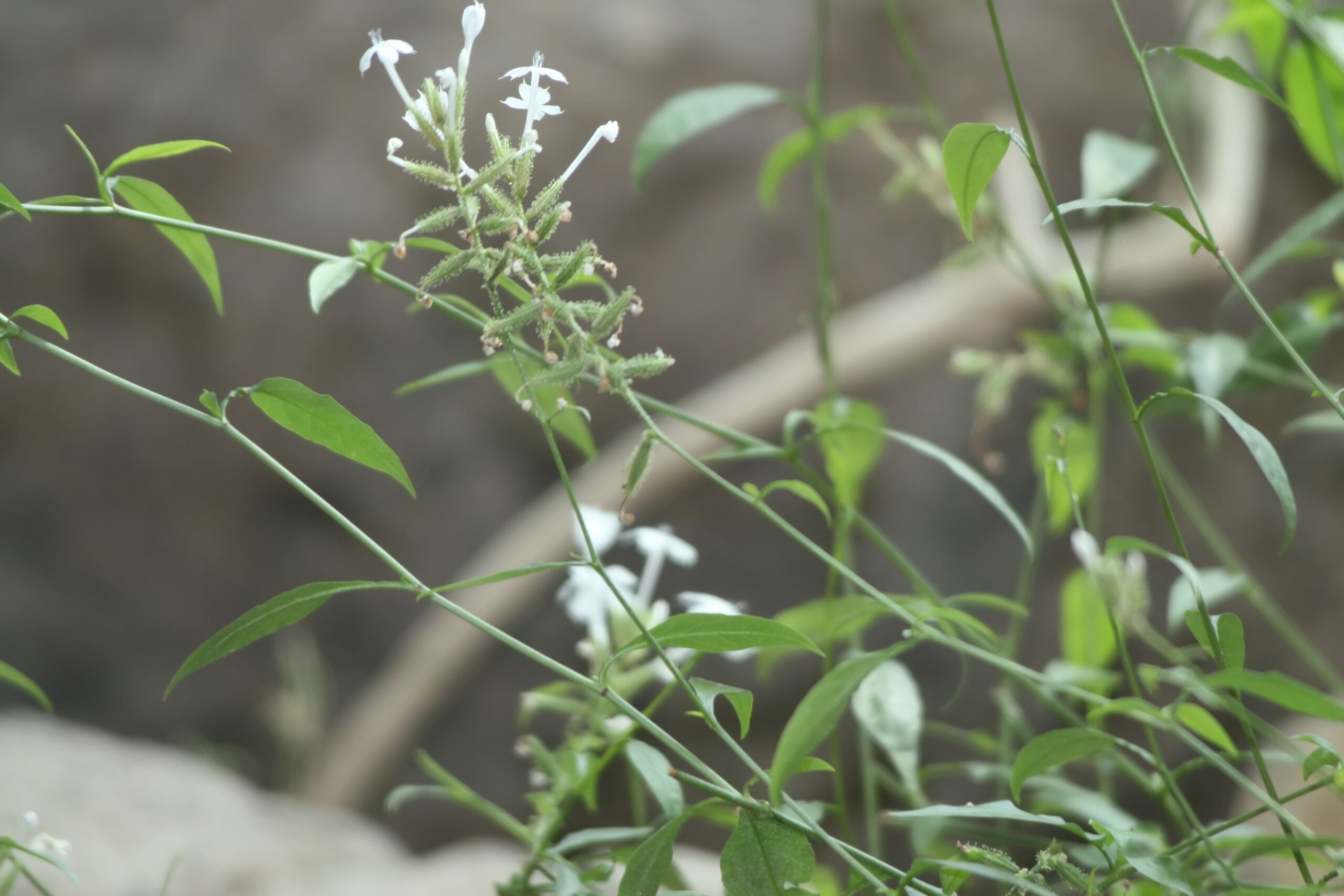
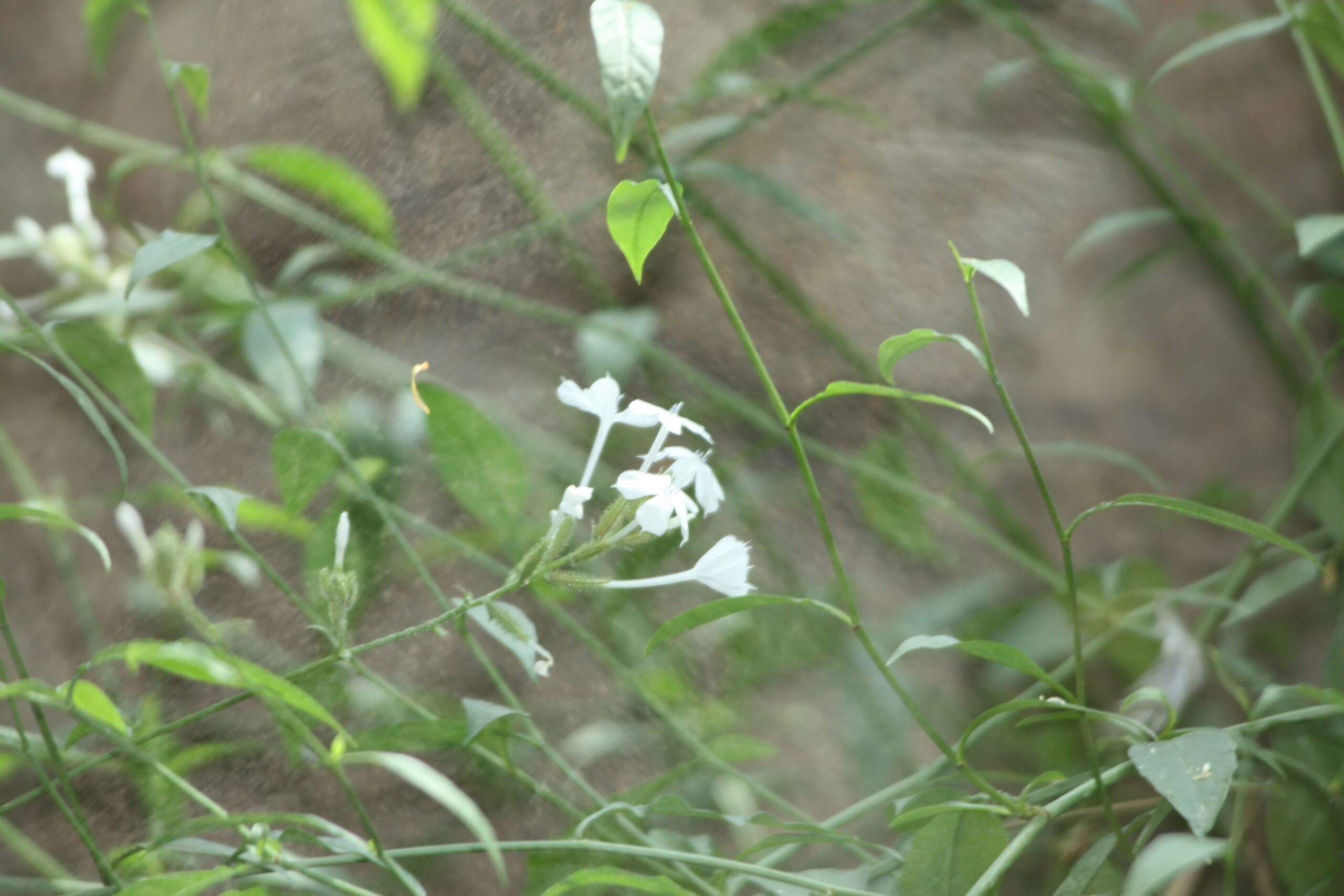
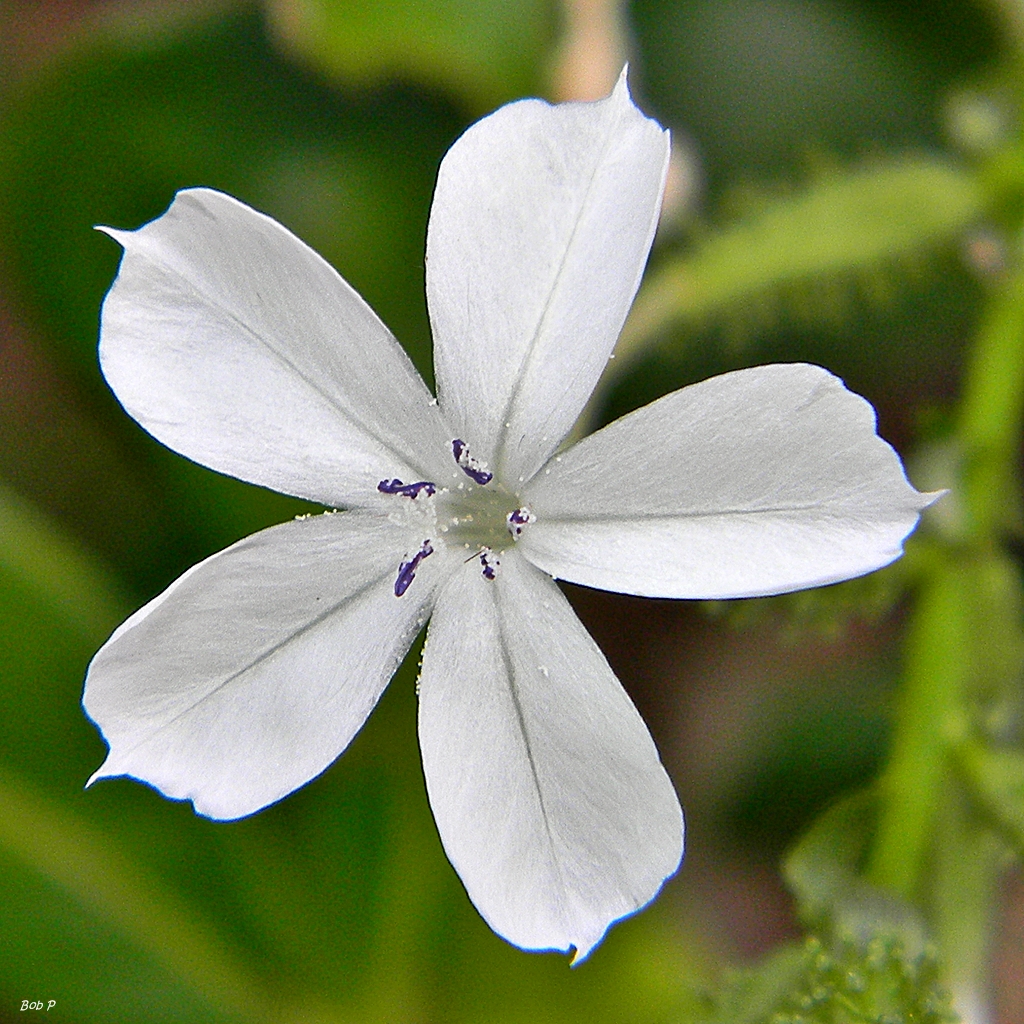
Native doctorbush is an evergreen, loosely sprawling shrub in the plumbago family, Plumbaginaceae, and the first thing to say about it is what it is not. It is not the plumbago in most Florida yards. That plant, the big, blue-flowered, ever-blooming shrub on every corner, is Cape leadwort, Plumbago auriculata, an import from South Africa, and it is a different species, bigger, flashier, and far more common in cultivation. Native doctorbush, Plumbago scandens, also called wild plumbago, wild leadwort, Ceylon leadwort, Florida plumbago, and, in the butterfly guide’s words, native doctorbush, is a Florida native and much less flashy than its cultivated cousin, with a demure floral display that rewards a close look rather than a drive-by. It is a small plant, described by some as a vine and by others as a shrub, growing perhaps 3 or 4 feet long and just as wide, with alternate, elliptical leaves and small white flowers, sometimes with a hint of blue, borne singly along the stem instead of in the showy clusters of its cousin. The flowers bloom through much of the year, giving way to a seed pod that forms just below the neck of each flower, and the seeds are small, pointed, and sticky, catching on clothing and hair with the determination of a plant that travels by hitchhiking.
Its native ground is the coastal hammock and the palm grove understory. Within Florida it is found throughout most of the coastal parts of the state from Volusia County south, including the Keys and the Gulf coast counties, and it grows in the understory of palm groves, thickets, and hammocks, in coastal hammocks and on the east side of Lake Okeechobee. Beyond Florida its range extends into parts of south Texas and Arizona, and south through Central America, a pan-tropical distribution that makes it a native in Florida and a native in many other places too. It likes deep shade, which is unusual enough among flowering shrubs to be worth stating twice: wild plumbago is a sprawling, matting, sometimes climbing shrub that likes the deep shade, and it will grow where most flowering plants sulk for want of sun. That shade tolerance is its garden superpower, and it is the reason a Florida gardener with a shady hammock corner and a butterfly list should know this plant by name.
The name needs a paragraph, because the taxonomy here is genuinely tangled. The butterfly guide calls it native doctorbush, Plumbago scandens. The Florida Native Plant Society database lists the plant as Plumbago zeylanica, wild plumbago, with Plumbago scandens as a synonym, and several other sources treat scandens and zeylanica as the same plant under different names. This guide files it under the butterfly guide’s name, Plumbago scandens, because that is the name the linking project must match, and it flags the zeylanica synonym openly rather than hiding it. If you search for this plant under either name, you are looking at the same small, white-flowered native. The cultivar ‘Summer Snow’ belongs to this species, with pure white flowers, and it is the form most often sold, though the straight species is the plant the butterfly knows. And the common name doctorbush has nothing to do with doctors in the modern sense; it is a folk name carried by several white-flowered plants of the tropics, and this guide will not invent a medical history for it.
How to grow
Plant native doctorbush in part shade to deep shade in well-drained soil, and give it something to sprawl over or under. It is a loosely sprawling shrub that can be trained as a climbing vine when tied up, grown as a large-scale groundcover, or left to mat beneath palms and hammock trees, and it is at its best in the dappled light of a Florida hammock garden, where it fills the awkward shady corner that defeats most flowering plants. Plant nursery-grown plants in spring or fall, water deeply until established, and then water as needed to keep the soil lightly moist. It is evergreen in its range, and it blooms through much of the year, with a short break during the warmest part of summer in some accounts, though Florida gardeners report flowers in most months. Hard prune to control size and to encourage colorful new foliage, which emerges deep red and matures to medium green, with all foliage turning red in late fall and winter in the accounts that describe it.
The butterfly connection is the reason this guide was written, and it is direct. The Cassius blue’s host list names Cape leadwort, Plumbago auriculata, and native doctorbush, Plumbago scandens, side by side, and the wild plumbago’s own nursery notes add the detail that the Cassius blue lays her eggs in the buds. If you want Cassius blues in a shady Florida garden, plant both plumbagos, or plant the native one alone and accept a smaller, shadier show: the butterfly will find it, because the butterfly’s caterpillars are looking for buds, not for blue flowers. Do not spray a host plant because it has caterpillars on it, and do not deadhead every bud in a tidy frenzy, because the buds are the nursery. A doctorbush with a few chewed buds is a doctorbush doing its job.
Propagation is by cuttings and by seed, and the plant is easy enough that a gardener with a friend who grows it will soon have one too. Take stem cuttings in spring or early summer, root them in a moist, well-drained mix, and plant them out when rooted. Seed, where you can collect it without stripping a wild population, should be sown fresh, because the sticky seeds are designed to travel, not to wait. Buy nursery-grown plants, never wild-collected ones: this plant is imperiled in south Florida in the accounts that track it, and a native plant garden should never be built on a wild population’s back.
Water and feeding
Water regularly during establishment and as needed thereafter to keep the soil lightly moist, but do not waterlog it. Native doctorbush grows in hammock soil that drains well and holds some moisture, and it is not a wetland plant. A mulch of leaves, which is what a hammock provides naturally, helps hold the moisture and cool the root zone it likes. Feeding is light: a top-dressing of compost in spring is plenty, and heavy fertilizer produces soft growth that is more vulnerable to the powdery mildew this plant can suffer in summer humidity. The plant is good in most soils, which is a generous way of saying it does not demand much, and it repays that modesty by flowering in shade where fussier plants fail.
Common problems
Powdery mildew in summer is the main problem, and it is managed by air circulation, spacing, and cutting back affected growth rather than by spraying, especially on a butterfly host plant where spraying would kill the very insects the plant exists to feed. The sticky seeds are a practical nuisance rather than a plant problem: they catch on clothing and hair and are difficult to remove, like pulling off a bandage, and a gardener who brushes past a seeding doctorbush will learn to check their sleeves. The plant is otherwise a tough, long-lived perennial with few serious pests, and its worst enemy in Florida is the assumption that it is the same as Cape leadwort. It is not: it is smaller, shadier, whiter, and native, and planting it as if it were its blue cousin, in full sun and a prominent bed, will disappoint both the plant and the gardener.
Harvest
There is no kitchen harvest from native doctorbush, and the traditional medicinal uses that fill old herbals for plumbagos in general are not something this guide will compress into a recommendation, because the genus contains irritant compounds and the folk name doctorbush is not a safety certificate. The harvest that matters is the flower show in shade, the Cassius blues in the buds, and the groundcover that holds a hammock corner together. If you cut a flowering stem for a vase, cut sparingly, and leave most of the buds for the butterflies. A native plant’s generosity is measured in caterpillars, not in bouquets.
Saving seeds
Native doctorbush is a Florida native vine with a sticky secret: its seed hides in the dried flower heads, in little spiky clusters that catch on fur and clothing — nature’s way of hitchhiking. Collect the seed in fall, when the flower heads have dried and the little seed clusters strip easily from the stem. Rub the dried heads between your hands over a paper bag, winnow out the chaff, and you have seed that is ready to sow.
Sow the seed in spring, in a warm, bright spot, in a well-draining mix, covered lightly with soil. Keep it moist but not waterlogged, and warm — around 70 to 75°F — and expect sprouts within two to three weeks. Fresh seed germinates better than stored seed, so sow within a few months of harvest if you can, and do not count on seed kept for a year behaving the same way.
Cuttings are the other route, and in some ways the easier one: take 6- to 8-inch stem cuttings from healthy growth without flowers, strip the lower leaves, dip the end in rooting hormone, and pot them in moist, well-draining mix under a plastic bag to hold the humidity. Roots usually form within four to six weeks. Root cuttings work too, taken in late winter or early spring from a plant a couple of years old — bury short sections horizontally under half an inch of mix, and keep them bright and moist.
One warning that belongs here: the sap can irritate skin, so wear gloves when you handle cuttings or work with the plant for any length of time. And keep saved seed dry — Florida humidity is the enemy of stored seed, so dry it thoroughly, jar it with a silica gel packet, and keep it in a cool, dark place.
Varieties
The straight species is the plant most gardeners should grow, and the cultivar ‘Summer Snow’ is the form most often sold, with pure white flowers and a vigorous, evergreen habit that makes it a good trellis, wall, or fence plant in warm climates. Do not confuse this species with Cape leadwort, Plumbago auriculata, the South African import with blue flowers in showy clusters, which is a different species with its own place in the Cassius blue’s host list and, presumably, its own guide. The site’s Academy native profile for doctorbush, Plumbago scandens, covers the same species as a profile, and this guide covers it as a full growing guide, in the same coexistence pattern as cottonwood, corkystem, and the other species that have both a profile and a plant-guides page. This guide covers scandens, and only scandens, under the name the butterfly guide gives it.