
📿 Necklace Pod
What it looks like
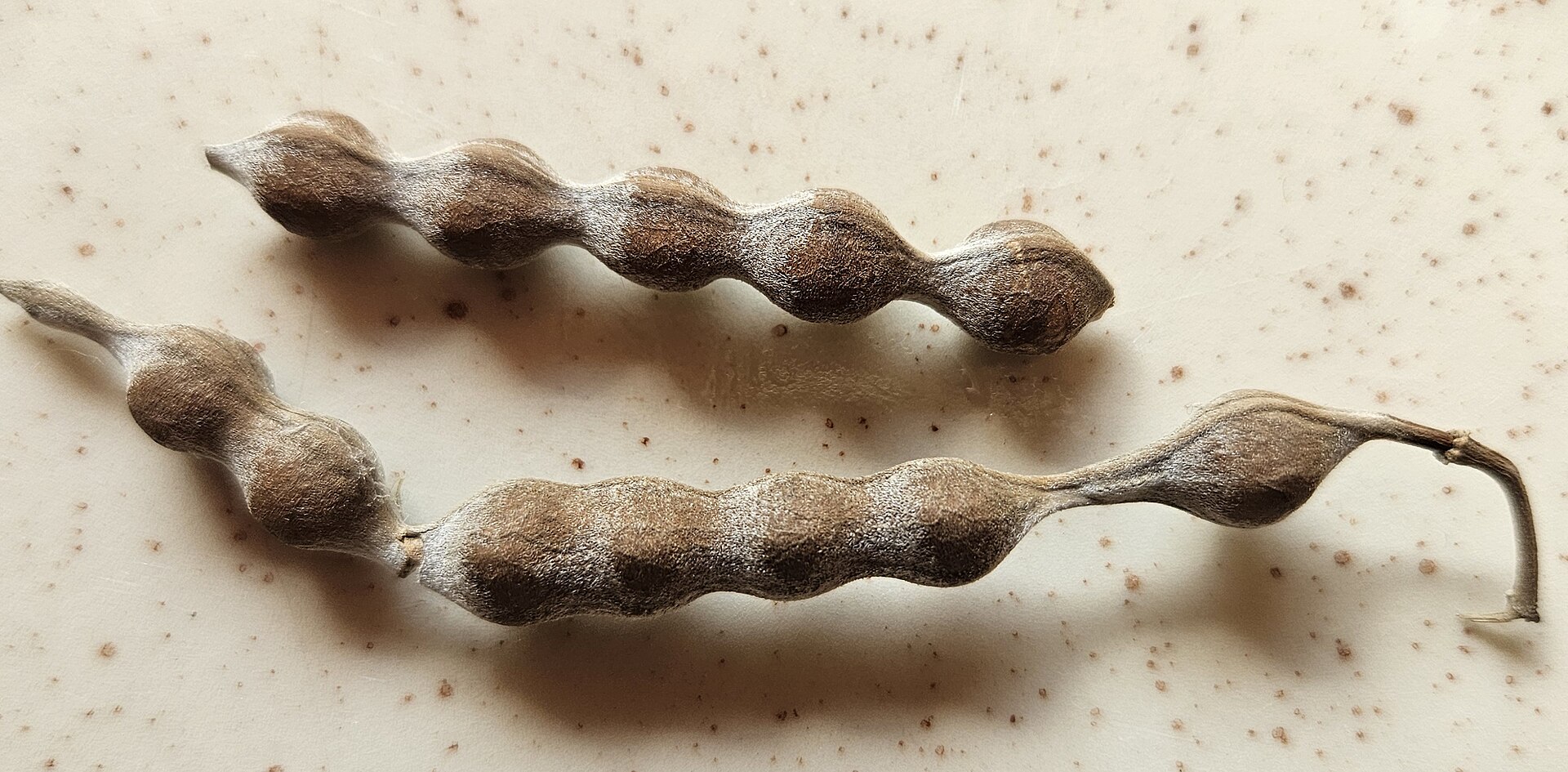
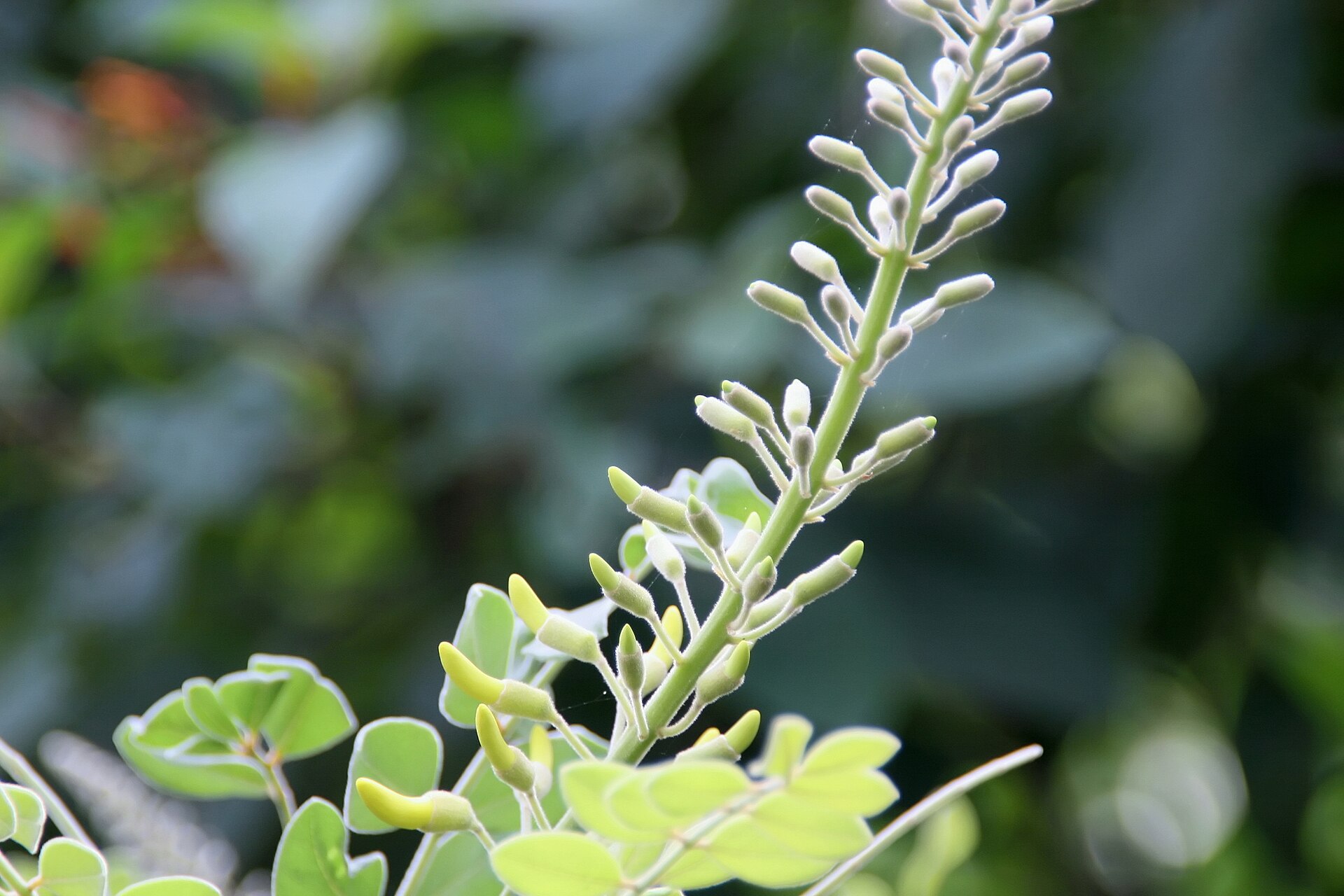
Necklace pod is a soft, silvery-green shrub with velvety leaves and upright spikes of bright yellow, pea-shaped flowers that bloom through much of the year in south Florida. After flowering it carries the pods that give it its name: long, beaded pods that look like a string of yellow-green beads and turn brown as they ripen.
It grows as a loose, open shrub, typically 6 to 10 feet tall, with a slightly sprawling habit that suits a naturalized coastal garden better than a formal hedge. Its silvery foliage lightens a dark green border and looks especially good with other coastal plants like sea grape and coontie.
Why this variety
Choose necklace pod for a coastal garden where salt spray kills lesser shrubs. It tolerates salt, wind, drought, and sandy soil, and it flowers when many shrubs are resting, which makes it a year-round butterfly plant in the warmest parts of the state.
It is also a good substitute for invasive lantana and Christmas cassia, giving you yellow flowers and butterfly traffic without the escape risk. UF/IFAS notes it as a native shrub that attracts butterflies all year, and its open habit means it never looks stiff or over-clipped.
How to grow
Plant in full sun in well-drained sandy soil, in fall or spring. Buy the Florida-native variety truncata from a native nursery if you can: much of the necklace pod sold commercially is the Texas variety occidentalis, which also grows well in south Florida but is not the Florida native form. Check the label and ask the nursery.
Prune lightly after a flush of bloom to keep it tidy, cutting back to a side shoot. It can be cut back harder in spring if it gets leggy, and it regrows well. Do not shear it into a ball: its charm is its loose, airy habit.
Water & feeding
Water deeply once a week while it establishes, then water only in extended drought. Necklace pod is drought tolerant once rooted and hates wet feet, so in a rainy summer it needs drainage more than it needs a hose.
Feed with compost in spring if the sand is very poor. Heavy fertilizer grows soft stems that flop in wind, and a coastal shrub that flops is a shrub that will be cut back hard anyway.
Common problems
Seeds are poisonous: do not eat the seeds or pods, and keep children from playing with the bead-like pods. This is the most important warning on this guide, and it is not a joke.
Freeze damage: necklace pod is a warm-climate shrub. A freeze can kill it back to the roots, though it often regrows in spring in south Florida. In central Florida, plant it in a sheltered spot.
Wrong variety: if the label says occidentalis, you have the Texas form, not the Florida native truncata. Both grow in south Florida, but only truncata is the Florida native.
Self-seeding: it can spread by seed in a favorable spot. Pull seedlings where you do not want them, and do not let it seed into natural areas.
Harvest
There is no edible harvest, and the pods and seeds must never be eaten. The harvest is flowers, butterflies, and a shrub that thrives in salt and sand where other plants fail.
Enjoy the pods as ornament: they are beautiful on the plant, they feed no one, and they should stay on the plant until they drop. Cut branches for a vase will hold their yellow flowers for a few days, but the plant in flower is the better display.
Browse all plant & pest guides
Saving seeds
Necklace pod is a Florida native coastal shrub, and its seed comes with two things to know before you start: the coat is hard as a bead, and the seed itself is poisonous. The pods hang on the plant for months — slender, silvery, bead-like chains that give the plant its name — and they turn brown and dry when the seed inside is ripe. Collect the dry pods, crack them open, and you have medium-sized, olive-green seeds with a hard coat that will not let water in until you help it.
Scarification is the key step. Nick each seed with a file, rub it with sandpaper, or pour hot water over the seed and let it soak for 24 hours — any of these will breach the coat so water can get in. No cold stratification is needed; necklace pod is a tropical shrub and has never heard of winter. Sow the treated seed in a well-draining mix of soil and sand, kept constantly moist, at around 70 to 75°F. Germination usually comes within three to four weeks, and the seedlings grow fast — a seedling can be a small shrub within a few months.
Now the warning, up front where it belongs: necklace pod seeds contain cytisine, an alkaloid that is emetic and purgative — in plain language, they will make you violently sick if eaten. Do not let children handle the seed unsupervised, do not store it where it could be mistaken for an edible bean, and wash your hands after handling it. This is a plant to grow and admire, not a plant to taste.
Cuttings are the alternative for exact clones, since seed-grown plants vary a little. But seed is the easy route for a plant that self-seeds freely around its parent in the wild — you will often find volunteers near a mature shrub, and those are free plants. Save seed from a healthy plant, label the jar clearly with the warning, and keep it dry and cool: Florida humidity is the enemy of stored seed, so jar it with a silica gel packet and keep it in a cool, dark place.