
🌸 New Mexican Locust
What it looks like
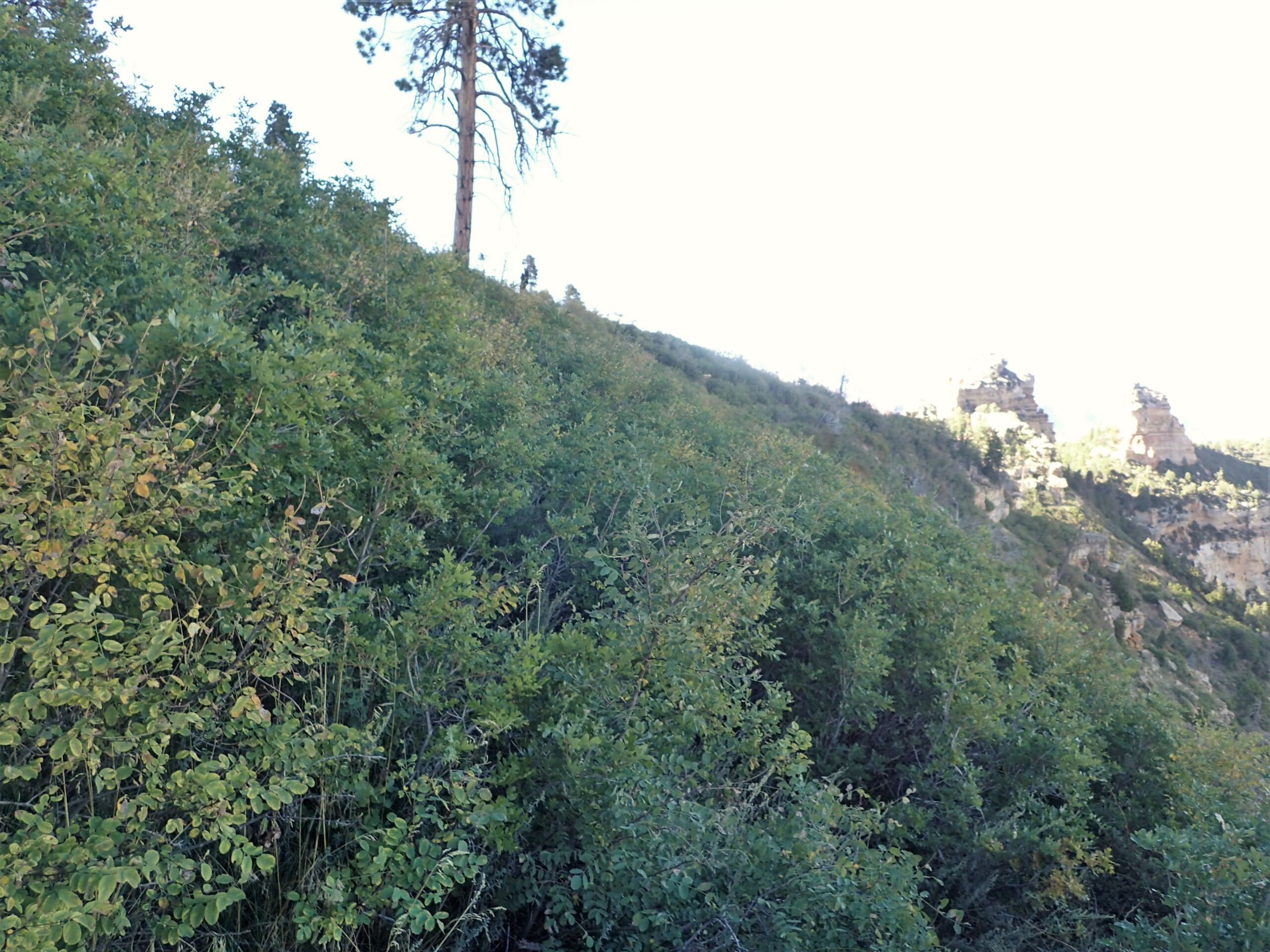
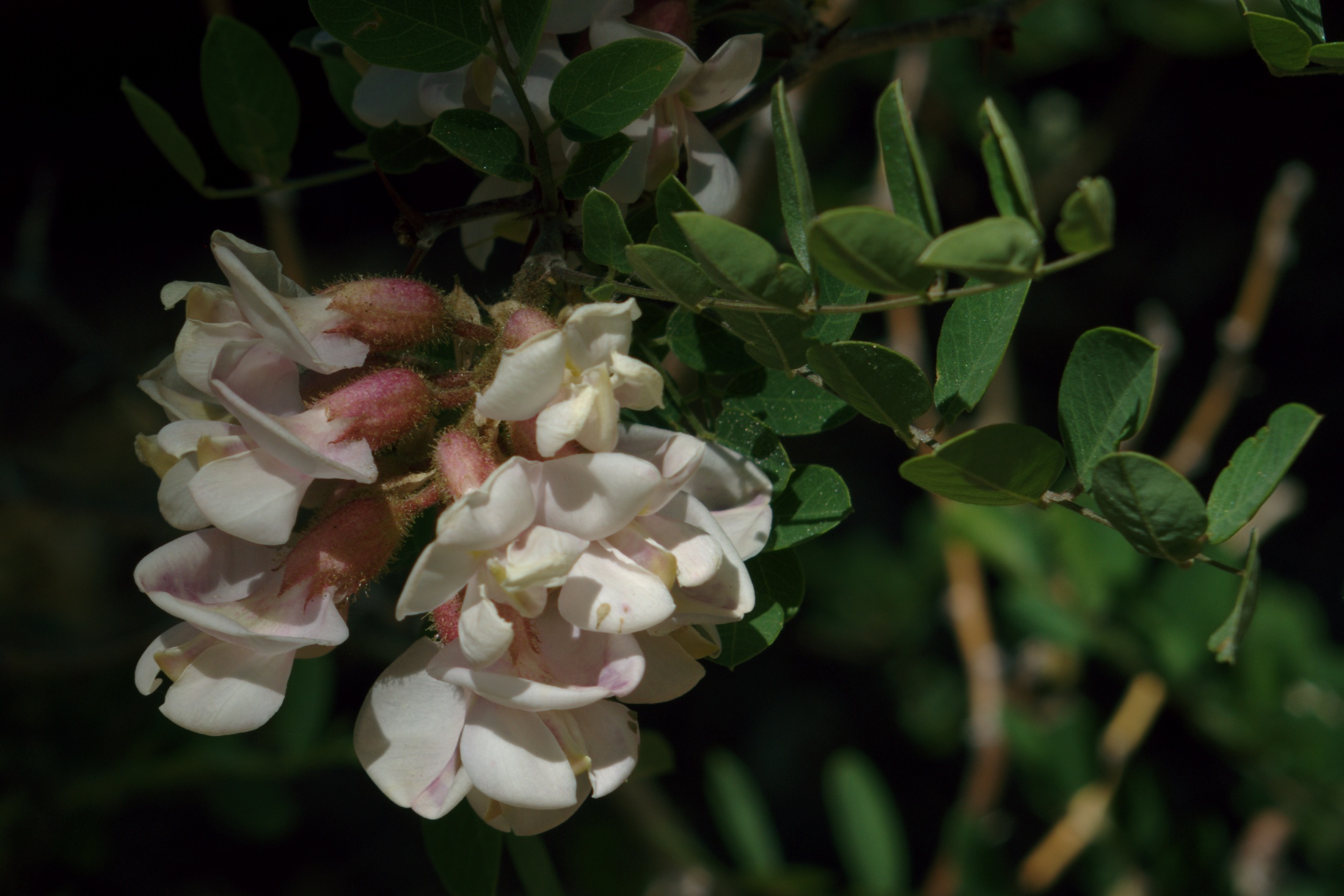
New Mexican locust is a small, thorny, deciduous tree — or, in dry sites, a large shrub — of the American Southwest, and it is the pink-flowered locust that most gardeners outside its range have never met. It grows typically 15 to 30 feet tall, often multi-stemmed and spreading by root suckers into a thicket, with furrowed gray-brown bark, stout spines at the leaf bases, and pinnate leaves of many small, oval leaflets that give the canopy a fine, feathery texture. In late spring and early summer it erupts into hanging clusters of pink to rose-purple pea flowers, fragrant and showy, followed by flat, hairy pods that persist into winter. A locust in pink is a sight that stops traffic in the high desert, and it smells as good as it looks.
The name needs unpacking, because “locust” is a word with a complicated resume. New Mexican locust belongs to Robinia, the genus of the black locust (Robinia pseudoacacia) — the famous, white-flowered, fast-growing timber and honey tree of the eastern United States, which has its own growing guide on this site. The two are cousins, not twins: black locust is larger, white-flowered, and eastern; New Mexican locust is smaller, pink-flowered, and southwestern, native from the mountains of New Mexico, Arizona, Colorado, and Utah south into Mexico. It is also not a honey locust (Gleditsia triacanthos), which is a different genus with different pods and its own guide, and it has nothing to do with the insect locust except for sharing a name that early American settlers applied to hard-wooded, pod-bearing trees.
The species name neomexicana simply means “of New Mexico,” and the tree wears its origin honestly: it is a plant of dry canyons, mountain slopes, open woodlands, and roadsides at middle elevations, where it tolerates drought, poor soil, and cold winters that would kill a subtropical tree outright. Its thorns are real — stout, paired spines at each leaf base — and its suckering habit is enthusiastic, so it is a tree for a site with room, not for a small courtyard. But where it fits, it is spectacular: pink flowers against gray-green foliage, humming with bees, in ground where little else blooms so boldly.
The butterfly evidence is direct and species-level. The Mexican Yellow guide lists “New Mexican locust” among its host plants, alongside fern acacia, prairie acacia, and Cassia species. The Funereal Duskywing guide is more explicit still, naming “New Mexican locust (Robinia neomexicana)” among the legumes its caterpillars eat, alongside bur clover, deerweed, and vetch. These are not genus mentions to be folded into a black locust guide: the species-versus-genus rule cuts the other way here, and the black locust guide covers Robinia pseudoacacia only. A reader following either butterfly’s host list needs this species, by this name, and this guide is it.
Like all Robinia species, New Mexican locust fixes nitrogen through root nodules, which is why it colonizes poor, disturbed, and burned ground and improves it as it grows. It is a pioneer tree in the truest sense: it arrives first, holds the slope, feeds the soil, and makes room for slower, longer-lived trees to follow. Gardeners in the Southwest have used it for exactly that — erosion control on dry slopes, a fast screen or windbreak, a wildlife thicket, and a pollinator tree that blooms when the high desert is at its driest and most flower-hungry.
How to grow
Grow New Mexican locust in full sun, in soil that drains, and with room to be itself. It wants at least six hours of direct sun and tolerates heat, drought once established, cold winters, and poor, rocky, or sandy soil — the conditions of its native canyons and slopes. What it does not want is wet, heavy, waterlogged ground, or a site where its suckers will invade a lawn, a bed, or a neighbor’s yard. A dry slope, a large xeriscape, a windbreak row, or a wildlife corner with space to sucker is the right setting; a small formal garden is not.
Plant in spring or fall, space trees 10 to 15 feet apart (farther if you want individual specimens rather than a thicket), and water deeply until established, then taper off. Seed germinates best after scarification or a hot-water soak, because locust seed coats are famously hard, and nursery stock is the easier path for most gardeners. Stake young trees only if the site is windy; the tree’s natural habit is multi-stemmed and spreading, and fighting that habit produces a weaker tree than accepting it. Prune in late winter to remove dead wood and crossing branches, and wear gloves and eye protection — the spines are no joke, and a locust branch swung at face height is a lesson you only need once.
Florida note, stated plainly: New Mexican locust is not a Florida tree. It is a high-desert and mountain Southwest species that needs cold winters, dry air, and well-drained mineral soil, and it will not thrive in Florida’s heat, humidity, and wet summers. Florida gardeners chasing the butterfly-host idea should treat this guide as a plant to know — the Mexican Yellow and Funereal Duskywing are southwestern and tropical butterflies, not Florida regulars — and plant the southeastern legume hosts that do the same job in their own yards. Know the species, admire it from a distance, and plant its local cousins.
Management is mostly about suckers and thorns. Mow or cut suckers that appear beyond the intended thicket, and do it regularly — a locust thicket left alone will happily claim more ground than you planned. Keep the tree away from walkways, play areas, and driveways where thorns become a hazard, and do not plant it under power lines or against a house: it is a spreading, medium-sized tree, and it will outgrow a tight spot. With those boundaries respected, it is a low-maintenance, long-lived, drought-proof tree that asks for almost nothing and gives pink flowers, bee forage, butterfly hosts, and nitrogen-rich soil in return.
Water & feeding
Water sparingly once established. New Mexican locust is a dry-country tree: deep, infrequent watering during establishment, then little supplemental water in a normal southwestern climate. Overwatering in heavy soil is a faster killer than drought, and a tree kept constantly wet grows soft, leggy, and disease-prone. In a rainy climate, drainage matters more than irrigation — plant on a slope or in gritty soil, and let the tree’s desert roots do their work.
Feeding: almost none. Nitrogen fixation through root nodules supplies the tree’s nitrogen, and a light compost mulch at planting is plenty. Nitrogen fertilizer is counterproductive, encouraging soft growth and suppressing nodulation. If the tree looks pale in genuinely poor soil, the answer is usually water timing or drainage, not a bag of fertilizer — this is a plant that evolved to feed itself on a canyon slope.
Soil science note: locust nitrogen fixation is why the tree is both a colonizer and a soil builder. Root nodules trade plant sugars for bacterial nitrogen, and when leaves fall and roots die back, that nitrogen enters the soil for the next generation of plants. Burned or eroded slopes planted with locust recover faster than bare slopes precisely because the tree is not just occupying the ground but enriching it. A New Mexican locust thicket is therefore a soil-improvement project that happens to bloom pink — and a reminder that the fastest way to heal poor ground is often to plant the pioneer that evolved to live on it.
Common problems
- Suckering beyond bounds. The main management problem. Mow or cut suckers regularly, site the tree with room, and do not plant it where a thicket is unwelcome.
- Thorns. Stout spines at the leaf bases make pruning and handling hazardous. Wear gloves and eye protection, and keep the tree away from paths and play areas.
- Wet soil and root rot. Heavy, waterlogged ground kills desert locusts faster than drought. Plant for drainage, on a slope or in gritty soil.
- Locust borer and leaf miners. Locust borers can damage trunks and branches, and locust leaf miners can skeletonize foliage in bad years. Healthy, unstressed trees tolerate both better than stressed ones; remove badly damaged wood and do not overwater.
- Wrong climate. This is a Southwest mountain tree, not a humid southeastern one. In Florida or the Gulf South, it will struggle — plant a local legume instead.
- Confusion with black locust. Black locust is white-flowered, larger, and eastern; New Mexican locust is pink-flowered, smaller, and southwestern. Check flower color and range before you buy.
Harvest
New Mexican locust is not a food tree, and this guide does not suggest eating any part of it — locust foliage and bark contain compounds that are not food, and the flowers, while fragrant, are not a crop. The harvest is wood, wildlife, and soil: the dense, rot-resistant wood has been used for fence posts and small timber in its native range, the flowers are a major bee forage in late spring, and the thickets shelter birds and small mammals while feeding sulphur and skipper caterpillars. For home gardeners, the practical harvest is cuttings and seed — collect pods when they turn brown and dry, scarify or hot-water-soak the hard seeds before sowing, and take root cuttings if you want more thicket in a hurry (though most gardeners will find the tree supplies suckers faster than they can use them).
The finest harvest, as with every host plant in this project, is the butterflies themselves. Leave a locust thicket unsprayed through the caterpillar season, watch for large yellow sulphurs patrolling the canopy and duskywings sheltering in folded leaves, and let the tree do what it evolved to do. A pink-flowered locust in a dry yard, full of bees and butterflies, is a harvest that needs no basket.
Browse all plant & pest guides
Saving seeds
New Mexican locust is a thorny, pink-flowered southwestern shrub, and its seed comes with a hard coat and a simple fix. Collect the pods in fall, when they are brown and dry and rattle when you shake them. Shell the small, hard seeds out of the pods and dry them briefly — the seed keeps well in dry storage, so there is no rush to sow it.
The coat is waterproof, so scarify before you sow: nick each seed with a file, rub it with sandpaper, or pour hot water over the seed and let it soak for 24 hours. The seed should plump up as it takes in water, and seed that stays flat and hard after soaking was not treated enough. No cold stratification is needed — once the coat is breached, the seed is ready. Sow the treated seed shallowly in spring, in a well-draining mix, and keep it warm and moist. Germination usually comes within one to two weeks, and the seedlings grow fast once they get going.
The honest headline is the usual one for a locust: a seedling is a gamble, not a copy, and named selections will not come true from seed. Cuttings or suckers are the routes for an exact clone. And suckers are the other thing to know about this plant: New Mexican locust suckers freely from the roots, forming thickets over time, so a seedling you plant is a plant that will spread. Give it room, and do not plant it where a thicket would be a problem.
Wear gloves when you handle the pods and the seedlings — the thorns start early. Save seed from a healthy, well-flowered plant, and keep it dry and cool: Florida humidity is the enemy of stored seed, so jar it with a silica gel packet and keep it in a cool, dark place. And one thing worth knowing about the plant you are growing: like other locusts, it fixes nitrogen in its roots, so the seedling you raise is quietly feeding the soil it grows in.
Varieties
No named garden cultivars of New Mexican locust were verified for this guide. The tree is grown as the straight species, Robinia neomexicana, from nursery stock or seed, and its variation — in height, in pink intensity, in suckering vigor — is a response to site, water, and elevation, not a catalog of varieties. Botanists have named regional variants in the past, including a form with glandular-hairy pods, but for gardeners there is one plant to grow, and it is this one. Do not confuse it with black locust cultivars, which are a different species, and do not expect a dwarf or thornless form to appear on a tag without verification. Plant the species, give it sun and drainage and room, and let it be the pink locust of the Southwest.