
🍊 Nova Tangelo
What it looks like
Why this variety
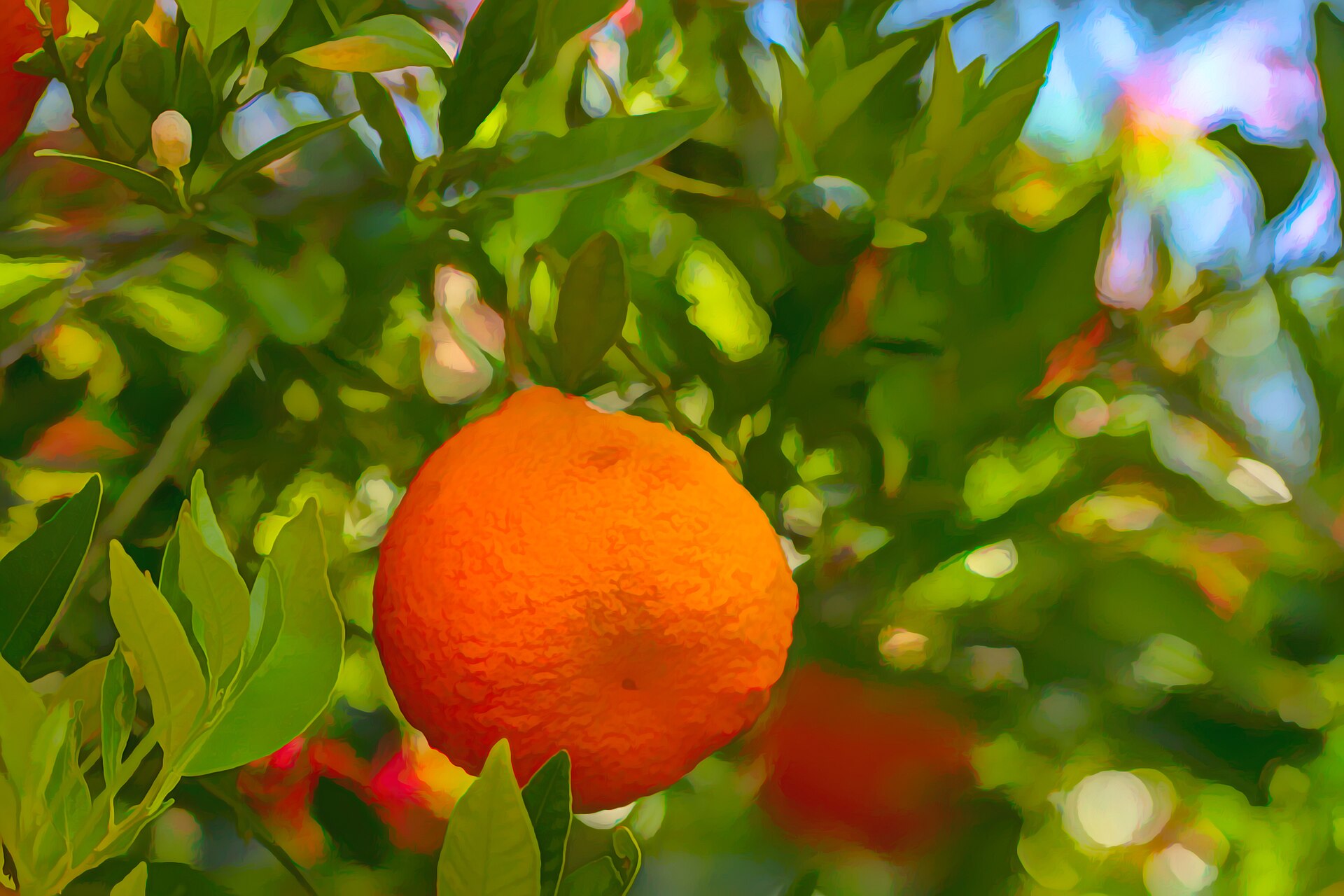
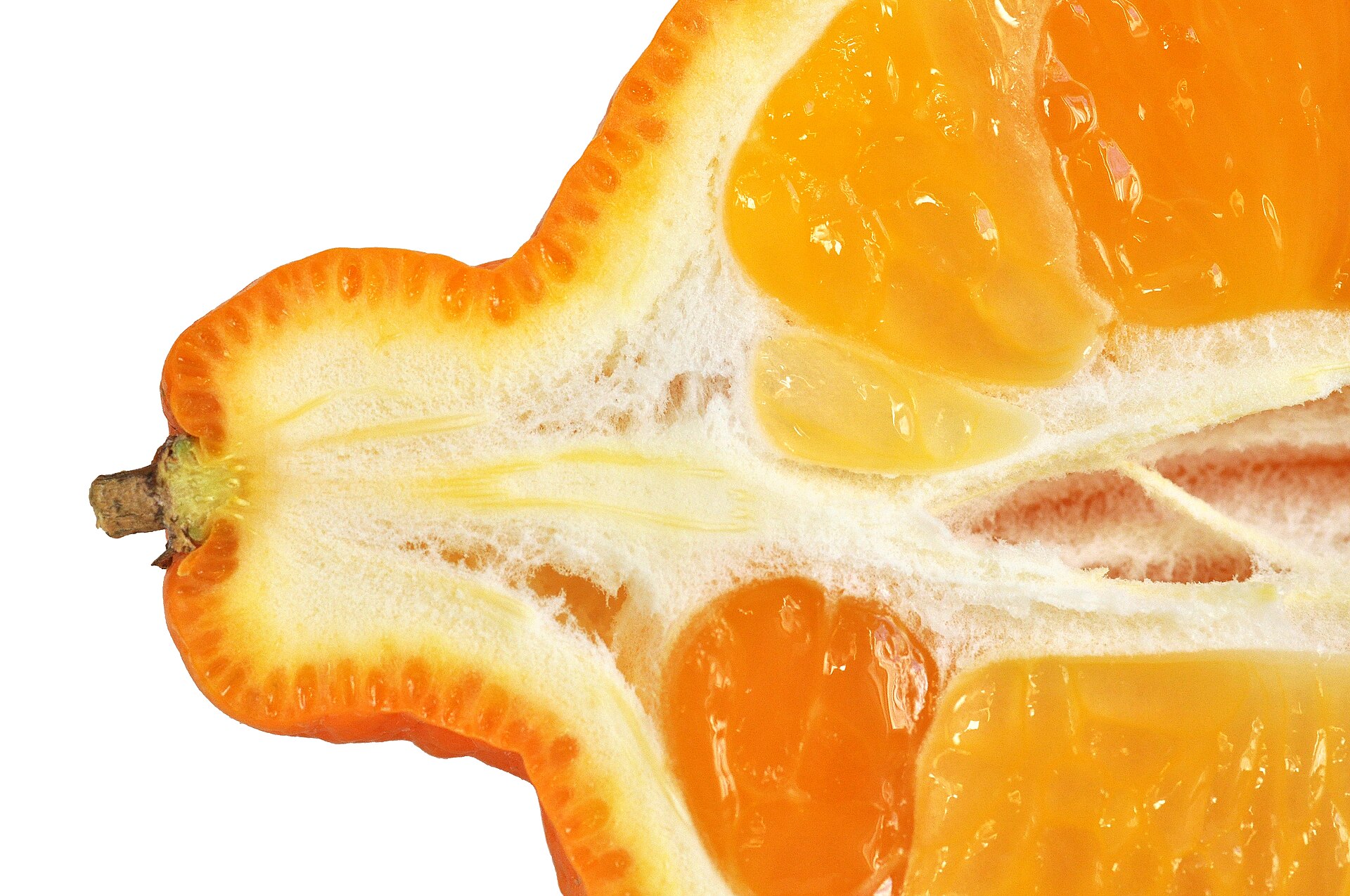
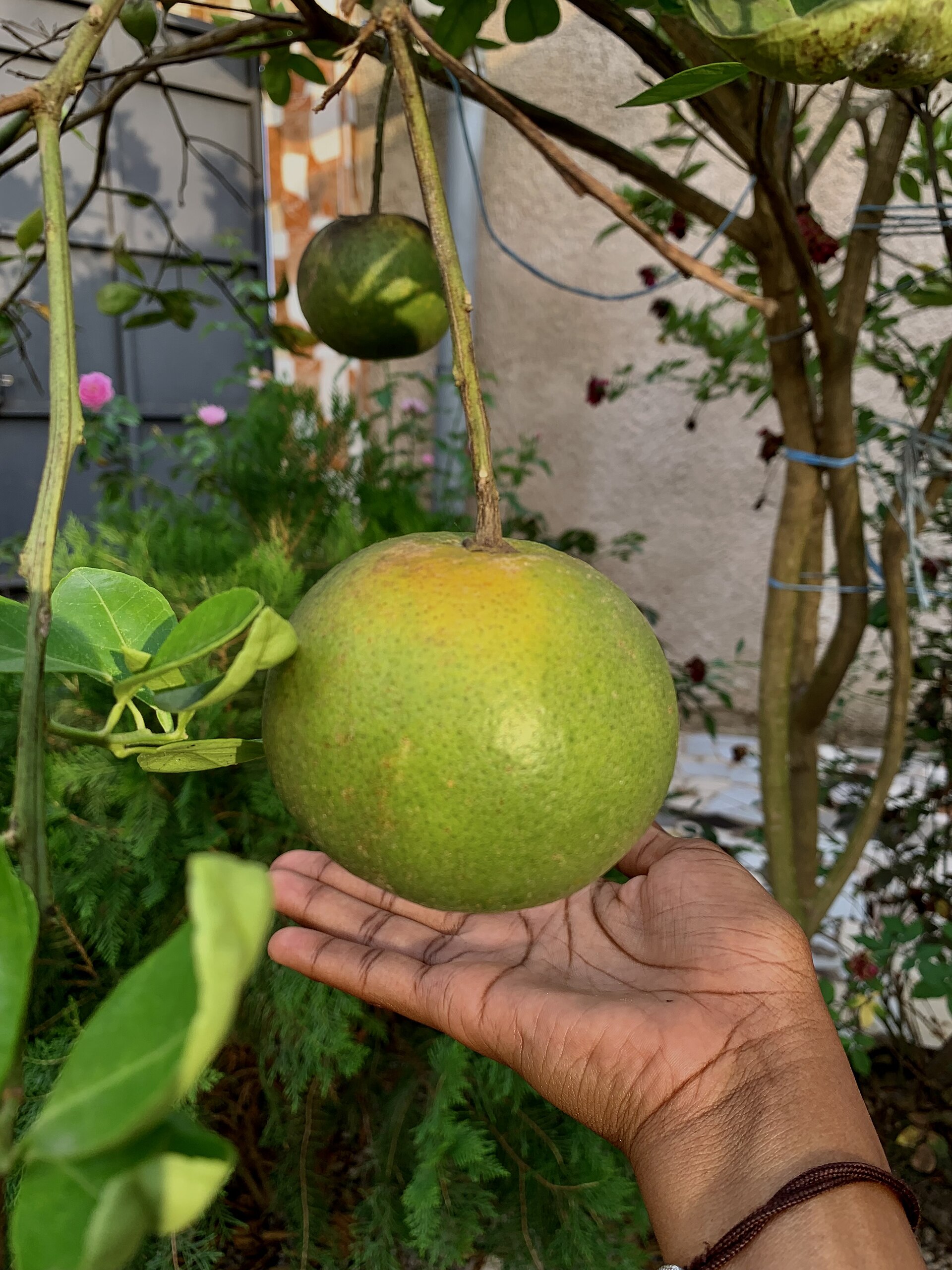
Nova is the early bird with a social life: a hybrid of Clementine tangerine crossed with Orlando tangelo, released in 1964 by the USDA, from the same cross that produced Robinson, Osceola, and Lee, according to UF/IFAS Extension HS177. Commercial harvest runs November–December, the fruit resembles an early-ripening Orlando in size and shape, and it was used a little for gift fruit in central Florida — a pretty, juicy, orange tangelo that shows up early and looks like Orlando’s younger cousin.
But Nova comes with a non-negotiable condition: it is self-incompatible and needs a pollination partner. UF/IFAS lists Temple, Orlando, Lee, and Sunburst as pollenizers. A lone Nova with no compatible citrus blooming nearby is a tree that will disappoint you on schedule, every year. Plan the partner before you plant the tree — this is the single most important sentence in this guide, and it is why Nova, in UF/IFAS’s words, has never been planted extensively in Florida despite being a good fruit.
One classification footnote: some modern mandarin references list Nova among tangors (mandarin crossed with orange), because its parentage is second-generation. This guide shelves Nova under Tangelo because UF/IFAS titles it ‘Nova Tangelo’ and its seed-parent cross is Clementine crossed with Orlando tangelo — one home, no duplicates.
How to grow
Buy a grafted tree on appropriate rootstock — trifoliate orange for cold hardiness, sour orange where it thrives — and always from certified disease-free stock. In Florida, citrus greening (HLB), spread by the Asian citrus psyllid, is the defining challenge of growing citrus: start clean, scout for psyllids on new flush, and keep the tree vigorous, because a stressed tree declines faster. Plant in the warmest, sunniest, best-drained spot you have, ideally with a south or southwest exposure and some reflected warmth from a wall or patio, with the graft union above the soil. Citrus roots drown in standing water faster than almost any other fruit tree’s. Container growing works for marginal zones — wheel the tree inside for freezes — and young trees need more frequent water than established ones.
Plant Nova with its partner in mind: same bloom window, within bee distance, and both trees in full sun with good drainage. UF/IFAS also warns of a tendency to dry out on vigorous rootstocks, so ask your nursery about rootstock choice and keep watering steady through fruit development. Prune lightly, scout for psyllids, and start with certified disease-free stock like every Florida citrus grower.
Water & feeding
Water deeply and infrequently, letting the top few inches dry between waterings; shallow daily sprinkles build shallow roots and invite root rot. New trees need water weekly through their first dry season, and container trees need it far more often — a pot in Florida sun dries out with impressive speed.
Feed citrus several times a year with a citrus fertilizer, split across spring and summer rather than dumped in one dose, and watch for micronutrient deficiencies — yellowing between leaf veins often means zinc or manganese, and Florida’s sandy, high-pH pockets lock those up. Castings help soil life, but they do not replace the citrus feed; use both, and skip fertilizer in late fall, when tender new growth would walk straight into a freeze.
Common problems
- Citrus greening (HLB) — yellowing, blotchy mottled leaves, lopsided bitter fruit, and slow decline, spread by the Asian citrus psyllid. There is no cure: buy certified disease-free trees, scout for psyllids, keep trees vigorous, and remove confirmed trees so they do not infect neighbors.
- Asian citrus psyllid — tiny insects on new flush that spread greening. Watch new growth, encourage beneficial insects, and treat flush carefully if psyllids appear.
- Citrus canker — raised, corky lesions on leaves and fruit in wet weather. Avoid overhead watering, do not work wet trees, and buy clean nursery stock.
- Root rot (Phytophthora) — follows poor drainage and overwatering. Plant high, drain well, and water deeply but infrequently.
- Freeze damage — the northern Florida citrus killer. Cover young trees, water before freezes, and plant cold-hardy varieties at the edge of their range rather than tender ones.
- Pollination failure from a lone tree — plant Temple, Orlando, Lee, or Sunburst nearby; self-incompatibility is the rule, not the exception.
- Drying out on vigorous rootstocks — discuss rootstock with your nursery and water steadily.
Harvest
Pick in November–December, when fruit is fully orange, juicy, and heavy for its size. Taste-test before stripping the tree, since tangelos do not sweeten much off it. Eat fresh or juice — an early tangelo is a gift in a season when most citrus is still thinking about it.
Browse all plant & pest guides
Saving seeds
Nova is the early bird with a social life: a hybrid of Clementine tangerine crossed with Orlando tangelo, released in 1964 by the USDA, from the same cross that produced Robinson, Osceola, and Lee. Commercial harvest runs November to December, the fruit resembles an early-ripening Orlando in size and shape, and it was used a little for gift fruit in central Florida. But Nova comes with a non-negotiable condition: it is self-incompatible and needs a pollination partner — UF/IFAS lists Temple, Orlando, Lee, and Sunburst as pollenizers. As a named hybrid it is kept true by grafting, not by seed: buy a grafted tree on appropriate rootstock — trifoliate orange for cold hardiness, sour orange where it thrives — and always from certified disease-free stock. The full method is in the Saving seeds section of the Tangelo guide.