
🖌️ Paintbrush
What it looks like
Paintbrush is the rare wildflower that looks like it was dipped in paint. The showy part is not the flower at all — it is the bracts, the leaf-like structures around the flower spike, which blaze scarlet, orange, crimson, yellow, or pink while the true flowers stay small, greenish-yellow, and tucked discreetly among them. The effect is a spike that looks like a brush loaded with paint, dragged upward through the meadow. Plants range from low, spreading mats to upright clumps 1 to 3 feet tall, with narrow, often lobed leaves that can be green or grayish and, in desert species, softly woolly. The genus Castilleja holds around 200 species, nearly all native to western North America, in the broomrape family (Orobanchaceae) — a family full of root parasites, which is the first clue to paintbrush’s secret life.
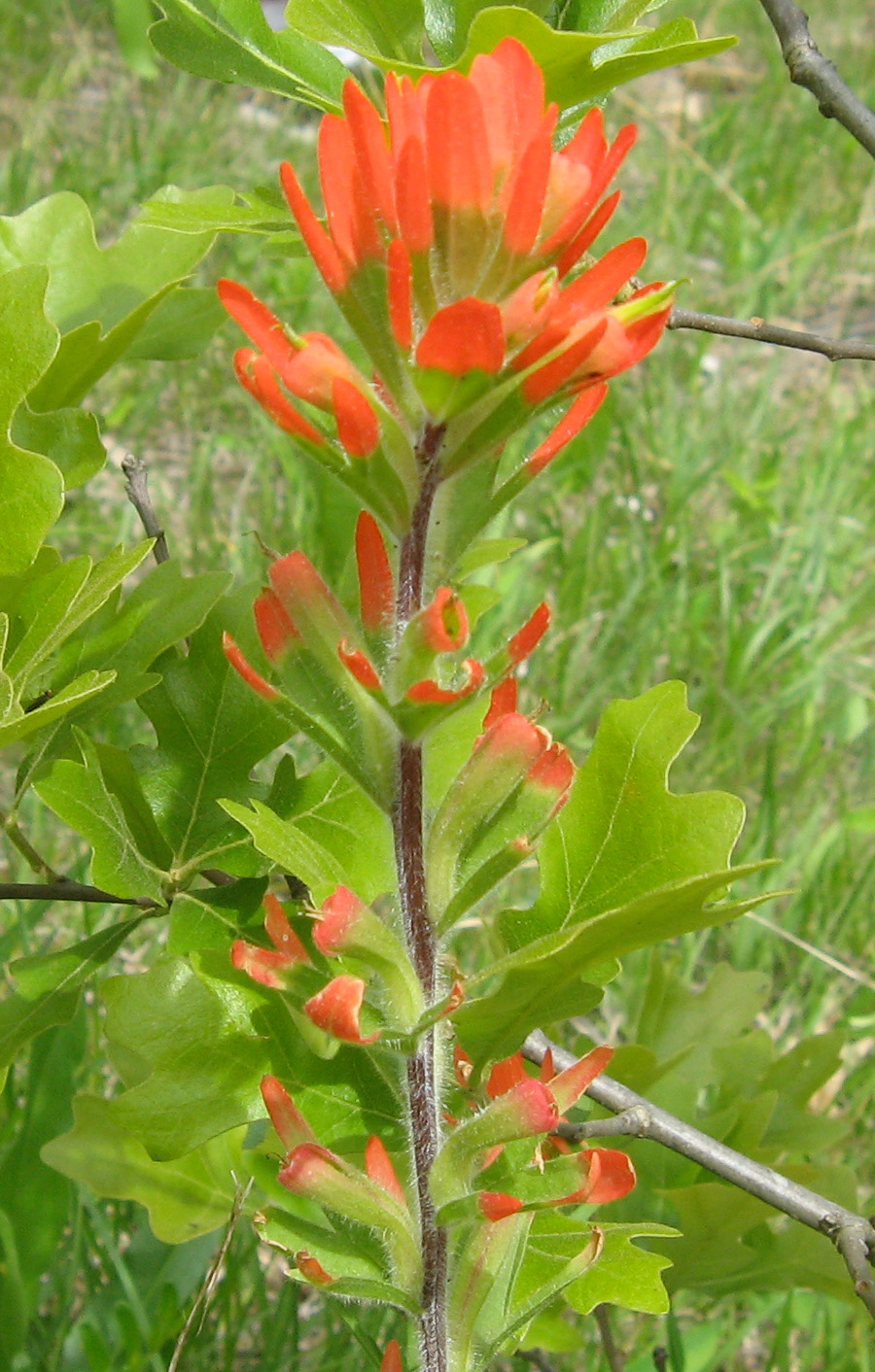
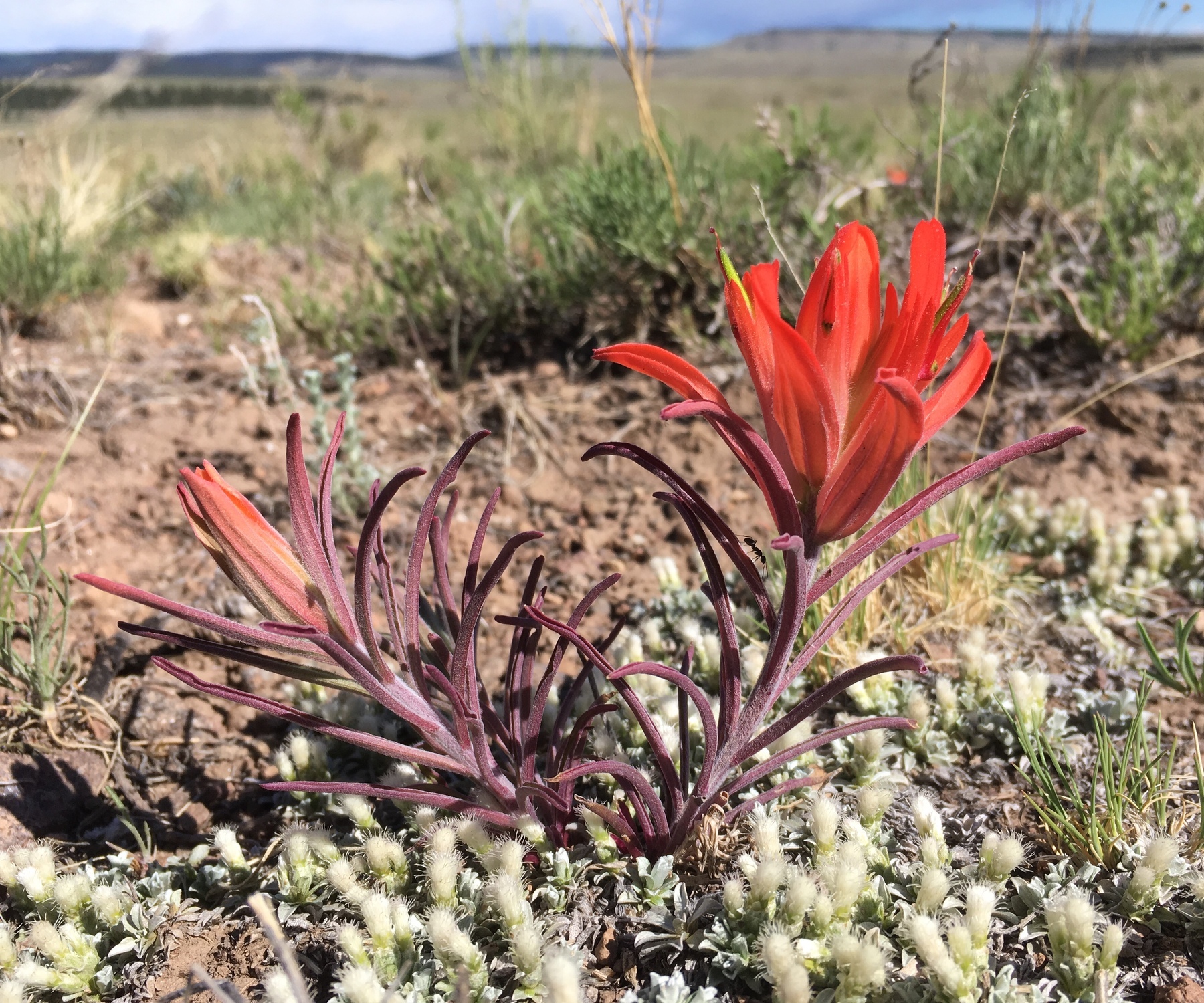
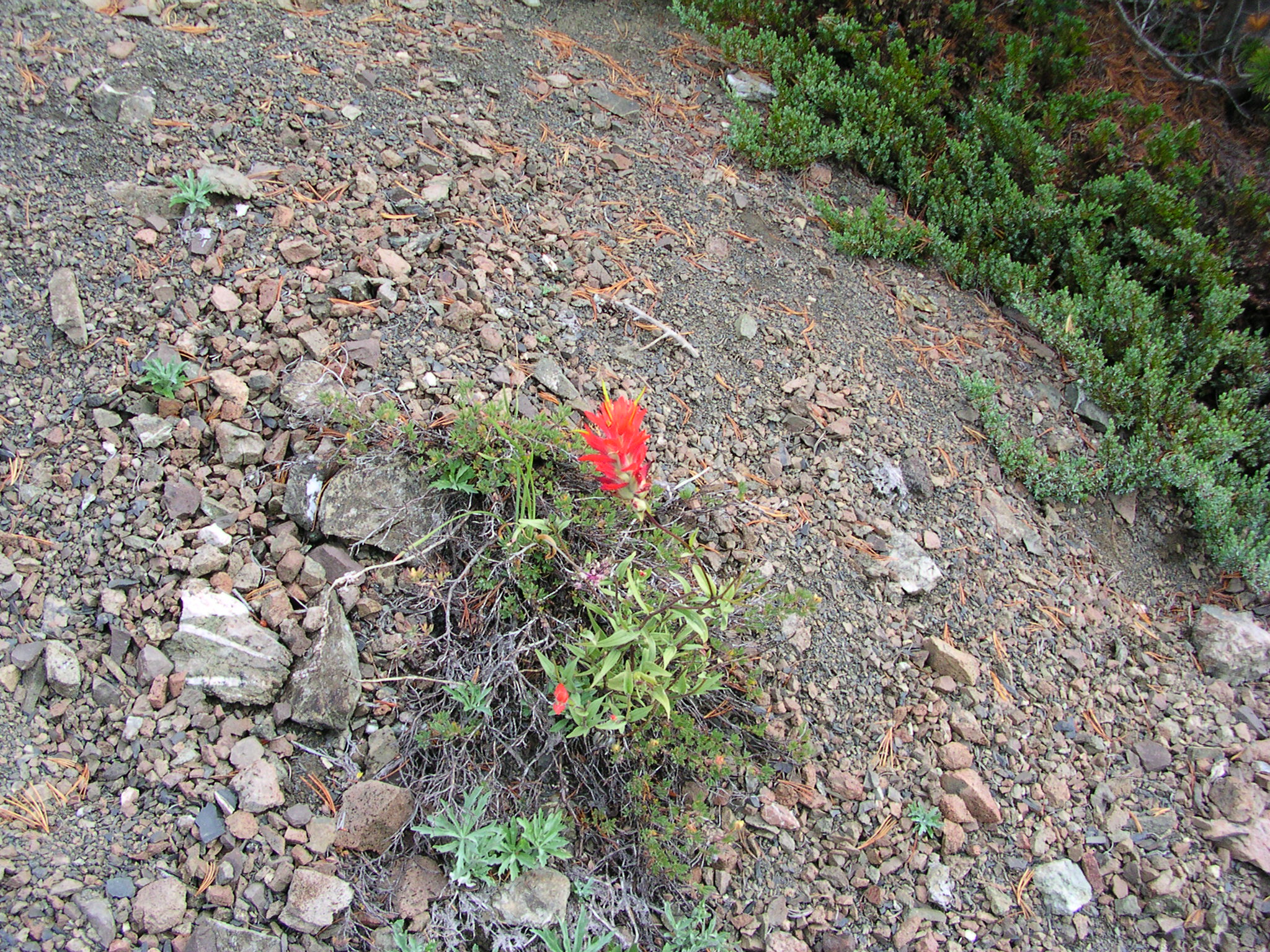
Butterflies are paintbrush’s other claim to fame. Checkerspot caterpillars feed on paintbrush — the Edith’s checkerspot, the variable checkerspot, the Fulvia checkerspot, the Leanira checkerspot, and the black checkerspot all use Castilleja as a host, with the Fulvia checkerspot recorded specifically on wholeleaf paintbrush (Castilleja integra) and woolly paintbrush (Castilleja lanata). The adult butterflies nectar on the flowers too, but it is the caterpillar connection that matters: a meadow with paintbrush and its host grasses is a checkerspot nursery, and a meadow without it is just a pretty field. Hummingbirds, meanwhile, are the paintbrush’s pollinators of choice — those red bracts are a hummingbird billboard, and the birds work the spikes all summer.
Florida note: Paintbrush is not a Florida garden plant, and Florida gardeners should admire it from a respectful distance. The genus is a temperate and western creature that needs lean soil, a suitable host, and a climate with a real winter; Florida’s humidity, rich soils, and lack of its host ecology defeat it. Note also the name trap: Florida paintbrush (Carphephorus corymbosus) is a completely different plant in a different family, not a Castilleja at all. If you want paintbrush color in Florida, plant Florida natives that actually belong there — do not try to force a mountain hemiparasite into a subtropical yard.
How to grow
Growing paintbrush is the hardest easy thing in native gardening, because the plant refuses to grow alone. Every Castilleja is a hemiparasite: it photosynthesizes on its own, so it is green and self-feeding for energy, but it also grows specialized root structures called haustoria that tap into the roots of neighboring plants and draw off water and dissolved minerals. Without a host, a paintbrush seedling lingers, weakens, and dies — often in its first year or two. With a host, it thrives. The single most important growing instruction is therefore not about soil or sun, but about neighbors: never plant paintbrush by itself in a bare bed.
The practical method is to sow paintbrush seed together with host seed, in the same spot, at the same time. Good hosts are low, non-aggressive plants that will not outshade the paintbrush: native bunchgrasses and sedges first of all, and for particular species, penstemon, sagebrush (Artemisia), buckwheat (Eriogonum), and prairie wildflowers such as yarrow. For scarlet paintbrush, a University of Washington propagation protocol recommends sowing alongside yarrow, sedges, or other small-statured meadow plants. For Indian paintbrush (Castilleja coccinea), low grasses such as blue grama and June grass, and rushes such as path rush, are documented hosts. Sow in fall so the seed gets its winter cold, or cold-stratify before spring sowing, and plant into lean, well-drained soil in full sun — rich, fertilized garden soil favors the host and the weeds over the paintbrush, which is exactly backwards. Space plants about 12 inches apart within their host matrix, water to establish, and then leave the patch alone: paintbrush does not want to be fussed over, divided, or transplanted, and it must never be dug from the wild, since digging severs the root connections and kills both the paintbrush and the host it was plugged into.
Water & feeding
Water paintbrush the way you water its host, which is to say: modestly. Most species want consistent moisture while establishing and during their spring growth, then tolerate considerable dryness — desert paintbrush and wholeleaf paintbrush are dry-country plants that want sharp drainage and lean soil, while scarlet paintbrush likes moister meadow ground. The through-line is drainage: no species wants wet feet or standing water, and rich, constantly moist garden soil is a recipe for a paintbrush that rots while its host takes over. On feeding: do not fertilize. Fertilizer feeds the host and the competing weeds, which then shade out the paintbrush, and it pushes soft growth on a plant that evolved for lean ground. The paintbrush is already getting its mineral supplement the old-fashioned way — by borrowing it from its neighbors’ roots.
Common problems
- Death without a host: The number one cause of paintbrush failure, by an enormous margin. A paintbrush planted alone in a bare bed will decline and die, usually within a year or two. Always plant with hosts, and sow them together.
- Host outcompeting the paintbrush: The opposite failure. An aggressive host shades out the paintbrush it was meant to feed. Choose low, modest hosts, not vigorous spreaders.
- Rich soil: Fertilized, compost-heavy garden soil favors everything except paintbrush. Lean, well-drained, mineral soil is the prescription.
- Transplant shock: Bare-root or potted paintbrush with no host nearby rarely persists. Buy plugs grown with a host, or sow seed with hosts in place, and do not move established plants.
- Wild digging: Never dig paintbrush from the wild. It kills the plant, damages the host, and in many places is illegal. Buy nursery-grown plants or seed from reputable native-plant sources.
- Short life in some species: Many paintbrushes are biennial or short-lived perennials — a rosette the first year, a flowering stalk the next — so a patch needs to reseed to persist. Let some flower heads go to seed, and do not deadhead everything.
Harvest
Paintbrush is not harvested for the table, and it should not be picked for the vase either — a cut spike is a dead spike on a plant that may not come back. The harvest, such as it is, is seed: let some flower heads ripen and dry on the plant, collect the tiny seeds, and sow them immediately alongside host seed in fall, or store them cool and dry for fall sowing. For the garden, the real harvest is the show itself — weeks of scarlet, orange, and pink spikes, hummingbirds working the patch, and checkerspot caterpillars on the foliage — and the knowledge that you grew one of the hardest plants in the native garden by doing the counterintuitive thing: planting it with something else and then getting out of its way.
Propagation
Paintbrush is a hemiparasite, and that one word changes everything about how you think of propagating it. Castilleja does not grow alone: its roots tap into the roots of neighboring grasses and wildflowers and borrow water and nutrients from them, while still making some of its own food by photosynthesis. A paintbrush without a host is a paintbrush that starves. That is why paintbrush is notoriously hard to grow in a garden, and why the honest advice here is a stewardship note rather than a set of germination instructions.
In the wild, paintbrush seed falls near host plants, waits for the right conditions, and germinates alongside grasses it can plug into. In a garden, that means sowing seed with host grasses already established, in lean, well-draining soil, and accepting that germination is erratic and establishment is slow. It is specialist work, and it fails more often than it succeeds — which is why most gardeners who love paintbrush are better off admiring it where it grows wild, or buying nursery-grown plants from a native plant nursery that has already done the hard part.
Do not collect paintbrush seed from wild populations unless you have permission and a real plan for it. Wild paintbrush is part of a meadow community, and taking seed from it without understanding the host relationship is taking the easy half of a hard equation. If you do have seed, sow it in fall with a host grass already in the ground, in a spot you are prepared to leave alone for a year or two, and do not expect a garden plant on a garden schedule.
The best way to have paintbrush in your life is to protect the meadows where it already grows, to plant the native grasses it partners with, and to let the paintbrush find its own way in. Some plants are not meant to be propagated on demand — they are meant to be stewarded, and paintbrush is one of them.
Species in this group
- Scarlet paintbrush — Castilleja miniata: Also called giant red Indian paintbrush, one of the most widely distributed and reliably showy species, from coastal Alaska south through the Rockies and Sierra Nevada to Arizona and New Mexico, from sea level to above timberline. Dense spikes of red to orange-red bracts, blooming much of the summer in meadows, open forests, and rocky slopes.
- Indian paintbrush — Castilleja coccinea: The eastern paintbrush, a biennial of prairies, rocky glades, moist open woodlands, and stream banks across central and eastern North America. Hardy roughly in zones 3 to 8, with scarlet bracts and a well-documented host list of grasses and rushes.
- Wholeleaf paintbrush — Castilleja integra: A southwestern perennial of dry, rocky slopes and grasslands at 4,500 to 10,500 feet, from Arizona, Colorado, New Mexico, and western Texas into northern Mexico. Stems 10 to 50 centimeters tall, softly woolly-haired, with orange bracts, and a documented host of the Fulvia checkerspot.
- Desert paintbrush — Castilleja chromosa: A perennial of arid desert scrub, sagebrush, and pinyon-juniper woodland in the western United States, typically 6 to 18 inches tall, with vivid red-orange bracts. Hardy roughly in zones 5 to 8.
- Woolly paintbrush — Castilleja lanata: A gray-woolly southwestern species of dry slopes and desert grasslands, and the other documented Fulvia checkerspot host alongside wholeleaf paintbrush.
- Downy paintbrush — Castilleja sessiliflora: A Great Plains species from southern Canada through the central United States to northern Mexico, thriving in hot, dry, rocky or sandy prairie with grass hosts such as blue grama and June grass.
- Rosy paintbrush — Castilleja rhexifolia: A mountain paintbrush of alpine and subalpine meadows, famous for its variable pink, purple, and two-toned bracts — much of that variation coming from hybridization with other paintbrush species.
- Sulphur paintbrush — Castilleja sulphurea: A yellow-bracted paintbrush of the Rocky Mountain alpine and subalpine slopes, the golden exception in a genus famous for red.