
🌾 Panic Grass
What it looks like
Panic grasses are warm-season grasses with a talent for presence. Switchgrass, the headliner, is a clumping perennial that grows 3 to 8 feet tall, with stiff, upright stems, flat leaves up to half an inch wide, and large, open, airy panicles that catch the light like a haze in late summer and fall. The foliage runs green to blue-green through summer, then turns gold and tan in fall and stands through winter as tawny architecture. Other panic grasses vary widely: maidencane forms bright-green stands in wet ground, witchgrass is a delicate annual of open fields, and bitter panicgrass is a blue-hued coastal dune grass that looks like it was designed by a landscape architect with a fondness for the sea. What unites them is the panicle — the branched, open flower head that gives the genus its name, from the Latin panicum, for a kind of millet.
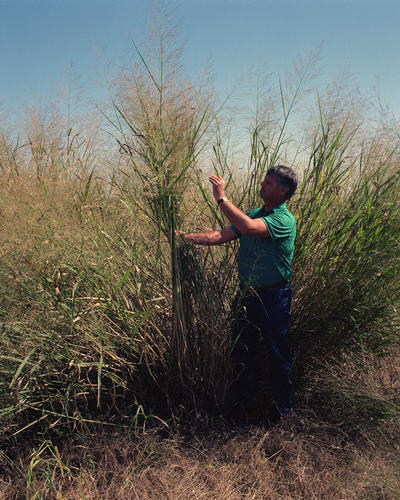
For butterflies, panic grasses are host plants, and the relationship is a classic prairie one: skipper caterpillars feed on the leaves of Panicum species, sheltering in rolled blades and leaf ties. A switchgrass clump in a meadow is not just ornamental — it is a nursery. Plant panic grasses in drifts rather than lonely singles, and leave the winter stems standing: they shelter wildlife through the cold months and the birds pick at the seeds.
Florida note: Panicum is well represented in Florida’s native flora. Switchgrass, maidencane, and bitter panicgrass are all recorded as native in Florida, from wet flatwoods and pond edges to coastal dunes. Switchgrass and maidencane also have Florida native plant profiles of their own — see them as related reading, in plain text, alongside this guide. In Florida, panic grasses are a natural fit for rain gardens, pond margins, and coastal plantings, matched to the right moisture: maidencane for the wet spots, bitter panicgrass for the dunes, switchgrass for the broad middle ground.
How to grow
Panic grasses are warm-season grasses, which flips the calendar from the cool-season grasses in this series: they wake up late, grow most in summer heat, and shine in fall. Plant in spring after the last frost, once the soil has warmed, either from nursery plants or from seed sown about half to three-quarters of an inch deep. Give switchgrass 2 to 3 feet of space between plants — clumps grow large, and crowded plants flop and compete — and site it in full sun for the stiffest, most upright form. It tolerates part shade but loses form and flops in too much shade, and it tolerates a wide range of soils, from sand to clay, dry to moist, and even occasional flooding. Rich soil is not required and can actually cause flopping; average soil and full sun produce the best plants.
First-year growth is mostly roots. Switchgrass spends its first season building a deep, fibrous root system — famously deep in prairie plants — and may look unimpressive above ground. Do not judge it in year one. By year two or three it becomes the bold, upright clump you planted it for, and a stand can last indefinitely once established, spreading slowly by short rhizomes. For meadow plantings, space plants about a foot apart if you want them to merge into a flowing screen, or wider if you want individual clumps with presence. Keep the planting edge accessible so you can manage spread beyond the intended area — switchgrass can be vigorous and can dominate small beds.
Water & feeding
Water new plants regularly until established, then relax. Switchgrass is drought-tolerant once its roots are down and also tolerates wet soils, which is a rare and useful combination — it is one of the few ornamental grasses equally happy in a dry bank and a rain garden. For best growth, keep soil evenly moist but not soggy; for a naturalistic planting, rainfall alone usually suffices after the first year. Maidencane wants more water than switchgrass — it is a wetland plant at heart — while bitter panicgrass tolerates the salt and sand of the dunes. Match the species to the moisture and you will rarely need to irrigate.
Feeding is refreshingly minimal: switchgrass needs little or no supplemental fertilizer, and soil too high in nutrients can cause plants to flop. A light compost mulch in spring is plenty for garden plants; prairie and meadow plantings need nothing at all. If your switchgrass flops every year, the likely culprits are too much shade, too much nitrogen, or too little space — fix those before reaching for stakes.
Common problems
- Flopping: The classic switchgrass complaint. Causes: too much shade, overly rich soil, or overcrowding. Fix with full sun, lean soil, and proper spacing; cut back in late winter to refresh the clump.
- Slow first year: Switchgrass invests in roots before top growth. A sleepy first year is normal — judge the plant in year two or three, not year one.
- Vigorous spreading: Switchgrass spreads by rhizomes and seed and can dominate small beds or crowd smaller neighbors. Site it with room, and keep the bed edge accessible for management.
- Self-seeding: Panic grasses seed freely. In a formal bed, deadhead before seed ripens if volunteers are unwelcome; in a meadow, let the birds have them.
- Rust and leaf spot: Switchgrass is generally resistant to most pests and diseases, but rust can appear in humid summers. Good air circulation and full sun reduce pressure; severe cases rarely kill an established clump.
Harvest
For gardeners, the annual “harvest” is the late-winter cutback: in late winter or early spring, before new growth emerges, cut the whole clump down to 3 or 4 inches above the ground. Wear gloves — dry switchgrass stalks can give slivers — and compost the cut stems or leave them as mulch. For forage and hay, switchgrass is cut earlier, while still leafy, and it has a long history as a prairie forage grass. For seed, harvest the panicles in fall when the seeds are tan and strip easily from the head, but leave plenty standing for the birds — winter seed heads are a food source and a shelter in one. For biomass and restoration plantings, switchgrass is harvested in fall or winter after it has translocated nutrients to its roots, which is also why the cutback-and-compost routine works so well in gardens.
Saving seeds
This guide covers the panic grass genus, Panicum, and the seed advice is genus-level: the species differ in their details, but they all play by the same basic rules. Collect the seed in late summer or fall, when the seed heads turn tan and dry and the seed shakes loose easily into a paper bag. Strip the heads by hand, let them finish drying indoors, and clean out the chaff. A single head holds far more seed than one garden needs, so a small bag is plenty.
The first rule is light: panic grass seed needs light to germinate, so sow it on the surface of a moist seed-starting mix and press it in gently, but do not bury it. The second rule is a chill: many panic grasses, switchgrass included, germinate better after a cold, moist stratification of 30 to 60 days in the fridge, though some will sprout without it — the sources disagree by species, so treat the chill as cheap insurance. A fall sowing outdoors, letting a real winter do the stratifying, is the simplest method of all. Sow in spring, keep the mix moist and bright, and expect sprouts within a few weeks.
Seedlings are fine and grassy at first and need a season in pots before planting out. And here is the honest headline: seed-grown panic grass varies, and the named cultivars — the switchgrass varieties with a particular color, height, or habit — will not come true from seed. Division is the faithful route for those. Dig and split an established clump in spring, making sure each division has roots and shoots, and you have an exact clone.
Save seed from your strongest, best-formed plants, label the bag — grass seed all looks alike — and keep it dry and cool, because Florida humidity is the enemy of stored seed. And one thing worth knowing about the seed you are saving: panic grasses feed skipper caterpillars, so the seed you sow is not just next year’s grass — it is next year’s butterflies, too.
Species in this group
- Switchgrass — Panicum virgatum: The star. A clumping warm-season perennial, 3 to 8 feet tall, hardy in zones 4 to 9, native across North America east of the Rockies from southern Canada to Mexico. Full sun to part shade, medium to wet soil tolerated, drought-tolerant once established. Also called tall panic grass. Florida native profile available as related reading.
- Maidencane — Panicum hemitomon: A wetland panic grass of swampy ground, wet hollows, and marsh edges, forming extensive bright-green stands. A Florida native and a classic pond-margin and wet-meadow plant. Florida native profile available as related reading.
- Witchgrass — Panicum capillare: A delicate annual panic grass of open fields, roadsides, and disturbed ground, with fine, hairy, much-branched panicles that break off and tumble in the wind. A pioneer species and a reminder that not every panic grass is a giant.
- Proso millet — Panicum miliaceum: The grain millet of the genus, cultivated for thousands of years for its small, round seeds, used for human food and birdseed. An annual, quick-growing, and the most agricultural member of this group.
- Bitter panicgrass — Panicum amarum: A coastal dune grass of sandy beaches and upper dunes, often strikingly blue-green, with tall clumps that stabilize sand. Native along the Atlantic and Gulf coasts including Florida, and a workhorse of dune restoration plantings.