
🍊 Peters Variegated Calamondin
What it looks like
Why this variety
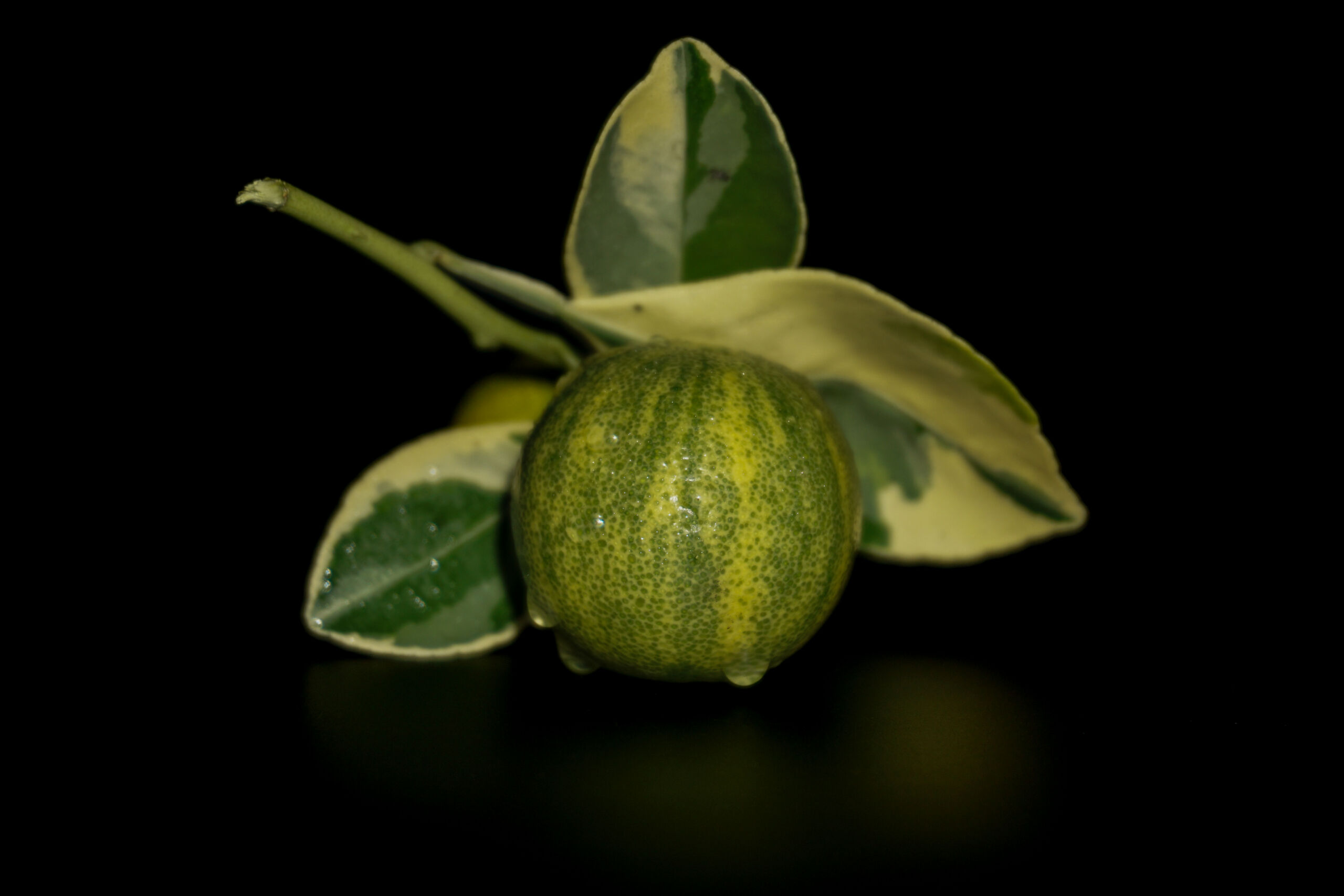
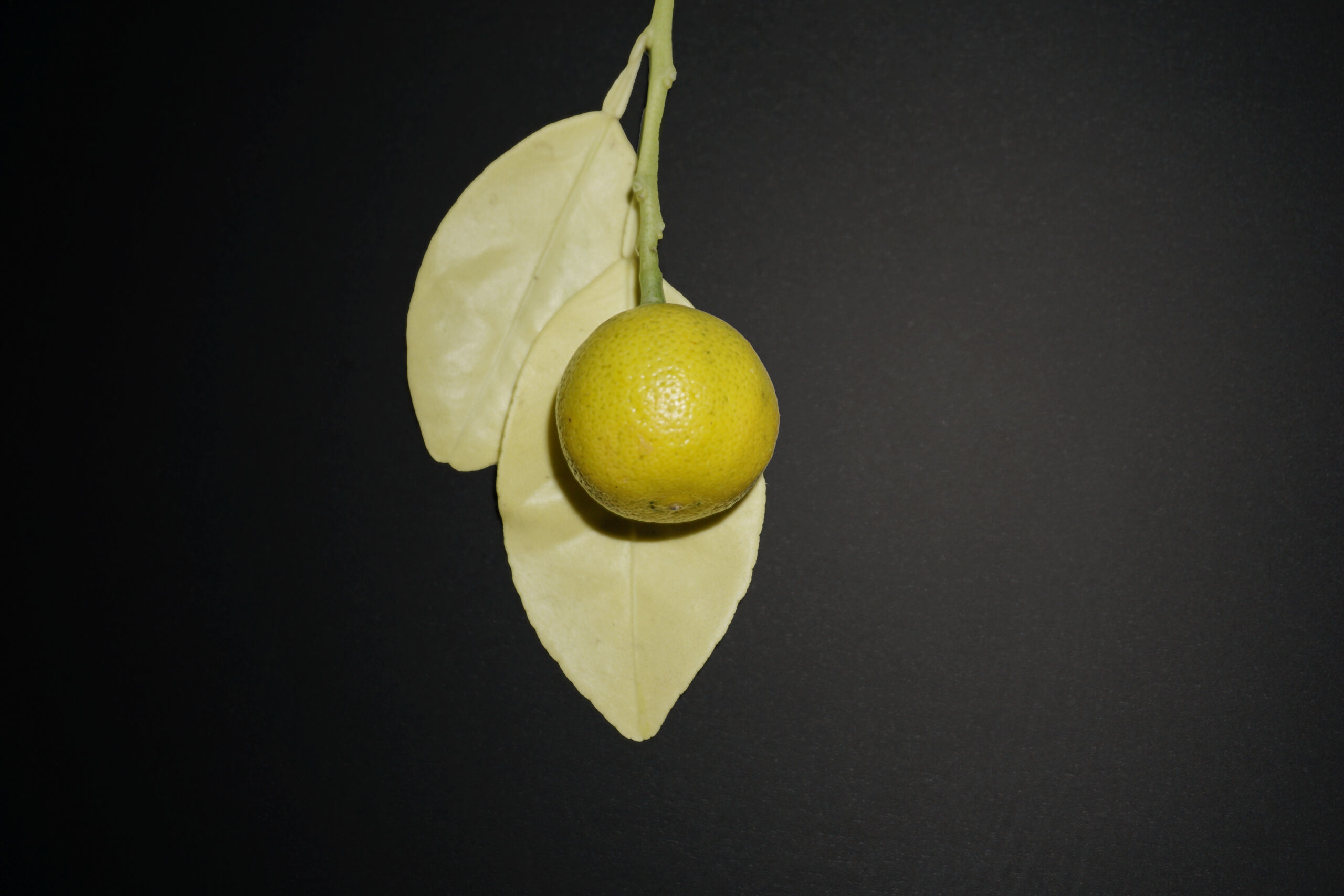
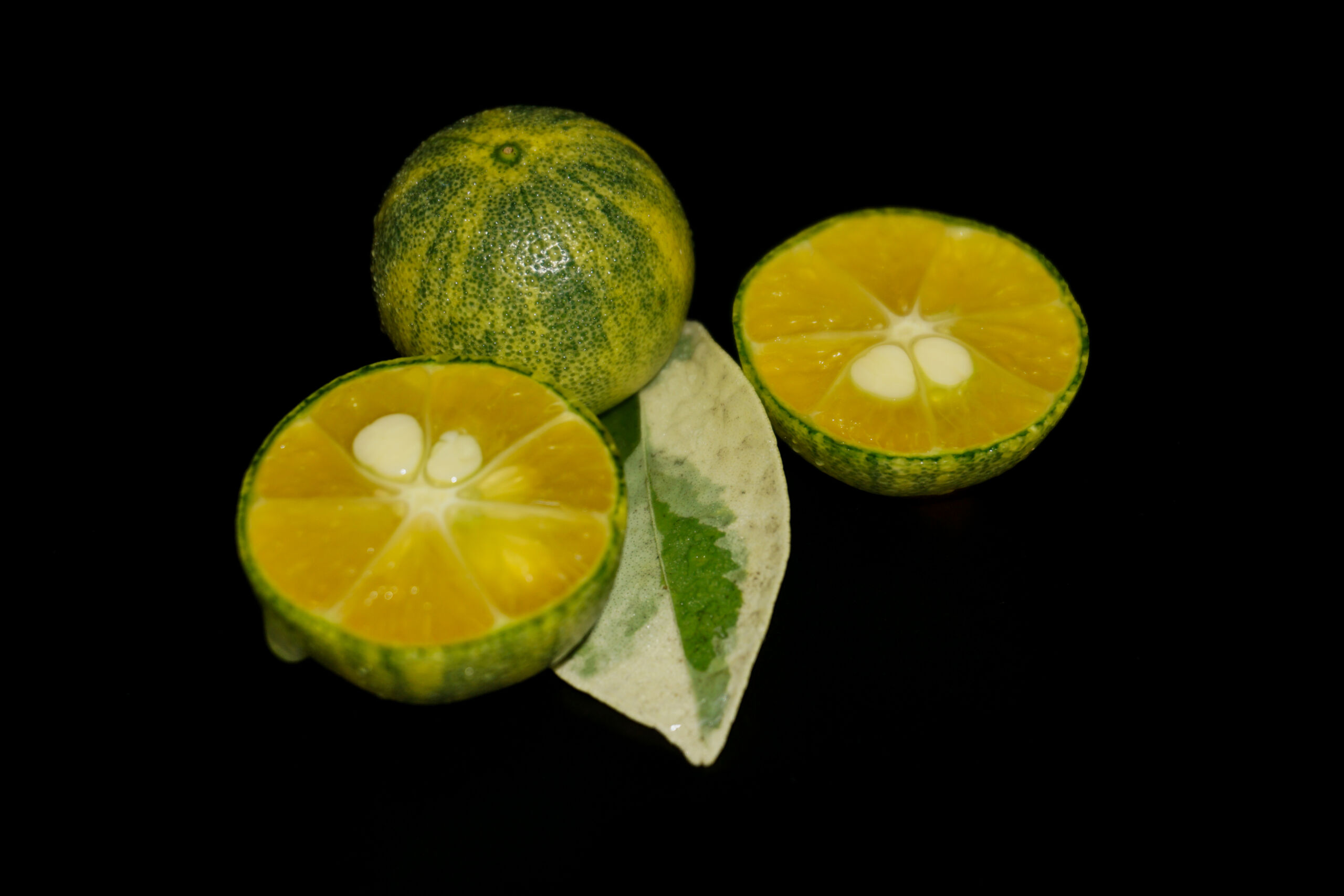
Say it plainly first, because this is the whole point of the guide: Peters Variegated is a FORM of calamondin, not a fruit variety. The fruit is the same beloved little sour orange as the standard Calamondin — a mandarin x kumquat hybrid with a thin, sweet rind and intensely sour pulp — dressed up in marbled cream-and-green leaves and faintly striped fruit. You are not buying a new flavor. You are buying the same tree in a fancier outfit, and the outfit is the reason to buy it.
That makes Peters primarily a landscape and ornamental tree: compact, evergreen, almost constantly in flower or fruit, and showy even when it is not fruiting, because the foliage does the decorating. It grows well in Florida, and it is the calamondin to plant by a doorway, in a courtyard pot, or anywhere a plain green tree would be fine but a variegated one would make you smile every time you walk past. And a related honesty note: calamondin has no named fruit varieties — calamansi, Panama orange, and the rest of that long list are names for the single hybrid in different languages and regions, not cultivars. Peters, the ornamental form, is the one named exception, and it is a form, not a flavor.
How to grow
Buy a grafted tree on appropriate rootstock — trifoliate orange is the usual pick where cold hardiness matters. Plant in the warmest, sunniest, best-drained spot you have, with the graft union above the soil, because citrus roots drown in standing water faster than almost any other fruit tree’s. In Florida, citrus greening (HLB), spread by the Asian citrus psyllid, is the defining challenge: start with certified disease-free nursery stock and scout for psyllids on new flush. Container growing works well for marginal zones — wheel the pot inside for freezes. And a Florida shopping note that applies to all of these: almost no national citrus nursery ships trees into Florida under USDA quarantine rules, so buy from a Florida-licensed citrus nursery or through FDACS budwood rather than expecting an out-of-state shipment to arrive.
Grow Peters exactly like standard calamondin: in zones 9–11, plant outdoors in well-drained soil; elsewhere, grow in a large pot that moves indoors before frost, in the brightest spot you have. Calamondins are self-fertile, so one tree fruits, and they fruit young — often within a year or two of purchase. Variegated leaves carry less chlorophyll, so give this tree the sunniest spot available, and prune out any all-green reverted shoots before they outgrow the variegated growth. Prune lightly to shape after harvest.
Water & feeding
Water deeply when the top few inches of soil dry out; citrus likes consistent moisture but hates soggy roots, and young trees need more frequent water than established ones. Container trees dry out with impressive speed in Florida sun, so check pots often. Never let a container tree sit in a saucer of water — citrus roots rot in standing water. Feed with a citrus fertilizer through the growing season, easing off in winter, since container trees exhaust their soil fast.
Common problems
- Frost — container trees must come indoors before a freeze; outdoor trees need frost cloth on cold nights.
- Scale and aphids on indoor trees — inspect regularly and treat with horticultural oil.
- Root rot from overwatering — drainage matters more than fertilizer.
- Leaf drop after moving indoors — a normal adjustment to lower light; do not overwater in response.
- Reversion — all-green shoots outgrowing the variegated growth; prune them out.
Harvest
Pick when the fruit is fully orange and soft — calamondins hold on the tree for weeks, so harvest as needed rather than stripping the tree. Use the juice like lemon juice, slice whole fruit into tea and drinks, or make marmalade from the thin, sweet rind. The fruit is identical to standard calamondin, so every calamondin recipe you already love works here — you just picked it off a prettier tree.
Browse all plant & pest guides
Saving seeds
Say it plainly first, because this is the whole point of the guide: Peters Variegated is a FORM of calamondin, not a fruit variety. The fruit is the same beloved little sour orange as the standard Calamondin — a mandarin x kumquat hybrid with a thin, sweet rind and intensely sour pulp — dressed up in marbled cream-and-green leaves and faintly striped fruit. You are not buying a new flavor. You are buying the same tree in a fancier outfit, and the outfit is the reason to buy it. As a named variegated form it is kept true by grafting, not by seed — seedlings would grow into plain green calamondins, not variegated ones. Buy a grafted tree on appropriate rootstock — trifoliate orange is the usual pick where cold hardiness matters — and plant in the warmest, sunniest, best-drained spot you have, with the graft union above the soil. The full method is in the Propagation section of the Calamondin guide.