
💜 Pickerelweed
What it looks like
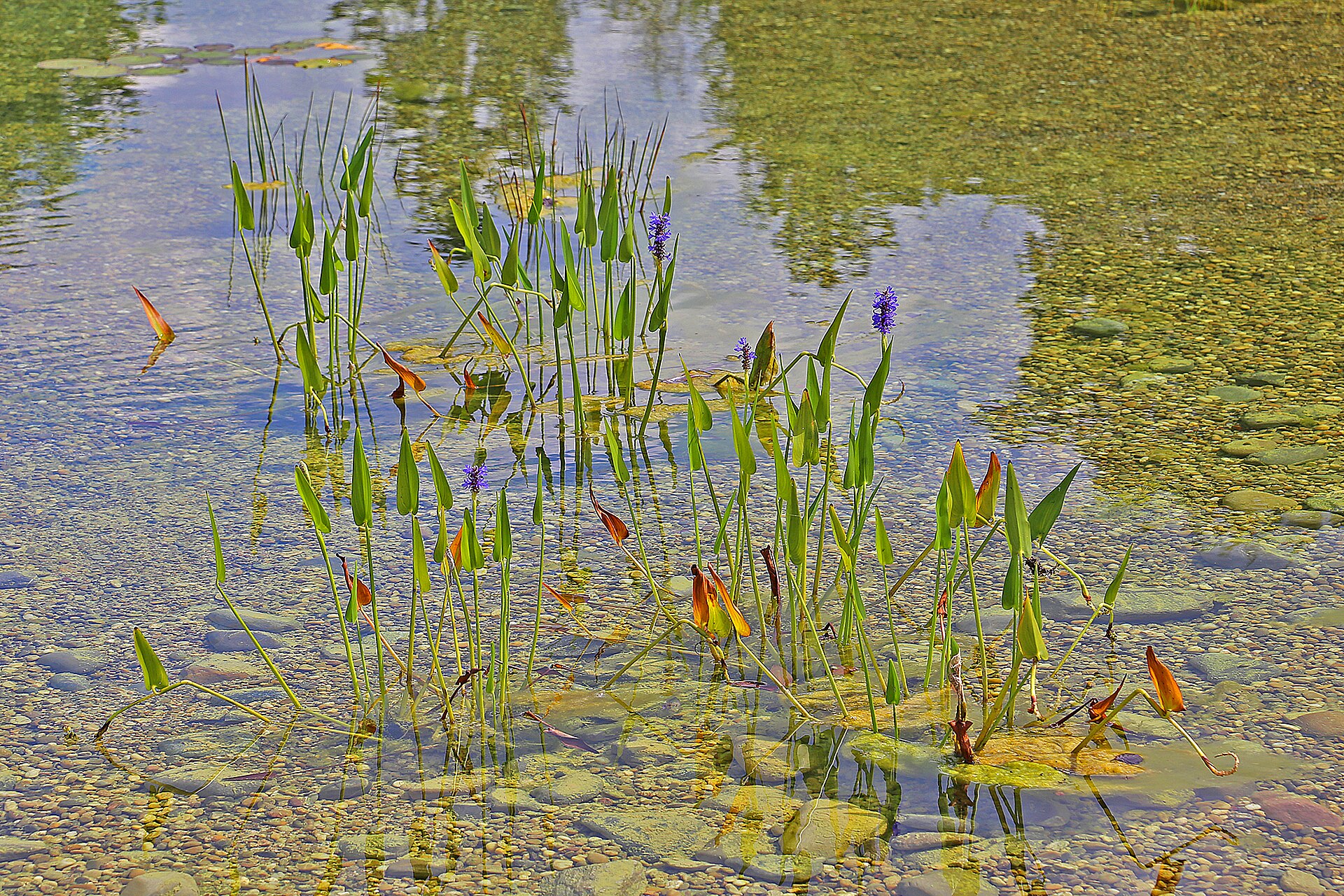
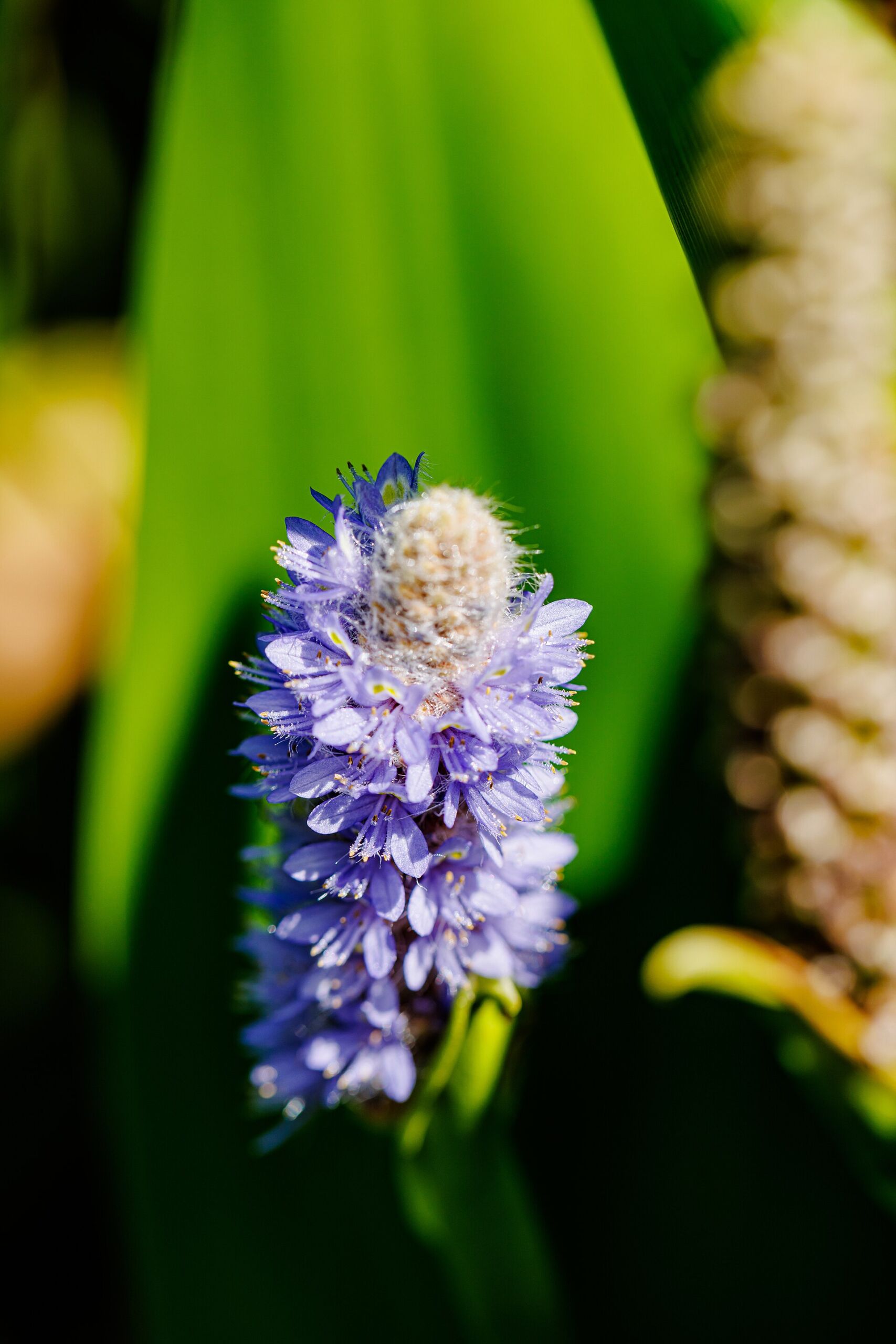
Pickerelweed is a clumping aquatic perennial with glossy, heart-shaped leaves on upright stems and dense spikes of blue-violet flowers that bloom from spring through fall. Each spike opens a few flowers at a time, so a clump can be in flower for months, with new spikes replacing old ones all season.
It grows in shallow water or wet soil, typically 2 to 4 feet tall, with a tidy clumping habit that suits a pond edge, a rain garden, or a boggy corner where other plants drown. Its leaves stay green through the warm months and die back in winter in the north of its range, regrowing in spring.
Why this variety
Choose pickerelweed for the wet spot: the pond margin, the rain garden that holds water, the low corner that never dries out. Most garden plants rot there; pickerelweed thrives there, and it flowers while it does it.
It is also a wildlife plant for water gardens: its flowers feed pollinators, its seeds feed waterfowl, and its leaves shelter frogs and small aquatic life. A pond edge with pickerelweed is a pond edge that works, not just a pond edge that looks nice.
How to grow
Plant in full sun to part shade in wet soil or shallow water up to about 12 inches deep, in fall or spring. Set the pot at the pond margin or in a container sunk into the pond, water it in, and mulch the bank around it. Give it room to clump, and do not plant it in deep water where it cannot root.
Cut back dead foliage in late winter before new growth starts. In a container, divide the clump every few years in spring if it outgrows its pot, and replant the divisions at the pond edge.
Water & feeding
Pickerelweed wants water, so water is not the problem: the problem is a pond that dries out completely in a drought. If your pond is seasonal, plant pickerelweed at the lowest margin where water lingers longest, and water it in dry spells.
Feed with compost in spring if it is in a container or a rain garden. In a pond, do not add fertilizer directly to the water, where it feeds algae instead of plants.
Common problems
Drying out: pickerelweed will not survive a long, complete dry-out. If your pond dries every summer, plant it in a container you can water, or choose a drier-site plant.
Spreading in a small pond: it can spread by rhizomes in a favorable pond. Grow it in a container sunk into the pond if you need to contain it.
Winter dieback: in the north of its range, pickerelweed dies back in winter. This is normal. Wait until spring growth shows before cutting.
Algae in a fertilized pond: do not fertilize pickerelweed in a pond. The algae will thank you, and the pickerelweed will not need it.
Harvest
There is no edible harvest. The harvest is months of blue flower spikes at the water’s edge, and a pond margin that looks intentional rather than weedy.
Cut flower spikes for a vase in summer if you like, but leave most of them for the pollinators. A pickerelweed clump in full flower, with bees working the spikes, is the water garden at its best.
Browse all plant & pest guides
Saving seeds
Pickerelweed is a native Florida wetland plant, and its seed plays by wetland rules: it wants to be wet, it wants a chill, and it is in no hurry. After flowering, the stem bends down and dips the seed pods into the water — that is the plant sowing itself. To save seed, collect the green, warty pods in late summer before they drop, and let them dry just enough to open. The seed is dormant at dispersal and will not germinate without a cold, moist rest of about 6 to 8 weeks.
For the cold treatment, mix the seed with damp sand in a sealed bag and refrigerate for 6 to 8 weeks. Then sow on the surface of constantly wet, rich mud — a pot standing in a saucer of water works, or a tray of saturated soil — and do not bury the seed. Keep it sunny and never let it dry out, not even once: pickerelweed seed that dries is seed that dies. Germination is staggered over several weeks, sometimes up to 12 weeks, so keep the tray wet and patient. Grow seedlings on in shallow water until they are well rooted before setting them at their intended depth, in water up to about 5 inches deep at the crown.
The honest note is that seed is the slow route, and division is the practical one. Divide an established clump in spring or early autumn, cutting the thick rhizome into sections that each carry roots and at least one growing point, and replant at the same depth. Division gives you a flowering-size plant quickly; seed gives you a project. Use seed when you want a lot of plants cheaply, or when you are restoring a wetland edge, and use division when you want one more plant in your pond.
Pickerelweed spreads by rhizome into thick colonies, so give it room or a container, and divide every few seasons to keep it in bounds. Seed keeps poorly when dry — sow it fresh after stratification rather than storing it. And plant it where it belongs: shallow water or saturated soil at a pond margin, never in a dry bed, where it will simply fail and blame you.