
🌴 Pindo Palm
What it looks like
Quick facts
- Sun: Full sun to light shade
- Soil: Well-drained, sandy to loamy; tolerates poor soil once established
- Spacing: 12 to 15 feet from structures
- Height: Slow-growing; up to about 30 feet in the wild, often considerably less in cultivation
- Life cycle: Long-lived evergreen palm, single trunk
- Zones: Commonly listed zones 8 to 11; one of the hardiest feather palms
- Florida: Grown statewide; one of the best palms for North Florida
What it is — and the name argument, settled
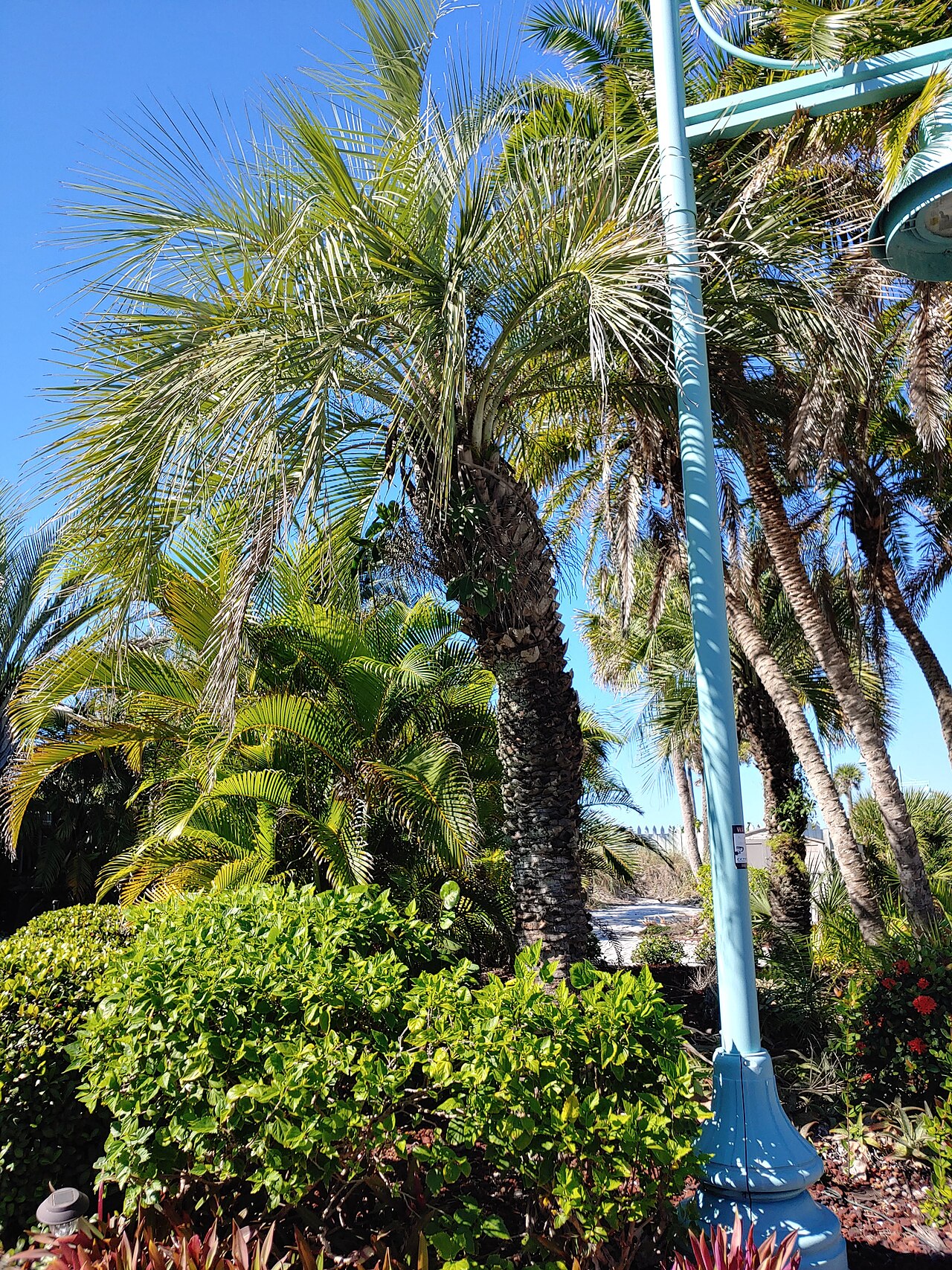
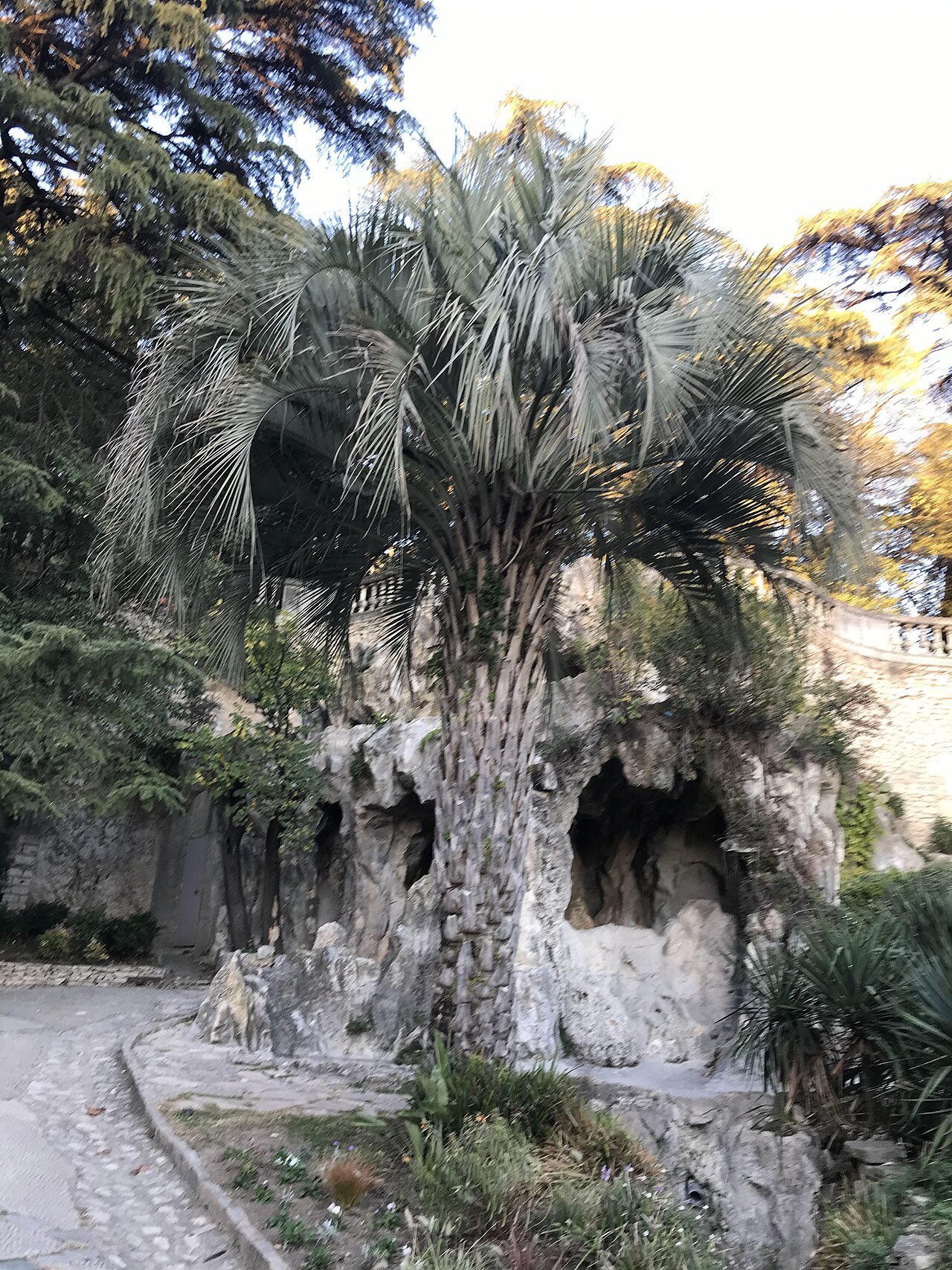
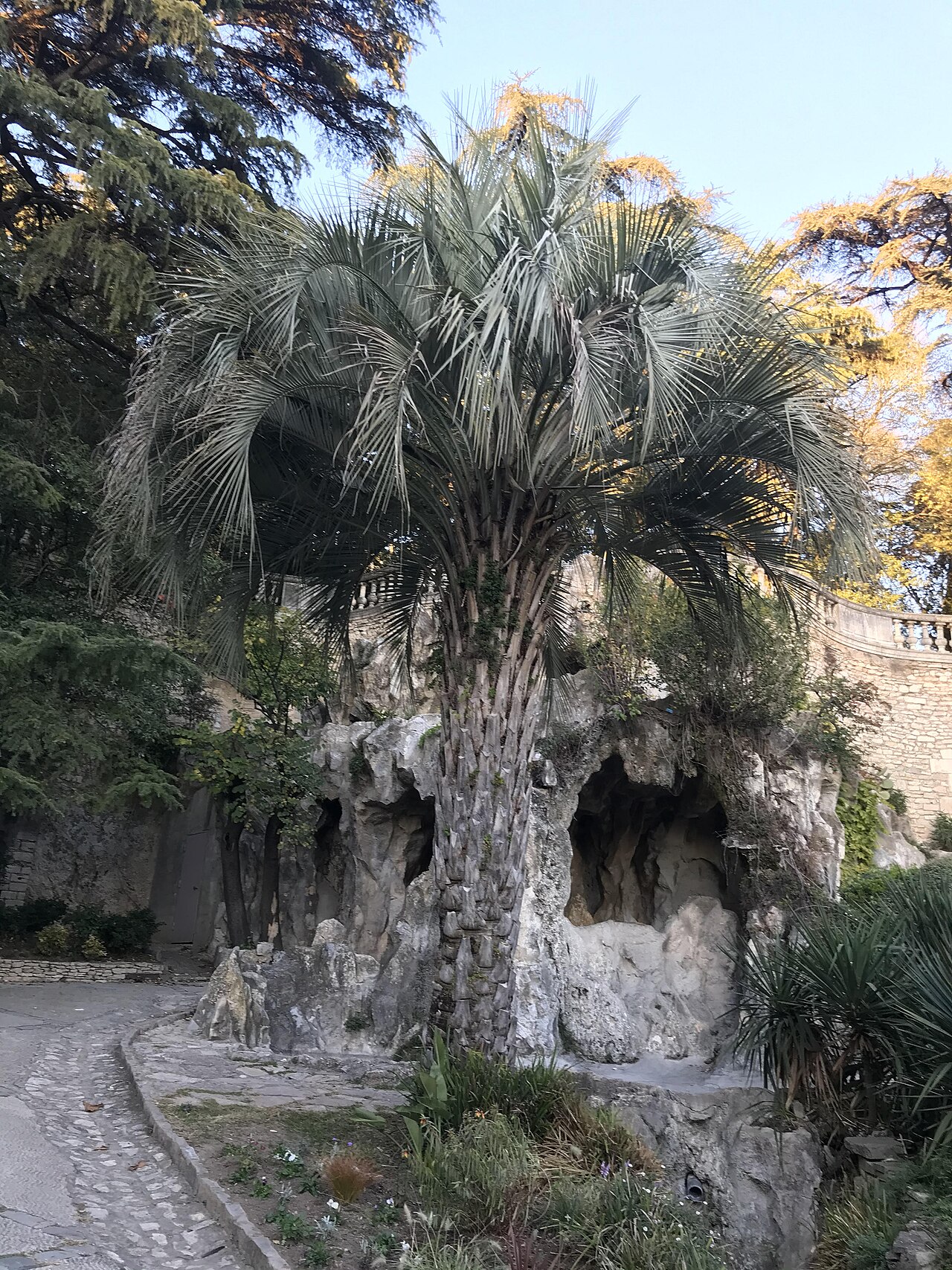
Pindo palm is also called the jelly palm, and both names refer to the same tree and the same fruit: clusters of yellow-orange, plum-sized fruit that are fragrant, sweet-tart, and traditionally made into jelly, wine, and preserves. The fronds are the other identifier: strongly arching, feather-shaped, blue-green to gray-green, curving inward toward a thick, stout trunk that often keeps the knobby bases of old fronds like a pinecone pattern.
Now the name argument, because you will meet it on nursery tags. For most of the twentieth century this palm was sold as Butia capitata. UF/IFAS Extension is explicit: the pindo or jelly palm was formerly known as Butia capitata, but research showed the correct name for this palm is Butia odorata. The true Butia capitata is a different, more tropical species from inland central Brazil, smaller and less hardy, rare in cultivation. The palm in Florida yards, the one with the fragrant fruit and the cold tolerance, is Butia odorata (the epithet odorata means fragrant, for the fruit). Nursery labels are catching up slowly; if a tag says Butia capitata, it almost certainly means this palm. The synonym is noted here so you can recognize it, not so you have to argue with the garden center.
Pindo is native to southern Brazil and Uruguay, where it grows in open, savanna-like palm groves. It is slow-growing — patience is part of the purchase — but it is also one of the hardiest feather palms in cultivation, which is why it anchors so many North Florida landscapes where more tropical palms are an annual gamble.
Growing pindo palm in Florida
Plant pindo in full sun and well-drained soil, and give it room: the arching fronds need 12 to 15 feet of clearance, and the fruit clusters drop — which is either a harvest or a mess, depending on whether you pick them. Water regularly until established, then water deeply through droughts; pindo tolerates dry spells once its roots are down, but it fruits better and looks better with consistent moisture. Feed with a palm-specific fertilizer, not lawn fertilizer: pindo, like all palms, is prone to potassium and magnesium deficiency, which shows as yellowing and frizzling on older fronds. A mulch ring kept off the trunk, compost or castings worked into the top of the soil, and a slow-release palm fertilizer two or three times a year is the whole program.
Harvest the fruit when it turns deep yellow-orange and soft, and taste before you commit to a batch of jelly — flavor varies from tree to tree, from sweet and tropical to sharp and fibrous. The fruit is also wildlife food: birds and mammals love it, which is a feature if you like wildlife and a cleanup note if you do not. Remove only fully dead fronds, and never cut into the trunk or the growing point at the crown’s heart.
Cold is pindo’s superpower among feather palms: established trees handle freezes that kill queen palms and coconut palms outright, which is why it is the default feather palm for North Florida. Young trees are less hardy, so give a new planting frost protection for its first winters.
Problems worth knowing
Mostly, pindo is trouble-free. Nutrient deficiency is the recurring issue, and it is a feeding problem, not a disease. Scale insects can colonize fronds; palm weevils are a concern for palms generally but pindo is not a headline victim. The main complaint is the fruit drop and the slow growth — both are the tree being itself, and both are priced into the decision before you plant.
And a family note: pindo is one parent of the mule palm, the hybrid with queen palm. If you love pindo’s toughness and want a bigger, faster, more coconut-like crown, that hybrid is the next tree to look at.
Where this guide came from
Pindo palm is one of the palms surveyed in the group guide. See also the Palm guide, which surveys the whole group this plant belongs to.
Saving seeds
Pindo palm seed is a test of patience before anything else. Collect the small yellow fruits when they are fully ripe — they fall when you shake the branch — and clean the pulp off the pits promptly. Soak the pits in clean water for seven days, changing the water daily, which softens the exterior and improves germination. The seed does not need a cold rest; it needs warmth and time, and research has found that a warm stratification — about three weeks at around 104°F, then steady warmth near 86°F — speeds things along, though a warm spot in a Florida summer does much of the same work.
Sow the pits in a well-draining mix, half-buried or just covered, and keep them warm — 70 to 100°F — and consistently moist, out of direct sun. Germination is slow: sources say up to 50 weeks in the best conditions, 6 months to over a year is common, and in the wild it can take two years. Some seed pops up in a few weeks, some waits a year, and both are normal for this palm. Do not throw a pot out because nothing happened in three months — that is the seed doing what pindo seed does. A few weeks of dry storage before sowing seems to help, and fresh seed germinates better than old.
The honest headline is about what you will get: seedlings vary, and a pindo grown from seed takes years to become a palm you would recognize — the strap-leaf juvenile stage lasts a long time before it gains speed. If you want a known plant quickly, buy a nursery palm. Seed is for the patient grower, and for the satisfaction of a palm you started yourself. Sow several pits, keep them warm and moist through the summer, and label the pot with the date so future-you knows when to start wondering.
In Florida, pindo is one of the hardiest palms and grows well across the state, so a seedling has a real future here. Keep young plants sheltered from hard freezes their first winter or two, and plant out in the warmer months when root growth is fast. Store seed dry and cool for a few months if you must, but sow fresh seed when you can — it germinates best.