
🌿 Pineapple Mint
What it looks like
Why this variety
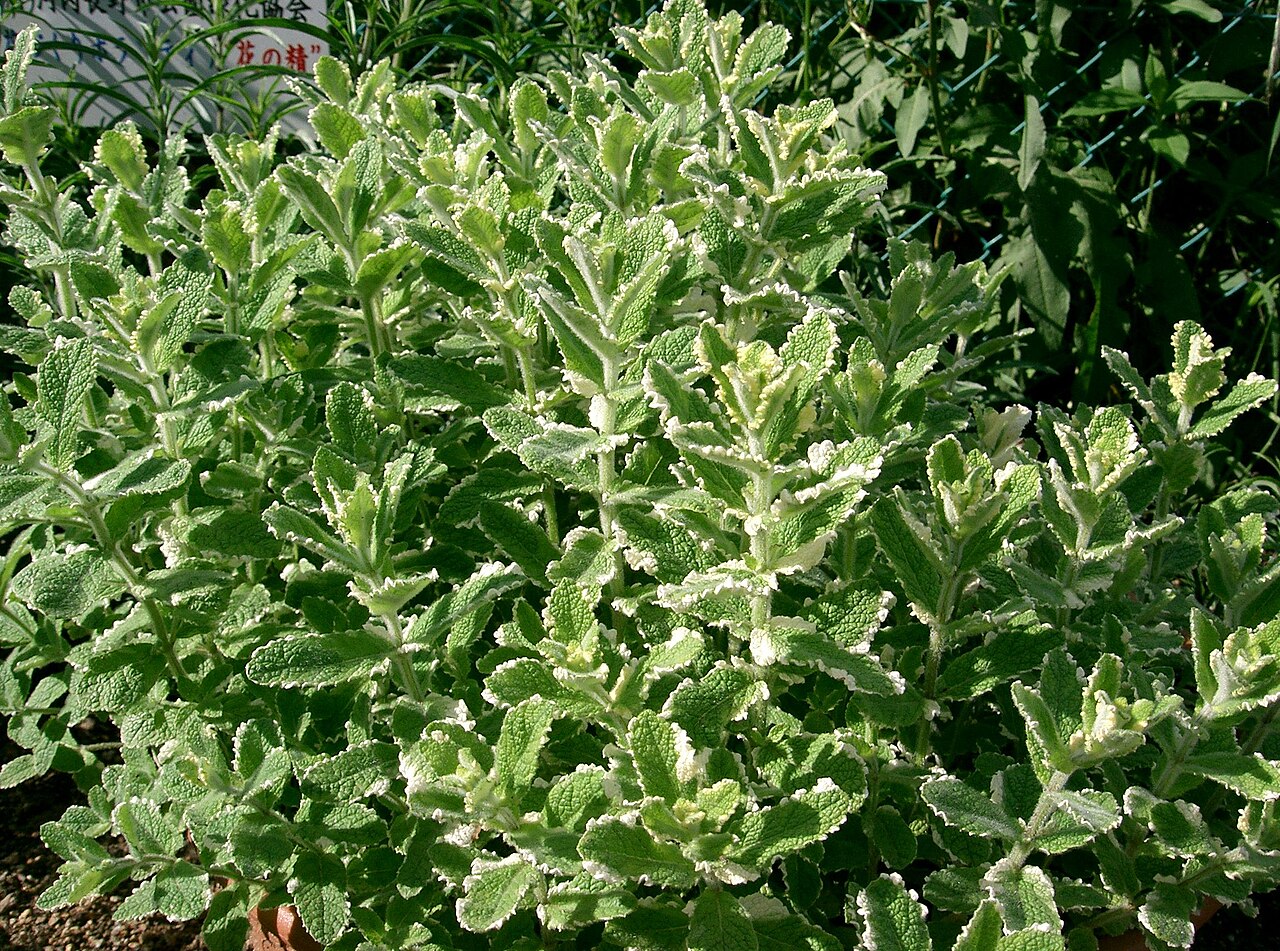
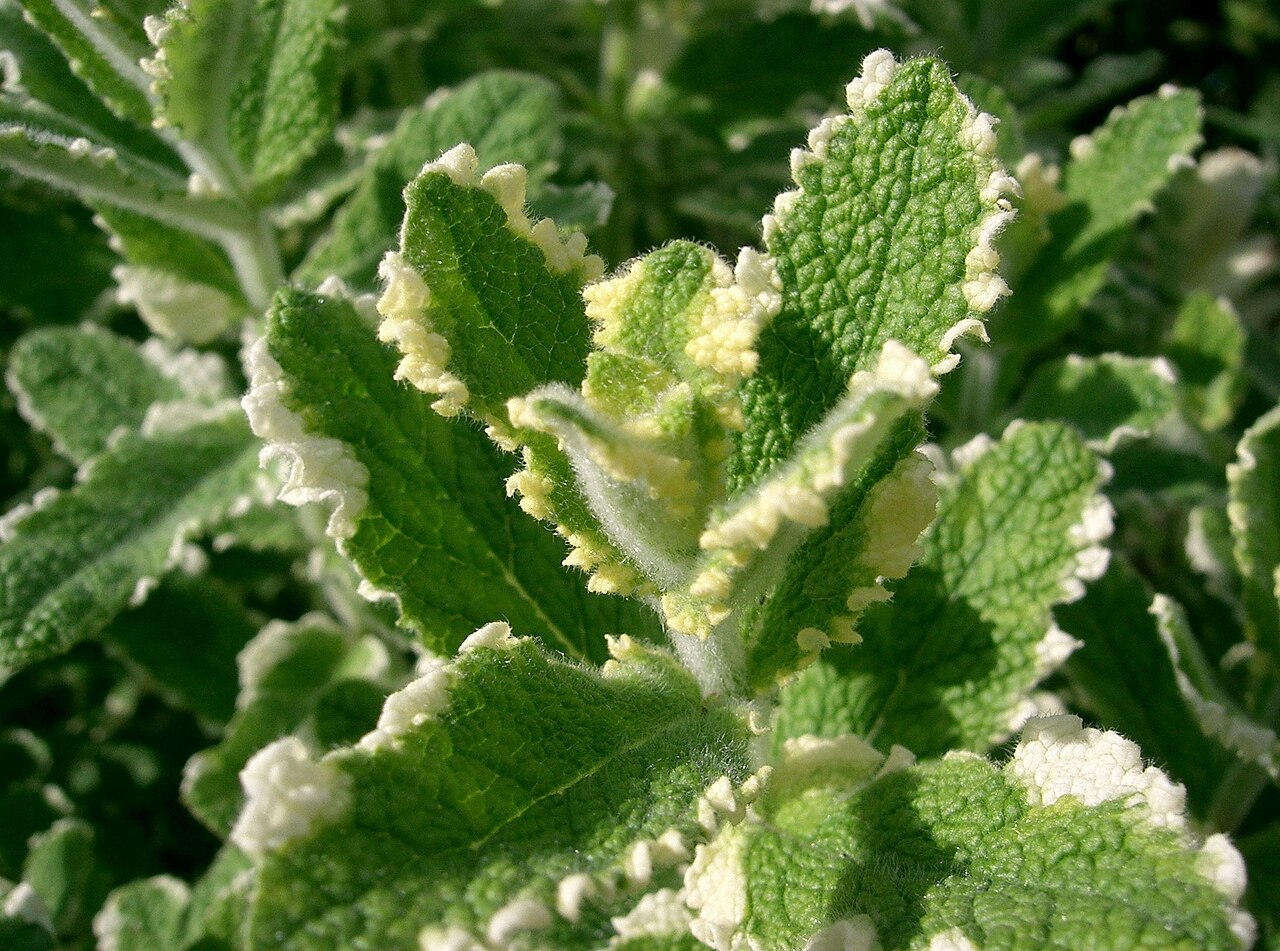
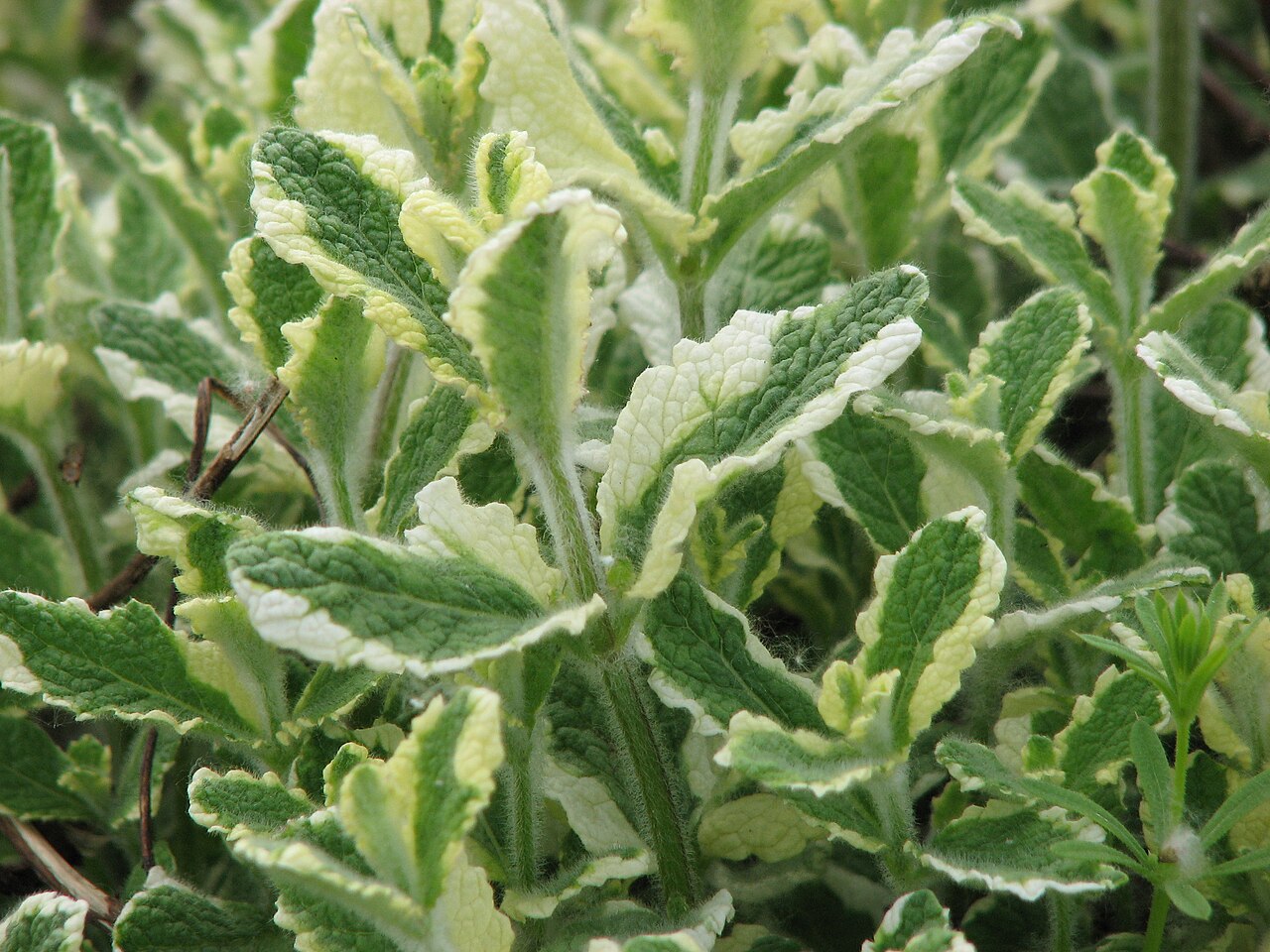
Pineapple mint is apple mint dressed for display: a variegated cultivar of Mentha suaveolens, with soft, woolly leaves marbled in cream and green and a scent that carries a genuine hint of pineapple alongside the classic mild mint aroma. It is one of the prettiest mints you can grow, brightening containers, hanging baskets, and border edges even before you pick a leaf — and it is edible, flavoring teas, jellies, and fruit salads with a mild, fruity mint flavor.
The variegation needs a gardener’s eye: cream-and-green leaves vary from all-white to all-green on the same plant, and the vigorous all-green stems will take over if left alone, turning your pineapple mint back into plain apple mint. Cut out green shoots promptly and give the plant a little more shade than other mints — strong sun fades variegation — and it stays the showpiece it was bred to be. Like all mints, it lives in a pot.
How to grow
Buy plants or cuttings — variegation does not come true from seed. Plant in spring in a pot at least 12 inches wide with rich, moist mix, in part shade to full sun with afternoon shade in hot gardens. In Florida, morning sun and afternoon shade is the sweet spot for holding the cream variegation.
Pinch tips to keep plants bushy, and inspect regularly for all-green shoots, cutting them out at the base as soon as they appear. Cut back by half after the first flush for fresh variegated growth, and divide in spring or fall, keeping only variegated divisions.
Water & feeding
Water regularly, keeping soil lightly moist; pineapple mint wilts fast in drought and its variegated leaves scorch sooner than green leaves when dry. Pots in summer need frequent checks, but never let the pot sit in water — moist, not waterlogged.
Feed lightly with castings at planting. Moderate fertility keeps variegation bright; heavy feeding pushes green growth that dulls the cream marbling.
Common problems
- Reversion to green — cut out all-green shoots immediately, or they outgrow the variegated growth within a season.
- Spreading by runners — pots only, as with all mints; runners escape through drainage holes, so check pot bases in summer.
- Scorch in harsh sun or drought — part shade and steady water protect variegated foliage, which burns faster than green foliage.
- Mint rust in humid, still air — remove affected leaves, improve airflow, and cut back for clean regrowth.
Harvest
Pick leaves from 6–8 weeks after planting, choosing the most richly variegated sprigs for garnishes, teas, and fruit salads, where the cream-and-green color shows. The flavor is mild and fruity, so use generously where a stronger mint would need only a few leaves.
Cut back by half after harvest for fresh variegated regrowth, and take cuttings from variegated stems only for new plants. Pineapple mint dries adequately for tea, but it is at its best fresh, where color and scent both survive.
Browse all plant & pest guides
Saving seeds
Pineapple mint is apple mint dressed for display: a variegated cultivar of Mentha suaveolens, with soft, woolly leaves marbled in cream and green and a scent that carries a genuine hint of pineapple alongside the classic mild mint aroma. It is one of the prettiest mints you can grow, brightening containers, hanging baskets, and border edges even before you pick a leaf — and it is edible, flavoring teas, jellies, and fruit salads with a mild, fruity mint flavor. As a variegated mint it is kept true by cuttings and division, not by seed: buy plants or cuttings — variegation does not come true from seed. Plant in spring in a pot at least 12 inches wide with rich, moist mix, in part shade to full sun with afternoon shade in hot gardens, and cut out all-green shoots promptly, or they will take over and turn your pineapple mint back into plain apple mint. The full method is in the Saving seeds section of the Mint guide.