
🌾 Rabbitbrush
What it looks like
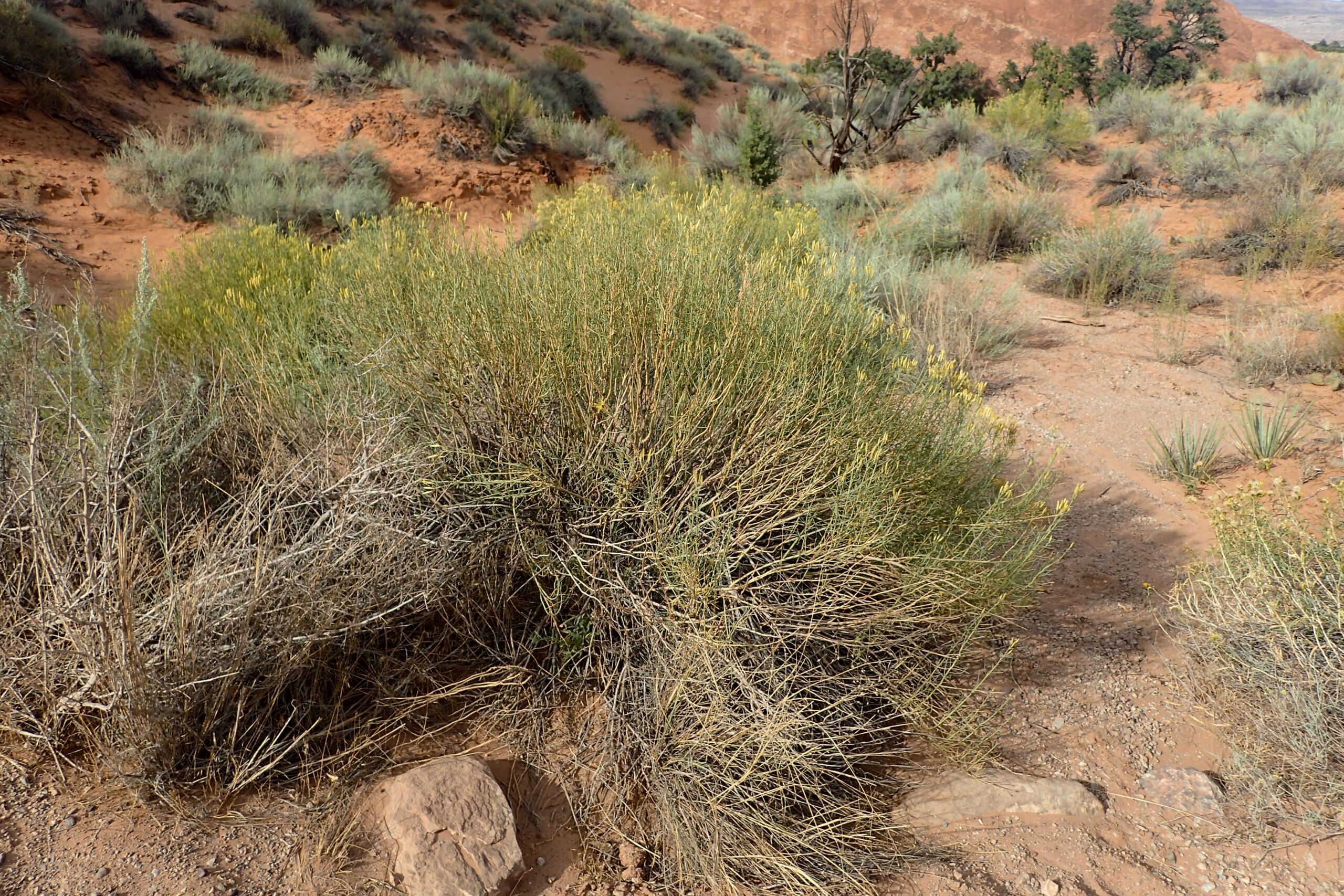
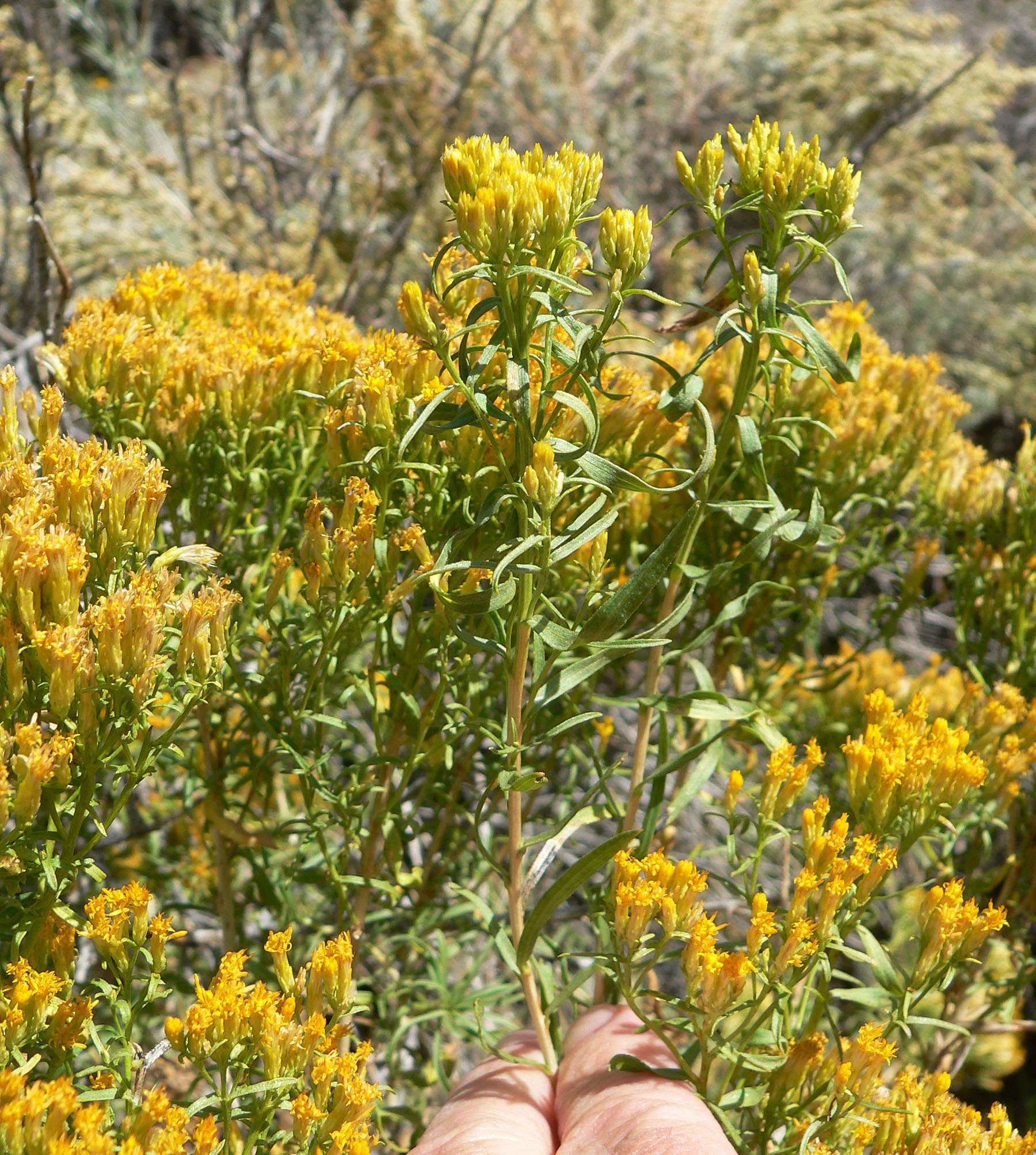
Rabbitbrush is not one plant, and that is the first thing to get straight. Rabbitbrush is a common name shared by several closely related shrubs of the western United States, and the two that matter most — the two the butterfly guides actually name — are gray rabbitbrush and green rabbitbrush. Both are members of the aster family, Asteraceae, both throw clouds of small yellow flowers in late summer and fall, and both are built for country that would kill a rose bush and shrug. The difference is in the foliage, and once you see it you cannot unsee it: gray rabbitbrush has gray-green, hairy, non-sticky leaves, while green rabbitbrush has bright green, shiny, sticky leaves. Gray is felted; green is varnished. Same golden bloom, different outfit.
Gray rabbitbrush, Ericameria nauseosa, is the big one: a multi-branched, deciduous shrub typically growing 4 to 7 feet tall, with some sources giving 2 to 7 feet across its wide range, and spreading about as wide as it is tall. Its narrow leaves are covered in fine white hairs that give the whole plant a silvery cast, and its abundant yellow flower heads open from July into October, turning a hillside gold when the sagebrush around it has already gone quiet. Green rabbitbrush, Ericameria viscidiflora, is the compact cousin: a rounded shrub typically 1 to 3 feet tall, occasionally reaching 4 feet, with sticky green leaves and dense clusters of yellow disc flowers from July into September. The species name viscidiflora means sticky-flowered, which is Latin doing its job with unusual honesty.
Both species are native across the Intermountain West and the Great Basin, from British Columbia south through the western interior to Texas and northern Mexico for gray rabbitbrush, and across the sagebrush steppe and high desert for green rabbitbrush. They grow in dry, open places: plains, valley bottoms, foothills, mountainsides, grasslands, sagebrush communities, and roadsides, on sandy, gravelly, loamy, or even heavy clay soils, as long as the drainage is decent. They are deep-rooted, fast-growing, and famous for colonizing disturbed ground, which is why you see them thick along roads and on overgrazed rangeland: livestock find them unpalatable, so they increase where palatable plants have been eaten away. That is not invasiveness — both are natives throughout their range — it is a native plant taking advantage of an opening, the way natives have always done.
For butterflies and pollinators, rabbitbrush is a late-season lifeline. When most summer flowers are done, rabbitbrush is just opening, and its yellow heads draw bees, butterflies, and other insects in crowds. The butterfly guides list rabbitbrush as both a host plant and a nectar plant: caterpillars of checkerspots feed on it, and adults of many species nectar on it. A rabbitbrush in September is a fueling station on the last road before winter, and in the dry West, that timing matters more than almost anything else a garden plant can offer.
Florida note: Rabbitbrush is a western plant, full stop. It wants dry air, cold winters, and lean, well-drained soil, and it will not be happy in Florida’s humidity, summer rain, and warm winters. Do not plant it in Florida; this guide is for western readers, and for everyone else it is a plant to admire on a road trip through sagebrush country, not a plant to order.
How to grow
Grow rabbitbrush like the desert plant it is: full sun, lean soil, sharp drainage, and benign neglect. It cannot grow in the shade, and it sulks in rich, moist garden soil where a rose would thrive. Plant in spring or fall in sandy, gravelly, or loamy soil that drains freely; it tolerates clay as long as water does not stand on the surface for more than a day or two, and it tolerates soils from mildly acidic to strongly alkaline, including somewhat saline ground. Space gray rabbitbrush 4 to 5 feet apart, green rabbitbrush 3 to 4 feet apart, and plant in groups or masses rather than as a specimen in a prominent bed — older garden advice warns it is not at its best as a solo feature, and it looks far better as a golden drift with sagebrush, grasses, and other western natives.
Propagation is easy: seed sown in fall or spring germinates without fuss, though a stratification period can speed it, and cuttings root well. Seedlings are sensitive to frost and drought when tiny, so protect young plants through their first season, then step back. A rabbitbrush that has found its roots grows fast, reaching maturity in two to four years, and it self-seeds where it is happy, so give it room and expect volunteers. If a seedling appears where you do not want it, pull it young; a rabbitbrush allowed to establish is a shrub with opinions.
Pruning is simple and best done in late winter, before spring growth starts. Cut back leggy or woody stems by a third to a half to keep the plant compact and floriferous, and remove dead wood any time you see it. A hard late-winter cutback rejuvenates an old, woody plant, which will regrow vigorously from the base. Do not shear it into a ball: rabbitbrush looks best with its natural, rounded, slightly wild shape, and shearing just produces a dense shell of weak growth over a woody interior.
Water & feeding
Water to establish, then mostly leave it alone. Rabbitbrush grows on 7 to 18 inches of annual precipitation in the wild, and once established it needs no supplemental water in much of its range — it is drought-hardy, intolerant of overwatering, and genuinely happier dry than wet. Give new plants regular water through their first season, tapering off as they root, and in a garden setting a deep drink once or twice a month through a hot, dry summer is plenty. Daily sprinkling is the enemy: it keeps the crown wet, encourages weak growth, and can rot a plant that evolved for gravel.
Feeding is not just unnecessary, it is counterproductive. Rabbitbrush thrives in nutritionally poor soils, and fertilizer produces soft, floppy growth that falls over and invites pests. A gravel mulch, which keeps the crown dry and the roots cool, is worth more than any bag of fertilizer. If you must feed anything, feed the soil with a thin layer of compost once a year at most, and keep it away from the stems. The plant’s whole strategy is making a living where nothing else wants to; rich food ruins the strategy.
Common problems
- Overwatering: The number one killer in gardens. Wet feet rot roots and produce weak growth. Plant high, drain freely, and water rarely once established.
- Flopping and woodiness: Old plants get woody and leggy, especially in rich soil. Cut back hard in late winter to rejuvenate, and grow it lean to keep growth compact.
- Self-seeding: Rabbitbrush seeds abundantly and colonizes bare ground. Deadhead after bloom if seedlings are unwanted, or site it where volunteers are welcome.
- Pollen allergies: Rabbitbrush pollen can cause allergic reactions in sensitive people, and the late-season bloom coincides with ragweed season. Site it away from patios and bedroom windows if pollen bothers you.
- Unpalatable to livestock: A feature, not a bug, but worth knowing: grazing animals avoid it, so it increases on overgrazed land. In a pasture context that is a management signal, not a planting fault.
- Name confusion: Older books and guides call these plants Chrysothamnus, and newer ones call them Ericameria. Both names refer to the same shrubs in this guide, and a nursery tag with either name is probably selling you the right plant — check the species name, not just the genus.
Harvest
Rabbitbrush is not a food crop, but it has harvests. The flower harvest is the pollinator harvest: leave the golden heads standing through fall, because every week they stand is another week of nectar for bees and butterflies preparing for winter, and the seed heads that follow feed birds. The garden harvest is the cutting harvest: rabbitbrush stems cut in late summer, when the yellow heads are open, make striking, long-lasting dried arrangements, and the golden color holds well when dried. Cut a few stems, hang them upside down in a dry, airy spot, and you have a piece of the sagebrush steppe on a shelf. The land-management harvest is the oldest one: rabbitbrush’s deep roots, heavy litter, and rapid growth stabilize roadsides and degraded ground, which is why reclamation crews plant it on ground nothing else will hold.
Saving seeds
Rabbitbrush seed is tiny, fluffy, and fussy about one thing above all: it wants light. Collect the seed in fall, when the fluffy white seed heads have dried and the seed is tan and loose. Snip whole heads into a paper bag, let them dry a few days indoors, then rub them gently over a fine screen to separate the seed from the fluff. The seed is very small, so work over a tray — a sneeze at the wrong moment can cost you the whole harvest.
Sow on the surface of a very well-draining, gritty mix and press the seed in lightly — do not bury it. Research on rubber rabbitbrush found that light boosts germination substantially, sometimes two to three times over seed kept in the dark, and that any amount of burial cuts emergence sharply. A short cold, moist stratification — a few weeks in damp sand in the fridge — speeds germination, though seed from warm, low-elevation sources may sprout without it. Keep the mix moist but never soggy, and give the tray warmth and bright light. Germination usually comes in one to three weeks after stratification, and seedlings are slow at first and very prone to damping off, so use a sterile mix, water lightly, and give them air.
Save seed from a healthy plant with good form and heavy flowering, and sow more than you need — germination varies a lot by seed source, and some lots are simply better than others. Rabbitbrush seed does not store forever; keep it cool and dry, and use it within a year or two for best results.
And a Florida note, because it matters: rabbitbrush is a dry-country western native that wants sharp drainage, lean soil, and dry air. It is not a Florida plant, and it will struggle with our wet summers and humidity. If you are growing it in Florida at all, do it in a pot with a gritty cactus-style mix, water sparingly, and keep it out of the summer rain as much as you can. Seed saving here is for the curious, not the practical.
Species in this group
- Gray rabbitbrush — Ericameria nauseosa (formerly Chrysothamnus nauseosus): The big, gray-green, felted shrub, 2 to 7 feet tall and as wide, with abundant yellow flowers from July into October. Zones vary by source, roughly 3–9 to 4–9; this guide uses 3–9 as the broad range. The widest-ranging rabbitbrush, from British Columbia to Texas and northern Mexico, and the one most often seen as golden drifts along western roads.
- Green rabbitbrush — Ericameria viscidiflora (formerly Chrysothamnus viscidiflorus): The compact, bright-green, sticky-leaved shrub, typically 1 to 3 feet tall, occasionally 4 feet, with yellow flowers from July into September. Zones about 3–8. Common across the Intermountain West sagebrush steppe, and the rabbitbrush the butterfly guides name when they say green rabbitbrush.
- Other rabbitbrushes: Several further Ericameria species share the common name, including Parry’s rabbitbrush (Ericameria parryi), a smaller shrub of similar dry habitats. This guide covers the two butterfly-mentioned kinds in detail; if a nursery tag says rabbitbrush and the species is something else in Ericameria, expect the same recipe — full sun, dry soil, sharp drainage, and a golden late-season bloom — with the size adjusted to the species on the tag.