
🌸 Racemose Buckwheat
What it looks like
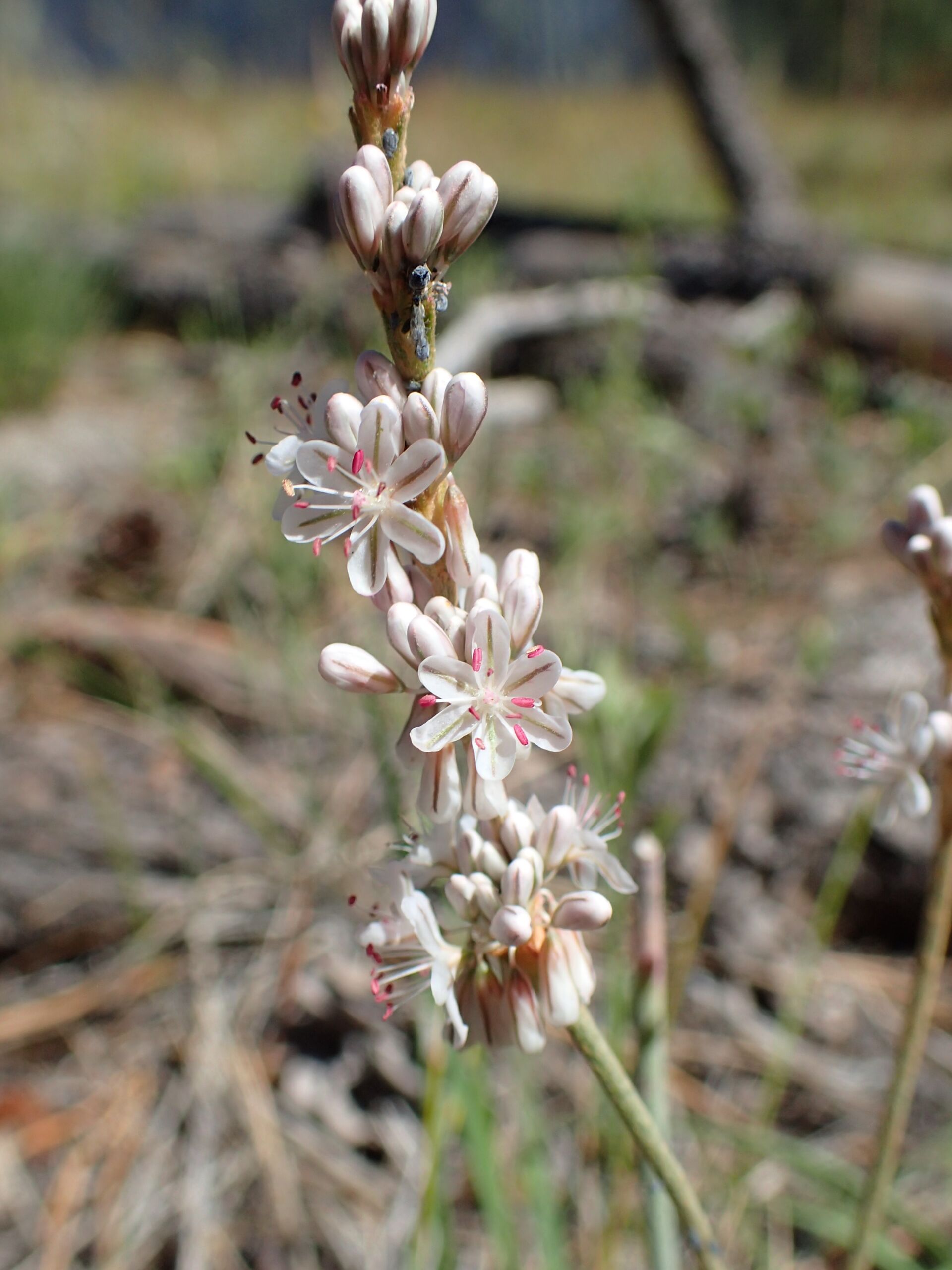
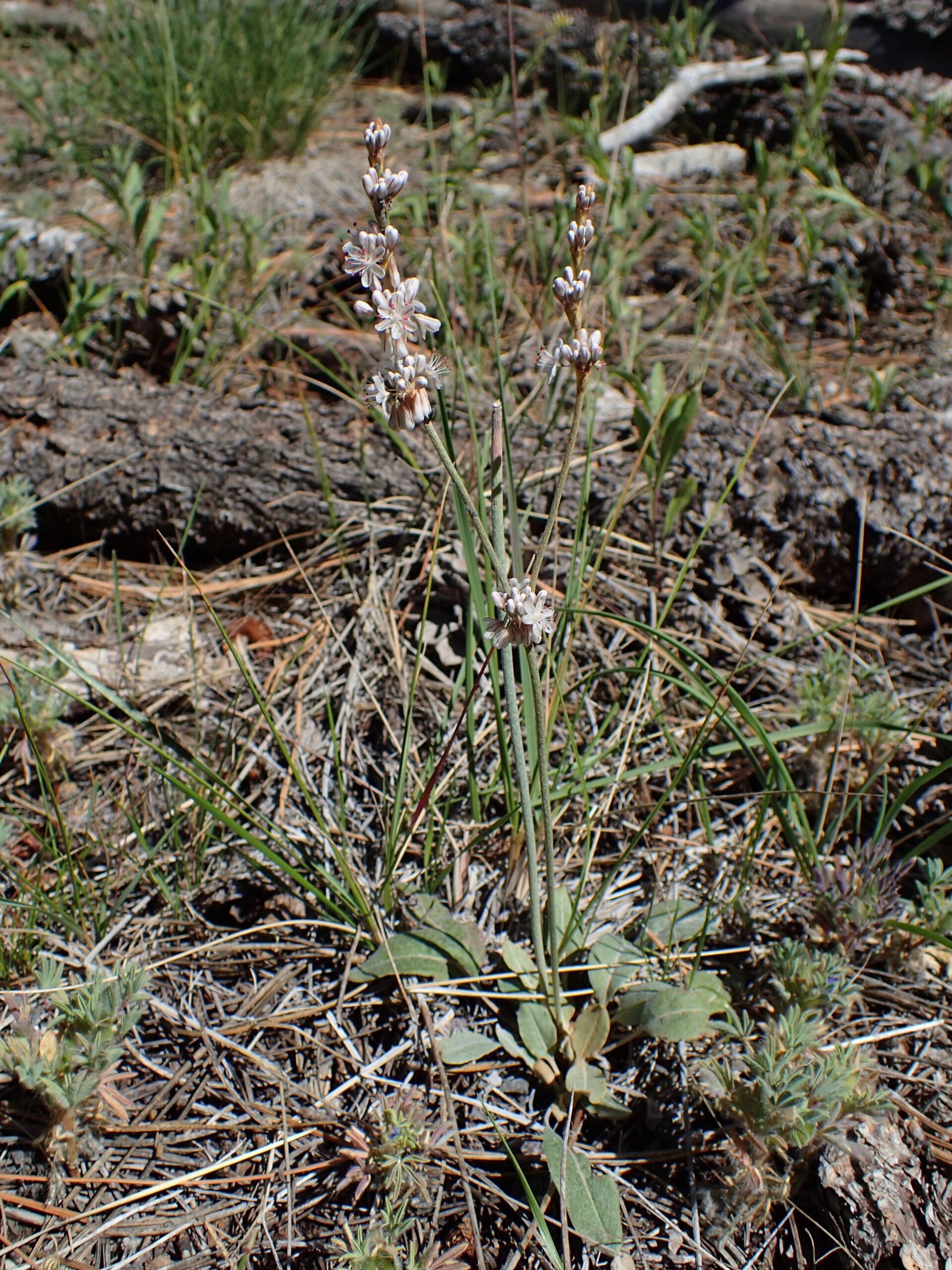
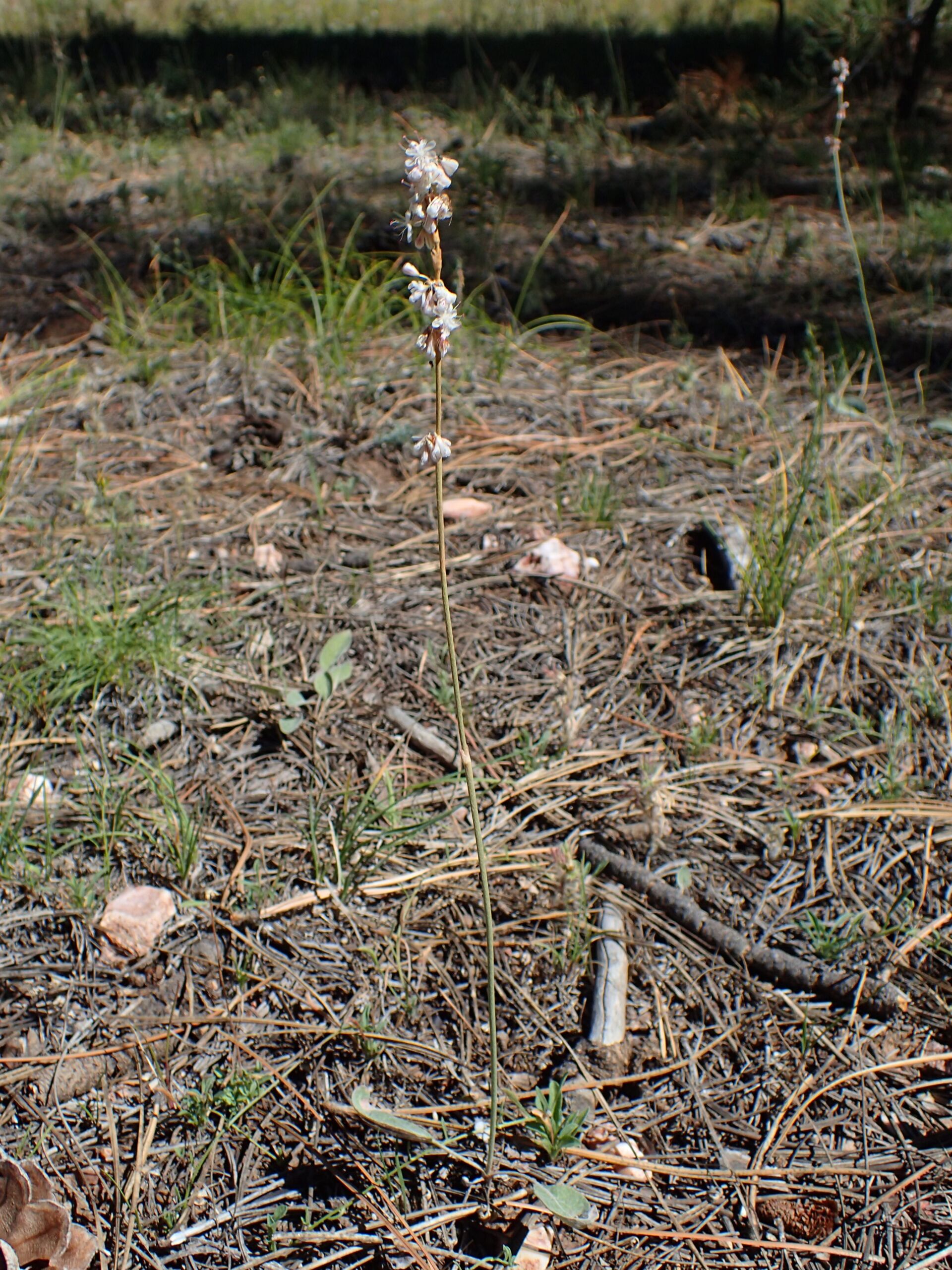
Racemose buckwheat is easy to recognize once you know the trick, and the trick is in the name. Racemose means arranged in a raceme, a long, unbranched stalk with flowers strung along it, and this buckwheat throws up tall, narrow, leafless flowering stalks that look like wands with the flowers lined up in orderly rows. Among the wild buckwheats, which mostly bloom in flat-topped clusters or tangled sprays, that tall, narrow, unbranched raceme is a signature — the plant equivalent of signing your name in a straight line. It is a perennial herb in the buckwheat family, Polygonaceae, in the great western genus Eriogonum, which holds some 250 species, nearly all North American, and it is one of the most distinctive members of the clan.
The plant itself is a study in desert restraint. The leaves are basal, on short stalks, elliptic to ovate and 2 to 3 inches long, often grayish and woolly underneath, forming a low rosette that hugs the ground while the flowering stalks do the showing off. Flora of North America describes the herb as 3 to 8 decimeters tall, occasionally to 10 decimeters — roughly 1 to 2.5 feet, occasionally over 3 feet — with slender flowering stems carrying inflorescences 15 to 50 centimeters long. Garden and field guides round that to up to 3 feet tall, which is the number to picture: a low rosette, a tall wand, and small white to white-pink flowers along the wand from June into October. The flowers are small, as buckwheat flowers are, but there are many of them, and from a distance a colony in bloom looks like a field of pale candles.
Its home is the dry interior West: Arizona, Colorado, Nevada, New Mexico, and Utah, in the Four Corners states and west to southern Nevada, on foothills, dry meadows, gravelly flats, grasslands, and woodlands, generally up to about 9,500 feet, and by Flora of North America’s measure at elevations of 1,400 to 2,900 meters, occasionally to 3,500. It grows in sandy to gravelly flats and slopes, in mixed grass, sagebrush, and mountain mahogany communities, and in scrub oak, pinyon, juniper, and conifer woodlands — in short, wherever the soil is thin, the sun is strong, and the rain is polite rather than generous. In good habitat it can grow in colonies of hundreds or thousands of plants, a pale-flowered meadow that hums with native bees.
For butterflies, racemose buckwheat is a host plant, and a valued one. The butterfly guides that mention it — under the names racemose buckwheat, redroot buckwheat, and the Latin Eriogonum racemosum — list it as a host for blues and a hairstreak, which means caterpillars eat it, not just adults nectaring on it. Like its buckwheat cousins, it is also a strong nectar and pollen plant for native bees, and a colony in bloom supports a whole pollinator community through the long, dry summer. The common name redroot buckwheat nods to the roots, which the Navajo and Diné people have used as a life medicine, primarily for internal problems — a traditional use recorded by Flora of North America, and a reminder that this is a plant with a human history as well as a butterfly one.
Florida note: This is a dry-mountain plant of the interior West, and it has no business in a Florida garden. It wants cold winters, dry air, gravelly soil, and elevation, and Florida offers none of those. Do not plant it in Florida; grow it in its home range, and let Florida’s own wild buckwheats and native nectar plants do the butterfly work at home.
How to grow
Grow racemose buckwheat as a dry-garden native, not as a bedding plant. Plant in full sun — it cannot grow in the shade — in sandy to gravelly, fast-draining soil. It accepts loam as long as drainage is sharp, and it prefers dry to medium moisture with a distinctly dry summer rest. The soil recipe that works is the foothill recipe: mineral soil, gravel or grit mixed in, no heavy clay, no waterlogged low spot, and no rich compost pile. Space plants 12 to 18 inches apart in a drift or colony, because a single plant is a wand and a colony is a meadow, and this plant wants to be a meadow.
Propagation is by seed, sown in fall so winter cold and moisture can do their work, or in spring in warm soil. Wild buckwheat seed germinates best with a period of cold stratification, and fall sowing outdoors provides it for free. Set out nursery plants in spring, water them in, and then resist the urge to fuss: this is a plant that establishes on neglect, and the fastest way to lose it is to love it with daily water and fertilizer. Once established, it is a perennial that returns from its basal rosette each year, throwing up fresh flowering wands each summer and going quiet in winter.
Site it with other dry-western natives — sagebrush, rabbitbrush, grasses, penstemons — where its pale wands can rise above lower groundcovers and catch the light. It is not a plant for a formal border or a humid perennial bed; it is a plant for a gravel garden, a rock garden, a dry meadow, or a restoration planting, where its restraint reads as elegance and its long bloom reads as generosity.
Water & feeding
Water sparingly and deeply. New plants need regular water until established, and after that racemose buckwheat wants the dry-garden pattern: a deep drink in a prolonged dry spell, and otherwise rainfall. It tolerates drought well once rooted, and it resents summer wetness far more than summer dryness — soggy soil in warm weather rots the crown, while a dry August just makes the bloom a little shorter. A gravel mulch keeps the crown dry and the roots cool, which is exactly the microclimate of its native gravelly flats.
Do not feed it. Like most wild buckwheats, it grows in nutritionally poor soil and needs no fertilizer; feeding produces soft, leggy growth that flops and invites pests, and it can shorten the plant’s life. If your soil is genuinely barren mineral gravel, that is not a problem to fix, it is the habitat. Leave the fertilizer bag in the shed, and let the plant do what it evolved to do on thin rations.
Common problems
- Rot in wet soil: The fatal fault. Poor drainage, heavy clay, or summer overwatering rots the crown. Plant in gravelly, fast-draining soil and water rarely.
- Shade: It cannot grow in the shade, and even part shade reduces flowering and weakens the plant. Give it full, all-day sun.
- Flopping in rich soil: Fertile, moist soil produces tall, weak wands that fall over. Grow it lean and dry for sturdy, upright bloom.
- Slow establishment from seed: Wild seed can be slow and uneven. Sow in fall for natural stratification, be patient, and do not assume a quiet first year is a failure.
- Confusion with other buckwheats: The genus holds some 250 species, and many look alike in leaf. The tall, narrow, unbranched raceme is the field mark for this one; if the flower stalk branches into a flat top, you are looking at a cousin, not racemose buckwheat.
- Wrong climate: Humid, warm-winter climates defeat it. This is a plant of cold winters and dry summers; outside that pattern, expect a short, unhappy life.
Harvest
Racemose buckwheat has no kitchen harvest — do not confuse it with grain buckwheat, Fagopyrum esculentum, the crop plant grown for seed. Its harvests are the seed harvest and the pollinator harvest. For seed, let the wands ripen fully in fall, when the flowers have set small, dry fruits, and shake them into a paper bag for fall sowing in a dry garden or restoration site. For the garden, the harvest is the bloom itself: cut a few wands for a dry arrangement, where the pale flowers hold their shape, and leave the rest standing for bees, butterflies, and the birds that follow. A colony left standing into fall feeds wildlife longer than a colony cut down for tidiness, and tidiness was never this plant’s strong suit anyway.
Saving seeds
Racemose buckwheat — redroot buckwheat, Eriogonum racemosum — is one of the easier wild buckwheats to save seed from, and the trick is mostly timing. Watch the flower heads in late summer and early fall: when they have turned dry and brown and the tiny seeds inside rattle loose at a touch, snip the whole head into a paper bag. Let the heads dry a few more days indoors, then rub them gently over a screen to free the seed. Winnow away the chaff and store the seed in a paper envelope in a cool, dry place.
Wild buckwheat seed often needs a cold, moist stretch before it will sprout. Research on Utah Eriogonum species found that seed from low elevations usually needs little to no chilling, while seed from high elevations can need 12 weeks or more — so the honest answer is that it depends on where your seed came from. The easy way to handle that uncertainty is to sow outdoors in fall and let winter do the work, or to stratify in damp sand in the fridge for 4 to 8 weeks and then sow in spring. Sow shallowly — barely cover the seed — in a very well-draining, gritty mix, keep it moist until germination, and expect sprouts in a few weeks once the chill requirement is met.
Save seed from a healthy plant with good form and heavy flowering, and sow more than you need. Wild buckwheat seed is small and germination can be uneven, so a generous sowing is the practical approach. Seed stores reasonably well cool and dry for a few years.
And a Florida note, because it matters: racemose buckwheat is a dry-country western native that wants lean, sharply draining soil and dry air. It is not a Florida plant, and our wet summers and humidity will test it hard. If you are growing it in Florida at all, do it in a pot with a gritty mix and keep it out of the summer rain. Seed saving here is for the curious, not the practical.
Varieties of this species
There are no verified garden varieties of racemose buckwheat to plant, and that statement is stronger than it sounds. Flora of North America’s treatment says the species is highly variable but that no taxonomic distinctions are attempted, because the variation is not geographically correlated, and a field guide to the American Southwest likewise notes that no specific varieties are recognized. Older names for forms of the species, including var. obtusum and var. orthocladon, appear in Flora of North America’s lower-taxa list, but the treatment’s own discussion declines to uphold them as distinct taxa. So the honest garden advice is simple: plant the species, Eriogonum racemosum, and expect natural variation in height, leaf shape, and flower size from plant to plant. That variation is the plant, not a defect, and a colony grown from seed will show it proudly.