
💕 Rio Pink Mandevilla
What it looks like
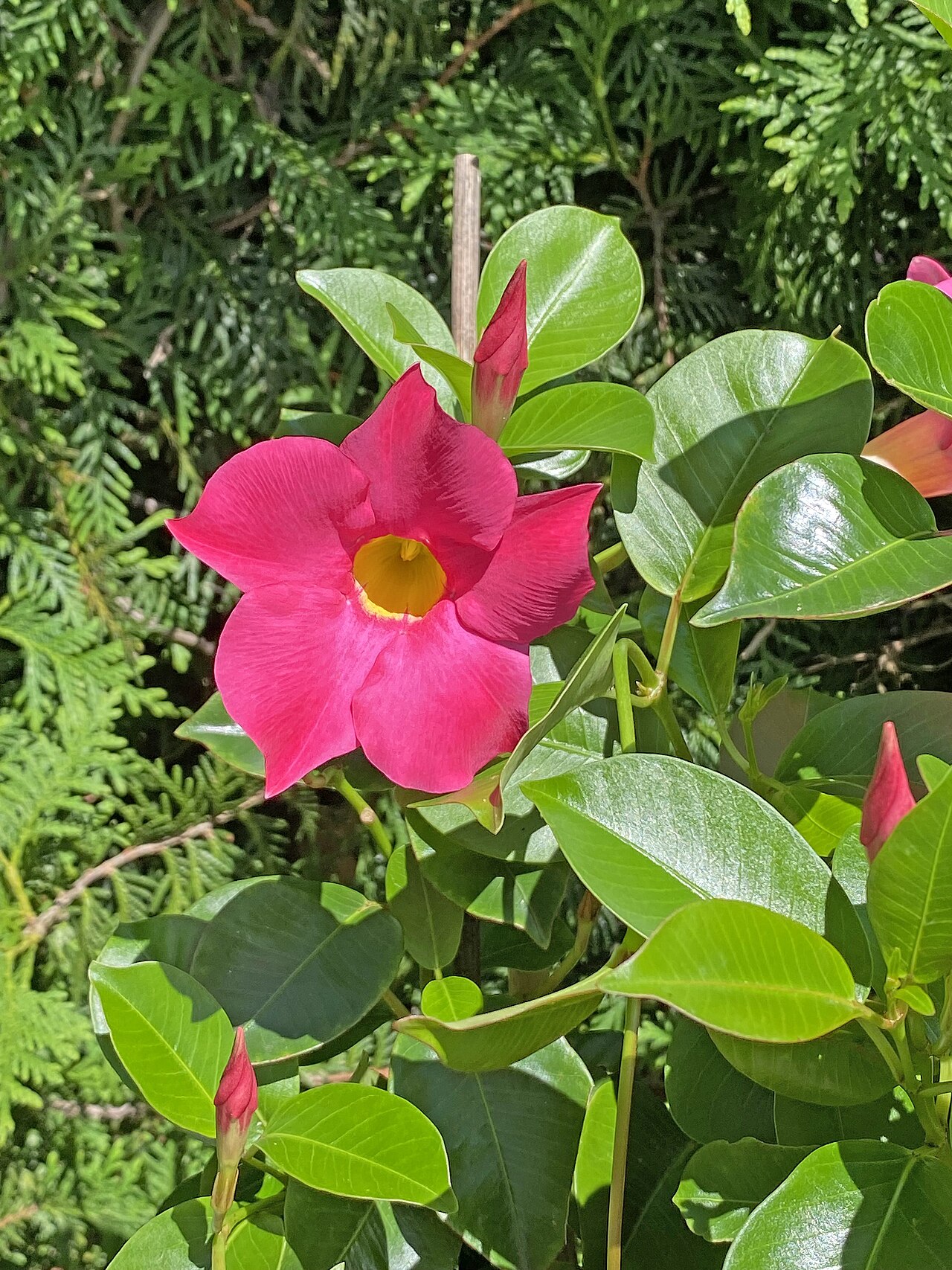
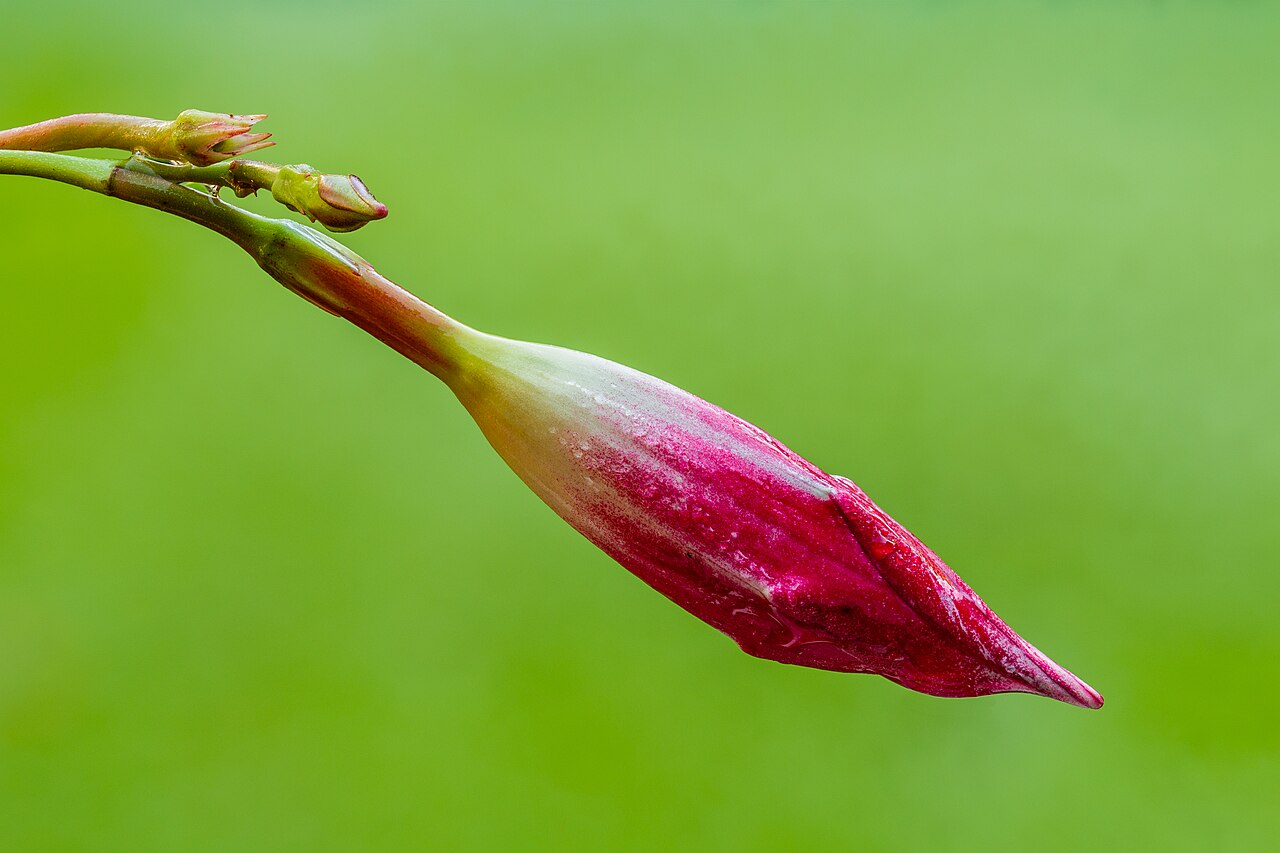

Photos show the species, Mandevilla, since no cultivar-specific photo has been verified for this variety — the species photos above are already hosted on this site and attributed as on the species guide.
Why this variety
Rio Pink is the mandevilla for gardeners who love the trumpet but do not have a trellis to spare. It is a Dipladenia type — the bushier, more compact branch of the mandevilla family — so instead of a tall twining vine it forms a mounding, spreading plant with soft-pink trumpets, ideal for hanging baskets, the front of a border, or a small pot on a sunny step.
Compact does not mean shy: Rio Pink flowers from spring through fall, it attracts butterflies and hummingbirds like its taller cousins, and its mounding habit means it can be used where a climbing mandevilla cannot — spilling over a wall, filling a basket, or edging a sunny bed. It is the mandevilla you buy when the garden is a patio, not a pergola.
How to grow
Plant outdoors in mid- to late spring, once nights are reliably warm, in a pot with drainage holes or in sandy, well-drained, fertile soil, and give it sun and warmth — Rio Pink is a tropical plant that sulks below about 50°F. It needs no tall support, though a small obelisk or low trellis will lift the flowers nicely; left alone, it mounds and spills, which is the point.
Pinch stem tips early in the season to encourage branching and a dense mound, and deadhead through the season to keep flowers coming. Work worm castings into the potting mix or planting hole, and feed regularly — a compact plant flowering all season in a pot eats through its food quickly, and a starved Rio Pink goes quiet in midsummer.
For the general picture, start with the Mandevilla growing guide, then use this guide for the details that make Rio Pink different. And a plain-language note on the hero stats above, because vines and shrubs are not vegetables: “Spacing” here means mature planting distance, and “Days to harvest” means time to first bloom — the moment the plant starts paying you back in flowers, not a picking date.
And a plain-language note on the hero stats above, because vines and shrubs are not vegetables: “Spacing” here means mature planting distance, and “Days to harvest” means time to first bloom — the moment the plant starts paying you back in flowers, not a picking date.
Water & feeding
Water when the top inch of soil is dry, keeping soil moist but never waterlogged, and water pots more often in heat — small pots dry fast. Feed every two to three weeks in the growing season, bring containers in before cold nights, and reduce water in winter while the plant rests indoors in a bright spot.
Common problems
- Spider mites in hot, dry air — stippled, dull leaves are the tell. Hose foliage, raise humidity around containers, and use miticide only as a last resort.
- Leaf yellowing from overwatering — mandevilla wants moist soil, not wet feet. A pot without drainage holes is a slow drowning.
- Cold damage below about 50°F — growth stalls, leaves drop. Bring containers in before the first cold night, not after it.
- Sap toxicity — all parts are toxic if eaten, and sap irritates skin. Gloves on, and site it away from grazing pets and toddlers.
Harvest
The harvest is a season of soft-pink trumpets at arm’s height — perfect for cutting, because the flowers are right where you can reach them. Cut stems in the morning, deadhead to keep the mound flowering, and at season’s end in cooler zones, cut back lightly, bring indoors, and rest it until spring growth resumes.
Browse all plant & pest guides
Saving seeds
Rio Pink is the mandevilla for gardeners who love the trumpet but do not have a trellis to spare. It is a Dipladenia type — the bushier, more compact branch of the mandevilla family — so instead of a tall twining vine it forms a mounding, spreading plant with soft-pink trumpets, ideal for hanging baskets, the front of a border, or a small pot on a sunny step. As a named mandevilla it is kept true by cuttings, not by seed — seedlings would not hold the mounding, spreading habit or the soft-pink trumpets. Plant outdoors in mid- to late spring, once nights are reliably warm, in a pot with drainage holes or in sandy, well-drained, fertile soil, and give it sun and warmth — Rio Pink is a tropical plant that sulks below about 50°F. It needs no tall support, though a small obelisk or low trellis will lift the flowers nicely. The full method is in the Saving seeds section of the Mandevilla guide.