
🫐 Salal
What it looks like
How to grow
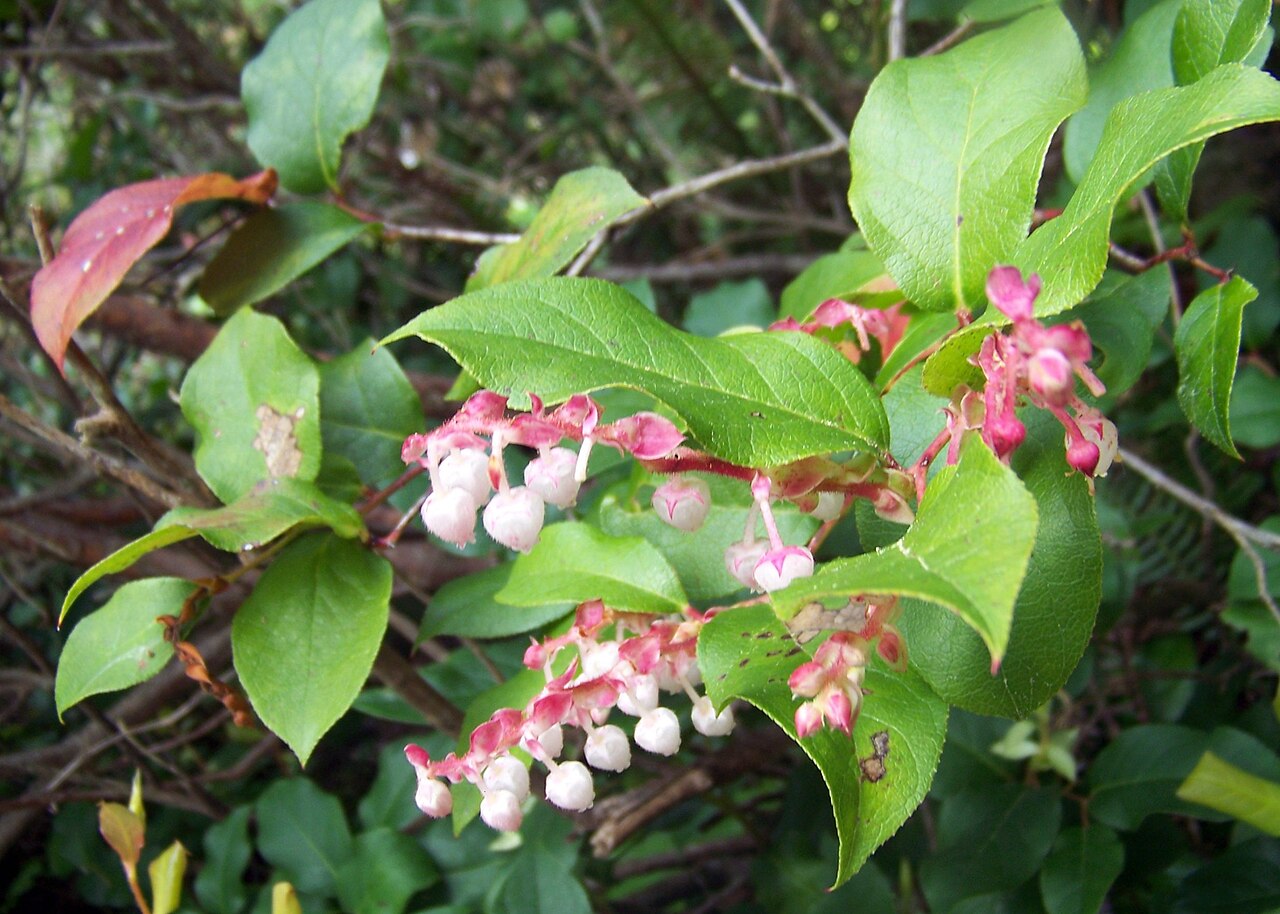
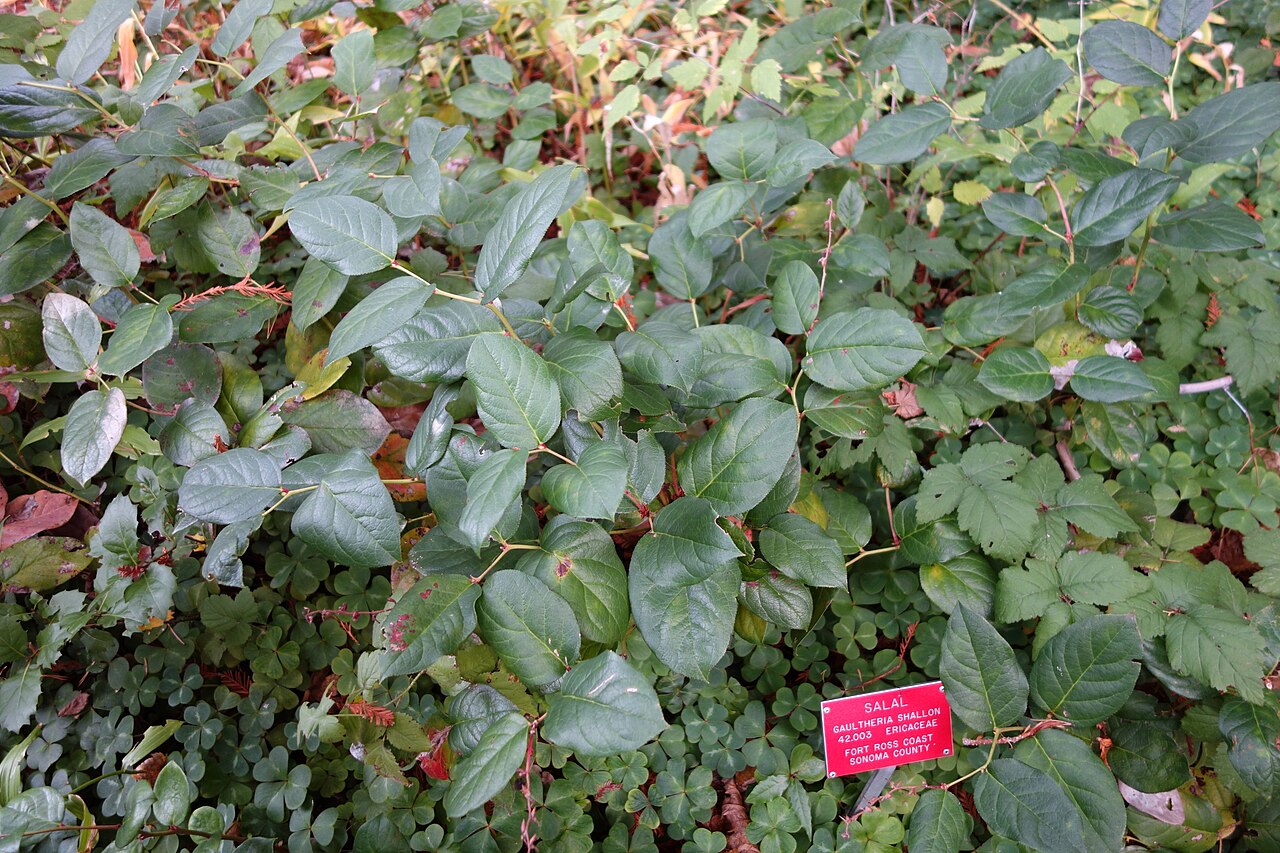
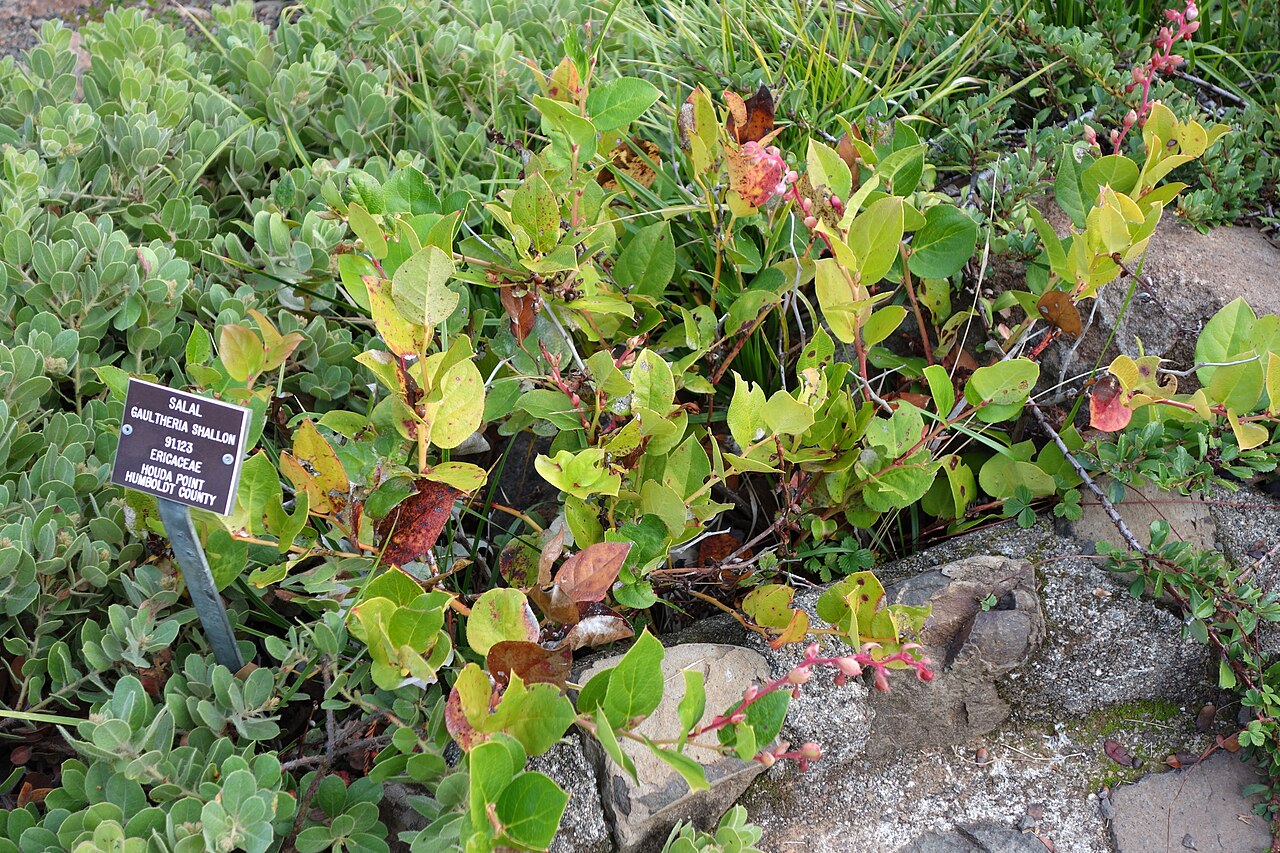
Salal is a Pacific Northwest evergreen shrub with glossy, leathery leaves, white-to-pink bell flowers in spring, and dark purple, seedy berries in late summer — used for jam, jelly, and pies, and famously as florist greenery. Grow it in partial shade to full sun in moist, acidic, well-drained, humus-rich soil; it tolerates shade better than most fruit shrubs and makes a handsome woodland groundcover or hedge, 3-5 feet tall in sun and taller in shade. Plant in fall or spring with minimal root disturbance, mulch with bark or leaf mold, and let it spread by rhizomes into a thicket. It is slow to establish but long-lived and nearly pest-free once settled. Note: salal can be vigorous in ideal Pacific Northwest conditions and has naturalized aggressively in parts of the UK — in its native range it is a well-behaved woodland plant, but site it where a thicket is welcome.
Water & feeding
Water regularly while young and in dry summers; established salal tolerates shade drought better than sun drought, but fruits bigger with summer water. Mulch to hold moisture. Feed lightly with an acid fertilizer in spring if growth is weak; in rich woodland soil, mulch is often enough.
Common problems
- Alkaline soil — leaves yellow and plants stall; acidify before planting.
- Dry sun — leaves scorch and fruit shrivels; shade and mulch help.
- Slow establishment — salal sits still its first year while rooting; be patient.
- Spreading thickets — mow edges if it wanders where it is not wanted.
Harvest
Pick when berries turn fully dark purple-black and soft; they are seedy and mildly sweet, best cooked. Make jam, jelly, and pie filling, or eat fresh in small handfuls. The leaves, famously, last for weeks in arrangements — a shrub that feeds you and decorates the house is doing double duty.
Browse all plant & pest guides
Saving seeds
Salal seed is tiny, slow, and fussy about soil — and the sources disagree about whether it needs winter first, so here is the honest version. Collect ripe berries in fall, when they are dark blue-black and soft. Mash the berries in a little water, let the pulp float off, and save the tiny seeds that sink. Rinse them and let them dry on a paper towel for a day.
Then comes the disagreement. Some references say salal seed needs a cold, moist stretch — pre-chill for 4 to 10 weeks in the fridge — while the University of Washington protocol says the seed does not require stratification at all, just light. Both agree on the part that matters most: surface-sow on a moist, acidic mix — peat and perlite, with no lime anywhere near it — and give the seed at least eight hours of light a day. Keep it moist and cool, around 40 to 50°F at first, and expect sprouts in three to eight weeks. Seedlings are tiny and slow-growing at first, and they are liable to damping off, so use a sterile mix, water lightly, and give them air. Salal seed stores reasonably well cool and dry — one study found 73% germination after three years at 40°F — so you can hold seed over winter without worry.
Save seed from berries that were fully ripe, from a healthy plant, and sow more than you need — germination is uneven, and a generous sowing is the practical approach. Rhizome cuttings are the faster route if you have a plant to divide from, and they give you a true copy of the parent, while seedlings vary.
And a Florida note, because it matters: salal is a Pacific Northwest native that wants cool, humid, acidic forest conditions, and it is not a Florida plant. Our heat and humidity will test it hard, and in most of Florida it will struggle no matter what you do. If you are growing it in Florida at all, do it as a curiosity in deep shade with an acidic peat mix, and treat the seed saving as an experiment, not a plan.
Varieties
Every named variety of Salal with its own growing guide:
- Cascade Sunrise Salal — The new salal: a patented, upright selection with vivid orange-red new growth, narrower leaves, and the same edible berries.