
🌵 Saltbush
What it looks like
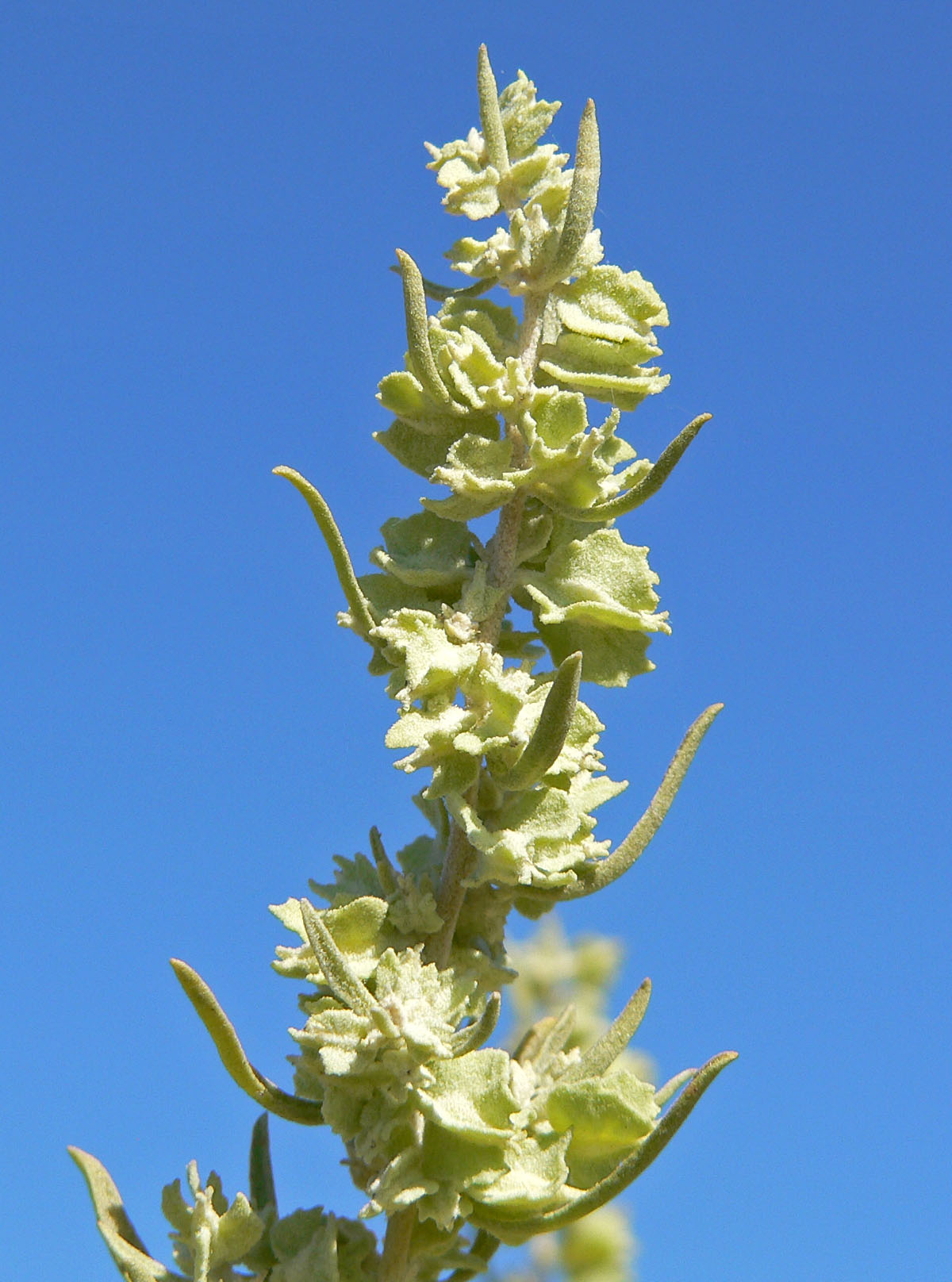
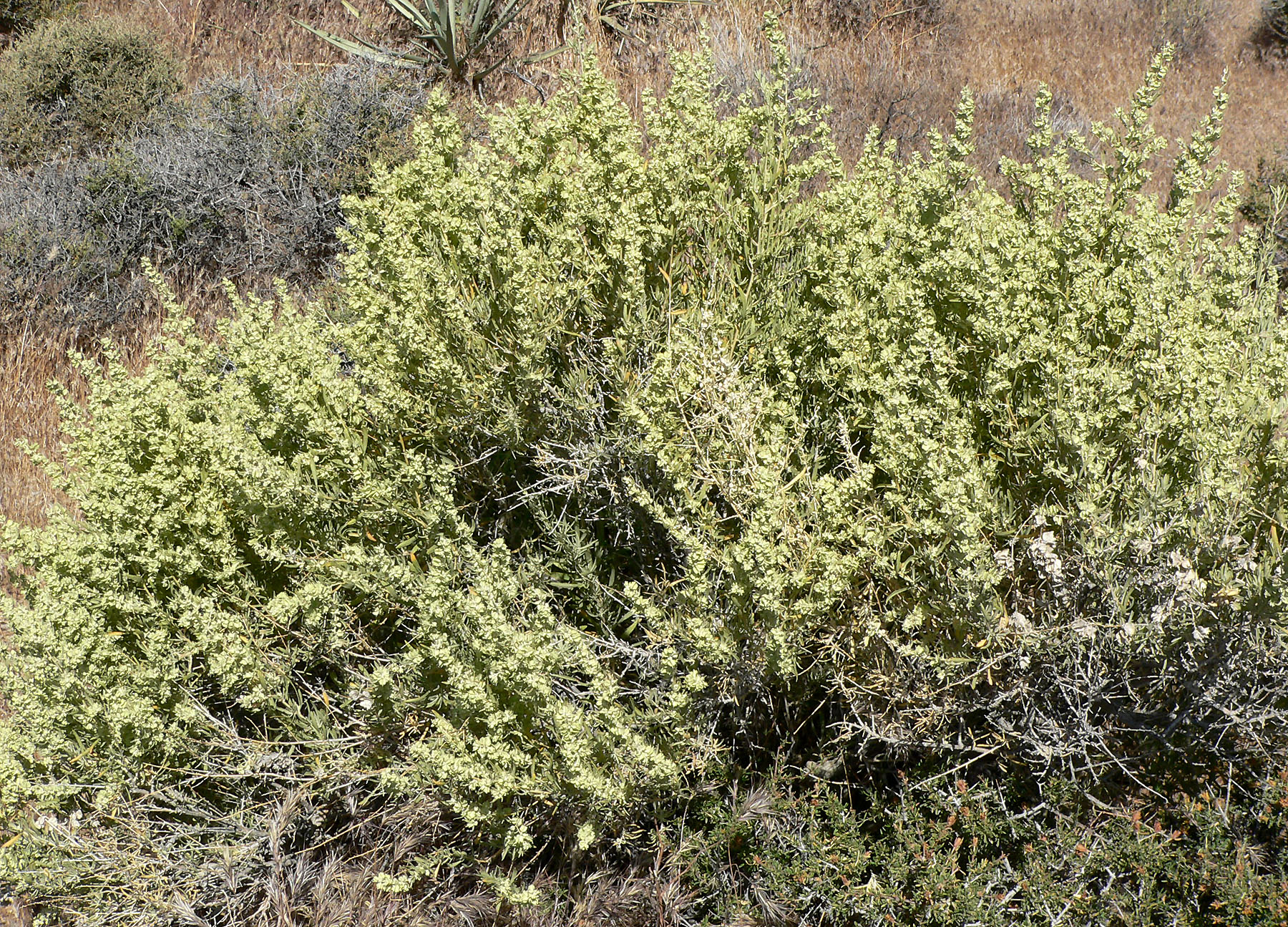
Saltbushes are the tough customers of the plant world. The genus Atriplex — in the amaranth family, Amaranthaceae (older books put it in Chenopodiaceae, the goosefoot family) — contains roughly 300 species of herbs and shrubs scattered across the world’s dry and salty places: deserts, alkali sinks, coastal bluffs, salt marshes, and roadsides where winter road salt has poisoned the ground for everything else. If a site is too dry, too salty, or too alkaline for normal garden plants, there is probably an Atriplex that considers it home.
Most saltbushes share a look: grey-green to silvery foliage, often with a mealy or scurfy coating of tiny scales. Those scales are not decoration — they are salt-excreting bladders on the leaf surface that store salt and eventually burst, releasing it onto the leaf. That is why the leaves taste salty, why they look frosted, and why the plant can handle soils that would kill most shrubs. The flowers are small and unshowy — saltbushes are wind-pollinated, so they do not bother with petals — in yellowish-green spikes or clusters. The show, where there is one, comes later: in fourwing saltbush, the seeds are enclosed in papery bracts with four wings at right angles, which catch the light and flutter in the wind like tiny pale moths.
Size varies wildly by species: from low annual herbs under two feet to big shrubs 10 feet tall and as wide. Growth habit varies too — some are evergreen, some semi-evergreen, some deciduous — so the first rule of growing saltbush is to pick the right species for your climate, not just any plant with “saltbush” on the label. This is a genus guide, not a single-plant guide, and the species section below is where the real decisions happen.
One reassuring fact for beginners: salt tolerance does not mean salt dependence. Fourwing saltbush, for example, tolerates saline and alkaline soils beautifully, but it also grows well on ordinary non-saline sandy, gravelly, and rocky soils. Think of it as salt-tolerant, not salt-addicted. You do not need to salt your garden to grow it — please do not salt your garden.
How to grow
Start with full sun and sharp drainage — those two are non-negotiable across the genus. Saltbushes cannot grow in shade, and most hate wet feet; flooding harms even the tough ones. Beyond that, match the species to your site: desert species want lean, well-drained, even gravelly soil and as little water as you can decently give them, while the Mediterranean and coastal species are more forgiving of garden soil and some irrigation.
Soil pH is where saltbushes flip the usual garden advice upside down. Most garden plants want slightly acid to neutral soil; many saltbushes prefer neutral to alkaline soil, tolerate very alkaline soils, and shrug at lime. If your soil is acidic, saltbush is probably not your plant unless you are growing the garden orach (see species notes), which is the odd one out as a garden vegetable.
Propagation is usually by seed, sown in spring, or by cuttings for shrub species. Seed germination can be improved by the usual desert-plant tricks — some species benefit from a cold period or from soaking — but many germinate readily in warm, well-drained seed mix. Shrub species are best planted young and left to establish a deep root system: fourwing saltbush, for example, can send roots 20–40 feet deep, which is why it is so good at erosion control and so bad at transplanting once established. Plant it where it can stay.
Pruning is light: remove dead wood, shape hedges after flowering, and cut back leggy growth. Many saltbushes respond well to hard pruning and can be kept as hedges or screens — quailbush in particular is used as a hedge and windbreak in saline sites.
Florida note: most saltbushes are desert or Mediterranean plants, not Florida natives, and they are a poor fit for Florida’s humid, acidic, summer-wet climate — the combination of humidity and wet soil rots the plants that love dry air and sharp drainage. Coastal gardeners with salty, sandy, well-drained ground might trial Mediterranean saltbush (A. halimus) as an experiment, but treat it as a trial, not a recommendation, and do not plant any saltbush near natural areas without checking its weed status locally.
Water & feeding
Once established, most saltbushes need very little water — that is the point of them. Fourwing saltbush thrives on 6–14 inches of annual rainfall in its native desert range. In a garden, water deeply but infrequently to establish, then back off. Overwatering is a more common killer than drought: soggy soil, especially in winter, rots roots and invites disease. Quailbush is the partial exception — it grows biggest where it has unlimited moisture, along desert watercourses — but even it wants drainage, not a swamp.
Feeding is almost unnecessary, and on poor soils it is actively unhelpful to pamper them: saltbushes are adapted to nutritionally poor soils and do well in them. A light dressing of compost at planting is plenty. Do not feed nitrogen heavily; you will get soft, leggy growth that flops and is more vulnerable to frost. The plant’s whole survival strategy is “make do with little,” and fertiliser argues with that strategy.
Common problems
- Wrong species, wrong climate. The commonest failure: planting a desert species in a wet, humid garden, or a tender coastal species where winters hit -20°F. Check the species notes below against your zone before buying.
- Wet feet. Poor drainage and winter wet kill more saltbushes than drought, salt, or cold combined. If your ground holds water in winter, plant on a slope, a raised bed, or a mound.
- Shade. Saltbushes cannot grow in shade. A spot that gets less than full sun produces weak, straggly plants that never thrive.
- Self-seeding and local dominance. Some species can become locally dominant in disturbed saline or riparian zones. Do not plant saltbush near sensitive natural areas, and deadhead or remove seedlings if it starts spreading beyond its welcome.
- Gender matters for fruit. Fourwing saltbush is dioecious — male and female flowers on separate plants — so only female plants produce the famous four-winged fruits, and you need a male nearby for pollination. If you want the winged display (and the bird food), plant several plants, not one.
- Salty leaves near other plants. Salt excreted onto leaves and dropped with leaf litter can raise salinity in the soil directly beneath a big saltbush. Give salt-sensitive neighbours some distance.
Harvest
Harvest depends entirely on which saltbush you grew. Garden orach (A. hortensis) is the vegetable of the family: pick young leaves for salads and cooking, like spinach, through the season. Mediterranean saltbush (A. halimus) is also eaten as a leafy green — its leaves have a mild, salty, spinach-like flavour and can be picked a few branches at a time through the year, which conveniently prunes the shrub as you go.
For the shrub species, the “harvest” is wildlife food and landscape value rather than dinner: the seeds feed quail, other birds, and small mammals through winter, and the foliage provides cover. If you want seed for propagation, collect the winged fruits of fourwing saltbush in late summer to autumn, when the bracts are dry and papery, and sow them the following spring. Note that seed collected from your own plants may hybridise — fourwing saltbush hybridises readily with other Atriplex species — so saved seed may not come true to type.
Do not eat shrub saltbush leaves casually: they are strongly salty, and while some species have traditional food uses, the shrub species are best left as habitat plants. Stick to orach and Mediterranean saltbush for the kitchen.
Browse all plant & pest guides
Saving seeds
Saltbush seed is easy to save — the plant makes it in abundance, and it practically falls into your hand. After the flowers fade, small dry seed heads form along the stems, and when they turn tan and papery, snip the whole stem into a paper bag and let it finish drying indoors. Rub the heads gently to free the small flat seeds, winnow away the chaff, and store the seed in a paper envelope in a cool, dry place. Saltbush seed keeps for a few years when it is dry.
Sow in spring or fall, when the weather is warm. Saltbush seed germinates best around 65 to 75°F, so sow shallowly — barely cover the seed — in a well-draining mix and keep it moist until germination. Some saltbush seed carries a salty coating that inhibits germination, so a good rinse or an overnight soak before sowing helps wash it off. Germination usually comes in one to three weeks, and seedlings grow fast once they are up. Saltbush self-seeds freely in dry, sunny spots, so a patch you plant once will often return on its own for years.
Save seed from a healthy plant with good form and heavy flowering, and sow more than you need. Saltbush crosses freely with other saltbushes in the neighborhood, so if you grow several types for seed in the same season, your saved seed may produce plants that are a mix. For a tough, salt-tolerant shrub, a little mixing does not matter much — but if you want a specific species, grow only one type for seed at a time.
In Florida, saltbush is in its element in coastal and dry spots: it loves sun, tolerates salt, drought, and poor soil, and shrugs at neglect. Start seedlings in pots and plant them out once they are sturdy, in a spot with sharp drainage and room to grow. And dry your seed thoroughly before storing it, because our humidity is the enemy of stored seed.
Species in this group
Fourwing saltbush — Atriplex canescens, also called chamiso and chamiza. The signature saltbush: a heavily branched evergreen to semi-evergreen shrub, typically 2–6 feet tall, occasionally to 10 feet, native to the western and central United States and northern Mexico. Grey-green foliage, four-winged papery fruits, blooms April to October, hardy roughly zones 4–9 (sources vary by ecotype, with some northern forms hardier than southern ones). Also the plant behind the butterfly guides’ “fourwing saltbush” and “shadscale” mentions — note that true shadscale is usually a different species, A. confertifolia, but the butterfly guides use the name for this plant, so both names point here.
Garden orach — Atriplex hortensis. The vegetable saltbush: an annual leafy green grown for its spinach-like leaves, in green, red, and purple forms. Existing orach growing guides cover this species in detail, so it is mentioned here as a relative only, not duplicated.
Mediterranean saltbush — Atriplex halimus, also called sea orach. A woody, semi-evergreen shrub to about 8 feet, native to the Mediterranean, North Africa, and parts of Asia. Silvery, diamond-shaped leaves, highly salt-tolerant, edible as a salty spinach-like green, hardy roughly zones 7–10. The most garden-friendly shrub saltbush for mild coastal climates.
Quailbush — Atriplex lentiformis, also called big saltbush. A large, fast-growing evergreen desert shrub, 3–10 feet tall and often wider, native to the southwestern United States and northern Mexico. Scaly grey-green leaves, creamy flowers in summer to autumn, tolerant of saline and alkaline soils, drought, and some flooding, hardy roughly zones 7–10 (tolerates cold to about 15°F). Excellent for hedges, windbreaks, and slope stabilisation in arid gardens — but too big for small gardens.
Spearscale orach — Atriplex patula. A widespread annual of disturbed and saline ground, much smaller and weedier than the shrubs above — typically under 3 feet, with narrow, spear-shaped leaves. More often encountered as a wild plant than deliberately grown; included here because butterfly guides mention the genus broadly, and this is one of the common weedy species a gardener is likely to meet.