
🍇 Sea Grape
What it looks like
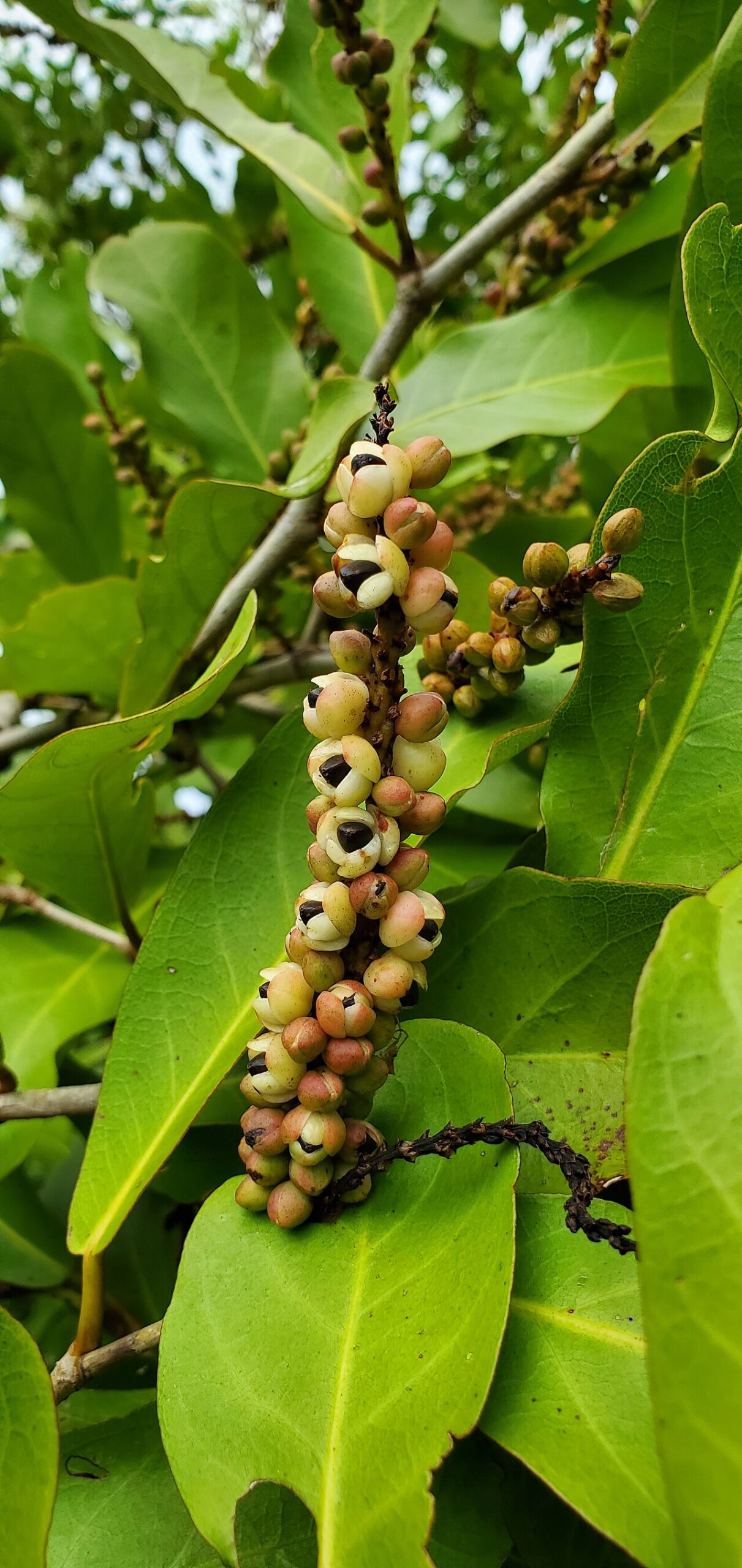

Sea grape is a sprawling shrub or small tree with huge, round, leathery leaves that turn red and orange in fall and winter, and with a smooth, mottled bark that peels in patches. In summer, female plants carry long, hanging clusters of grape-like fruits that ripen from green to purple, and male plants carry the long flower spikes that pollinate them.
In a garden it can be kept as a dense hedge, a windbreak, or a small tree, depending on how you prune it. Left alone on a dune it sprawls and roots where it touches sand, forming a thicket that holds the dune together, which is exactly what it evolved to do.
Why this variety
Choose sea grape for a coastal garden where salt spray, wind, sand, and drought defeat most plants. It tolerates all four, it screens in winter, it colors up in fall, and it fruits in summer, which is more seasons of interest than most coastal shrubs offer.
It is also a Florida coastal icon for a reason: it is native, it stabilizes dunes, it feeds birds with its fruits, and it gives a garden a tropical look without needing tropical coddling. A sea grape hedge is a statement that you garden with the coast, not against it.
How to grow
Plant in full sun in sandy, well-drained soil, in fall or spring. Dig a hole twice the pot width, water deeply, mulch, and give it room: a sea grape wants width. If you want fruit, plant a female plant, or several plants so you have both sexes; a lone male will flower but never fruit.
Prune to shape it after fruiting, or clip it into a hedge in spring. It tolerates hard pruning and regrows well, but a hedge that is sheared constantly will fruit less, so decide whether you want fruit or a formal hedge.
Water & feeding
Water deeply once or twice a week while it establishes, then water in extended drought. Once rooted, sea grape is drought tolerant and salt tolerant, and it handles sandy soil that drains fast.
Feed with compost in spring if the sand is very poor. It does not need heavy fertilizer, and in rich soil it grows fast enough to need more pruning.
Common problems
No fruit on a lone plant: sea grape is dioecious, with male and female plants. A single plant may be male and never fruit, or female with no male nearby to pollinate it. Plant several if fruit matters.
Too large for a small space: sea grape grows big. If you need a 4-foot plant, plant a shrub instead of shearing a tree for life.
Salt burn on inland plants: oddly, sea grape can suffer if it is overwatered with fresh water in heavy soil. It wants sand and drainage, not a soggy bed.
Wild harvesting: do not harvest sea grapes from wild dune plants. Plant nursery-grown plants in your own garden, and leave wild plants to hold the dunes.
Harvest
The fruit harvest is real, but only on female plants, and only when the fruits are fully ripe and purple. Ripe sea grapes are sweet-tart and make good jelly and juice, but unripe green fruits are astringent, so taste one before you pick a cluster.
Leave plenty of fruit for the birds, which are the plant’s seed dispersers and the reason it is on the dune in the first place. A sea grape that feeds both you and the birds is a plant doing its full job.
Browse all plant & pest guides
Saving seeds
Sea grape seed is easy to save — the plant makes it in abundance, and it practically falls into your hand. Eat the fruit, save the seeds from the ripest clusters, and clean the pulp off: mash the fruit in a little water, let the pulp float off, and save the hard seeds that sink. Rinse them and let them dry for a day.
Sow fresh, within days — sea grape seed loses viability as it dries out, so do not leave it on the counter for weeks and expect it to sprout. Sow about an inch deep in a warm, well-draining mix and keep it moist and warm, around 75 to 85°F. In Florida that is just a warm, bright spot out of scorching direct sun. Fresh seed germinates readily, usually within two to four weeks. Keep the mix damp but never soggy; a seed that dries out is dead, and one that sits in water will rot. Seedlings grow fast once they are up, and they can reach several feet in their first season.
The honesty part is the same one that applies to most fruit trees, with a twist: sea grape is dioecious, so each plant is either male or female, and you cannot tell which until it flowers. Only the females bear fruit, so grow several seedlings to be confident of getting both sexes — and know that a male sea grape is still a handsome tree, with the big round leaves that make the species worth growing. Named selections are propagated by cuttings or air layering for a reason. Seed is for the experiment and for a free tree that will still be beautiful, even if it never fruits.
Save seed from fruit that was fully ripe and sweet, from a healthy tree, and sow more than you need. In Florida, sea grape is in its element: it is the coastal icon, tolerant of salt, wind, and poor soil, and it grows from the Panhandle to the Keys. Start seedlings in pots and plant them out once they are sturdy, in a spot with room to grow — and know that in some coastal counties, trimming a sea grape is regulated, so check local rules before you prune.