
🌼 Shasta Daisy
What it looks like
How to grow
Plant in spring or fall in well-drained soil in sun — Shasta daisy is a hybrid bred in California by Luther Burbank from four daisy species, and it has been a garden staple ever since for one reason: big white flowers, long bloom, zero fuss. ‘Becky’ is tall and sturdy; ‘Snowcap’ stays compact. Deadhead for rebloom, and divide every 2–3 years — crowded Shastas bloom less and die out in the center. In hot climates, afternoon shade extends bloom.
Water & feeding
Water consistently through bloom; Shastas wilt visibly when dry and recover fast when watered. Good drainage matters — wet winter soil kills more Shastas than cold does.
Common problems
- Aphids on buds
- Leaf spot and crown rot in wet, poorly drained soil
- Flopping on tall types in rich soil — stake or choose compact cultivars
Harvest
Cut flowers often — Shastas are superb cut flowers and cutting encourages rebloom. Shear back after the first flush for a second round of bloom in fall.
Browse all plant & pest guides
Saving seeds
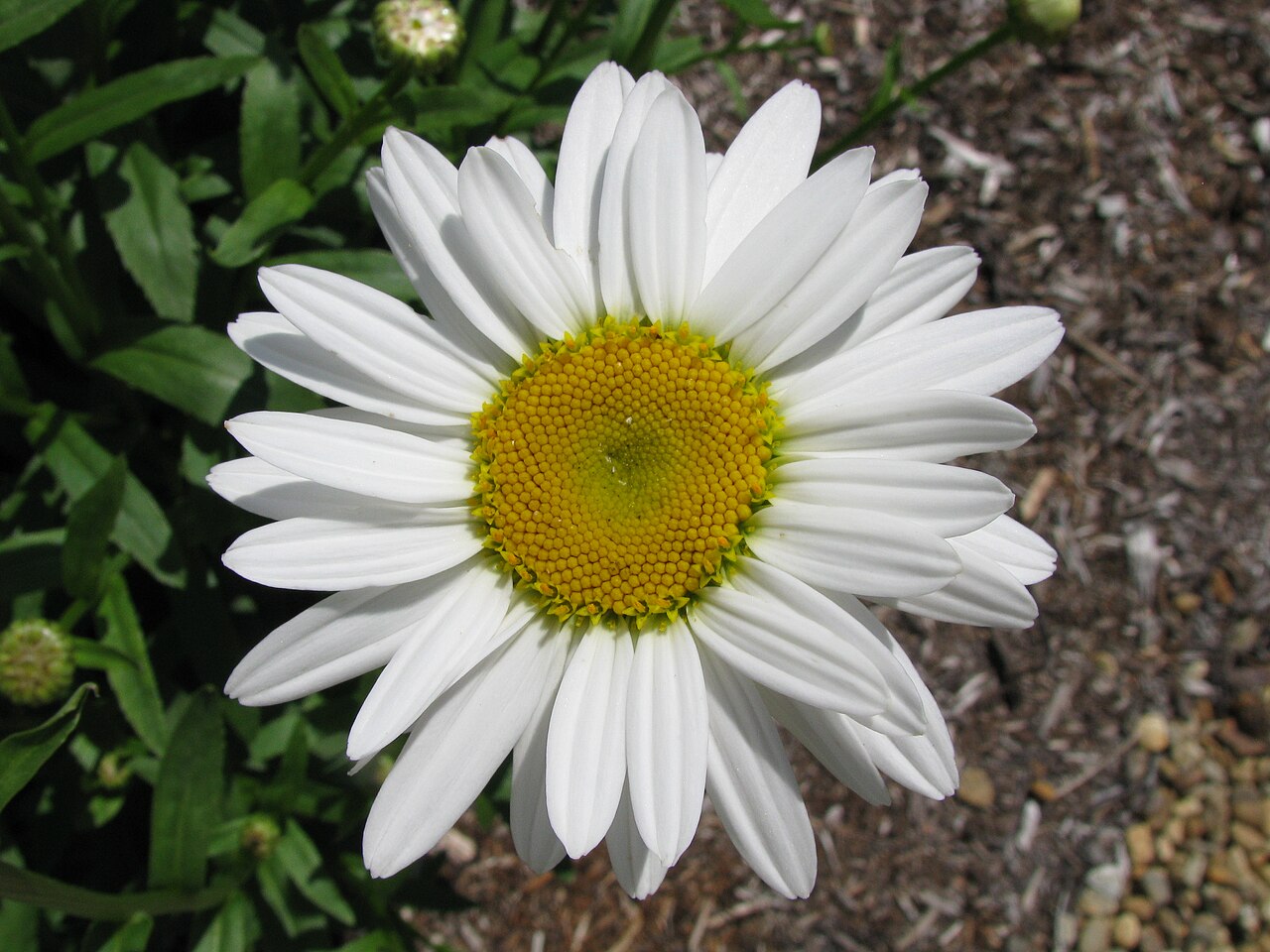
Hybrid honesty first: Shasta daisy is Leucanthemum × superbum, a garden hybrid, and seed germinates fine but the seedlings will not match the parent. White petals, yellow centers, and a general daisy shape, yes — but the exact flower size, height, and doubling of a named cultivar will reshuffle. Named cultivars come only from division.
Let a few flower heads ripen on the plant until they are dry and brown, then shake the seed out into a paper bag. Sow on the surface of moist mix, because the seed needs light to germinate, and keep it warm — germination usually comes in two to three weeks. You can also direct-sow in fall and let the seed wait out winter in the soil.
Division is the real propagation for this plant: divide clumps every two to three years in spring or fall, and it is also how you keep a Shasta daisy vigorous instead of a hollow ring of stems with a dead center. A divided plant is a plant you already know.
Shasta daisies self-seed lightly, so deadhead if you do not want volunteers popping up in the path. And the Florida honesty: Shasta daisy is a cool-climate perennial that is short-lived in Florida heat. Treat it as a cool-season flower in north and central Florida, enjoy it while it lasts, and let it reseed itself if it is happy.
Varieties
Every named variety of Shasta Daisy with its own growing guide:
- Alaska Shasta Daisy — The old-fashioned shasta: single white daisies on sturdy 2- to 3-foot stems — the cottage-garden standard since the 1890s.
- Becky Shasta Daisy — The tall white daisy: 3- to 4-foot stems of classic white daisies — the shasta that anchors a summer border.
- Snow Lady Shasta Daisy — The dwarf shasta: compact 10- to 12-inch mounds of white daisies — the shasta for edges, pots, and small gardens.