
🌼 Shepherd’s Needle
What it looks like

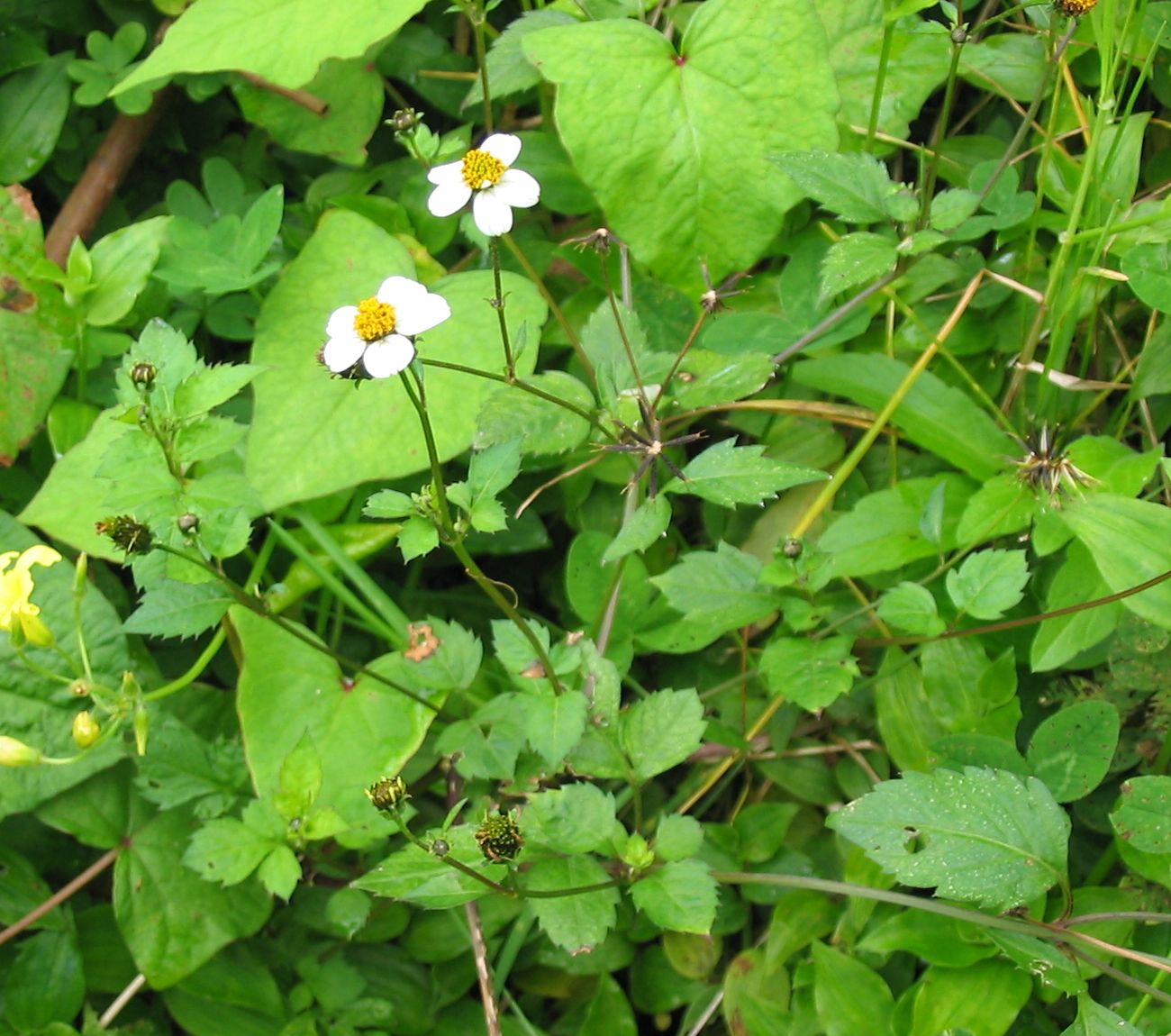
First, the name-clearing, because this plant is a champion of mistaken identity and the butterfly guides are part of the confusion. Shepherd’s needle is an old common name that usually belongs to a completely different plant, the Old World herb Scandix pecten-veneris, whose long, needle-like fruits really do look like a shepherd’s needle. But the butterfly guides on this site do not mean that plant. When they say shepherd’s needle, they mean Bidens pilosa: the white-peacock guide says so outright, naming shepherd’s needle in Florida as Bidens pilosa, also called Spanish needles, and the barred-yellow, sleepy-orange, and queen guides gloss it the same way, as the plant this site profiles as Spanish needles. So this guide is about Bidens pilosa, the warm-climate beggarticks — and it is not about Scandix at all.
One more tripwire before we go further: the Spanish needles profiles already on this site are Bidens alba, a close cousin, not Bidens pilosa. The two are easy to mix up in the field — both are white-rayed, yellow-centered, roadside bidens of Florida — and gardeners use the name Spanish needles for both. They are not the same species, and this guide does not pretend otherwise. If you followed a link here from a butterfly guide that said shepherd’s needle, Bidens pilosa is the plant you want.
Bidens pilosa itself is an erect, branching annual or short-lived perennial in the aster family, Asteraceae, native to tropical America and now weedy and invasive worldwide. It usually stands somewhere between about 1 and 5 feet tall, though pampered plants can push taller and starved ones flower at ankle height. The stems are grooved and four-angled, often rooting at the lower nodes where they sprawl and touch the ground. Leaves are opposite, mostly divided into 3 to 7 sharply toothed, lance-shaped to oval leaflets, softly hairy on both surfaces. The flower heads are small, about half an inch across, carried singly or in open clusters at the branch tips: 5 to 8 white, broadly elliptic ray florets — sometimes absent altogether — around a central disk of yellowish tubular florets. It flowers through much of the year in warm climates, chiefly summer into autumn where seasons bite. Then comes the part you will remember: the fruit is a slightly curved, four-angled black achene, tapered at both ends, tipped with 2 to 3 barbed awns that catch on clothing, fur, and feathers. That is the beggartick mechanism, and it works so well that a single plant can produce thousands of seeds that stay viable for years.
How to grow
Here is the honest truth about growing Bidens pilosa: in Florida and across the warm South, you almost certainly do not need to plant it. It plants itself. It colonizes disturbed ground, roadsides, field margins, garden beds, ditch banks, and wetland edges, and it does so with the cheerful persistence of a plant that has never heard the word no. If you want it as a butterfly nectar plant — and butterflies do work it hard, which is why it appears in nectar lists for sulphurs, queens, white peacocks, and others — the practical move is usually to let a patch stand at a sunny garden edge rather than to sow it deliberately. Give it full sun to part shade and soil that stays at least a little moist, and it will handle the rest, including soils from sand to clay. It cannot grow in deep shade, and it sulks in ground that stays bone dry, but between those two guardrails it is famously unbothered.
If you are starting from seed on purpose, sow on the surface or barely covered in warm soil, because this is a light-loving germinator of open ground. Thin volunteers to give each plant elbow room, and expect flowering within weeks of establishment in warm weather. There is no nursery tag to read and no cultivar to choose: the wild plant is the plant. Gardeners in cooler zones can treat it as a summer annual that arrives with the heat and is finished by frost; PFAF lists it for zones 8 to 12, which is a polite way of saying it is a tropical plant that tolerates a mild winter, not a hardy perennial. In Britain, the same source doubts it will thrive outdoors at all, which tells you how much it leans on warmth.
The Florida note matters here. Bidens pilosa is at home in Florida: it is the shepherd’s needle of the white-peacock guide’s ditch banks and the barred-yellow guide’s open ground. That also means it is a weed with ambitions, and a patch left entirely alone will seed into beds, paths, and lawn edges. Manage it the way you would any enthusiastic self-seeder: enjoy the flowers, then decide how many seed heads you are willing to let ripen. A patch mowed or deadheaded before seed set gives you the butterflies without the laundry bill.
Water & feeding
Water is the one input Bidens pilosa genuinely appreciates. It prefers moist soil and grows in damp fields, wetland margins, and ditch banks, though it tolerates relatively dry spells once established. In a garden setting, that translates to: water a managed patch the way you would water any flower bed, and do not be surprised if the volunteers in the damp corner outgrow the ones in the dry corner. It is not a drought plant in the yucca sense, and it is not a pond plant either; it wants that middle ground of soil that dries a little between waterings but never bakes to dust.
Feeding is simple to the point of comedy: do not bother. This is a plant of disturbed, often poor ground, and rich feeding mostly buys you taller, floppier stems and more seed. A mulch of compost or worm castings around a managed patch is plenty, and honestly more than the roadside plants ever get. If your patch looks leggy and sparse, the problem is almost never fertility; it is usually shade, drought, or both. Move your expectations, not your fertilizer bag: a lean, sunny, moist patch is a floriferous patch.
Common problems
The main problem with Bidens pilosa is success. It self-seeds aggressively, its seeds travel on animals and people, and a single season of neglect can stock your soil with a seed bank that keeps volunteering for years. The control is unglamorous and effective: pull or mow before seed set, and do not compost seed heads unless your pile genuinely runs hot. The second problem is the seeds themselves, which are barbed and cling to socks, shoelaces, pet fur, and fleece with a dedication that borders on the personal. Long pants and a brush by the back door are legitimate garden tools where this plant grows.
Pests and diseases are a minor chapter. As a vigorous wild plant it is rarely troubled enough for a gardener to notice, and it is itself a host for the Bidens mottle virus, a pathogen of many aster-family plants — one more reason not to let it sprawl through a bed of prized dahlias or garden bidens. Its other problem is reputational: because it looks like a weed, it gets weeded. If you are keeping a patch for butterflies, mark it, or some well-meaning helper will pull your nectar bar and leave the lawn looking tidy and the sulphurs looking elsewhere.
Harvest
There is no harvest in the vegetable-garden sense, and this guide does not recommend eating Bidens pilosa on a whim. The young leaves are eaten cooked in some traditions and the flowers have been used as a tea substitute, but the plant carries saponins and its identity is easy to confuse with its cousins, so foraging it for the table demands a species-level identification and a trusted reference, not a butterfly guide. The harvest that matters here is the one the butterflies make: nectar through the warm months, and seeds for small birds later. If you keep a patch, the most useful thing you can harvest is seed for next year’s patch — snip a few dry heads into a paper bag, label it honestly as Bidens pilosa, and store it dry. Or, more likely, just let the patch do what it was going to do anyway, and harvest the sight of sulphurs and queens working small white-and-yellow flowers on a ditch bank in August.
Saving seeds
The joke about shepherd’s needle is that nobody needs to save this seed — it saves itself. Bidens pilosa volunteers everywhere in Florida, and the needle-like seeds hitchhike home on socks, shoelaces, and dog fur. If you want it in your garden — and it is a butterfly buffet, with sulphurs and skippers working the little white-and-yellow flowers all day — just let a few plants stand and it will handle the rest.
To save it deliberately: let the flower heads dry on the plant until the black needles are stiff and dry, then strip them into a paper bag. Sow on the surface of moist soil, warm, with light reaching the seed — germination comes in one to two weeks with no treatment at all. Or scatter seed where you want a patch and step back.
The caution is the point. Shepherd’s needle self-seeds aggressively and will colonize any bare soil it finds, and every plant makes hundreds of hitchhiking seeds. If you do not want a patch, pull plants before they set seed — and check your socks on the way inside. A patch you planted on purpose is a butterfly garden; a patch you ignored is a weed problem, and the difference is only whether you meant it.
It is a naturalized weed in Florida, zones 8 to 12, frost-tender and annual or short-lived perennial elsewhere. Folk traditions use it as food and medicine, but this guide does not vouch for eating it — the seed note here is for the butterfly garden, where it earns its keep as a free, self-renewing nectar plant.
Species in this group
- Shepherd’s needle, hairy beggarticks — Bidens pilosa: This guide’s plant. The butterfly guides’ shepherd’s needle, also called Spanish needles in those guides; a worldwide warm-climate weed and butterfly nectar plant.
- Spanish needles — Bidens alba: The close cousin behind this site’s existing Spanish needles profiles. White rays, dark-centered disk, enthusiastic self-seeder, beloved by butterflies and bees — and a different species from Bidens pilosa, despite sharing the common name.
- Apache beggarticks — Bidens ferulifolia: The garden bidens, a tender perennial from Mexico and the southwestern United States with ferny leaves and golden-yellow daisies. The plant in garden centers, not the roadside weed.
- Three-lobe beggarticks — Bidens tripartita: A wetland species of damp ground and ditch edges, with yellow flower heads that are often disk-only or short-rayed, and three-lobed leaves.
- Burr marigold — Bidens laevis: A smooth, wetland beggarticks of pond edges and marshes, with showy yellow daisies on tall stems.
- Lemmon’s beggarticks — Bidens lemmonii: A southwestern species with its own growing guide, and a reminder that bidens in a butterfly guide can mean a particular wild species, not the garden annual.
- Shepherd’s needle in the Old World sense — Scandix pecten-veneris: Not this plant. The Eurasian herb whose needle-like fruits gave the name its start, and the reason this guide states its scope so plainly: when the butterfly guides say shepherd’s needle, they mean Bidens pilosa.