
🌿 Simpson’s Stopper
What it looks like
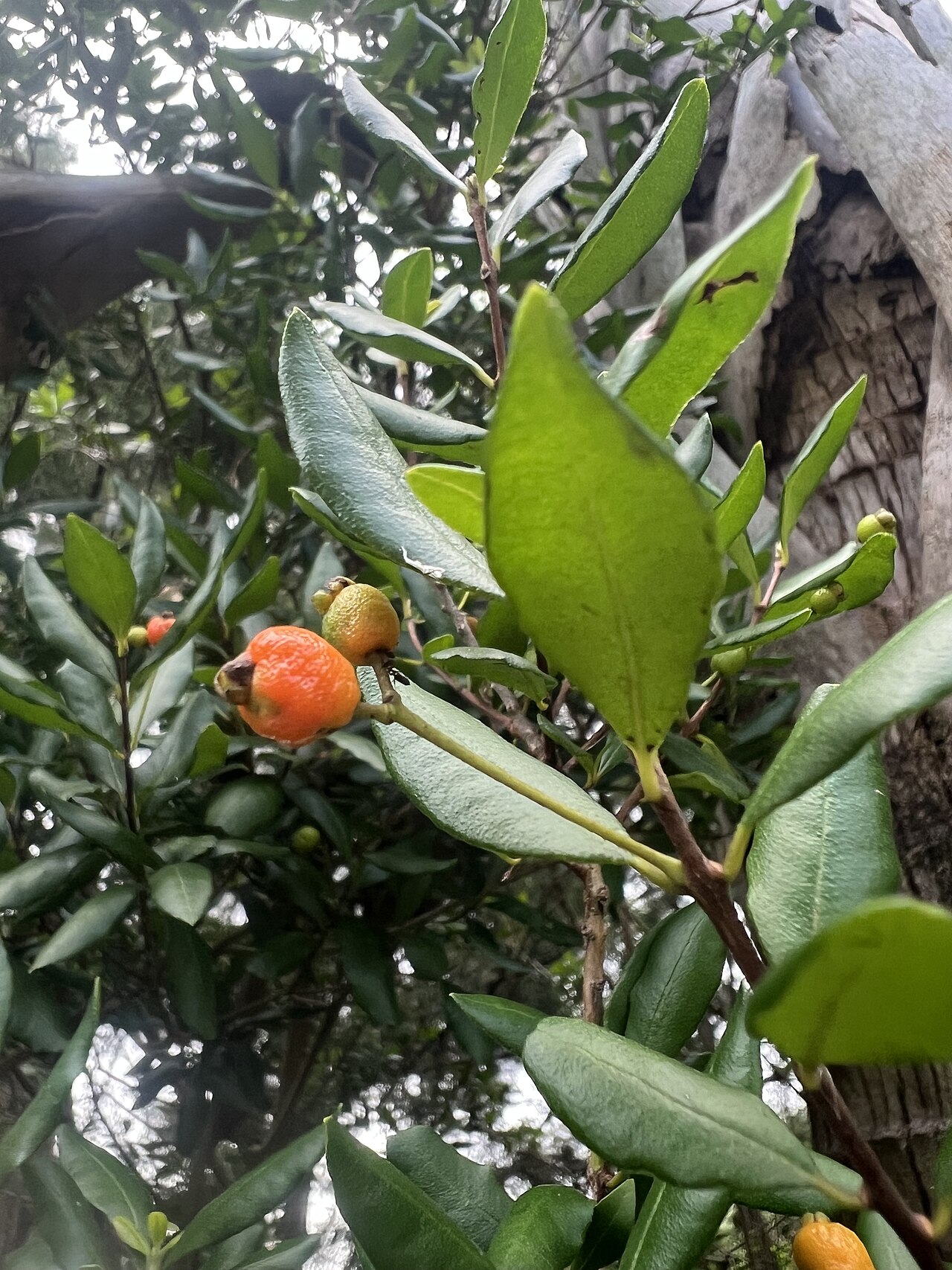
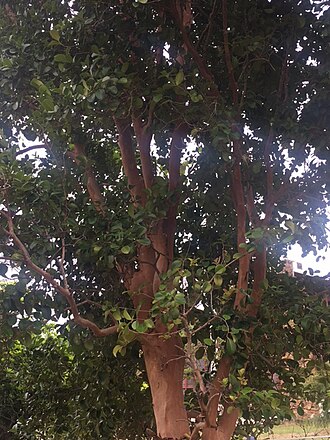
Simpson’s stopper is a four-season native shrub or small tree, 10 to 20 feet tall, with dense evergreen foliage, fragrant gardenia-scented white flowers, red berries, and peeling cinnamon bark that gives it interest even when it is not flowering or fruiting. The flowers are small, white, and intensely fragrant, like gardenia without the fuss, and they are followed by red berries that birds love. The bark peels in cinnamon-colored patches, revealing lighter bark beneath, so the plant looks good in winter when leaves and flowers are not the show.
It was named Florida’s 2008 plant of the year, an honor that reflects how well it performs in Florida gardens: it is a specimen, a hedge, or a background shrub, and it can be trained into a small tree, which makes it one of the most versatile native shrubs for central and south Florida. The dense evergreen foliage gives it structure all year, and the fragrance, fruit, and bark give it three more seasons of interest on top of that.
Why this variety
Choose Simpson’s stopper when you want a native hedge or specimen that does four jobs at once: fragrance in spring and summer, fruit for birds in fall, peeling bark in winter, and evergreen structure all year. Most native shrubs do one or two of those jobs; Simpson’s stopper does all four, and it does them with almost no pests and with drought tolerance once established. It is the shrub for a Florida garden that wants to look intentional, smell wonderful, and feed birds, without needing a spray program or a irrigation schedule.
It is also a plant with a name worth knowing: stopper comes from the old use of its relatives’ wood and bark, and Simpson refers to Charles Torrey Simpson, a Florida naturalist who championed Florida’s native plants. Planting it is a small act of Florida botanical history, and a very practical one.
How to grow
Plant in spring or summer in full sun to part shade in well-drained soil, spacing about 6 feet apart for a hedge, farther as a specimen, and water twice a week through the first growing season. Once established it is drought-tolerant and largely pest-free, and it tolerates rocky soils that defeat many shrubs. Prune to any shape you like; more sun means more flowers and a more compact habit, while shade makes it leggier. Train it into a small tree by removing lower branches if you want a tree form, or let it grow as a dense shrub for a hedge.
Florida note: Simpson’s stopper is a Florida native for central and south Florida, and it is a genuine Florida plant, not an import, for gardens in zones 9 through 11. In north Florida, trial it in a protected spot, and do not expect it to survive a hard freeze without damage; in central and south Florida, it is a sure thing, a hedge, a specimen, or a small tree that will perfume your garden every spring.
Water & feeding
Water twice a week through the first growing season, then sparingly. Once established, Simpson’s stopper is drought-tolerant and needs almost no supplemental water in most Florida gardens. Do not plant in soggy soil; well-drained soil is essential. Compost at planting is enough fertilizer.
Common problems
Too much shade: more sun means more flowers and a more compact habit. Shade makes it leggy and shy-flowering.
Soggy soil: well-drained soil is essential. Wet feet rot the roots.
Frost in north Florida: a central and south Florida plant, best in zones 9 through 11. In colder gardens, protect it or grow it in a container moved to shelter.
Size: at 10 to 20 feet it is a large shrub or small tree, not a dwarf. Do not plant it in a 4 foot space; give it room or prune it yearly.
Harvest
No food harvest, though birds harvest the red berries with enthusiasm. The harvest for gardeners is fragrance, fruit for birds, peeling bark, and evergreen structure, all from one plant. For propagation, sow seed or take cuttings, and share plants with friends who want a Florida native hedge that smells like gardenia.
Browse all plant & pest guides
Saving seeds
Simpson’s stopper is easy seed, and the best advice comes from the people who grow it by the thousands. Dave Creech at SFA Gardens writes that propagation by seed is easy: stratify for two or three weeks, sow, and emergence is quick, with tough seedlings. Berries ripen in late summer to mid-fall — each red-orange berry holds a single hard seed — so clean the pulp off and sow soon after, while the seed is fresh. Myrtaceae seed does not store long, so do not save it for next year.
Sow in a well-draining mix, keep it warm and moist, and expect sprouts in two to four weeks. Cuttings also root well most of the year, so if you have a plant you love, take cuttings in late spring or early summer and you will have the same plant faster. Seed is for starting from scratch and for the genetic shuffle that makes every seedling a little different.
One boundary matters: Simpson’s stopper is modestly threatened in the Florida wild, so never collect seed from wild plants. Save seed only from a plant you own in your own garden, or buy nursery-grown plants. The named forms — ‘Compacta’, ‘Nana’, ‘Geode’ — come only from cuttings, never from seed.
It is a Florida native, salt- and wind-tolerant, for zones 9 to 11, and a slow grower — five to ten years to maturity is normal. Plant it where it can become a small tree, give it sun or part shade, and let it be the dense, fragrant, berry-covered native it wants to be.