
🌼 Smartweed
What it looks like
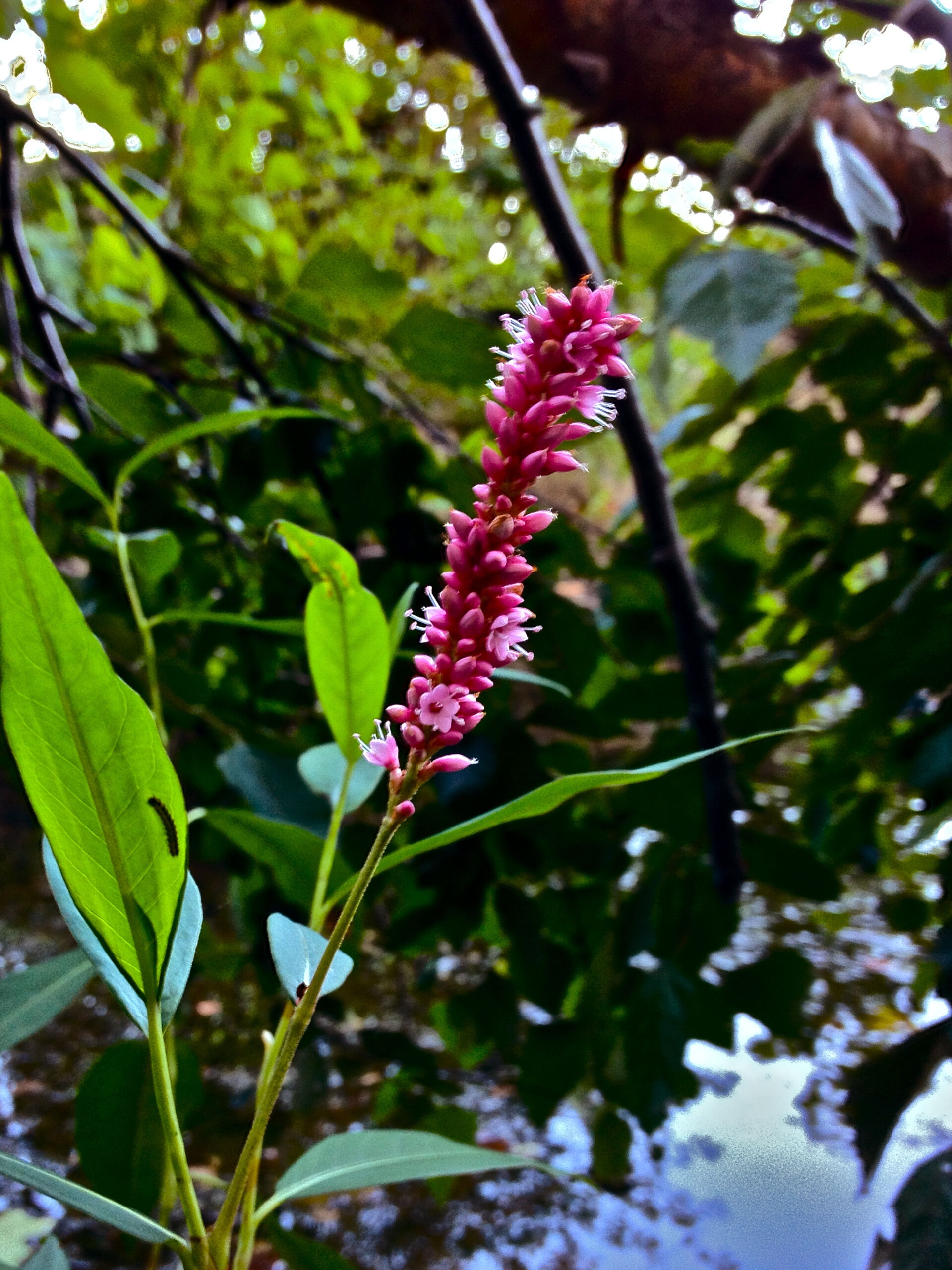
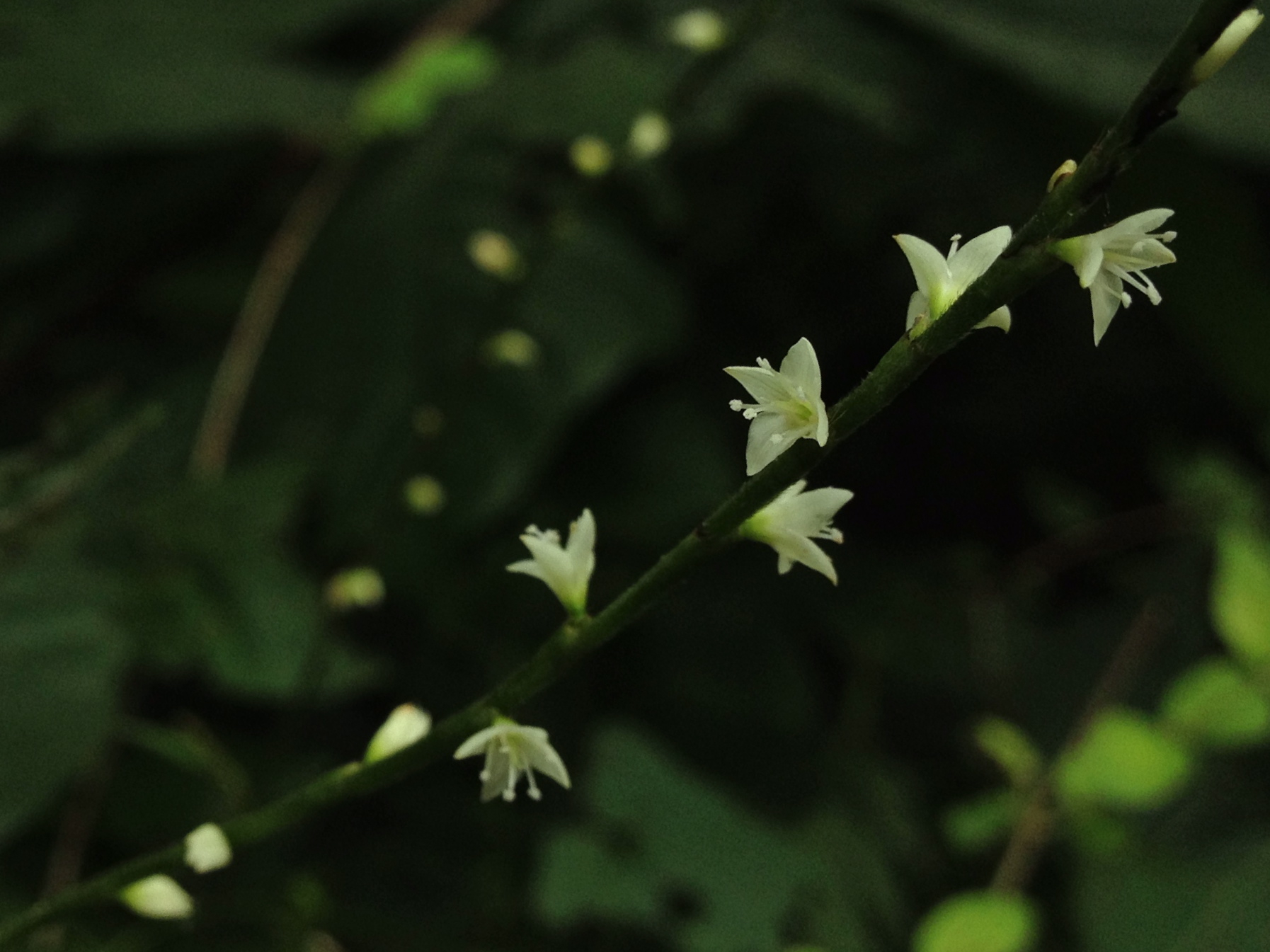
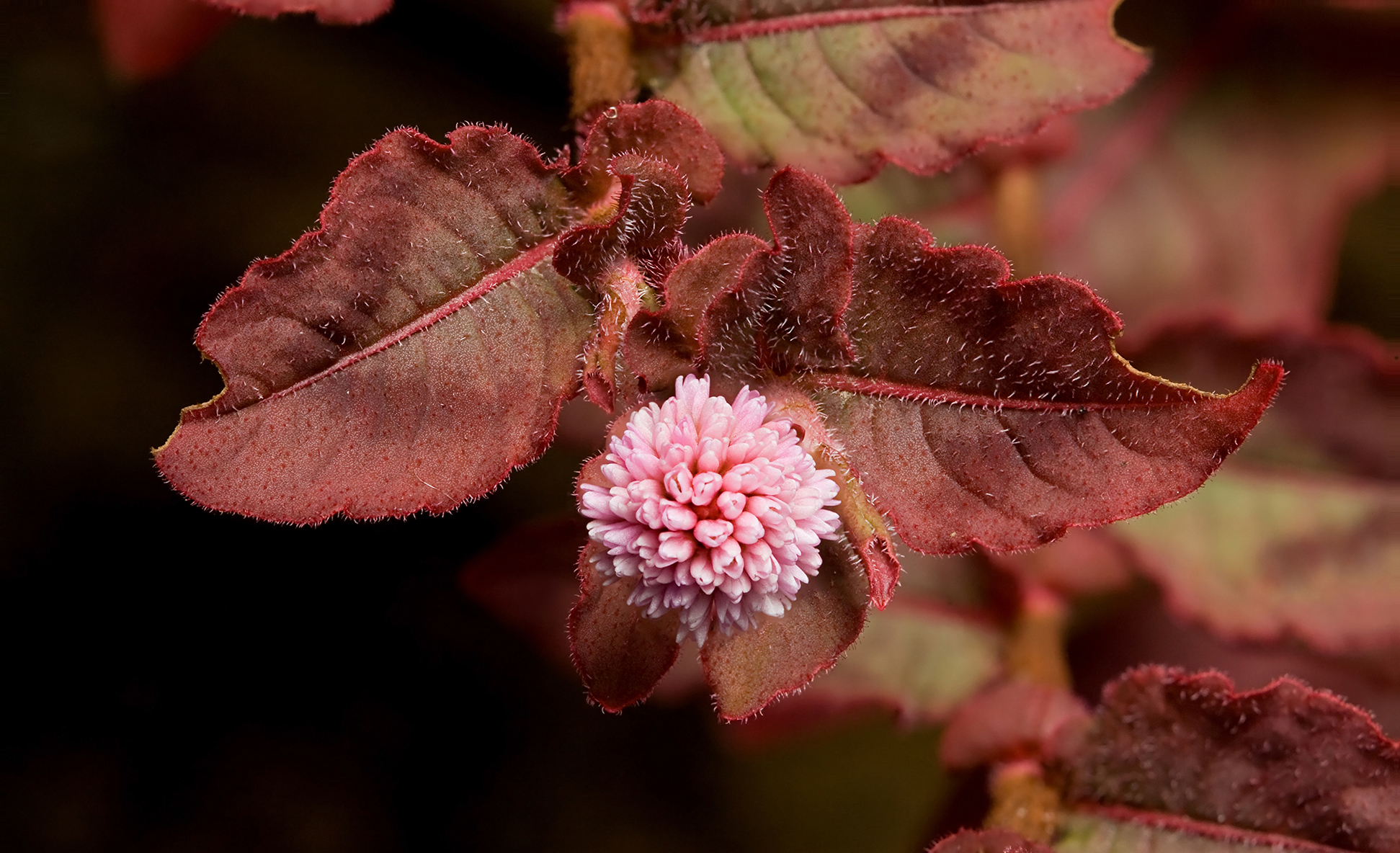
Smartweed is not a plant; it is a tribe. The genus Persicaria, in the buckwheat family Polygonaceae, holds roughly 100 to 140 species depending on which checklist you ask, and they range from ankle-high groundcovers to six-foot giants, from annual weeds of soybean fields to beloved garden perennials, from dryish borders to plants that grow standing in a pond. What unites them is a set of field marks that, once learned, make smartweeds unmistakable: stems with swollen, often reddish joints — the knees that gave the whole family its knotweed reputation — leaves that are usually lance-shaped and alternate, and, most distinctively, a papery sheath called an ocrea wrapped around the stem at each leaf joint, like a tiny, translucent boot. The flowers are small, in dense, usually spike-like clusters at stem tips, in white, pink, or red, with 4 or 5 petal-like tepals rather than true petals. Each pollinated flower becomes a small, dry, dark achene. Bloom runs from the start of summer into autumn, and a good patch in flower is a low, humming cloud of bees, flies, and butterflies.
The taxonomy matters, because it is the reason this guide exists separately from the knotweed guide. Smartweeds were long lumped into the giant genus Polygonum, and older books and butterfly guides still call them Polygonum. Molecular work in the late twentieth and early twenty-first centuries carved that empire into separate genera: Persicaria for most of the smartweeds, Polygonum kept in the strict modern sense for the knotweeds, Fallopia for the climbing buckwheats, Reynoutria for the big invasive knotweeds. This guide claims Persicaria species only. It does not fold Polygonum material in, and the knotweed guide does not claim Persicaria. One practical consequence, stated plainly for the coordinator wiring the butterfly links: if a butterfly guide pairs a smartweed mention with Polygonum Latin, that mention belongs to the knotweed guide, not this one. In the two guides that prompted this guide — the least skipper and the southern skipperling, both listing bare smartweeds as nectar plants — no Latin is paired, so the genus-level Persicaria mapping stands.
Identification within the genus is a sport in itself, and smartweed enthusiasts will forgive you for getting it wrong. The famous field marks: lady’s-thumb, Persicaria maculosa, often wears a dark, thumbprint-shaped blotch on the leaf; water-pepper, Persicaria hydropiper, tastes peppery and has narrow, cylindrical spikes; Pennsylvania smartweed, Persicaria pensylvanica, carries broad, rosy-pink spikes on a plant 3 to 6 feet tall in moist ground; water smartweed, Persicaria amphibia, is amphibious in the literal sense, growing on land or floating in a pond; jumpseed, Persicaria virginiana, is the shade-tolerant oddball with big oval leaves and slender wands of white flowers. The ocrea fringe is the fine print: bristly fringes versus smooth rims separate lookalikes that otherwise blur together, which is why smartweed identification rewards a hand lens and patience.
How to grow
How you grow a smartweed depends entirely on which smartweed you mean, and the honest advice starts with sorting the weeds from the garden plants. The wild smartweeds — lady’s-thumb, Pennsylvania smartweed, water-pepper, pale smartweed — need no help at all: they arrive in moist, disturbed ground, ditches, pond margins, field edges, and garden beds with poor drainage, and they stay. If you want them as butterfly and pollinator plants, the move is to tolerate a patch in a damp corner rather than to sow it, exactly as with shepherd’s needle. The garden smartweeds are a different conversation: mountain fleece, Persicaria amplexicaulis, and its cultivars like Firetail, grow 3 to 4 feet tall in zones 4 to 7 with long spikes of pink-red flowers from summer to fall; jumpseed cultivars like Painter’s Palette bring variegated foliage to shade; giant fleeceflower, Persicaria polymorpha, reaches 4 to 6 feet with fragrant white plumes and is not invasive; pink-headed persicaria, Persicaria capitata, trails as a groundcover 3 to 6 inches tall in zones 7 to 10. Buy the garden kinds by cultivar name from a nursery, and let the wild kinds volunteer.
Site most smartweeds in full sun to part shade in soil that stays moist. This is the genus for the rain garden, the pond edge, the low spot, the bed that never quite dries out — the places where other perennials sulk. Give garden types well-drained soil that stays rather cool and out of fierce heat, with humus worked in, and do not let them dry out in their first season. Jumpseed breaks the sun rule and is genuinely shade tolerant, which makes it the smartweed for woodland edges and the north side of the house. Water smartweed goes further and will grow in shallow water itself. Spacing follows the plant: groundcovers spread and will cover ground fast, upright types want 18 inches or more of elbow room, and the giants want to be treated as shrubs. Check the tag, because a genus that spans 6 inches to 6 feet does not have a single spacing.
Florida gardeners should read the wild side of this genus with clear eyes. Smartweeds love moisture, and Florida has moisture in abundance, but many of the wild species are temperate plants, and the genus as a whole is a weed story as much as a garden story. The garden cultivars that thrive in zones 7 to 10, like pink-headed persicaria, are the realistic Florida candidates; the cold-climate mountain fleece types are a North Florida trial at best. And whatever you plant, plant it where its enthusiasm is an asset: a rain garden, a pond margin, a damp border that needs covering — not a tidy bed where a self-seeding smartweed will be a weekly weeding job.
Water & feeding
Water is the whole game with smartweeds. They are plants of stream banks, ditches, pond edges, floodplains, and poorly drained ground, and most of them want soil that stays moist to wet. In the garden, that means regular water, a mulch of compost to hold moisture, and a site chosen for dampness rather than a watering schedule imposed on dry ground. Water smartweed can grow submerged or floating; the garden perennials want moist but not waterlogged soil, with the notable exception that they tolerate seasonal wetness far better than most border plants. If your smartweed wilts every afternoon, it is not diseased; it is thirsty, and it is telling you the site is wrong.
Feeding is light. A spring mulch of compost or worm castings is plenty; heavy fertilizer pushes soft, leggy growth and, in the wild species, more seed. Smartweeds are not hungry plants — they are opportunists of fertile, disturbed, moist ground, and they find their own fertility in a mulched bed. The one feeding-adjacent caution is about richness in reverse: soil that is too rich and too wet together produces tall, floppy plants with fewer flowers, the same complaint made about sneezeweeds. Lean, moist, mulched soil grows a tighter, freer-flowering plant.
Common problems
The common problem with smartweeds is that they work too well. Wild species self-seed freely and form colonies, and a patch left alone will seed into beds, paths, and lawn edges. Control is deadheading before seed set and pulling volunteers while they are small — the stems pull easily from moist soil, which is, conveniently, where they grow. Garden cultivars vary: giant fleeceflower is well-behaved, mountain fleece clumps politely, pink-headed persicaria spreads as a groundcover and needs an edge to respect. Know which one you planted before you complain about it.
Do not confuse smartweeds with their relatives. Mile-a-minute weed, Persicaria perfoliata, is a fast, spiny, invasive vine in the same genus and a genuine problem plant; it is not a garden smartweed and should never be planted. Japanese knotweed, the famous invader, is not a Persicaria at all in modern treatments — it is Reynoutria japonica — and it belongs in the knotweed guide’s warning section, not here. And do not eat smartweeds casually: water-pepper is peppery for a reason, and some species are reported toxic to livestock, so foraging the genus for the table demands a species-level identification and a trusted reference, not a general guide. The flowers are for the bees and the butterflies; the leaves are for identification practice.
Harvest
The harvest from smartweeds is mostly ecological, and it is generous. The long bloom from summer into autumn feeds bees, butterflies — including the least skipper and the southern skipperling, whose nectar lists prompted this guide — and hoverflies, and the seeds feed small birds later in the season. Garden kinds make good cut flowers: the spikes of mountain fleece and giant fleeceflower hold well in arrangements, and the airy sprays of some species work as fillers the way baby’s breath does. If you grow a patch for pollinators, the best harvest practice is to leave the seed heads standing into winter for the birds, then cut the patch back in early spring before new growth starts. What you take is flowers and seed for the birds; what you leave is the patch itself, which will be back, with or without your permission.
Saving seeds
Genus-level honesty first: smartweed is the old name for a knotweed group now mostly filed under Persicaria and Polygonum, and seed needs vary by species — this is the genus playbook. Most smartweeds are easy seed: sow warm in moist soil, barely covered or on the surface, and germination usually comes in one to two weeks with no cold treatment at all. Some species do better with a short chill, but warmth and moisture are the main requirements.
Let the seed heads ripen on the plant until they are dry and brown, then strip them into a paper bag. Dry the seed thoroughly before storing — smartweed seed keeps a few years in a cool, dry jar. Sow more than you need, since germination is good but uneven, and label the packet with the species if you know it.
The caution is the point: smartweeds self-seed freely and several species are aggressive weeds that will colonize any damp bare soil. If you are growing one on purpose — for the pollinators, which love the little pink spikes — deadhead before it seeds, or give it a contained spot. A patch you planted is a wildflower garden; a patch you ignored is a weed problem.
In Florida, smartweeds are common wetland and ditch plants, and a few species are native here. Save seed only from plants you can identify and actually want more of, and never move seed of a species you have not identified — some smartweeds are listed invasive, and the difference between a garden plant and a problem is often just the species name.
Species in this group
- Water smartweed — Persicaria amphibia: The amphibious one, native across much of North America, growing on land or floating in ponds and streams, with pink flower spikes; zones 3 to 10.
- Pennsylvania smartweed, pinkweed — Persicaria pensylvanica: The familiar native annual of moist, disturbed ground across most of the continental United States, 3 to 6 feet tall with broad, rosy-pink spikes, blooming late May into November.
- Lady’s-thumb, spotted smartweed — Persicaria maculosa: The weedy Eurasian annual with the dark thumbprint blotch on the leaf and pink spikes; common in gardens and fields, and the species most people picture when they hear smartweed.
- Water-pepper, marshpepper smartweed — Persicaria hydropiper: The peppery one, a semi-erect annual of damp places and shallow water with slender, nodding, greenish-white flower clusters; formerly Polygonum hydropiper.
- Jumpseed, Virginia knotweed — Persicaria virginiana: The shade-tolerant perennial of moist woodlands, with big oval leaves and slender wands of small white flowers, named for its spring-loaded seeds.
- Mountain fleece, red bistort — Persicaria amplexicaulis: The garden star, a Himalayan perennial with clasping leaf bases and long spikes of pink-red flowers; cultivars include Firetail and Golden Arrow.
- Giant fleeceflower — Persicaria polymorpha: The big, well-behaved garden perennial, 4 to 6 feet tall with fragrant white plumes, valued for long bloom and non-invasive manners.
- Pink-headed persicaria — Persicaria capitata: The trailing groundcover from the Himalayas, 3 to 6 inches tall, with bronze-flushed leaves and pink, bobble-like flower heads; zones 7 to 10.
- Pale smartweed, willow weed — Persicaria lapathifolia: A robust native annual of wet places, closely related to lady’s-thumb and distinguished by the lack of long bristles on the ocrea fringe.
- Dotted smartweed — Persicaria punctata: A native smartweed of wet ground with greenish-white flowers dotted with glands and an interrupted flower spike.
- Not in this guide — Polygonum species: The knotweeds in the strict modern sense live in the knotweed guide, not here. If your field guide or butterfly guide pairs a smartweed name with Polygonum Latin, follow the Latin to the knotweed guide.