
🌸 Smoky Hills Skullcap
What it looks like
Why this variety
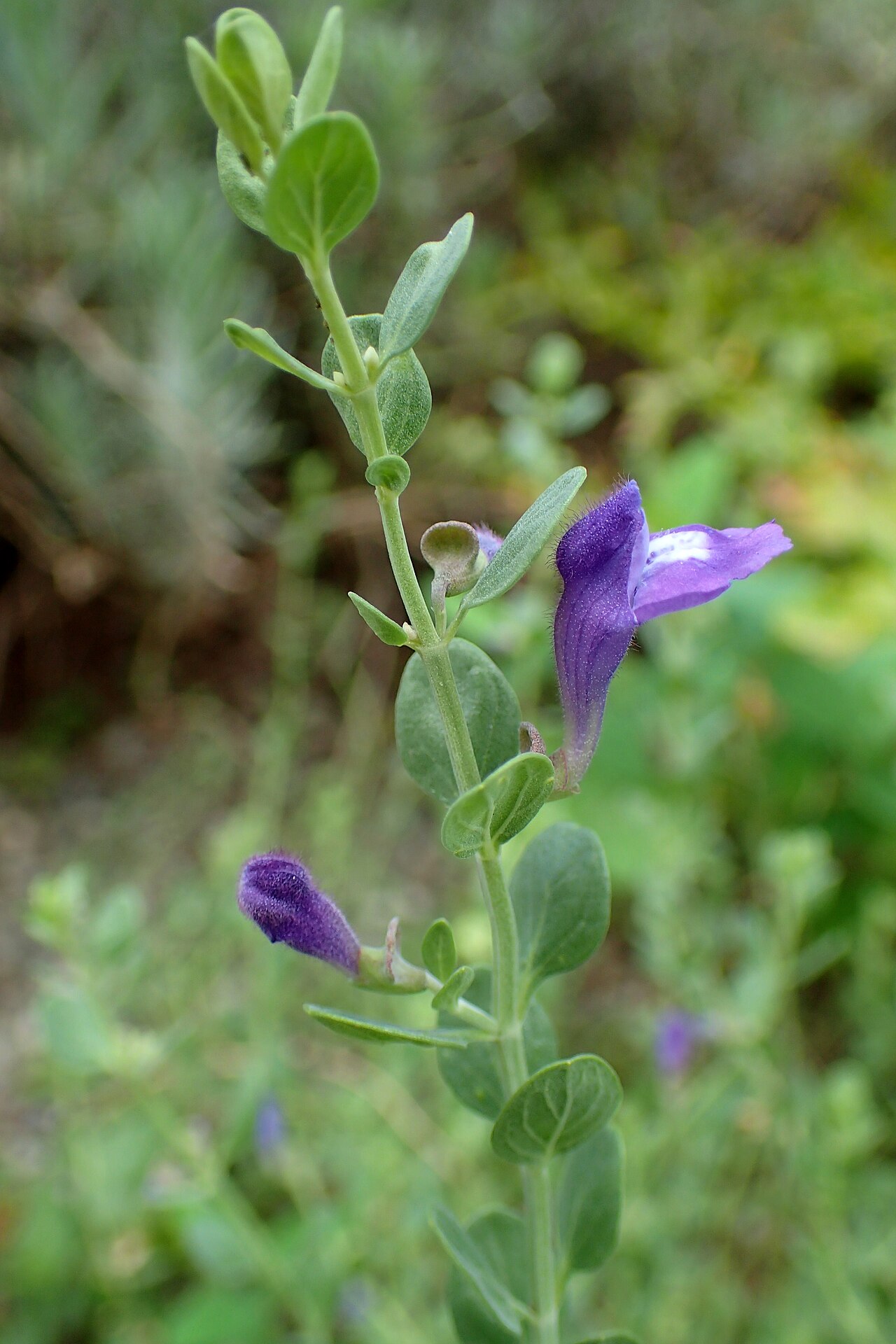
Smoky Hills is the skullcap for gardeners who want a prairie plant, not a wetland one: a selection of Scutellaria resinosa, the sticky or prairie skullcap from Kansas and Colorado south into Mexico, bred as a tough, compact, grey-green mound 6 to 8 inches tall and a foot wide, smothered in deep violet-blue flowers in late spring and summer. It is drought-tolerant once established, it wants sun and drainage, and it is a rock-garden and front-of-border plant that blooms hard without fussing. If you want skullcap as a dry-garden perennial rather than a medicinal herb, Smoky Hills is the selection to plant.
The trade-off is drainage and expectations: Smoky Hills wants sharp drainage and full sun, and it will rot in wet, heavy soil, which is the opposite of what some skullcaps want. Give it sun, lean well-drained soil, and steady water only until established, then leave it alone — overwatering and overfeeding make it floppy and short-lived. Cut back lightly after bloom for a tidy mound, divide congested plants in spring, and do not confuse it with medicinal skullcap, Scutellaria lateriflora, which is a different species with different uses. Smoky Hills is an ornamental prairie plant, and it is honest about that job.
If you are new to choosing between cultivars, the Varieties Matter guide explains why the name after the plant matters as much as the plant itself. Smoky Hills is a perfect example: it is not just a skullcap in the abstract, it is a skullcap with a specific job, a specific history, and specific strengths.
Florida honesty: prairie skullcap is a North and Central Florida plant for dry, sunny beds — it wants drainage and sun, and Florida’s sandy soil suits it better than Florida’s humidity does. In North and Central Florida, give Smoky Hills full sun, sharp drainage, and a raised bed in heavy soil, and water only to establish. In South Florida, try it in the driest, sunniest, best-drained spot you have, and treat it as a trial. It is a dry-climate plant with a Florida foothold, not a Florida native, and this guide states that plainly.
How to grow
Plant in spring, after frost danger, in full sun to part shade and well-drained, lean to moderately rich soil — skullcap wants sun, drainage, and room for air, and different species want different moisture, so match the species to the spot: prairie types want dry sun, Texas types want sun to part shade with drainage, and wetland types want moisture. Work a little worm castings into the bed at planting, space 12 to 18 inches apart, mulch lightly, and do not overfeed, because rich soil makes lush leaves and fewer flowers. Prune lightly after bloom to keep plants mounding, and divide congested clumps in spring.
Set plants 12-18 inches apart in soil with a pH around 6.0-7.5. Work worm castings into the bed at planting and mulch to hold moisture. A well-fed skullcap plant rewards that care directly: steadier growth, better bloom, and a show that actually shows up.
Water & feeding
Water to establish, then water according to species — prairie and Texas skullcaps tolerate drought once established and want drainage, while wetland skullcaps want consistent moisture. Water at the soil line, do not mulch heavily against crowns, and feed lightly: castings at planting is usually enough. In a dry spell, water prairie types only if they wilt; in a wet spell, drainage is the care program for dry types, because crown rot in stagnant water kills them outright. Match water to species, and skullcap will reward you with months of bloom.
Common problems
- Crown rot in waterlogged soil — dry-type skullcaps want drainage; do not plant them where rain ponds, and use a raised bed in heavy soil.
- Leggy growth in shade or rich soil — give skullcap sun and lean soil, not shade and fertilizer, for compact, floriferous plants.
- Confusion between species — medicinal skullcap (S. lateriflora) is a different species from ornamental skullcaps; do not use ornamental types medicinally, and do not assume one species’ uses apply to another.
- Woody, leggy subshrubs if never pruned — shear lightly after each flush and cut back woody stems in spring to keep plants mounding.
- Self-seeding — skullcap seeds freely; deadhead before seed ripens if you do not want volunteers, or edit seedlings in spring.
Harvest
Cut a few flowering stems for small bouquets in summer, when flowers are fully open — skullcap lasts a few days in water and suits wildflower-style arrangements, though it is best admired in the garden, where pollinators work its two-lipped flowers all day. Deadhead or shear lightly after each flush to prolong bloom, leave the last flush standing for pollinators in fall, and cut back woody stems in spring. Do not harvest ornamental skullcap for medicine — medicinal skullcap is a different species, and ornamental types are for looking at, not for tinctures.
Browse all plant & pest guides
Saving seeds
Smoky Hills is the skullcap for gardeners who want a prairie plant, not a wetland one: a selection of Scutellaria resinosa, the sticky or prairie skullcap from Kansas and Colorado south into Mexico, bred as a tough, compact, grey-green mound 6 to 8 inches tall and a foot wide, smothered in deep violet-blue flowers in late spring and summer. It is drought-tolerant once established, it wants sun and drainage, and it is a rock-garden and front-of-border plant that blooms hard without fussing. As a named skullcap it is kept true by division, not by seed — plant in spring, after frost danger, in full sun to part shade and well-drained, lean to moderately rich soil: skullcap wants sun, drainage, and room for air, and different species want different moisture, so match the species to the spot — prairie types want dry sun, Texas types want sun to part shade with drainage, and wetland types want moisture. Work a little worm castings into the bed at planting, space 12 to 18 inches apart, mulch lightly, and do not overfeed, because rich soil makes lush leaves and fewer flowers. Prune lightly after bloom to keep plants mounding, and divide congested clumps in spring. The full method is in the Saving seeds section of the Skullcap guide.