
🪻 Stachytarpheta
What it looks like
Stachytarpheta — pronounced stake-kee-tar-FEE-tuh, and yes, it is worth learning to say out loud at parties — is a genus in the verbena family (Verbenaceae) whose whole personality can be summed up in one structure: the spike. The genus name comes from the Greek stachys, meaning “spike,” and tarphys, meaning “thick” or “dense,” and the plants live up to it. Long, wiry, sometimes almost quill-like spikes rise from the stems, and along each spike a few small tubular flowers open at a time, working their way upward from the bottom. Each flower lasts only about a day, and on very cloudy days some will not bother opening at all. The effect is not a big splashy bloom but a slow, months-long trickle of color — blue, purple, pink, red, or coral depending on the species — which is exactly why butterflies never seem to leave it alone.
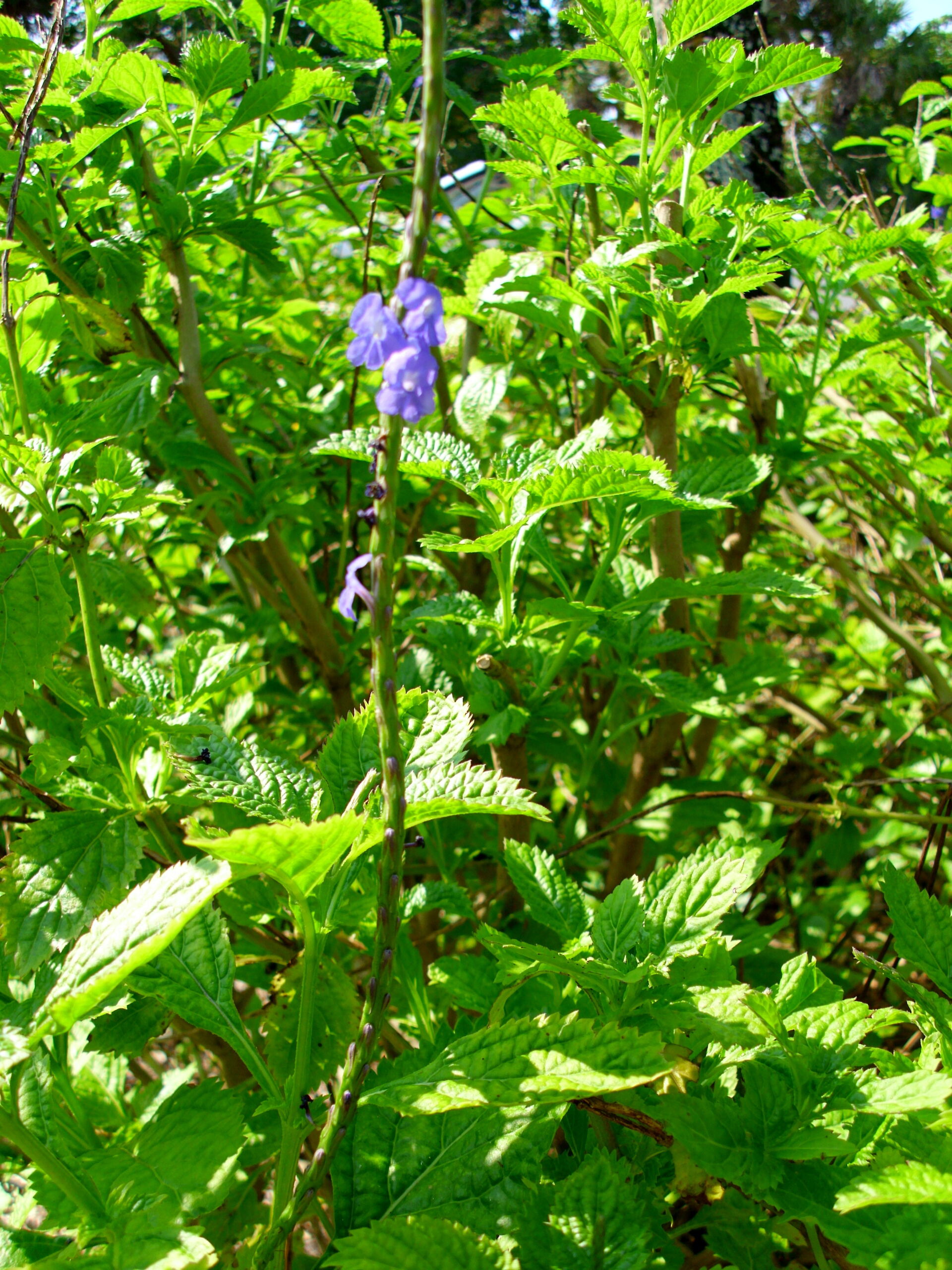
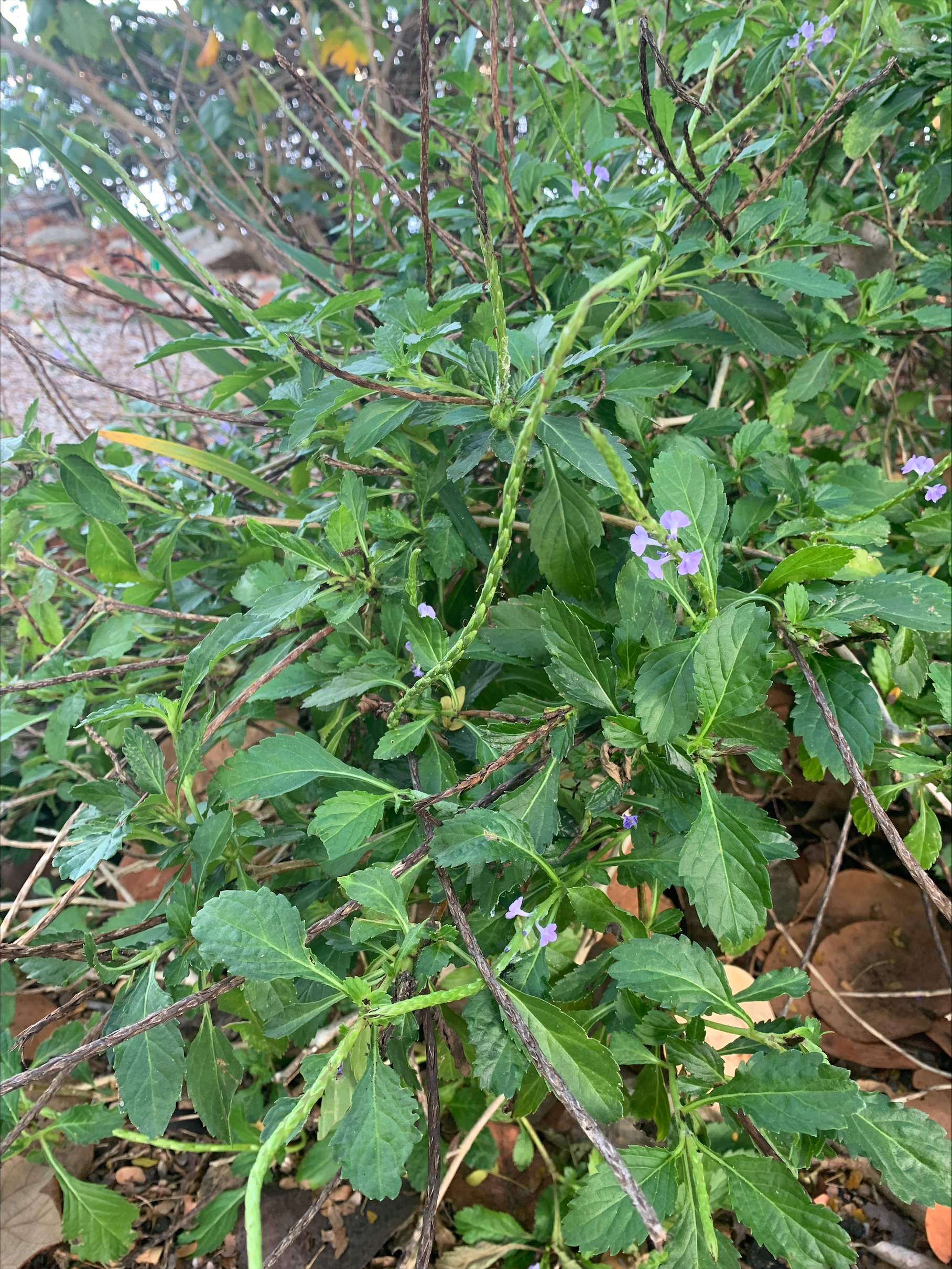
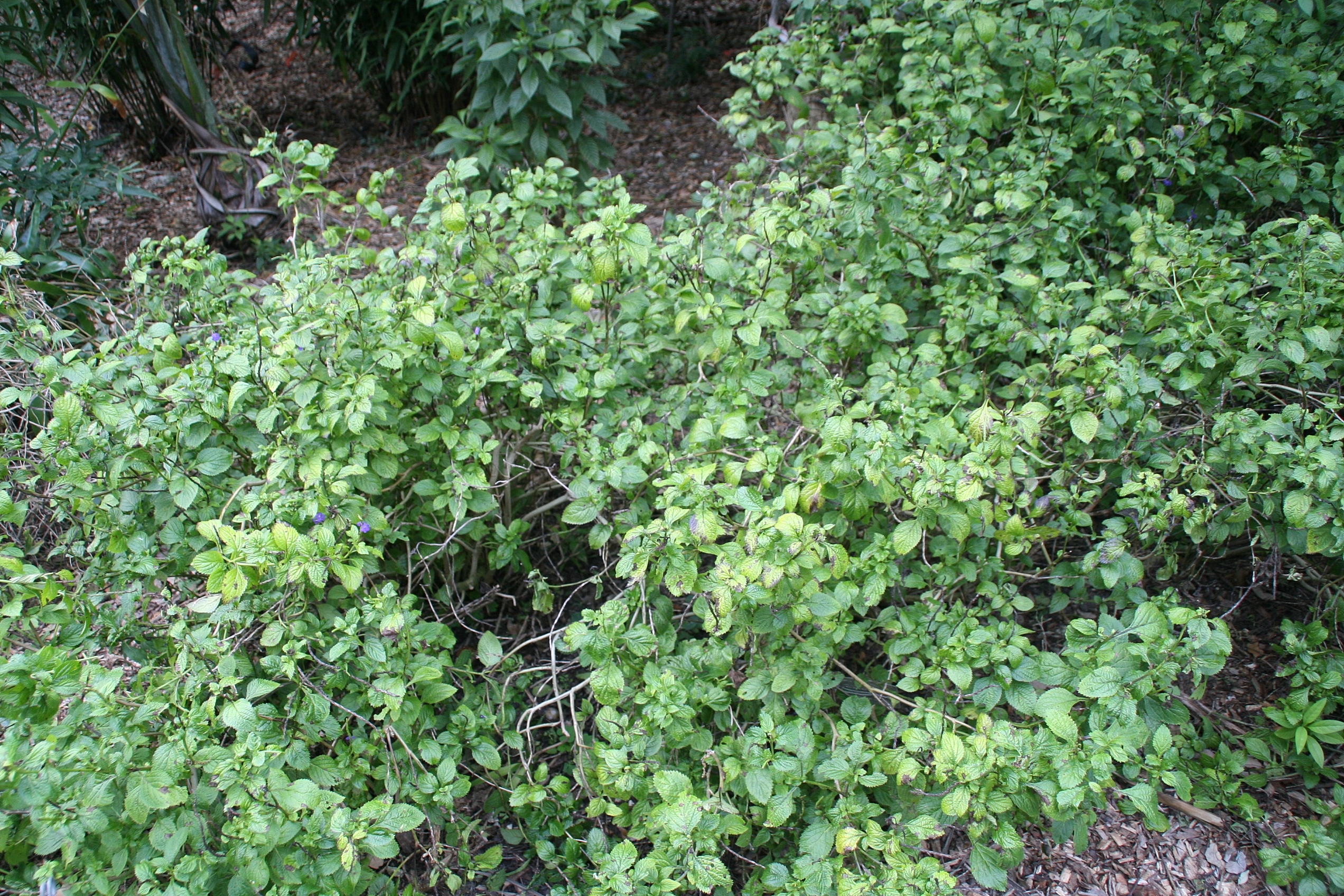
Size is where the genus refuses to be summarized, so do not let anyone sell you “porterweed” as one size. Across the genus, plants vary from low, sprawling subshrubs under a foot tall (not counting their flower spikes) to upright woody shrubs 5 to 7 feet tall. Leaves are opposite, usually serrated or toothed, and vary from dull and flat to glossy and deeply quilted depending on the species — a difference that turns out to matter enormously in Florida, as we will explain below. The flowers are small, tubular, and rich in nectar, which is why the genus is famous among butterfly gardeners on several continents. Hummingbirds visit too. If you plant the right species, you will rarely see it bloom alone, because the butterflies found it first.
Florida note: Florida is where this genus gets both wonderful and treacherous. The state’s only native porterweed is blue porterweed, Stachytarpheta jamaicensis, a low, sprawling plant of coastal dunes, shell mounds, and disturbed areas in South Florida and parts of Central Florida. Its status is genuinely a little unsettled — it is generally treated as native by the USDA PLANTS database and the Atlas of Florida Plants, while some botanists suspect it arrived with early Bahamian or Caribbean settlers carrying medicinal seeds — but for garden purposes it is the native one to plant. Everything else commonly sold as “porterweed” in Florida is a different, non-native species, and the most common one is a listed invasive. Buy by Latin name, from a native nursery, or do not buy at all.
Butterfly note: In this site’s butterfly guides, Stachytarpheta appears as a nectar plant for the lyside sulphur, the thoas swallowtail, and the rusty-tipped page, and as a host plant for the tropical buckeye (through Cayenne snakeweed, Stachytarpheta cayennensis). That split — nectar across the genus, host duty for one particular species — is a good reminder to read the species, not just the genus, when you are planting for a specific butterfly.
How to grow
First, decide which Stachytarpheta you are actually growing, because “porterweed care” without a species name is a recipe for a six-foot surprise where you expected a groundcover. For the Florida native blue porterweed, expect a low, sprawling subshrub, usually under 2 feet tall, that spreads sideways and blooms nearly year-round in frost-free sites. For the upright exotic species, expect a woody shrub 4 to 6 feet tall with a distinct trunk. Plant the native in any sunny spot with decent drainage and it will shrug at heat, humidity, and neglect, then bloom nonstop. Plant the upright types the same way, but give them the back of the border and room to become shrubs.
Give all of them full sun for the best flowering; they will tolerate light shade at the cost of fewer flowers. In zones 9b to 11 they are perennial, though the native blue porterweed’s hardiness is sometimes given more narrowly as zones 10 to 11, so northern gardeners in zone 9b should site it warmly and be ready for winter damage. North of their perennial range, grow them as annuals: they love heat, bloom continuously from late spring to frost in a single season, and in zones 7 and 8 a reasonable expectation for one season’s growth is about 3 feet. Start from cuttings or seed in spring after frost, and do not coddle them — heat is the point. Cut back in late winter to keep plants bushy instead of lanky, and deadhead if you do not want volunteers. In warmer areas the plants can become weedy by self-seeding, which is a polite way of saying they will plant themselves everywhere you did not intend.
Water & feeding
Water to establish, then basically ignore them. Porterweeds are notably drought-tolerant once settled and tolerate sand or clay soils, so long as the ground drains and does not stay waterlogged. They handle downpours and dry spells alike, which is part of their charm in a butterfly garden that nobody wants to babysit. The native blue porterweed tolerates short droughts and prefers well-drained soil; the upright species are similarly tough once their roots are down.
Feeding is barely necessary. A plant in average soil needs no fertilizer, and rich feeding mostly produces soft, lanky growth that flops and needs cutting back sooner. If your soil is genuinely impoverished, a light top-dressing of compost in spring is plenty. Think of porterweed as a plant that flowers best when slightly neglected — the garden equivalent of a friend who is more fun when you stop hovering.
Common problems
- The wrong species — the big one: Cayenne porterweed (Stachytarpheta cayennensis, also sold and filed as S. urticifolia) is classified as a Category II invasive species in Florida: it has escaped cultivation and is altering native plant communities. Do not plant it in Florida. Tell it from the native by habit first: the native is low and sprawling, under about 2 feet, with duller, flatter leaves; the invasive is an upright woody shrub 4 to 6 feet tall with glossy, deeply quilted (bullate) leaves and deeper violet-purple flowers. If the tag says only “porterweed,” do not buy it.
- Self-seeding enthusiasm: In warm areas porterweed can become weedy. Deadhead the spikes before they set seed if you do not want volunteers, or let a few go if you want a self-renewing patch — but never let the invasive species set seed anywhere.
- Frost: Porterweed is winter-hardy only in zones 10 and warmer for most species, perennial in 9b to 11 as a genus. A hard freeze will kill top growth; in marginal zones the roots may resprout, but do not count on it. Grow as an annual north of the perennial range and enjoy it without guilt.
- Lankiness: Left unpruned for a year or more, stems droop and become leggy and undesirable. Cut back in late winter and pinch through the season to keep plants bushy.
- Caterpillars nibbling the leaves: That is the point. Porterweed is a host plant. If caterpillars are eating it, the garden is working. Do not spray your butterfly host plants.
- Cloudy-day no-shows: Blue porterweed flowers open for only one day and will not open on very cloudy days. A spike that looks bare on a grey morning is not dead; it is waiting for sun.
Harvest
Porterweed is not a vegetable crop, and this guide makes no medicinal recommendations, even though the leaves and flowers have a long history of traditional use as teas and remedies in the Caribbean and the Americas. What you harvest is wildlife: nectar for butterflies and hummingbirds nearly year-round in frost-free sites, and, for the tropical buckeye, caterpillar food. Deadhead to extend blooming, or leave fall seed heads standing if you like a wilder look and do not mind volunteers — with the native species only, never the invasive one. If you grow it for cutting, the wiry spikes are charming in a mixed bouquet, but the individual flowers last a day, so enjoy them in the garden where they belong and let the butterflies have the rest.
Saving seeds
Porterweed is easy seed. Let the flower spikes ripen until they are dry and brown, then strip the seed into a paper bag. No cold treatment is needed; sow in spring in moist soil, barely covered, and keep it warm — germination usually comes in one to two weeks. You can also direct-sow where you want it and let it come up on its own.
It self-seeds freely, which is a gift if you want a butterfly garden and a chore if you do not — porterweed is one of the best butterfly plants in Florida, and the seedlings will pop up wherever the seed lands. Deadhead if you want to keep it in bounds, or let a few plants go to seed each year and pull the volunteers you do not want.
Save from the plants the butterflies liked best — the tallest spikes, the most flowers — and dry the seed thoroughly before storing; it keeps a few years in a cool, dry jar. Sow more than you need, since germination is good but not total.
In Florida, porterweed is a perennial in the south and a self-seeding annual further north, happiest in full sun and well-drained soil. The native blue porterweed and the red porterweed both reseed the same way, so label the packet — the butterflies do not care which one it is, but you might.
Species in this group
Blue porterweed — Stachytarpheta jamaicensis: The Florida native, and the type species of the genus. Low-growing and sprawling, usually under 2 feet tall (not counting its spikes), with light-blue flowers bearing a white “eye,” borne a few at a time on long, narrow spikes. Found in coastal dunes, shell mounds, and disturbed areas; blooms in summer and potentially year-round in South Florida. This is the species covered by this site’s Porterweed growing guide, which is a species guide, not a genus guide — this page covers the whole genus, and the two are companions, not duplicates.
Cayenne porterweed, nettleleaf porterweed — Stachytarpheta cayennensis (also filed as S. urticifolia): The upright, woody shrub, 4 to 6 feet tall, with glossy, deeply quilted leaves and deep violet-purple flowers. Commonly confused with the native and frequently mislabeled in nurseries. Listed as a Category II invasive species in Florida. Host plant for the tropical buckeye. Do not plant in Florida; admire the distinction instead.
Changeable velvetberry, pink snakeweed — Stachytarpheta mutabilis: The pink one, reaching up to 7 feet tall, with relatively large pink to reddish flowers (10 to 12 millimeters across) on robust spikes, and densely hairy, velvety stems and leaves. A tropical ornamental that shows why the genus cannot be described in one sentence.
Stachytarpheta × intercedens: A hybrid of the native S. jamaicensis and the exotic S. urticifolia, said to look like the native but with an upright habit reaching 2 to 3 feet tall. A reminder that in this genus, habit alone is not identification — check the Latin name and the leaves.
Stachytarpheta indica: A name that appears in the literature and in cultivation, sometimes treated as a separate species and sometimes suspected to be the same plant as S. jamaicensis. This guide lists it as unresolved rather than pretending the taxonomy is settled, because in this genus it frequently is not.