
🍯 Summersweet
What it looks like
How to grow
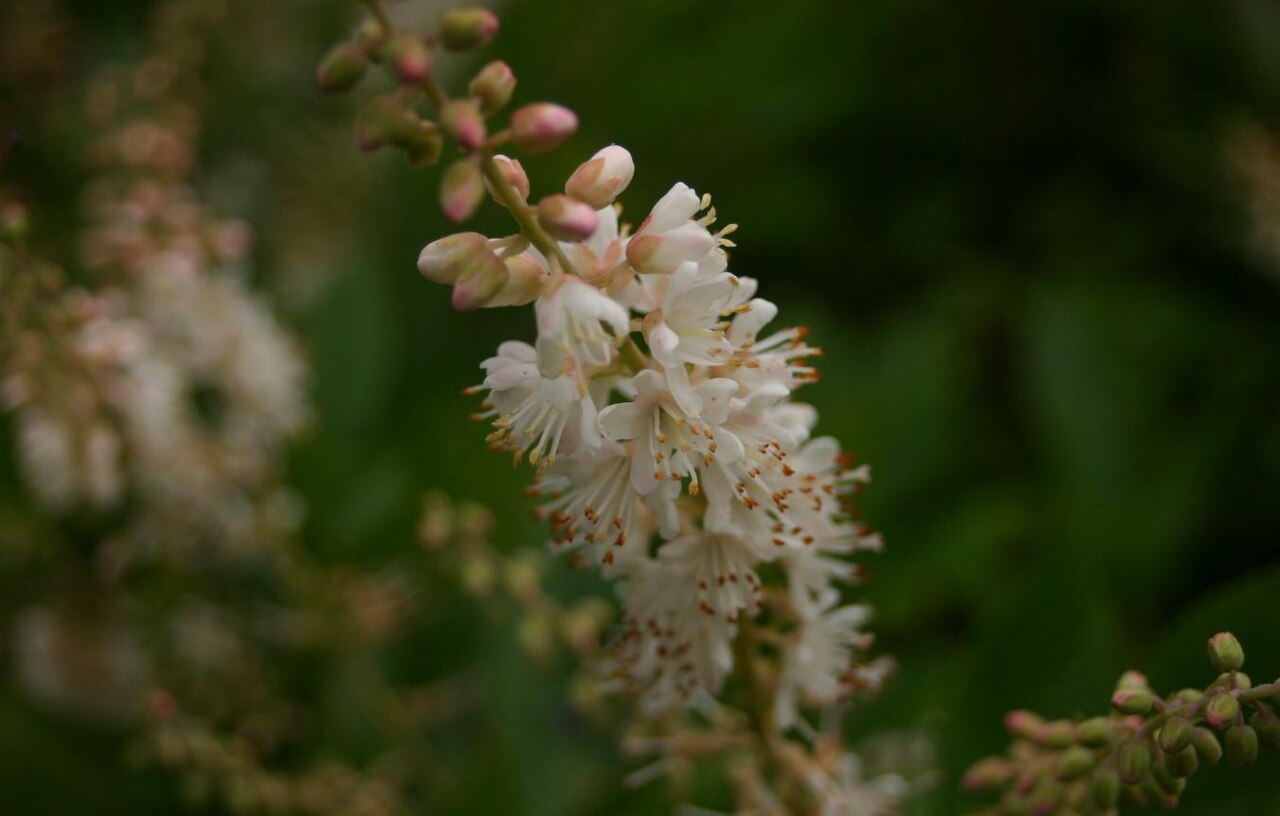
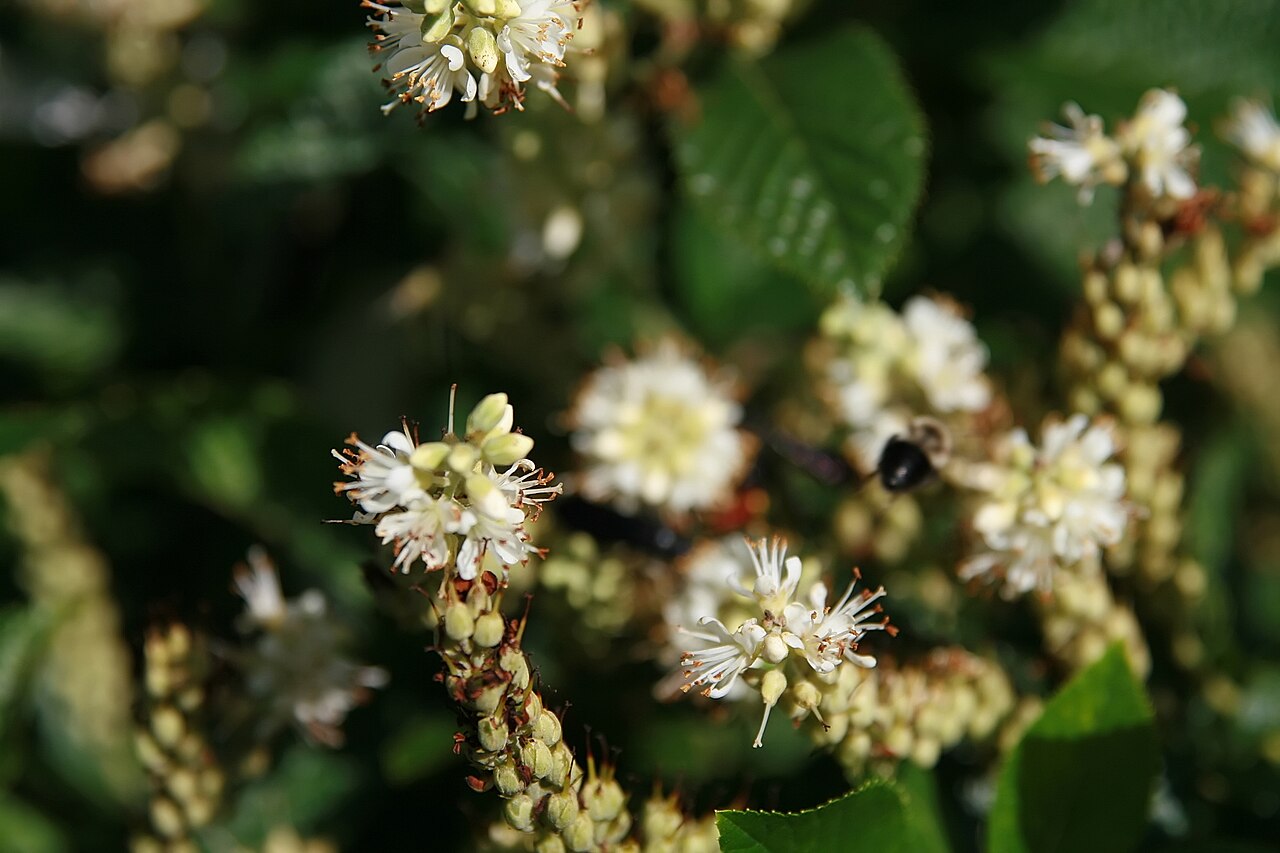
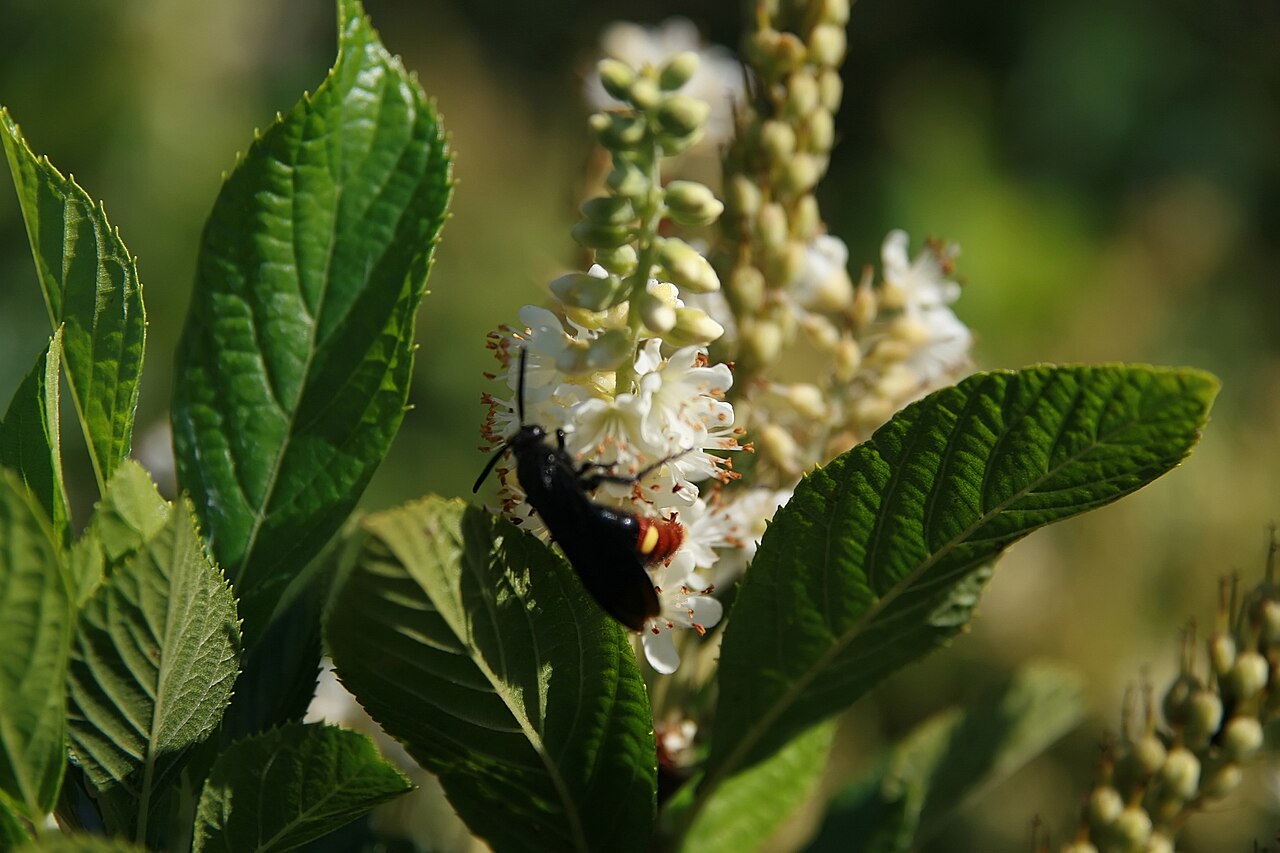
Summersweet, also called sweet pepperbush, is a native deciduous shrub that blooms when most shrubs have finished: upright spikes of fragrant white (or pink, in cultivars like ‘Ruby Spice’) flowers open in mid to late summer and draw bees, butterflies, and hummingbirds in crowds. It grows 3-8 feet tall and 4-6 feet wide, turns clear yellow in fall, and holds its dark seed capsules through winter. Plant in spring or fall in full sun to part shade in moist, acidic soil — summersweet is one of the best shrubs for wet spots, rain gardens, and pond edges, and it tolerates shade, though bloom will be lighter. It suckers gently, so give it room or plan to remove stray shoots.
Water & feeding
Keep the soil moist: summersweet wants consistent moisture and sulks in dry soil, especially in sun. Mulch thickly to hold moisture, and water deeply during dry spells — about an inch a week at minimum. Feed with compost in spring; it needs no heavy fertilizer. In hot, dry sites, spider mites can be a problem, so afternoon shade and steady moisture are your best prevention.
Common problems
- Spider mites in hot, dry spots — hose foliage, keep soil moist, and give afternoon shade.
- Leggy growth in deep shade — move toward more sun for denser growth and heavier bloom.
- Unwanted suckers — pull promptly unless you want a naturalized colony.
- Chlorosis — usually soil that is too alkaline; summersweet wants acidic soil below pH 6.8.
Harvest
There is no crop to harvest, but the flowers are excellent cut for summer bouquets, and the dried seed heads add winter interest if left on the plant. Prune in late winter or early spring, before new growth, removing dead wood and shaping lightly — flowers form on new wood, so spring pruning is safe.
Browse all plant & pest guides
Saving seeds
Summersweet seed needs winter. Give it a cold, moist chill — two to three months is the common figure — by mixing seed with damp vermiculite in a bag and refrigerating it, or by sowing in fall outdoors and letting the season do it. Sow in spring, barely covered, in moist mix, and germination usually comes in a few weeks after chilling. Without the cold, the seed sits there and does nothing.
Let the seed capsules ripen on the plant until they are dry and brown, then collect them into a paper bag. Dry the seed thoroughly before storing; it keeps a few years in a cool, dry jar. Sow more than you need, since germination is uneven.
Cuttings are the faithful route for named forms — softwood cuttings taken in summer root readily, and every cutting is a clone of the parent. Seed is for the species itself and for the patient gardener. A seedling will be a summersweet, but it will not be a named cultivar, and it may take a few years to flower.
Summersweet is a Florida native for wet ground and part shade, happiest in moist soil where other shrubs give up, and it is a late-summer pollinator magnet when almost nothing else is blooming. Plant it where the ground stays damp, and let it be the fragrant, bee-covered native it wants to be.
Varieties
Every named variety of Summersweet with its own growing guide:
- Hummingbird Summersweet — The dwarf summersweet that fits a foundation bed: white bottlebrush spikes, summer perfume, and hummingbirds on patrol.
- Ruby Spice Summersweet — The pink summersweet: deep rose-pink spikes instead of white, with the same summer perfume and the same wet-soil toughness.
- Sixteen Candles Summersweet — The summersweet that blooms like a birthday cake: dense white spikes held upright, fragrant, on a compact shrub.
- Vanilla Spice Summersweet — The summersweet that smells like dessert: larger white spikes with a vanilla-sweet perfume, on a shrub that loves wet feet.