
🌺 Sun Parasol Crimson Mandevilla
What it looks like
Why this variety
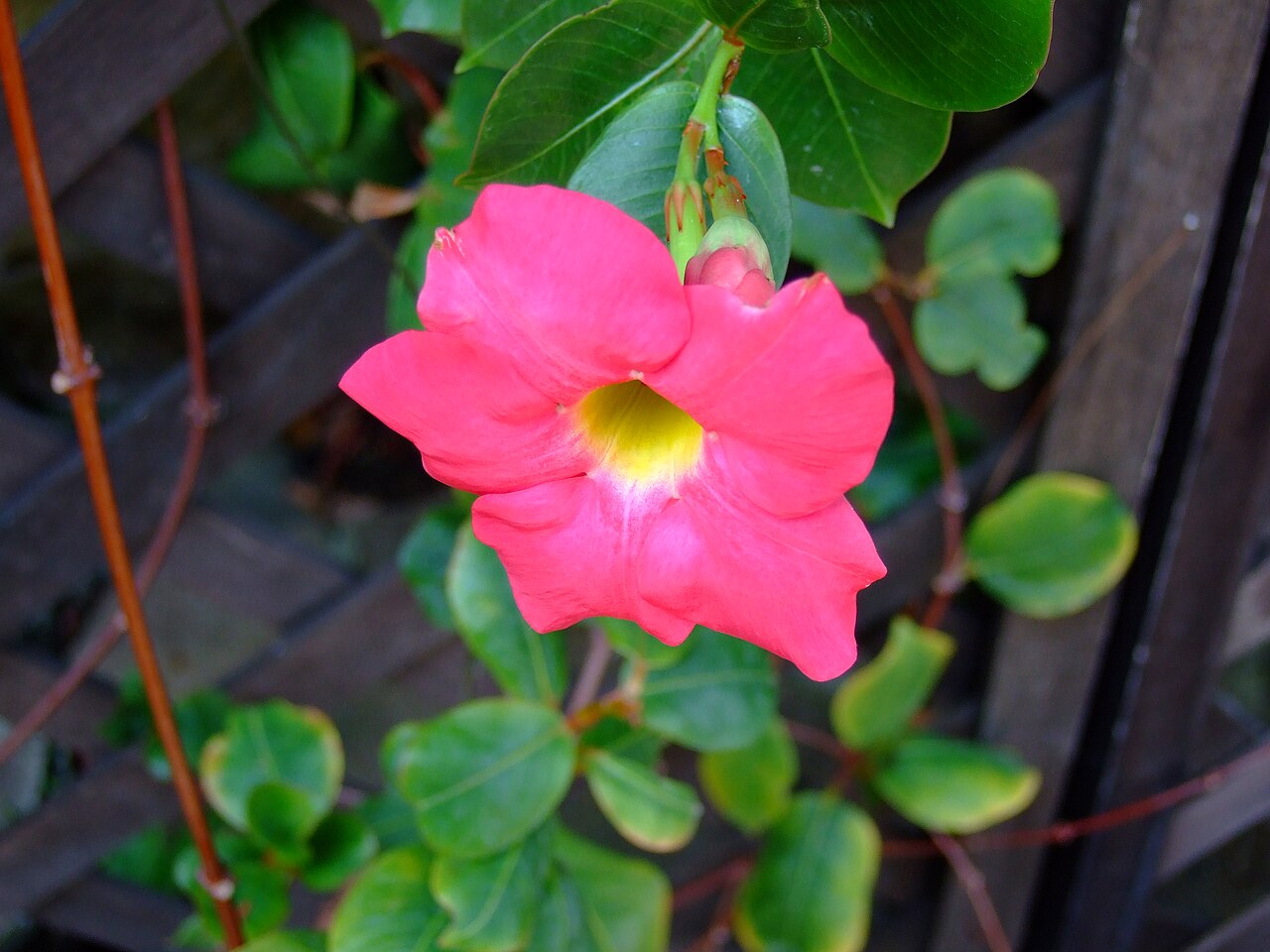
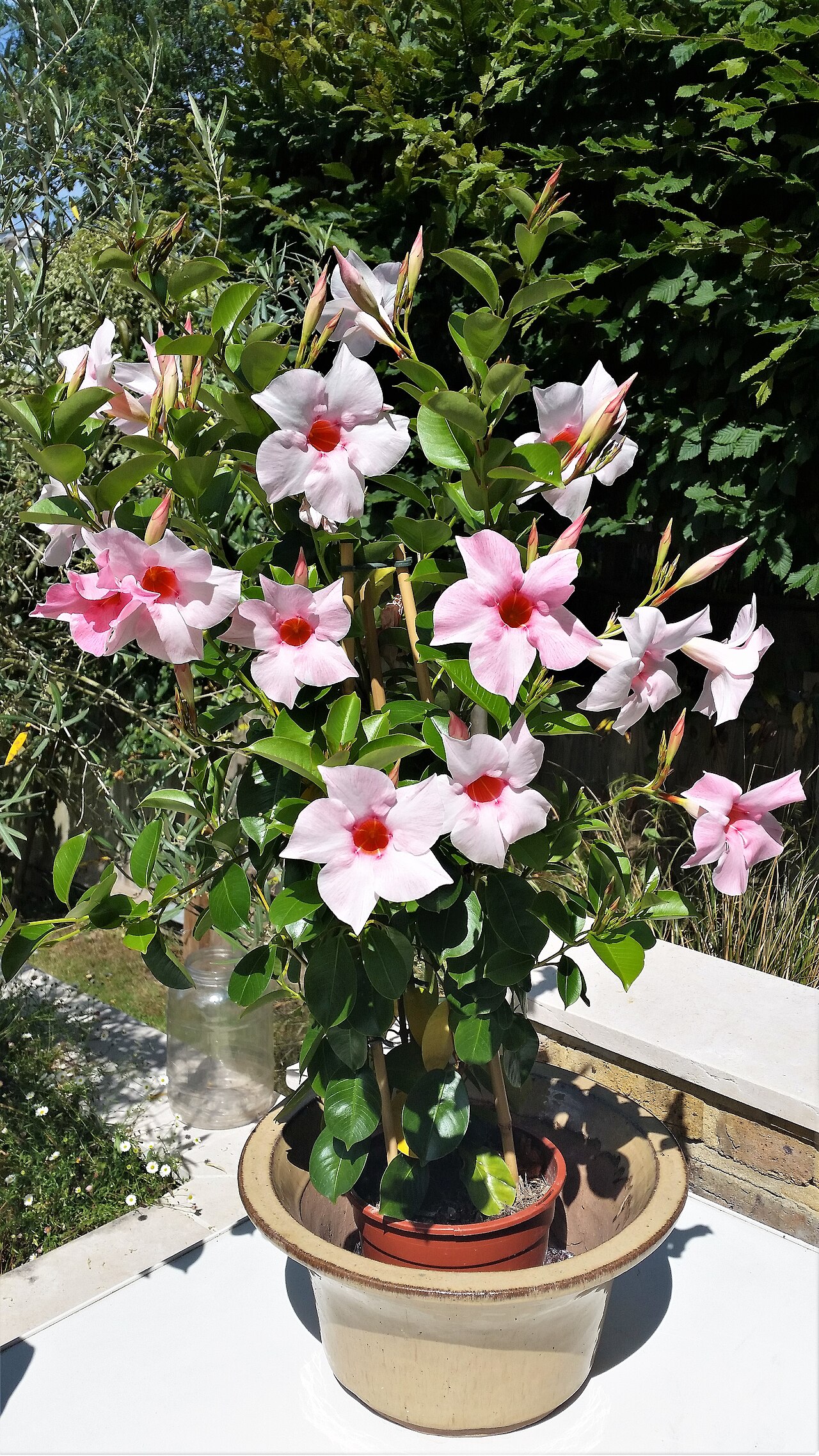
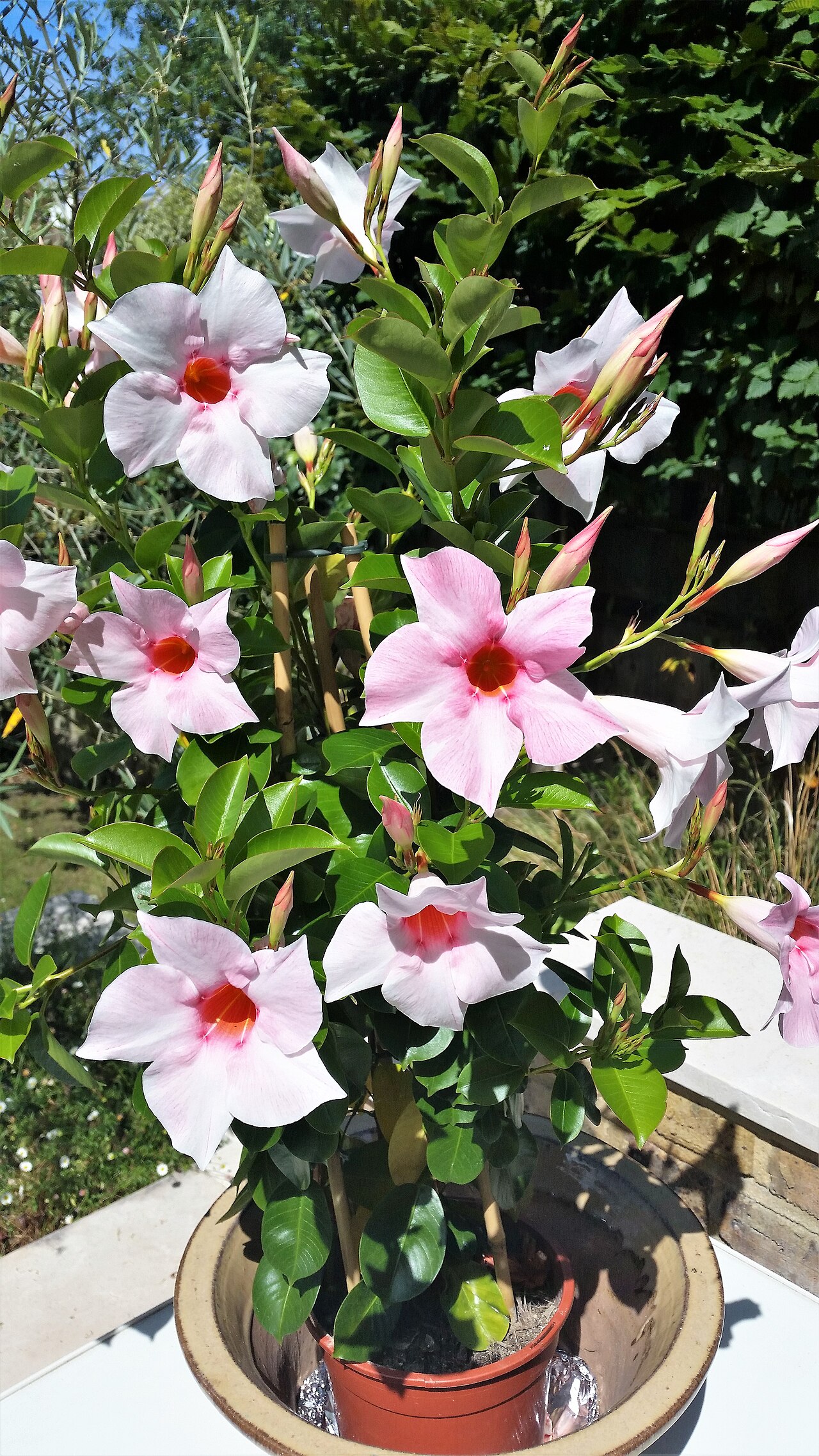
Sun Parasol Crimson is the modern mandevilla: a patented, vegetatively propagated cultivar bred for compact, heavily branching growth and huge, deep-red, trumpet-shaped flowers — up to 4 inches across, nearly twice the size of older mandevilla blooms — produced in clusters rather than singly, from spring until fall. It was bred for heat tolerance and continuous bloom, and it delivers: a container of Sun Parasol Crimson in summer is a red waterfall, and it stays tidy enough for a patio pot in a way Alice du Pont, bless it, does not. If you want mandevilla in a pot, this is the breeding to buy.
The trade-off is that a patented cultivar cannot be grown true from seed — buy plants, not seed, and do not expect seedlings to match — and its compact habit still wants sun, water, and feeding to bloom heavily. Give it full sun, well-drained soil, steady water, and regular feeding, prune lightly to shape, and bring containers under cover before frost. Do not overwater it in a pot without drainage, and do not plant it in shade and expect crimson — expect green, and blame the light.
If you are new to choosing between cultivars, the Varieties Matter guide explains why the name after the plant matters as much as the plant itself. Sun Parasol Crimson is a perfect example: it is not just a mandevilla in the abstract, it is a mandevilla with a specific job, a specific history, and specific strengths.
Florida honesty: Sun Parasol Crimson thrives in Florida heat and humidity, perennial in frost-free South Florida and a vigorous annual or container plant in Central and North Florida, blooming until the first freeze. Its compact habit is an asset in a Florida garden, where a 20-foot vine can swallow a fence by August: this one stays prunable, pottable, and in scale with a patio. Overwinter containers indoors in North Florida, and feed regularly for continuous bloom.
How to grow
Plant in spring, after frost danger, in full sun to part shade and well-drained soil, against a sturdy support it can twine around — a trellis, fence, or arbor, not a flimsy stake, which a vigorous vine will swallow. Work worm castings into the planting hole, water through the first season, and feed regularly in the growing season for continuous bloom. Prune after bloom to keep it shapely, and bring containers under cover before frost.
Set plants 18-24 inches apart on a support in soil with a pH around 6.0-7.0. Work worm castings into the bed at planting and mulch to hold moisture. A well-fed mandevilla plant rewards that care directly: steadier growth, better bloom, and a show that actually shows up.
Water & feeding
Keep soil evenly moist through the growing season — mandevilla is a fast-growing vine that wilts fast in dry soil and blooms hardest with steady water and regular feeding. Water at the soil line, mulch to hold moisture, and feed regularly: castings at planting plus a balanced liquid feed every couple of weeks during heavy bloom keeps the trumpets coming. In winter, reduce water for container plants kept indoors.
Common problems
- TOXIC SAP AND PARTS — mandevilla is a dogbane relative; its milky sap and all parts are toxic if eaten, so wear gloves when pruning and keep cuttings from children and pets.
- Freeze damage — mandevilla dies at frost; bring containers under cover before a freeze, and cut back dead growth in spring.
- Aphids, whiteflies, and spider mites — blast with water and encourage predators before reaching for sprays; stressed, dry plants attract pests first.
- Leggy growth in shade — mandevilla stretches and blooms thinly without sun; give it full sun to part shade, not deep shade.
- Outgrowing its support — a vigorous vine swallows a flimsy trellis; give it a sturdy arbor and prune to keep it in bounds.
Harvest
Cut a few flowering stems for bouquets in summer, when trumpets are fully open — mandevilla flowers last a few days in water and suit tropical-style arrangements, though they are best admired on the vine. Wear gloves when pruning, wash hands after handling, and keep cuttings from children and pets, because mandevilla sap and parts are toxic if eaten. Prune after bloom for shape, and bring containers under cover before frost.
Browse all plant & pest guides
Saving seeds
Sun Parasol Crimson is the modern mandevilla: a patented, vegetatively propagated cultivar bred for compact, heavily branching growth and huge, deep-red, trumpet-shaped flowers — up to 4 inches across, nearly twice the size of older mandevilla blooms — produced in clusters rather than singly, from spring until fall. It was bred for heat tolerance and continuous bloom, and it delivers: a container of Sun Parasol Crimson in summer is a red waterfall, and it stays tidy enough for a patio pot in a way Alice du Pont, bless it, does not. As a named mandevilla it is kept true by cuttings, not by seed — the trade-off is that a patented cultivar cannot be grown true from seed: buy plants, not seed, and do not expect seedlings to match. Plant in spring, after frost danger, in full sun to part shade and well-drained soil, against a sturdy support it can twine around — a trellis, fence, or arbor, not a flimsy stake, which a vigorous vine will swallow. Work worm castings into the planting hole, water through the first season, and feed regularly in the growing season for continuous bloom. Prune after bloom to keep it shapely, and bring containers under cover before frost. The full method is in the Saving seeds section of the Mandevilla guide.