
🌿 Sweet Woodruff
What it looks like
How to grow
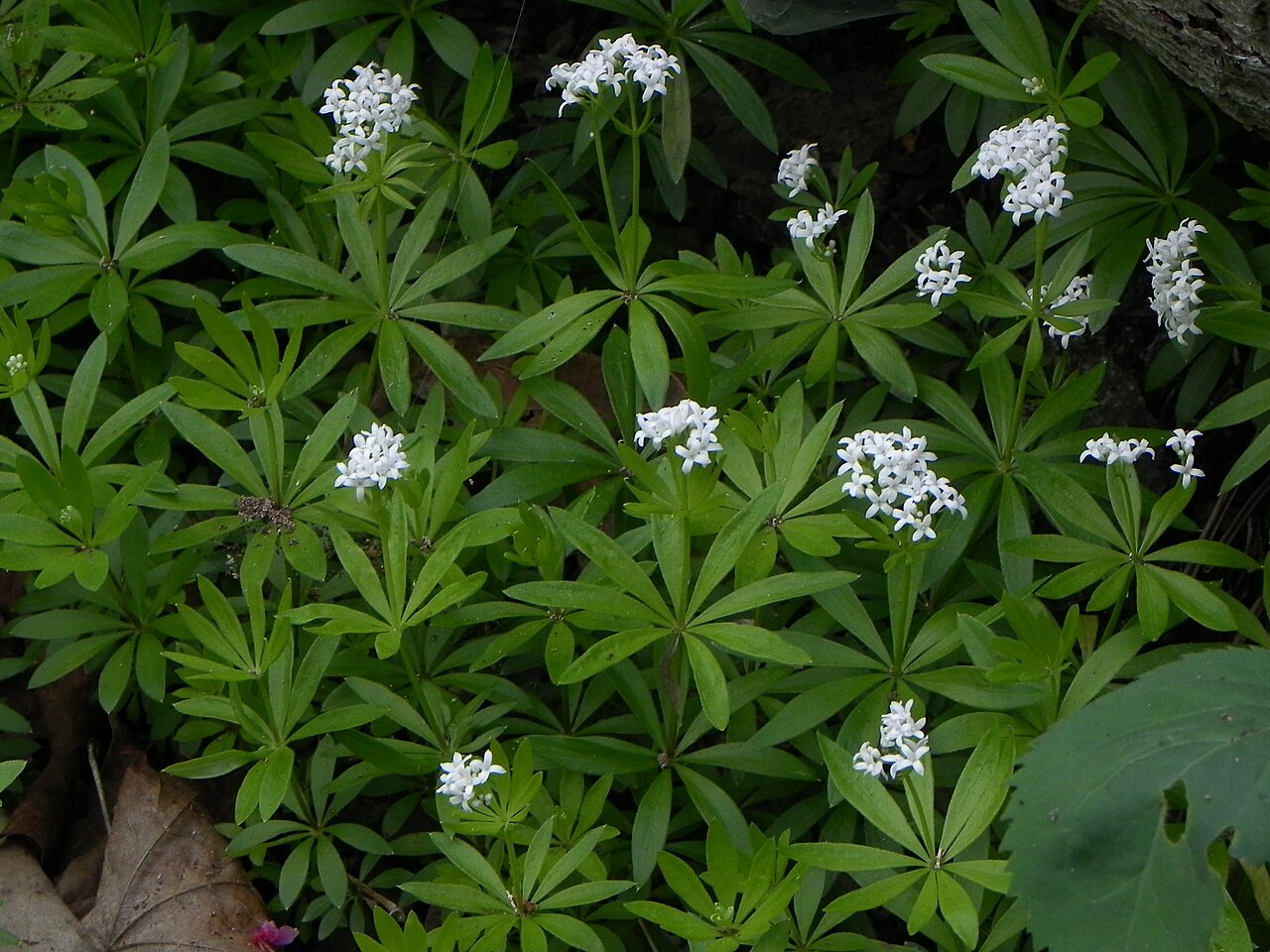
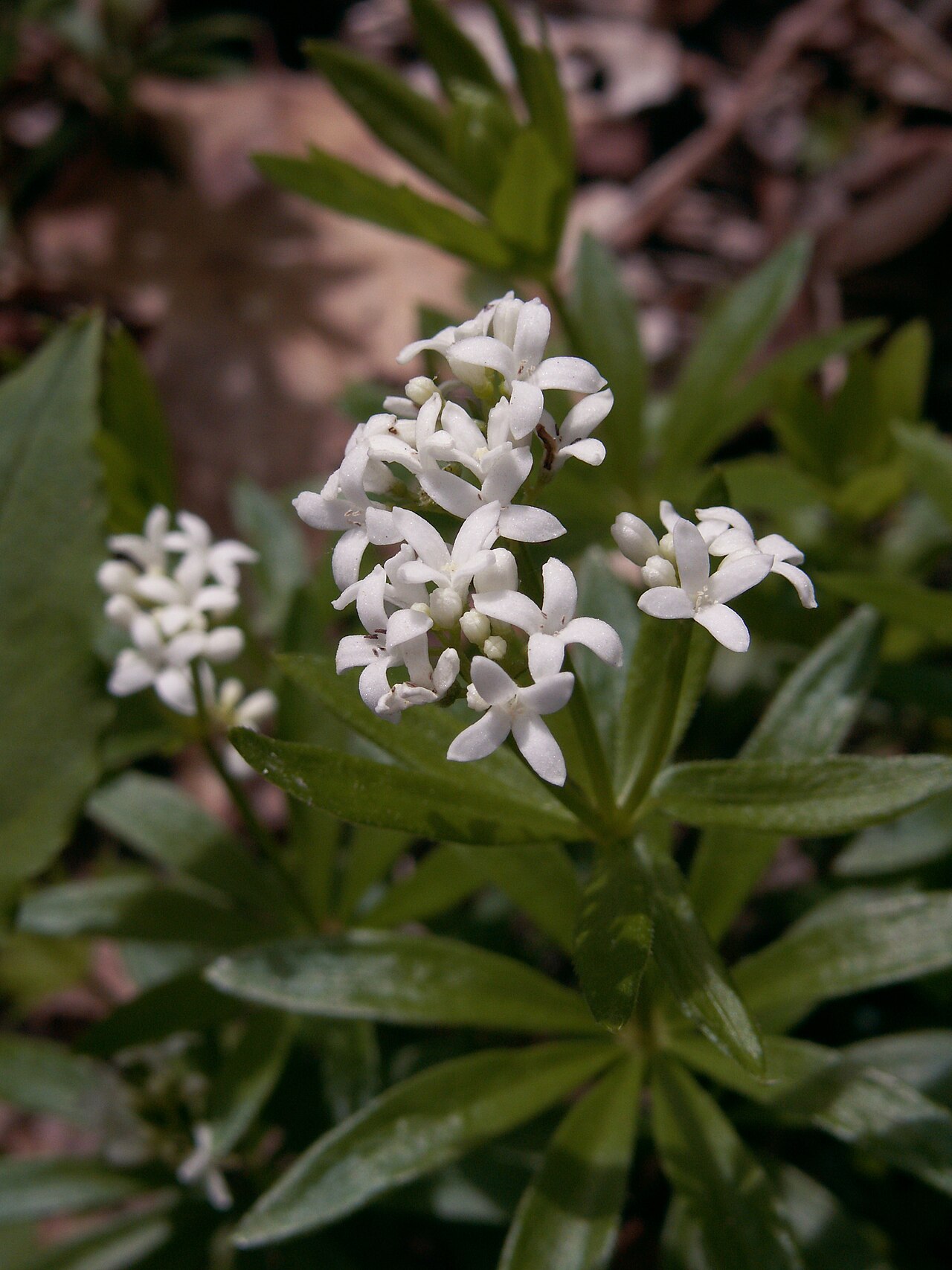
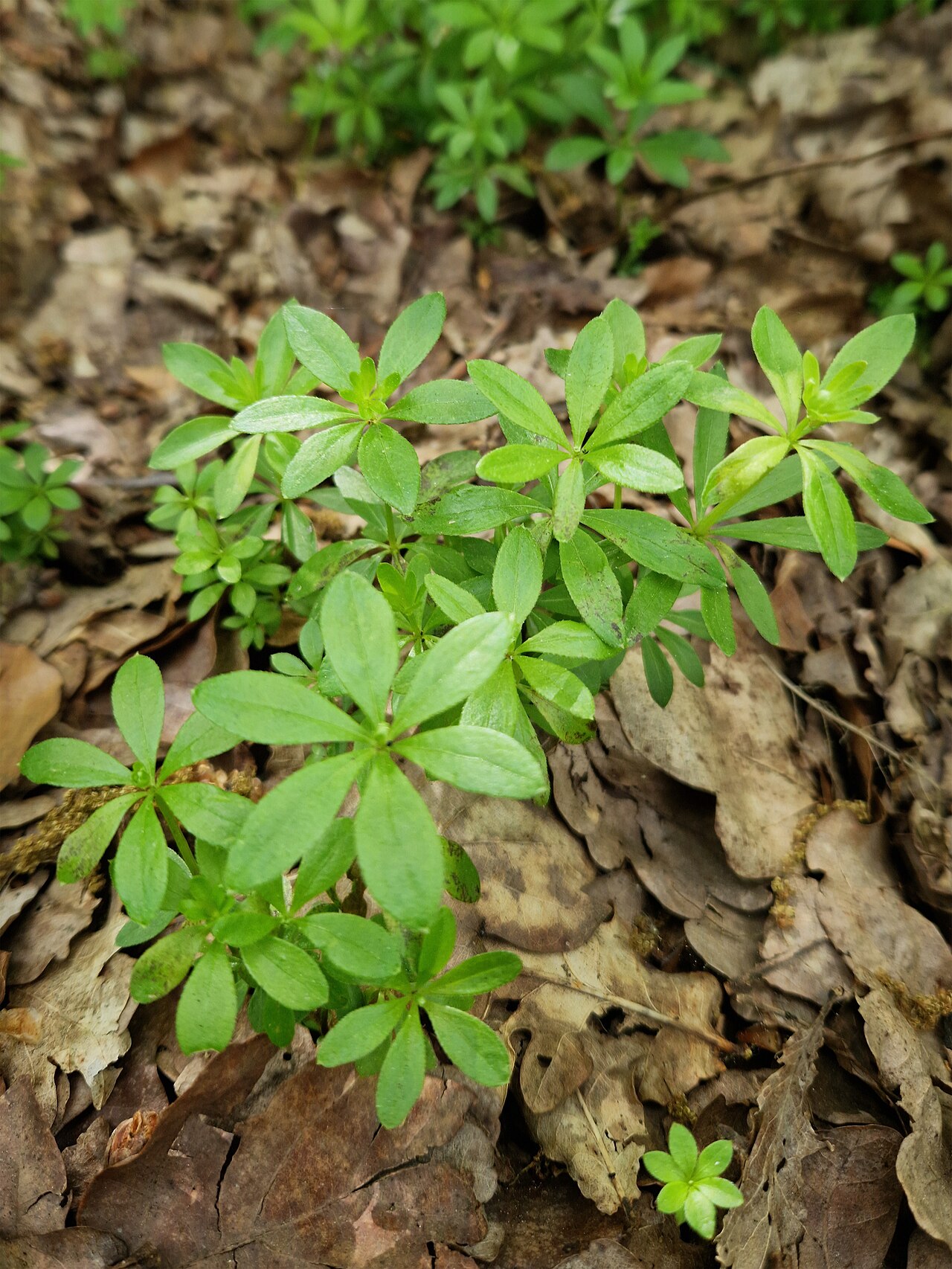
Sweet woodruff is a shade-loving perennial groundcover with whorled leaves and tiny white flowers, grown as much for its scent as for its flavor. Fresh leaves smell faintly green, but dried leaves develop a strong vanilla-hay fragrance from coumarin, the compound that also scents sweet grass — and that dried fragrance is the point. Sweet woodruff flavors May wine (Maiwein), a traditional German spring punch, as well as desserts, teas, and potpourri. It is one of the few herbs that prefers shade: plant it under trees, on the north side of buildings, or in any spot where most herbs would sulk. It spreads by runners into a dense mat, which makes it an excellent groundcover for difficult shade, but also means it should not be planted in a small bed with delicate neighbors unless you are willing to edge it. Start from nursery plants or division; seed is slow. Sweet woodruff wants rich, moist, well-drained soil and consistent moisture — it wilts in dry shade. In zones 9 and warmer it struggles with heat and is best treated as a cool-season plant or grown in the deepest shade available.
Water & feeding
Keep soil consistently moist — sweet woodruff wilts in dry shade. About an inch a week, more in hot weather. It is a moderate feeder for a groundcover: worm castings at planting and a light spring top-dress keep it lush. Mulch with leaf mold to hold moisture and mimic its woodland home.
Common problems
- Drought stress in dry shade — water consistently and mulch; sweet woodruff is not a dry-shade plant.
- Spreading into neighbors — edge beds annually or grow it where a mat is welcome.
- Coumarin caution — sweet woodruff contains coumarin, which in large, regular doses can affect blood clotting; traditional use is occasional (May wine, desserts), not daily in quantity.
- Slugs on low foliage — use traps or barriers in damp shade.
Harvest
Harvest leaves and flowering stems just as flowers open, cutting sprigs in the morning after dew dries. Dry sprigs in a dark, airy spot until crisp — the vanilla scent develops during drying, so do not judge fresh leaves by their faint scent. Use dried woodruff to infuse wine, cream, or syrup, removing the sprigs before serving, or crumble dried leaves into potpourri. A small bunch in a bottle of white wine for a few hours makes a simple May wine; use a tested recipe for quantities.
Browse all plant & pest guides
Saving seeds
Sweet woodruff seed needs winter. Give it a cold, moist chill — two to three months is the common figure — by mixing seed with damp vermiculite in a bag and refrigerating it, or by sowing fresh in fall outdoors and letting the season do it. Sow in spring, barely covered, in moist mix, and germination usually comes in a few weeks after chilling. Without the cold, the seed sits there and does nothing.
Let the seed ripen on the plant until it is dry and brown, then collect it into a paper bag. Sow fresh if you can — sweet woodruff seed does not store well, and dried seed may never germinate. Sow more than you need, since germination is uneven.
Division is the faithful route: lift and split the spreading roots in spring or fall, and every piece with roots and shoots attached becomes a plant. Seed is for starting from scratch and for the patient gardener; division is for the plant you already love.
And the Florida honesty: sweet woodruff wants a real winter and cool, moist shade, for zones 4 to 8, so it is marginal in Florida — north Florida only, in deep shade with moist soil, and even there it is a stretch. If it thrives, the vanilla-scented leaves are worth every year of waiting.