
🌿 Tall Peppergrass
What it looks like
Tall peppergrass is a plant that most gardeners have met, cursed, and pulled out without ever learning its name — which is a shame, because it is one of the more interesting weeds in North America. It is a member of the mustard family (Brassicaceae), an annual or biennial with a taproot, erect branching stems, and a peppery bite in every part. It is native to much of North America — from southern Canada through most of the United States to Mexico and Central America — and it is naturalized around the world, which is what happens when a plant is good at being a weed. It is common throughout Florida, where it turns up in yards, fields, roadsides, and disturbed ground with the confidence of a plant that has never once been invited.
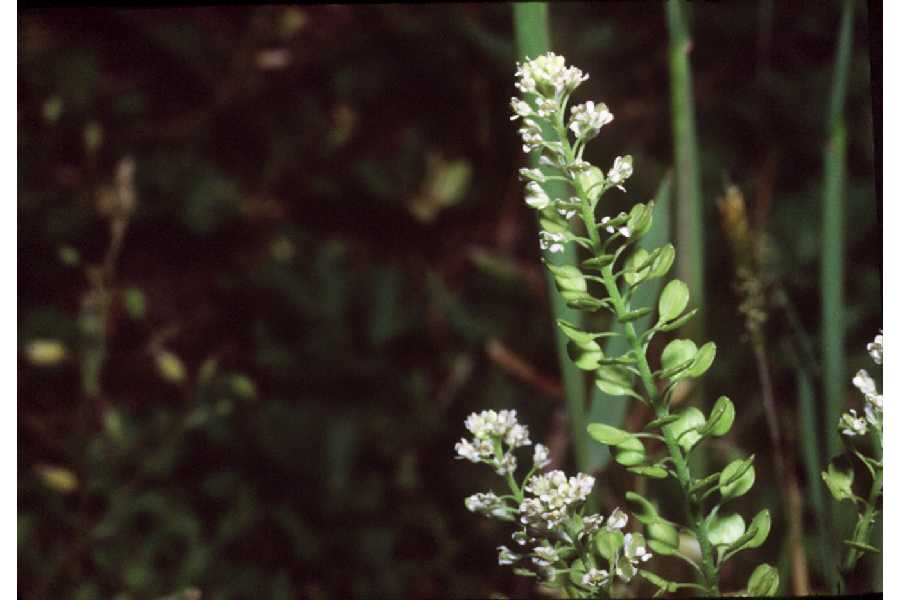
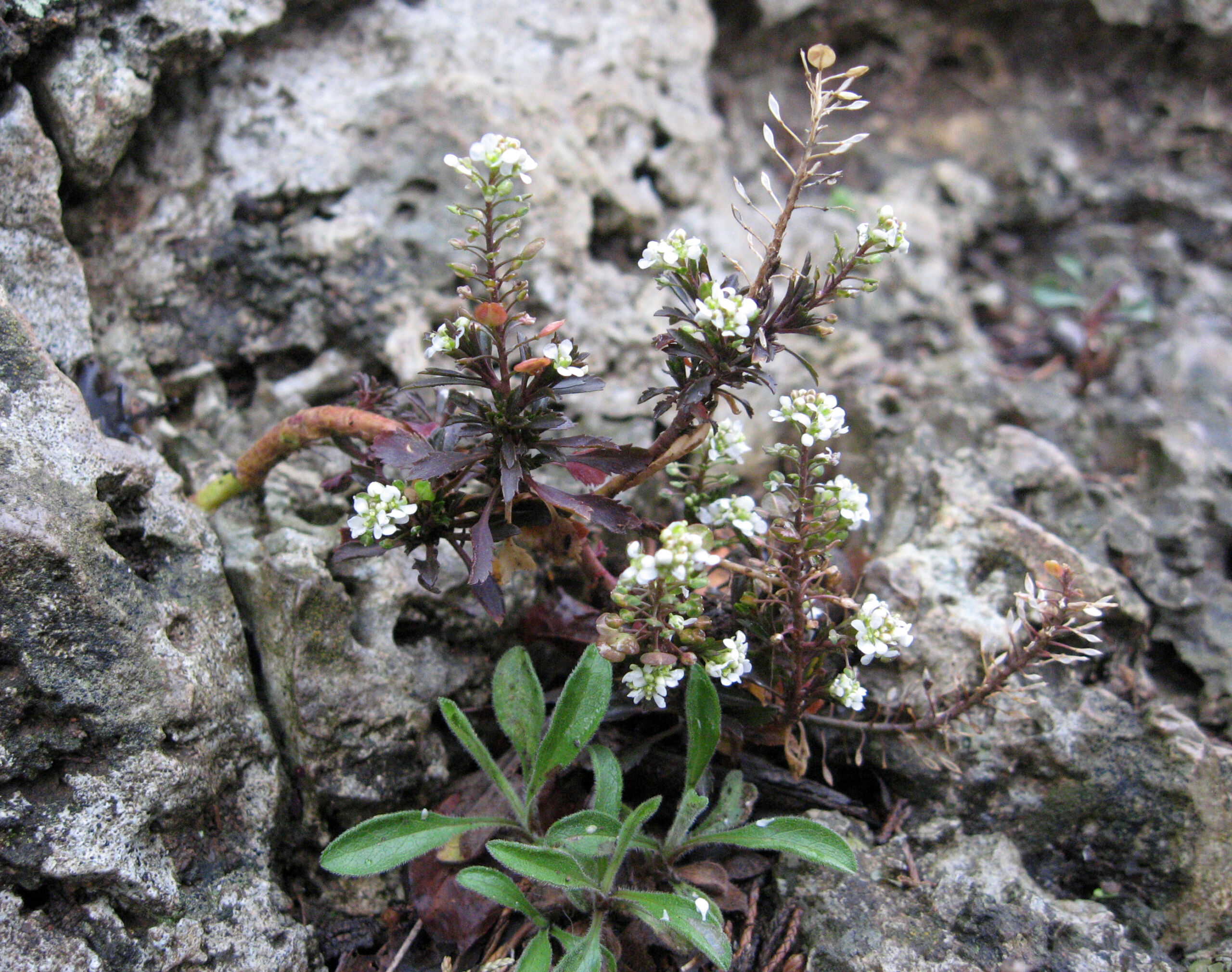
First year it is a basal rosette of oblanceolate leaves, pinnately divided, 2 to 3 inches long, hugging the ground and looking harmless. Then it bolts. Stems rise, branching near the top into an open, airy framework, and the stem leaves change character as they climb: sessile, linear to lanceolate, larger toward the base and toothed or lobed, smaller and simpler above. The plant’s mature height is usually given as 10 to 50 centimeters (roughly 4 to 20 inches), though Flora of North America allows stems up to 5.5 decimeters (about 22 inches) and a few sources stretch to 60 centimeters or even a meter in lush conditions — so “tall” is relative, and in this family it means taller than its low, creeping cousins, not taller than you.
The flowers are the giveaway, and they are why the plant has so many common names: Virginia pepperweed, Virginia peppergrass, least pepperwort, poor-man’s-pepper, common peppergrass. Tiny white four-petalled flowers, each petal barely 1 to 2 millimeters long, cluster in elongated racemes that lengthen as the season goes on until the whole top of the plant looks like a bottlebrush. Those racemes then transform into the fruit: small, round, flattened pods (silicles) 2.5 to 3.5 millimeters across, winged at the top with a shallow notch, packed along the stem like tiny coins. Taste one — a green seedpod, a young leaf — and you will understand the name immediately. The whole plant is peppery, and the young seedpods are genuinely usable as a pepper substitute, which is how a weed becomes a spice rack.
Butterfly note: Tall peppergrass is a caterpillar host plant, and a particularly important one for the whites. In this site’s butterfly guides it appears as a host for the checkered white (under the name Virginia pepperweed), the great southern white (also as Virginia pepperweed), and the large marble (as tall peppergrass). If you leave a patch of peppergrass standing in spring, you are running a nursery for white butterflies — and that is the kind of weed management this site wholeheartedly endorses.
How to grow
Honesty first: you do not need to “grow” tall peppergrass in any serious sense. It grows itself. If you have disturbed ground, a sunny edge, or a garden bed you neglected for a month, you probably already have it. This guide exists because if you are going to have it anyway, you might as well have it on purpose, in the right place, for the butterflies, and because a surprising number of gardeners would rather eat their weeds than fight them.
Sow seed directly where it is to grow, in full sun to part shade, in almost any soil: sand, loam, or clay, rich or poor, so long as it drains. Tall peppergrass is a plant of roadsides, fields, pastures, waste places, and open woodland, and it treats a garden bed like a vacation. Thin seedlings to about a foot apart if you want respectable plants rather than a tangled thicket, and let at least some plants go to seed — that is how next year’s patch arrives, and how the white butterflies’ nursery stays stocked. It blooms mainly from April through June, with sporadic flowering later in the season in some regions; one cultivation reference gives a broader window of May through October. Either way, a spring sowing gives you flowers and pods by early summer, and a fall sowing in mild climates gives you a rosette that overwinters and bolts in spring. Biennial forms behave the same way on a two-year clock.
Site it deliberately, because “deliberately” is the difference between a useful patch and a weed problem. A wild edge, a pollinator strip, the back of a vegetable garden — all fine. The middle of your seed-starting beds, the carrot patch, or the spot where you plan to grow brassicas for seed — not fine. It is a mustard, and mustards share pests, diseases, and bad habits with your cabbage family crops. Give it its own corner, and it will reward you with butterflies and pepper.
Water & feeding
Water is almost irrelevant to this plant, which is one of its charms and one of its dangers as a weed. Tall peppergrass tolerates drought, poor soil, and neglect with a cheerfulness that makes pampered garden plants look ridiculous. Water to germinate and establish, then leave it alone; it will handle dry spells that send your lettuce to the compost pile. It also tolerates a range of soil reactions, from mildly acid through neutral to mildly alkaline, and it is unbothered by the kind of compacted, disturbed ground that defeats more refined plants.
Feeding is unnecessary and, in a sense, counterproductive. Fertilizer produces taller, lusher, more seed-laden plants, which is the opposite of what you want from a plant you are trying to keep in a corner. Poor soil keeps it in check and keeps the flavor sharp. If you are growing it for the potherb and the pepper substitute, the best-tasting plants are the lean, sun-grown ones, not the lush, fertilized ones.
Common problems
- Self-seeding enthusiasm: The plant’s superpower is also its problem. A single plant can scatter hundreds of pods, and the seed bank in your soil will remind you of it for years. If you do not want it everywhere, pull plants before the pods ripen and leave a few designated seed plants standing in the pollinator strip.
- Lookalikes: Two cousins cause the most confusion. Field pepperweed (Lepidium campestre) has larger, more conspicuously winged fruits and is generally hairier, while miner’s pepperweed (Lepidium densiflorum) has smaller flowers and fruits and is the species tall peppergrass is known to hybridize with. Check the fruit: tall peppergrass fruits are round, flat, and winged only at the top, with a shallow notch.
- Brassica baggage: As a mustard, it can harbor the same flea beetles and other pests that bother cabbage, kale, and broccoli, and it can act as a reservoir for brassica diseases. Do not grow it cheek-by-jowl with your brassica crops, and rotate it out of vegetable beds.
- Identification before eating: Only eat plants you have positively identified as Lepidium virginicum — round flat pods, tiny white four-petalled flowers, peppery taste, basal rosette with pinnately divided leaves. Wash everything well, and do not harvest from roadsides, sprayed lawns, or industrial waste ground, where a peppery weed may also be a contaminated one.
- It looks weedy because it is weedy: In a formal garden, tall peppergrass will read as a weed no matter how good your intentions are. Plant it in a wild, meadow, or pollinator context where its scrappy habit looks like what it is: a native plant doing its job.
Harvest
Harvest young leaves as a potherb or salad green — they are peppery, mustardy, and best when young, before the plant bolts and the leaves toughen. Harvest the young green seedpods as a pepper substitute: crush them fresh or dry them, and they bring a sharp, peppery heat to salads, soups, and sauces. The mature dry pods are the same spice, just smaller and harder to collect in quantity, which is why most foragers pick them green. Leave a few plants unharvested in your pollinator patch — the great southern white, checkered white, and large marble caterpillars need them more than your salad does, and a patch that feeds both you and the butterflies is the whole point of growing a weed on purpose.
Saving seeds
Tall peppergrass is a weed with a pepper grinder built in, and its seed is as easy as the plant is common. Let the seed pods ripen on the plant until they are dry and brown, then strip them into a paper bag. No cold treatment is needed; sow in spring in moist soil, barely covered, and germination usually comes in one to two weeks. You can also direct-sow where you want it and let it come up on its own.
It self-seeds freely, which is a gift if you want a butterfly plant and a chore if you do not — peppergrass feeds white and sulphur caterpillars, and the peppery leaves season a salad. Deadhead if you want to keep it in bounds, or let it go and pull the volunteers you do not want.
Save from the plants you liked best and dry the seed thoroughly before storing; it keeps a few years in a cool, dry jar. The seed is tiny, so sow more than you need and thin to the strongest seedlings.
In Florida, tall peppergrass is a common weed of open ground and gardens, zones 4 to 10, and it grows year-round in the southern part of the state. It is a plant most gardeners have met, cursed, and pulled out without ever learning its name — which is a shame, because it is one of the more interesting weeds in the yard.
Varieties
No named garden cultivars of tall peppergrass are verified, and this guide does not invent any — nobody is breeding peppergrass for the nursery trade, and you should be suspicious of anyone who claims to sell a cultivar of it. The varieties that do exist are botanical, not horticultural. The nominate variety, Lepidium virginicum var. virginicum, is the eastern form and the only variety recognized in North Carolina, where it is distinguished in part by fruiting pedicels that are round in cross-section. A western form, Lepidium virginicum var. menziesii, is recognized in other treatments, distinguished by differences in the fruiting pedicels. Other varietal names, including var. pubescens and var. robinsonii, appear in taxonomic literature; one source associates the common name “tall peppergrass” specifically with var. robinsonii and calls that form perennial, which conflicts with the annual-or-biennial account of the species as a whole — this guide records that disagreement rather than resolving it, and does not present any of these as garden varieties to buy. What you grow, in practice, is the straight species, from seed, in whatever local form turns up in your soil — which, given how widespread it is, may simply be the plants already growing in your yard.