
🌸 Thistle
What it looks like
Thistles are the drama queens of the daisy family (Asteraceae), and we mean that affectionately. Most begin life as a flat, spiny rosette hugging the ground, looking for all the world like a dandelion that joined a punk band. In their second year — most thistles are biennials, though some are annuals or short-lived perennials — they bolt upward on stiff, branching stems, sometimes to 8 feet tall in the case of yellow thistle, and open pincushion flower heads packed with tiny disc florets. There are no ray petals, just a glorious thistledown puff of pink, purple, yellow, or white, depending on the species and even the individual plant. The leaves are deeply lobed and edged with sharp spines, and the flower heads wear their own spiny armor in the form of bristly bracts. Handle with gloves. Seriously. Gloves.
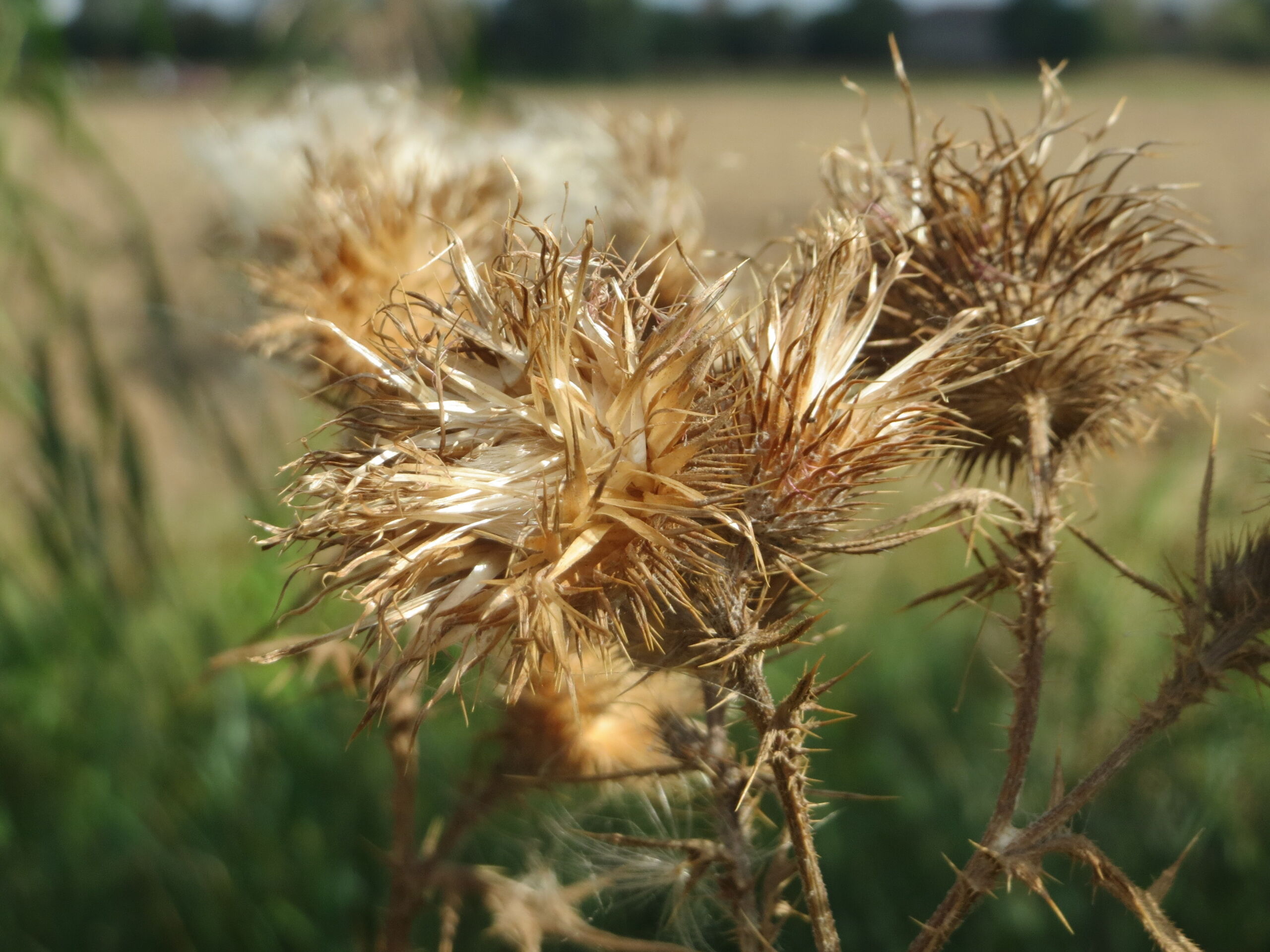
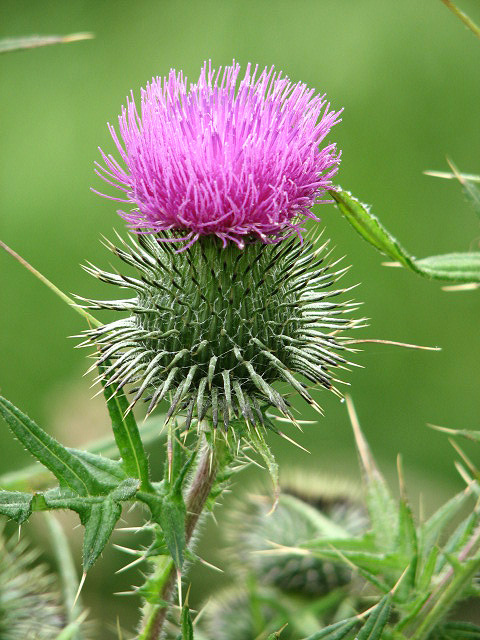
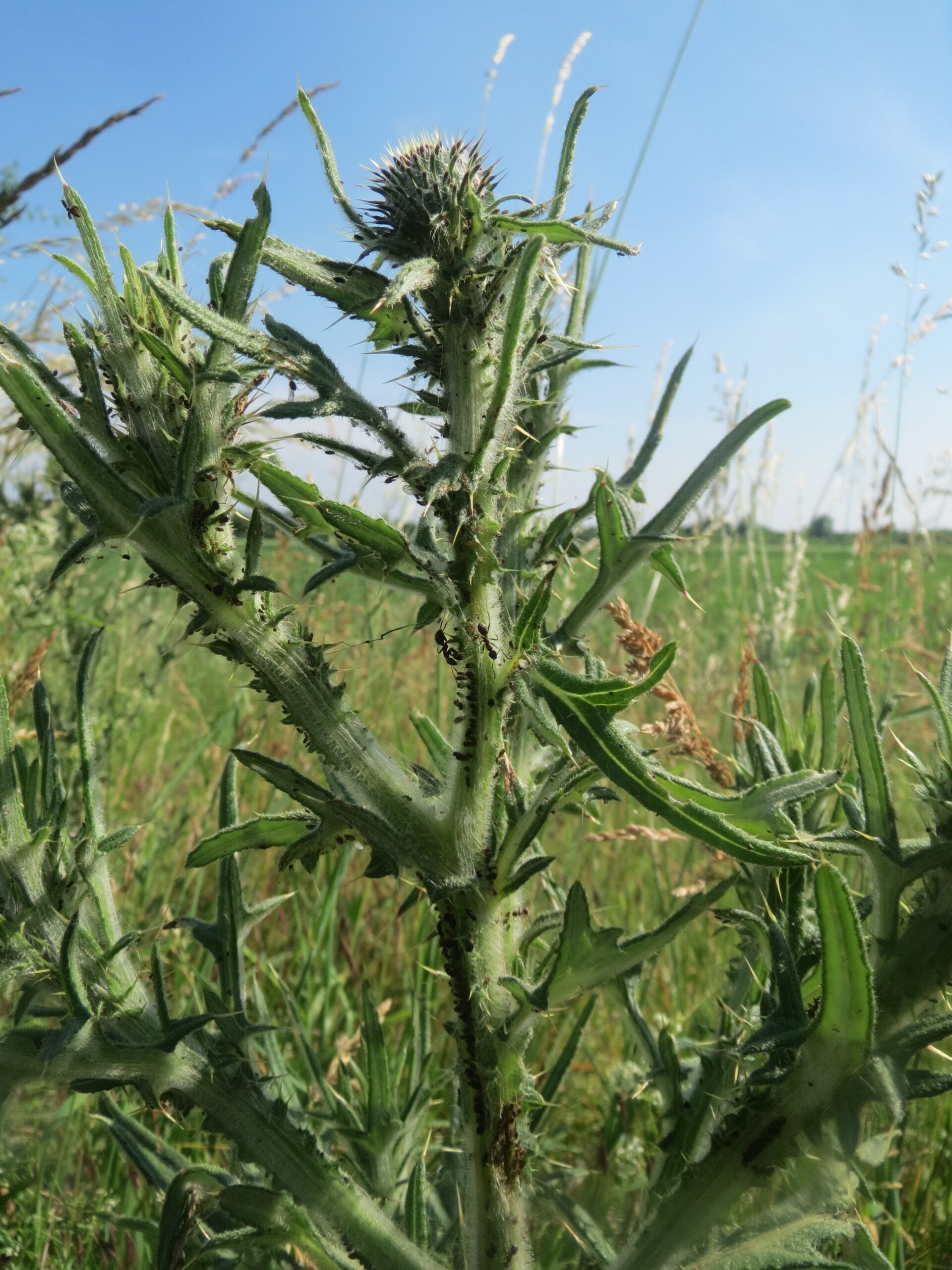
For butterflies, thistles punch far above their reputation. They are generous nectar plants — rich, late-season fuel when many garden flowers are fading — and several species serve as caterpillar host plants too. Goldfinches, meanwhile, treat thistle seed heads like a buffet, and birds use the fluffy down as nesting material. A thistle patch kept deliberately at the wild edge of a garden is one of the cheapest wildlife habitats you can grow, provided you pick the right species. That last clause matters enormously, as we will explain below.
Florida note: Yellow thistle (Cirsium horridulum) is a genuine Florida native, found throughout the state in pinelands, prairies, and the edges of salt marshes, and listed for Florida zones 8A through 10B. In Florida it overwinters as a basal rosette and blooms in spring, with flower color varying from plant to plant — purple, yellow, white, or pink. If you garden in Florida and want a thistle, this is the one to want.
How to grow
Here is the honest truth about growing thistles: most of them need no help at all, and the gardening skill lies in choosing wisely and keeping them where you want them. Start with a native species suited to your site, not with whatever thistle volunteered in the ditch. Sow seed in spring or fall in a sunny, open spot with average, well-drained soil. Thistles are sun worshippers; they tolerate a little shade but flower best in full sun, and most prefer ground that is not too dry. Do not fuss over them with rich compost or pampering — many thistles thrive in ordinary, even poor soil, and overly rich ground can produce floppy giants. Give plants about 2 feet of elbow room so air moves between them and you can actually get in there with gloves to deadhead.
Biennial thistles spend year one as a rosette and flower in year two, then die, usually leaving seedlings behind to carry on. If you want a steady patch rather than a one-year wonder, let a few heads go to seed each year and pull the seedlings that show up where you do not want them. Perennial species spread by seed and, in some cases, by underground roots, so site them where spreading is a feature, not a crisis — a meadow edge, a wildlife corner, a back-of-the-border wild strip — and not in the middle of your prized perennial bed. And please, before you plant any thistle, check your local noxious weed list. The wrong thistle in the wrong state is not a wildflower garden; it is a legal and ecological headache.
Water & feeding
Thistles are famously unfussy. Water new plantings until they are established, then step back. Most species are reasonably drought-tolerant once their deep taproots get going, which is part of why they colonize roadsides and pastures so cheerfully. Swamp thistle is the exception that proves the rule: it wants damp ground, wet thickets, seepage slopes, and wet meadows, and it will sulk in a dry bed. Match the species to your soil moisture and you will barely need to water at all.
Feeding? Barely. A thistle in average soil needs no fertilizer, and feeding can backfire by pushing soft, floppy growth that falls over in the first summer storm. If your soil is genuinely impoverished, a light top-dressing of compost in spring is plenty. Think of thistles as the garden’s self-reliant teenagers: they do not want your help, they want your sunny spot and your respect for their personal space (and their spines).
Common problems
- The wrong thistle: Canada thistle and bull thistle are invasive in many regions and listed as noxious weeds in numerous states. Learn to tell natives from invaders before you plant — or before you pull. A rough field rule: many native thistles have whitish leaf undersides, while many non-natives have green undersides, but swamp thistle breaks that rule, so confirm with a local flora or extension guide.
- Self-seeding enthusiasm: One thistle head can release a cloud of wind-borne seed. Deadhead promptly if you do not want a thistle takeover, and compost the heads rather than leaving them on the ground.
- Spines vs. humans: Thistle spines are no joke. Wear thick gloves and long sleeves when handling, deadheading, or pulling plants, and keep thistle patches away from paths where bare legs pass.
- Aphids and rust: Thistles can host aphids and are susceptible to thistle rust in some areas. In a wildlife patch this is usually tolerable — the aphids feed ladybugs and the birds — but do not site thistles cheek-by-jowl with susceptible crops.
- Flopping: Tall thistles in rich soil or shade can lean and flop. Full sun, average soil, and neighboring sturdy plants to lean on will keep them upright.
Harvest
Thistles are not a harvest crop in the usual garden sense, and this guide does not recommend eating them. What you do harvest is ecological: nectar for butterflies and bees through summer and into fall, seeds for goldfinches and other birds, and down for nest builders. If you grow thistles for wildlife, the “harvest” is simply leaving the seed heads standing through fall and winter for the birds, then cutting the dead stalks down in late winter before new rosettes wake up. If you grow a thistle for cut flowers — some gardeners do, gloves on — cut stems when the heads are freshly open, and be aware that the seed heads will happily sow themselves all over your garden if you bring them indoors to dry.
Saving seeds
Genus-level honesty first: thistle is a big group — Cirsium and its cousins, dozens of species — and most of them are biennials that spend their first year as a flat, spiny rosette and their second year as a tall, prickly flower tower. The seed playbook is shared across most of them: let the flower heads ripen until they are dry and fluffy, then collect the seed before the wind takes it. No cold treatment is needed for most species; sow in spring in moist soil, barely covered, and germination usually comes in one to two weeks.
Thistles self-seed freely, which is a gift if you want a pollinator plant and a chore if you do not — bees and butterflies love the purple flowers, and goldfinches love the seed. Deadhead if you want to keep it in bounds, or let a few plants go to seed each year and pull the volunteers you do not want. Wear gloves: the spines are not a joke.
Save from the plants the pollinators liked best, and dry the seed thoroughly before storing; it keeps a few years in a cool, dry jar. Sow more than you need, since germination is good but not total, and label the packet with the species if you know it.
In Florida, thistles are common wildflowers of open ground and roadsides, and several species are native here. Save seed only from a species you can identify and actually want more of — some thistles are listed invasive, and the difference between a pollinator plant and a problem is often just the species name.
Species in this group
One important disambiguation first: milk thistle (Silybum marianum) is a DIFFERENT plant in a different genus, with its own guide. If you are looking for milk thistle, do not shop this page — it is not a Cirsium, even though it shares the thistle name and the attitude.
- Carolina thistle — Cirsium carolinianum: A southeastern native of open woods, roadsides, and pine savannas, with pink to purple heads. A good regional choice where it is native.
- Swamp thistle — Cirsium muticum: The wetland thistle. Native to swamps, wet thickets, seepage slopes, and wet prairies, with large pink-purple heads. The exception to the leaf-underside identification rule — its undersides are green despite being native.
- Tall thistle — Cirsium altissimum: A prairie and woodland-edge native, growing roughly 3 to 6 feet tall and flowering from July through September. Well-behaved in managed settings and a strong butterfly nectar plant.
- Yellow thistle — Cirsium horridulum: Florida native and coastal plain native from New England to Texas, with flower color varying from plant to plant — yellow, purple, pink, or white. Typically 1 to 4 feet tall in Florida sources, though some plants reach 8 feet. Blooms in spring in Florida and in May through August farther north.
- Bull thistle — Cirsium vulgare: Also called spear thistle or common thistle. A biennial, 3 to 6 feet tall, with purple heads from July into October and a deep taproot. Native to Europe and western Asia; considered invasive in many temperate regions, so plant it nowhere it is listed as a weed — admire it where it volunteers instead.
- Canada thistle — Cirsium arvense: INVASIVE — DO NOT PLANT. Despite the name it is native to Europe, not Canada. A perennial that spreads aggressively by creeping roots as well as seed, it is designated a noxious weed in 43 states and forms dense stands that displace native plants. If you find it, manage it; never sow it.
- Field thistle — Cirsium discolor: A biennial or short-lived perennial native of pastures, woodlands, and thickets, abundant in open woodlands and prairie plantings under restoration. Looks much like bull thistle and is often mistakenly killed for it — check before you pull.