
🌿 Ticktrefoil
What it looks like
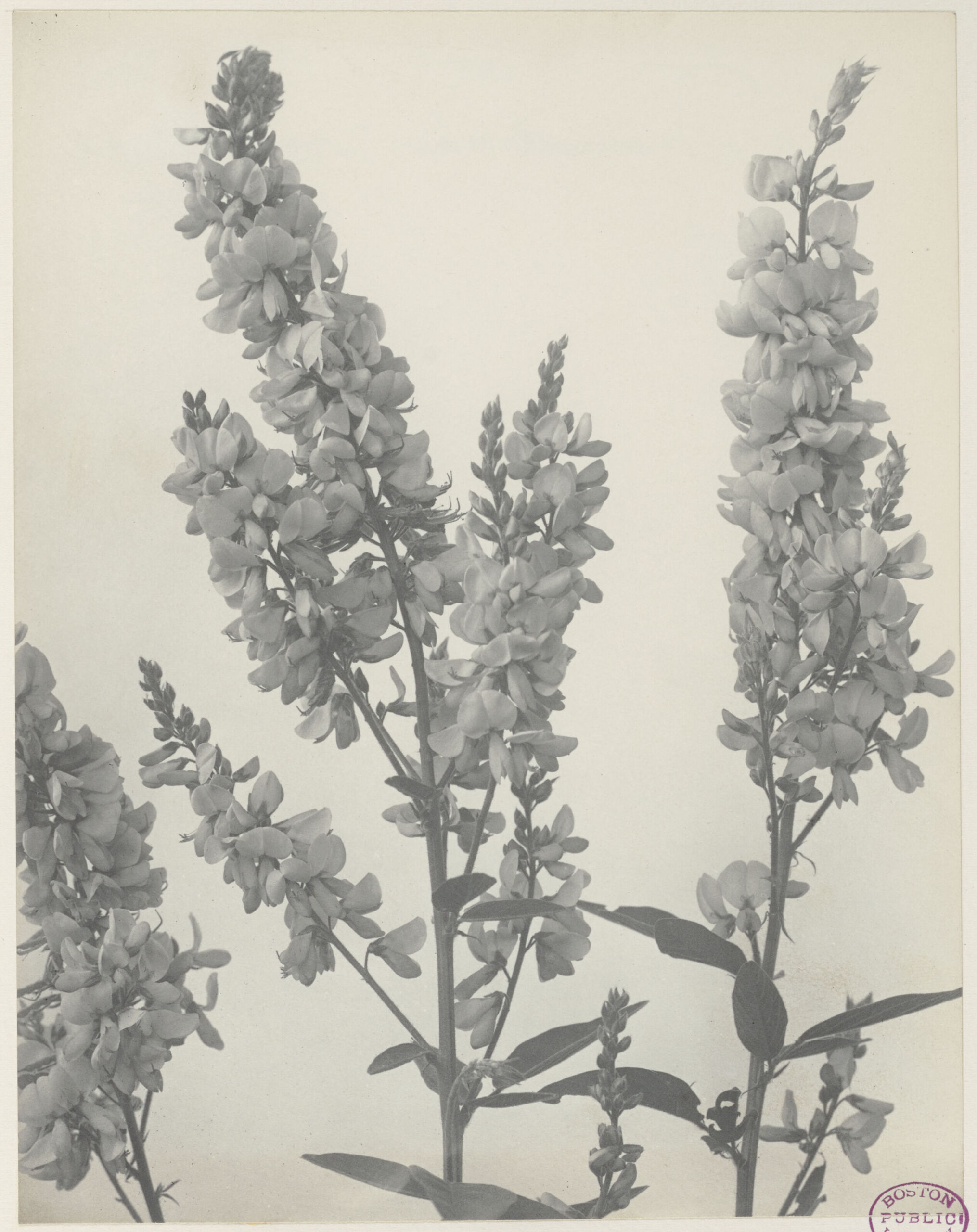
Ticktrefoils are legumes that do not look like they are trying very hard — until you walk past one in seed, and then you discover they have been trying very hard indeed, on your trousers. The genus Desmodium, in the pea family (Fabaceae), holds mostly inconspicuous herbs and small shrubs with three-parted leaves and small pea-like flowers in pink, purple or white. Panicled ticktrefoil (Desmodium paniculatum) grows to about 3 feet tall, with alternate, pinnately trifoliate leaves whose leaflets are lance-shaped to oblong, usually 2 to 10 times as long as wide. Showy ticktrefoil (Desmodium canadense) is taller and showier, 3 to 6 feet on leafy stems, with dense spikes of pink to purple pea flowers that bloom from July to September.
The flowers are worth a closer look than they usually get. They are classic pea flowers — a broad banner petal on top, two wings at the sides, and a keel below holding the stamens and pistil — but small, often only about half an inch long, and carried in open panicles or racemes at the stem tips. From a distance a ticktrefoil in flower looks like a pink haze. Up close it is a whole pea-flower factory, and that is why butterflies notice it: the flowers offer nectar, and the leaves offer caterpillar food. The USDA’s fact sheet for panicled ticktrefoil lists it as a host for several skippers and butterflies, including the hoary edge, silver-spotted skipper, southern cloudywing and northern cloudywing.
Then comes the fruit, and the fruit is the whole story. Ticktrefoil pods are not ordinary bean pods. They are loments: flat pods that break crosswise into one-seeded segments, each segment covered in tiny hooked hairs. Those segments stick to fur, feathers and clothing with cheerful tenacity, and they are carried away from the parent plant by whatever brushed past. If you have ever come home from a late-summer walk and spent ten minutes picking flat green-brown segments off your socks, you have met a ticktrefoil, and you have done its reproductive work for free.
How to grow
Plant ticktrefoil where a plant that seeds itself is a welcome guest, not an intruder. The USDA fact sheet for panicled ticktrefoil describes it as a native perennial wildflower of upland forests and savannahs, preferring coarse to medium-textured, well-drained soils, and growing from Maine south to Florida and west to Texas and Nebraska. In the garden that translates to: sun to part shade, soil that drains, and a spot at a woodland edge, meadow margin or prairie planting where it can mingle with grasses and other wildflowers. Showy ticktrefoil likes similar conditions — prairies, thickets, wet meadows, lake margins and roadsides — and tolerates both dry and moist soils as long as they drain.
Sow seed in autumn where it is to grow, or stratify seed indoors if sowing in spring; several sources note that seed sown in autumn needs no special treatment, while indoor sowing benefits from a cold period. Ticktrefoils are legumes, so inoculating seed with the appropriate rhizobium — the root-nodule bacteria that partner with legumes — can help establishment, especially in soil where no Desmodium has grown before. Seedlings need water until established; mature plants tolerate some drought and appreciate occasional watering in dry periods, but they do not want to be pampered. In favourable spots they self-sow readily, which is how a single plant becomes a patch over a few years.
Give them neighbours that can hold their own. Ticktrefoils are not aggressive in the thuggish sense, but they are persistent, and a patch in a formal border will wander. In a meadow or prairie planting, with grasses and robust perennials around them, that wandering looks natural. Stake or surround tall showy ticktrefoil if your site is windy — a plant weighed down by its own flower head, as growers report, flops gracelessly — or plant it in a drift where stems support each other. Cut back after flowering if you want to limit seed, but leave some plants to set seed if you want the patch to renew and the birds and small mammals to have their share of the loments’ journey.
Water & feeding
Water to establish, then be moderate. Ticktrefoils grow in soils from moist to fairly dry, and Plants for a Future lists panicled ticktrefoil as preferring dry or moist soil, well-drained, in light, medium or heavy soils, in mildly acidic to neutral conditions, and even in very acidic soil. That is a wide tolerance, and it means the main watering mistake is overwatering in heavy, soggy soil. A deep soak in a drought will keep flowers going; a permanently wet bed will rot roots and discourage the very soil life the plant depends on.
Feeding, as with other legumes, is mostly unnecessary — and that is the soil science worth pausing on. Ticktrefoils host nitrogen-fixing bacteria in root nodules, converting atmospheric nitrogen into forms plants can use, and in doing so they enrich the soil around them rather than depleting it. That is why they are valued in prairie restorations and agroforestry: they are not just taking up space, they are quietly fertilising their neighbours. A compost mulch in spring is plenty. High-nitrogen fertiliser is redundant at best and, by encouraging soft growth, counterproductive at worst. Let the bacteria do the fertilising; your job is to not disturb the roots unnecessarily and to keep the soil covered and alive.
Common problems
- Seeds on everything. This is not a problem with the plant; it is the plant’s dispersal strategy working exactly as designed. If loments on clothing drive you mad, site ticktrefoil away from paths, deadhead before pods mature, or grow it where you walk past in wellies you do not mind picking over.
- It self-seeded into the lawn. Mow or pull seedlings while small. A mown lawn is not ticktrefoil habitat, and seedlings will not survive regular mowing.
- It flopped. Tall species in rich soil or wind flop. Plant in drifts, give sun, and skip heavy feeding.
- Identification confusion. Missouri’s field guide notes 17 Desmodium species in that state alone, and that identification often depends on close analysis of the seed pods. Do not worry about naming every volunteer to species; worry about whether you planted the right one for your garden, and let the pods tell you the rest.
- Bean pod mottle virus near soybeans. Showy ticktrefoil has been investigated as a possible source of bean pod mottle virus in soybean plants, carried via the bean leaf beetle. If you garden next to soybean fields, this is worth knowing and worth mentioning to the grower, rather than planting ticktrefoil hard against the field edge.
Harvest
Ticktrefoil is not a food crop in this guide, and no medicinal use is recommended here. The harvest is seed and, if you are feeling playful, a demonstration. Collect loments when they are brown and dry but before they all hitch a ride — shake a stem over a paper bag and the segments will drop in, hooked hairs and all. Store seed dry and cool. And if you have children in the garden, show them the trick: brush a hand along a seeded stem, watch the segments stick, and explain that they have just become a dispersal agent, like a deer or a dog, only slower and with better conversation. That is a better lesson than any worksheet.
Browse all plant & pest guides
Saving seeds
Genus-level honesty first: ticktrefoil is a big legume genus — Desmodium, dozens of species — and the seed playbook is shared across most of it. The seed coat is hard, so nick each seed with a file or rub it with sandpaper, then soak it overnight in warm water; the seeds that swell are ready. Sow warm in moist soil, barely covered, and germination usually comes in one to two weeks after treatment. Untreated seed can sit in the soil for months and do nothing.
Let the seed pods ripen on the plant until they are dry and brown — the little jointed pods that stick to your clothes are the seed — then strip them into a paper bag. Dry the seed thoroughly before storing; it keeps several years in a cool, dry jar.
Ticktrefoil self-seeds freely, which is a gift if you want a native groundcover and a chore if you do not. It fixes nitrogen, feeds the bees, and asks for almost nothing — a legume that earns its keep. Deadhead if you want to keep it in bounds, or let it go where you want a cover.
In Florida, ticktrefoils are common natives of open woods and roadsides, and several species are found here. Save seed only from a species you can identify, and label the packet — a bag marked “ticktrefoil” is a mystery, not a plan.
Species in this group
Panicled ticktrefoil — Desmodium paniculatum — A native perennial wildflower to about 3 feet, with pink to lavender flowers June through September and sticky loments August to October; zones about 4 to 10; a separate native profile exists for this species.
Showy ticktrefoil — Desmodium canadense — A tall native perennial, 3 to 6 feet, with dense spikes of pink to purple pea flowers July to September; a prairie and meadow plant that fixes nitrogen and hosts several skippers.
Desmodium tortuosum — A tropical and subtropical ticktrefoil with twisted (tortuous) pods, for warm climates where a vigorous, sprawling legume is welcome.
Desmodium triflorum — A low, prostrate ticktrefoil with small three-flowered clusters, useful as a ground-hugging legume in warm, sunny spots.
Illinois ticktrefoil — Desmodium illinoense — A prairie ticktrefoil of the central United States, distinguished from showy ticktrefoil by a single, terminal, white-flowered inflorescence with few branches, where showy ticktrefoil has a branched, rose-purple one.