
🌳 Trema Micrantha
What it looks like
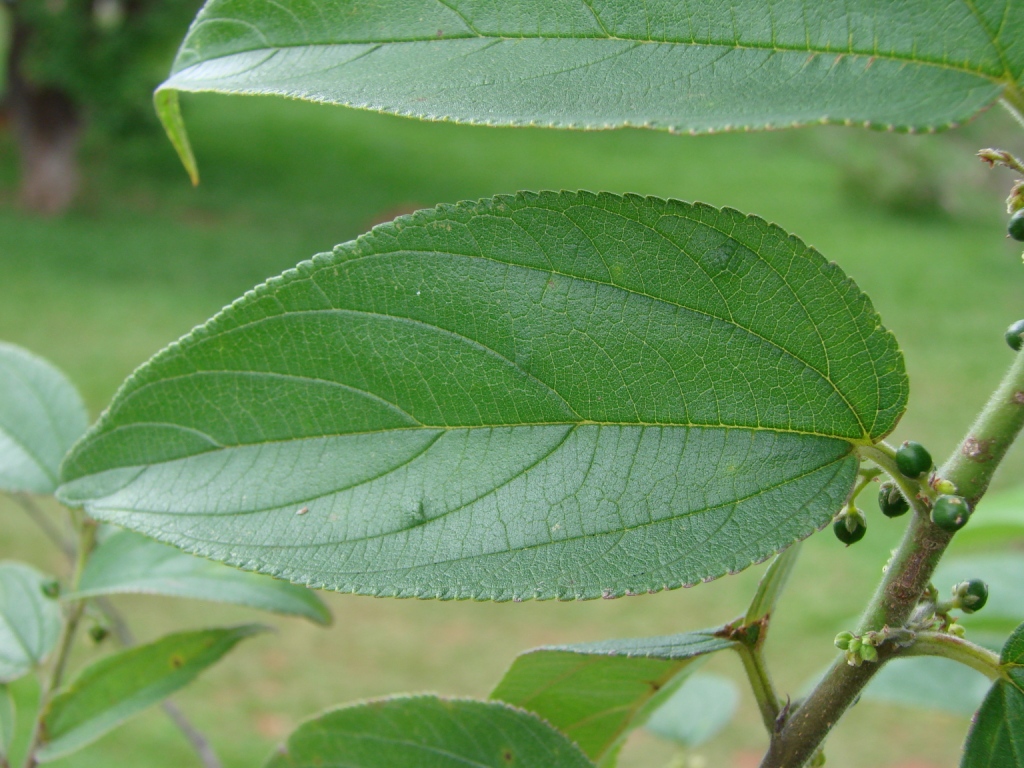
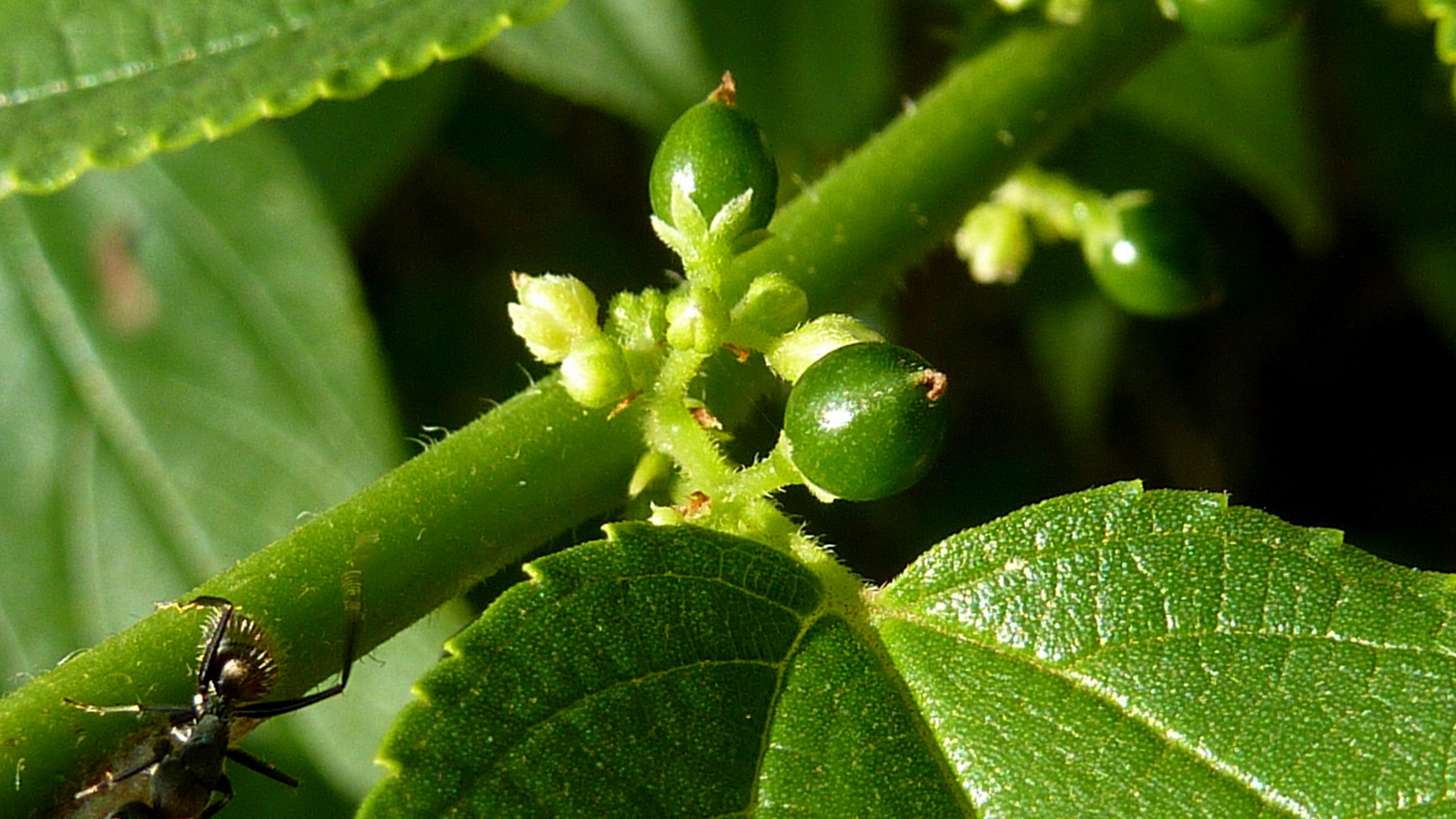
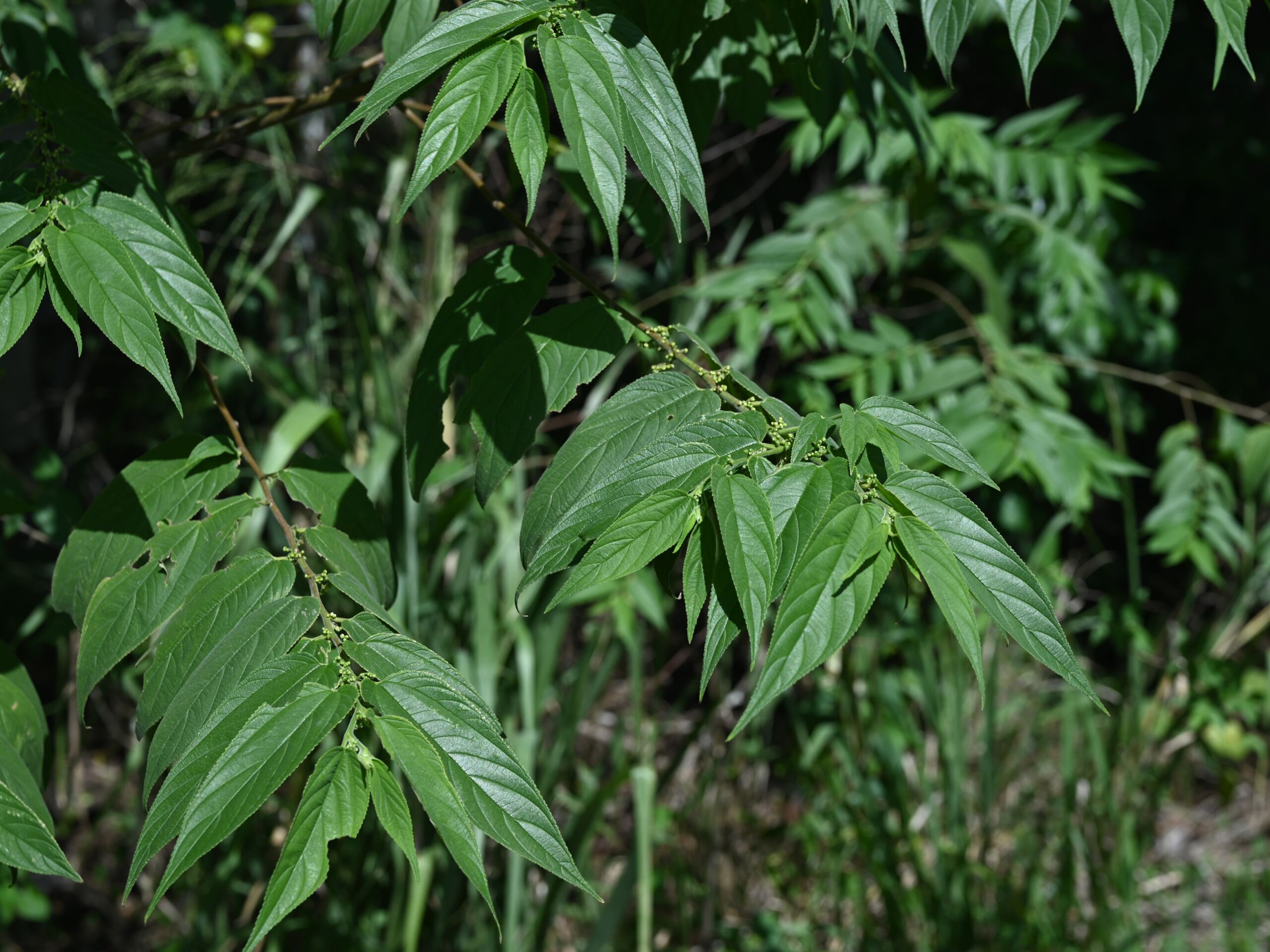
Trema micrantha is a shrub or small tree in the hemp family (Cannabaceae), closely related to the hackberries (Celtis) — a relationship the butterfly guides hint at, since the same guides that list Trema also list Celtis among their hosts. It is native to warmer parts of the Western Hemisphere: Mexico, Central America, tropical South America, the West Indies, Jamaica, Cuba, Hispaniola, Puerto Rico, and southern Florida. Its common names tell the same story twice: Jamaican nettletree for the island and the nettle-like leaves, and capulin for the small, cherry-like fruits. It is also called Florida trema, for the one corner of the United States where it grows wild.
Identification starts with the leaves and the underside trick. The leaves are alternate, simple, egg-shaped to lance-shaped, up to about 9 centimetres long, green on top but covered with white, woolly pubescence underneath — flip a leaf and it looks frosted. The margins are evenly serrated, and the tip runs out to a long point, the classic Trema leaf shape: ovate-acuminate, in botanical shorthand. The flowers are small and greenish-white, easy to miss, and the fruits are the reward for looking closely: small, round, yellow to bright reddish-orange drupes, up to about 4 millimetres across, borne in clusters. The tree itself grows up to about 10 metres (roughly 33 feet) tall, often less in open, disturbed ground, with a fast, open, slightly scruffy crown. It is a pioneer by trade: it shows up first on cleared, burned, or otherwise disturbed ground, grows fast, fruits young, and feeds everything that passes.
For butterflies, Trema micrantha is a host plant, and the verification for this guide is unusually clean. Cramer’s eighty-eight lists it by name among its host plants — “Trema species (Trema lamarckiana, Trema micrantha)” — with eggs laid singly under Trema leaves, beside the leaf midrib. The orange mapwing also lists Trema micrantha among its host plants, among nettle-family and related plants of tropical forest edges and mountain slopes. That is two butterfly guides, both naming the species outright, not a genus guess and not a common-name inference. The Trema association is unusual within Cramer’s eighty-eight’s tribe, most of whose members use soapberry-family hosts, which makes this butterfly — and this tree — a small taxonomic surprise. A tree that feeds an eighty-eight is a tree worth knowing by name.
A note on the name, because it will confuse anyone who looks it up: you will also see this plant written as Trema micranthum. The two spellings name the same species — micrantha in the USDA Germplasm Resources Information Network and in Flora of North America usage, micranthum in Plants of the World Online, which treats the genus as neuter. This guide uses Trema micrantha, the spelling the butterfly guides use, and notes the alternate spelling so that no one thinks they are two different trees. The related species Trema lamarckiana, named alongside it in Cramer’s eighty-eight, is a different species, and the Trema genus as a whole — about 15 species — is a separate, later unit. This guide claims Trema micrantha only.
How to grow
Here is the honest framing, and it is a geographic one: Trema micrantha is a tropical and subtropical tree, and in the United States it belongs in southern Florida and nowhere colder. It is not hardy in temperate winters, it is not a plant for a North Florida frost pocket, and it should not be sold or planted as if it were. In its range — southern Florida, the Caribbean, Mexico, and Central and South America — it is gloriously easy, because it is a pioneer. It colonizes disturbed, cleared, and open ground, grows fast from seed, and asks for little beyond sun, warmth, and drainage. If you are in southern Florida and you have a sunny, open, disturbed corner, Trema micrantha will very likely find it on its own, carried there by a bird that ate the fruit.
To grow it deliberately in its range, sow fresh seed in a warm, sunny, well-drained spot, barely covered, and keep it moist until germination. It is a fast grower, and it fruits young, which is the whole point of a pioneer: it feeds birds and butterflies quickly, and it shades and shelters the slower trees that follow. Give it room — a small tree’s crown, 15 to 30 feet across at maturity — and do not plant it against a house, a fence, or a power line, because fast pioneers do not stay polite. Prune lightly to shape a single trunk if you want a tree rather than a shrubby thicket, and remove suckers and seedlings where they are not wanted, because a bird-fed pioneer will volunteer generously. Outside its range, grow it only as a container plant brought indoors before any frost, and understand that a container Trema is a curiosity, not a butterfly host: the butterflies that use it do not live where it needs a pot.
Florida note: In Florida, Trema micrantha — Florida trema — is a southern Florida native of hammocks, forest edges, and disturbed ground, and it is the one Trema species Florida gardeners are most likely to meet. It is not a plant for central or northern Florida, where freezes will kill it, and it should be planted only in the frost-free south, in a sunny, open spot with room to be a small, fast, slightly scruffy tree. Its value in a Florida butterfly garden is real but tropical: it feeds the stray and southern butterflies that reach the state, and it feeds the birds that carry its seed. Do not plant it as a substitute for native temperate hosts, and do not expect it to survive a hard freeze. It is a southern Florida tree, and it knows it.
Water & feeding
Water needs are moderate. Trema micrantha grows in moist tropical ground and on disturbed sites, and it establishes best with regular moisture in its first season. Once established, it tolerates drier spells better than many tropical trees, but it is not a desert plant: long droughts will check its growth and thin its fruit. In a garden setting in southern Florida, water deeply to establish, then water in dry spells and let the rainy season do the rest. Good drainage is the rule — it wants moist ground, not standing water — and a mulch ring helps a young tree through its first dry season.
Feeding: light, if at all. This is a pioneer of poor, disturbed soils, and it does not need rich feeding to grow fast — indeed, it grows fast precisely because it does not wait for good soil. A light application of balanced organic fertilizer in spring is plenty for a garden tree, and no fertilizer at all is fine for a wild or naturalized plant. The soil science note is the plant’s whole story: as a fast-growing pioneer, it turns bare, disturbed ground into shade, leaf litter, and fruit, and its fallen leaves and bird-dropped seed build the soil that slower, longer-lived trees will eventually need. It is not a crop to feed. It is a first responder to let work.
Common problems
- It is not hardy, and it will prove it. Trema micrantha is tropical. A freeze will damage or kill it, and no amount of mulch changes that. Plant it only where frost is rare or absent, and do not let a mild winter fool you into planting it a zone too far north.
- It volunteers — a lot. Birds eat the small fruits and drop the seed everywhere. If you do not want Trema seedlings across the yard, pull volunteers while they are small and do not let a fruiting tree overhang a bed you want to keep clean.
- It is fast and scruffy, not stately. A pioneer crown is open, irregular, and sometimes brittle. Do not plant it as a formal shade tree and then complain that it does not behave like a live oak. It behaves like a pioneer, which is to say fast, generous, and a little wild.
- Confusion with other Trema species. Trema lamarckiana, named alongside Trema micrantha in Cramer’s eighty-eight, is a different species, and small-leaved populations of Trema micrantha may be confused with it. Check the leaf underside — white and woolly in Trema micrantha — and the fruit color, and do not assume every Trema is this species.
- Confusion with hackberries. Trema is closely related to Celtis (hackberry), and the two genera share serrated leaves and small drupes. Hackberries are generally larger, longer-lived trees of temperate regions; Trema is the smaller, faster, tropical cousin. If the tree is in southern Florida and the leaf underside is woolly-white, you are probably looking at Trema.
- Short life, by tree standards. Pioneers grow fast and die younger than climax trees. Expect decades, not centuries, and plan for the slower trees that will follow it.
Harvest
Harvest, for Trema micrantha, is about fruit, bark, and wood — in that order of garden relevance. The small fruits are eaten by birds and, in their native range, by people, but this guide does not present them as a garden fruit crop: they are tiny, seedy, and best left to the birds that spread the tree. The bark has a documented human use that is worth knowing: after the local extirpation of slow-growing xalama in San Pablito, Mexico, Otomi people began using Trema micrantha bark strips as a raw material for handmade amate paper — a substitution driven by necessity, and a reminder that a pioneer tree’s bark can be a craft material when a slower tree runs out. The soft wood has been used for tea chests and matchsticks. The harvest this guide recommends without reservation is the ecological one: let the tree fruit for the birds, let it host the eighty-eights and mapwings where they occur, and let its leaf litter feed the ground beneath it. A Trema managed that way gives you butterflies, birds, and a better patch of ground, which is a better yield than a tea chest.
Browse all plant & pest guides
Saving seeds
Trema is a pioneer tree, and its seed is built for speed. Let the small dark fruit ripen on the tree until it is fully colored, then collect it and clean the pulp off the seed. Sow fresh — trema seed does not store well, and dried seed may never germinate. Sow in a warm, moist mix, barely covered, and germination usually comes in one to two weeks. No cold treatment is needed.
Birds do most of the seed saving for this tree: they eat the fruit and drop the seed wherever they perch, which is how trema colonizes bare ground after a clearing. If you want it on purpose, sow where you want a fast-growing native tree and let it be — it grows several feet a year in its first seasons.
Seedlings will vary, and there are no named forms to keep true from seed. Sow more than you need, since germination is uneven, and give the seedlings room — trema is a tree, not a shrub, and it wants to be tall.
Trema is a Florida native for open ground and disturbed sites, a fast-growing pioneer that feeds birds and butterflies and then makes way for slower trees. Plant it where you want quick shade and wildlife, and let it do the job it evolved to do.
Species in this group
Trema micrantha (also written Trema micranthum) — the species described in this guide, the Jamaican nettletree or capulin, also called Florida trema; the spelling micrantha is used here because it is the spelling in the butterfly guides.
Trema lamarckiana — a related Trema species named alongside Trema micrantha in Cramer’s eighty-eight; a different species, not covered by this guide.
Trema orientale — the pigeon wood, a related Trema species of Asia and Australasia, with larger leaves and a wider Old World range; a different species, not covered by this guide.
Other Trema species (Trema spp.) — the genus holds about 15 species, and this guide claims Trema micrantha only; a butterfly guide naming another Trema species belongs to that species’ guide, and a guide naming the genus belongs to the genus guide.