
🎺 Trumpet Vine
What it looks like
How to grow
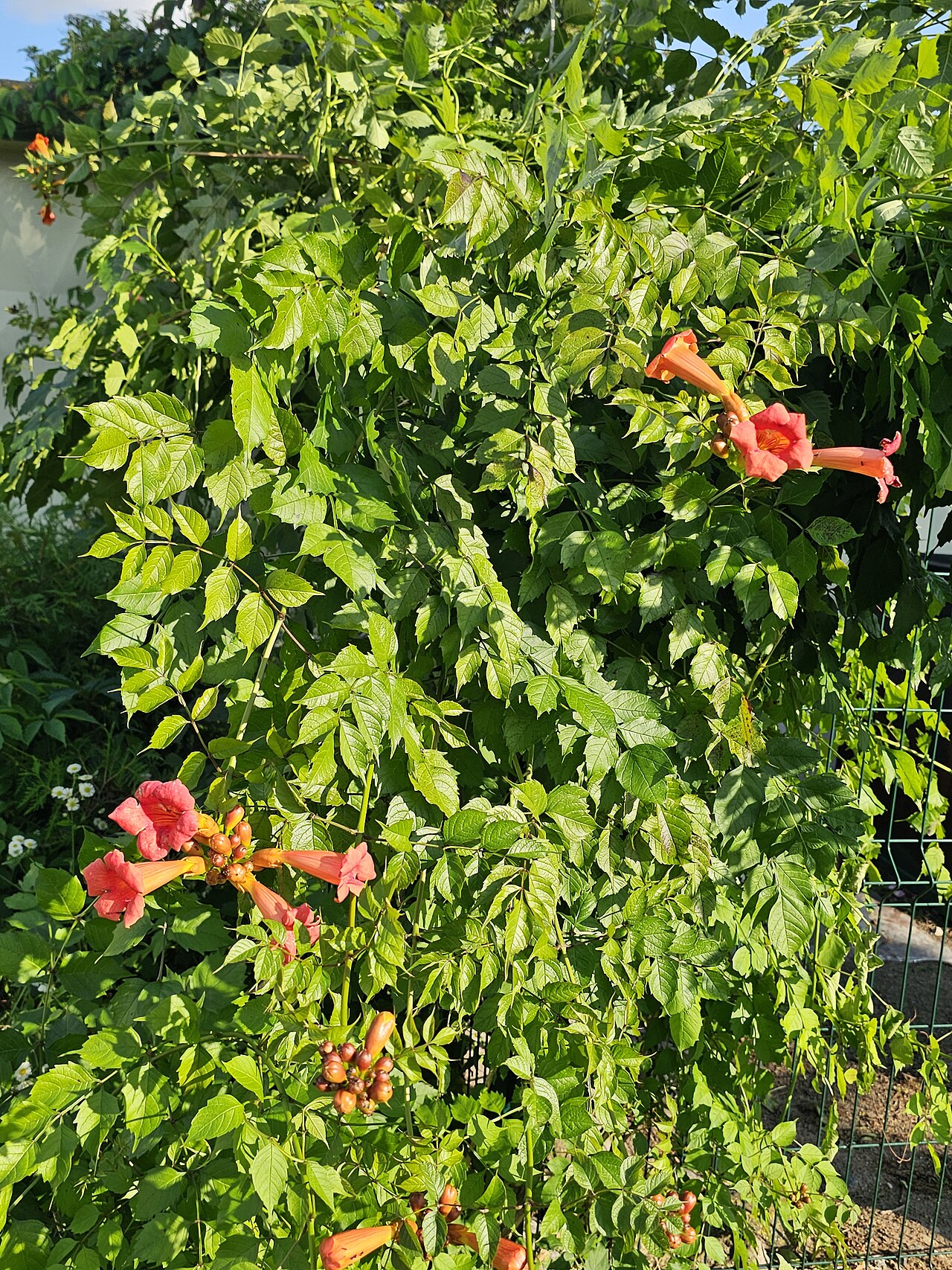
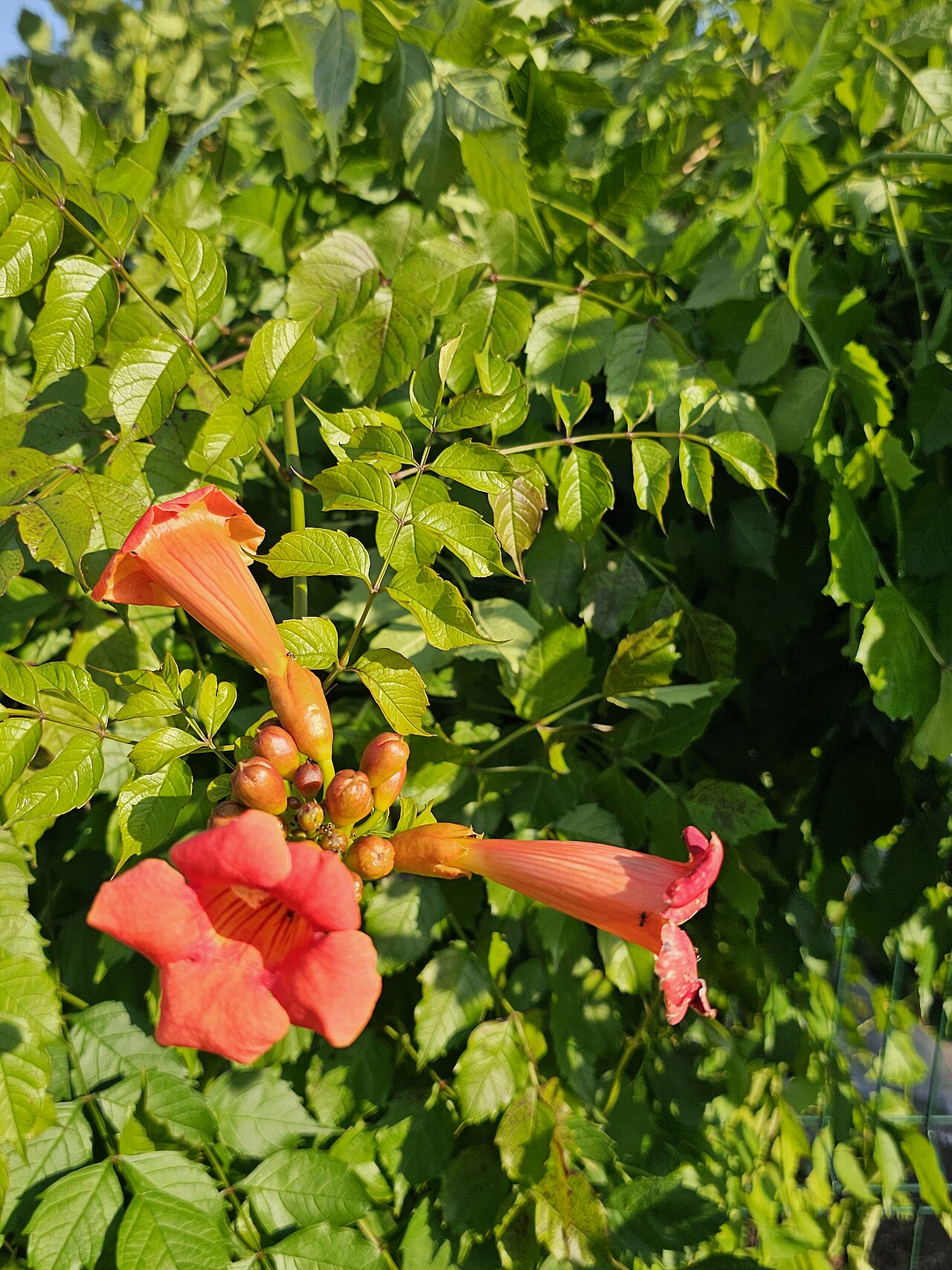
Plant in spring in full sun and any reasonably drained soil — trumpet vine is a native that thrives on neglect and rewards it with orange-red trumpet flowers all summer that hummingbirds fight over. The warning is real: it spreads by root suckers and can pop up across a yard, so plant it where you can mow around it, never against a house (its aerial rootlets damage mortar and siding) and never where suckers will invade a neighbor’s bed. A sturdy arbor or a dead tree to climb is the ideal host.
Water & feeding
Water to establish; mature plants are very drought-tolerant and need little supplemental water. Rich, wet soil makes it spread faster, not bloom better.
Common problems
- Aggressive suckering — the main complaint; mow or dig suckers regularly
- Few pests; occasionally aphids on new growth
- Damage to masonry and siding from aerial rootlets — keep it off buildings
Harvest
Prune hard in late winter or early spring — trumpet vine blooms on new wood, so cutting it back to a framework each spring concentrates flowering and controls size. Remove suckers as they appear.
Browse all plant & pest guides
Saving seeds
The caution comes first with this one: trumpet vine is one of the most aggressive vines you can plant. It suckers from the roots, layers wherever a stem touches soil, and self-seeds freely — and it will eat a house, a fence, and a pergola if you let it. Plant it where it can run, on a strong structure far from the house, and keep an eye on where it is heading. A well-placed trumpet vine is a wall of orange flowers and hummingbirds; a neglected one is a takeover.
Let the long seed pods ripen on the vine until they are dry and brown, then collect them before they split and scatter — the flat, papery seeds are built to fly. No cold treatment is needed; sow in spring in moist soil, barely covered, and germination usually comes in two to three weeks.
Cuttings root easily in summer, and suckers dug in fall are plants by spring — every sucker is a clone of the parent. Seed is for starting the species from scratch, and for the gardener who wants a lot of vines in a hurry — which, given this plant, is a wish to make carefully.
In Florida, trumpet vine is a native for sun and well-drained soil, a hummingbird magnet that blooms all summer. Give it a strong arbor, cut it back hard in winter to keep it in bounds, and pull the suckers that pop up where you do not want them — because they will pop up.
Varieties
Every named variety of Trumpet Vine with its own growing guide:
- Flava Trumpet Vine — The yellow trumpet: golden-yellow trumpets on the native vine — the trumpet vine that glows instead of shouts.
- Madame Galen Trumpet Vine — The salmon-red hybrid: large salmon-red trumpets on a slightly tamer vine — the trumpet vine bred for gardens, not forests.
- Stromboli Trumpet Vine — The deep red hybrid: rich red trumpets in big clusters — the trumpet vine with the most saturated color.