
❤️ Variegata Bleeding Heart Vine
What it looks like
Why this variety
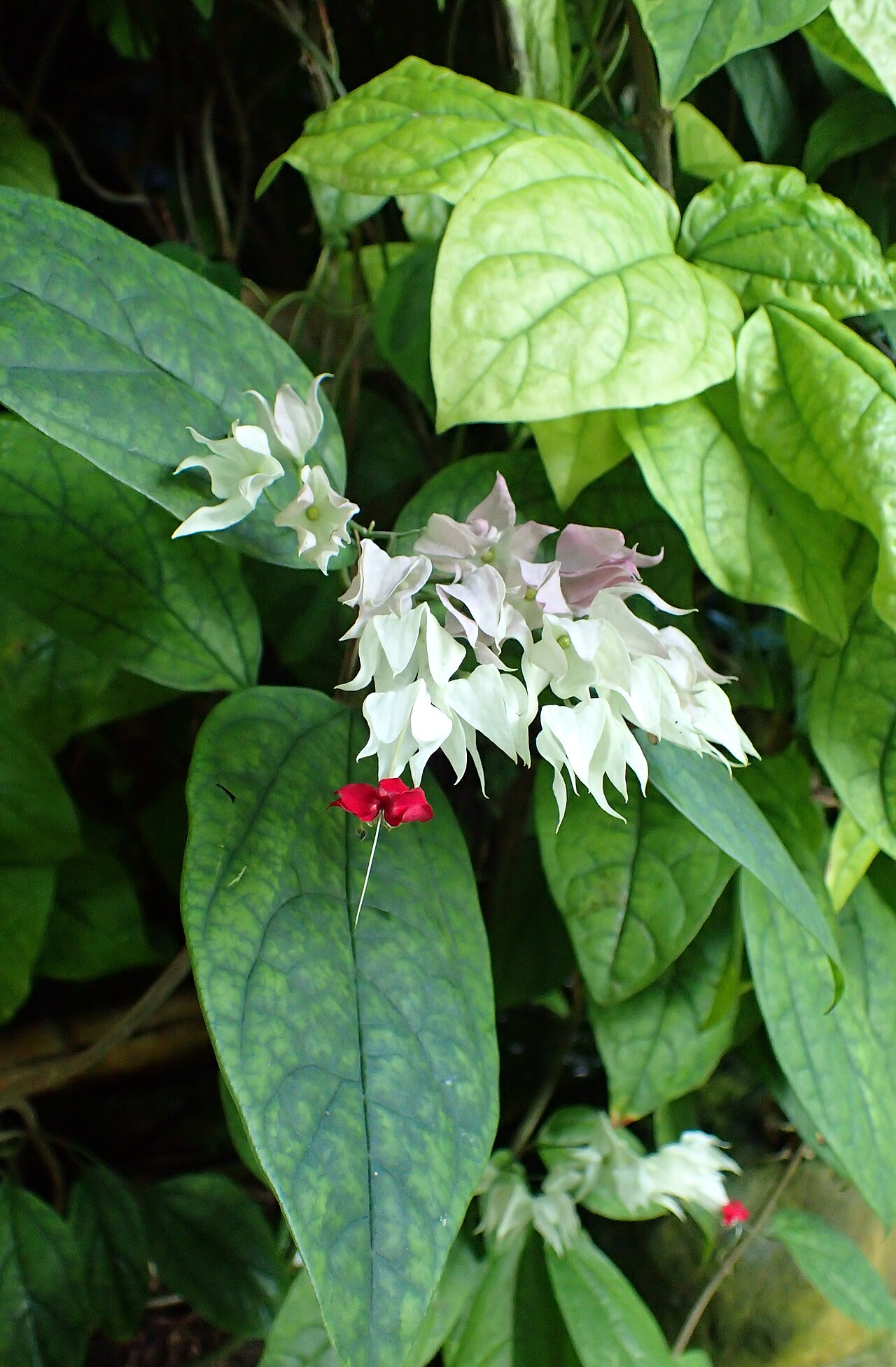
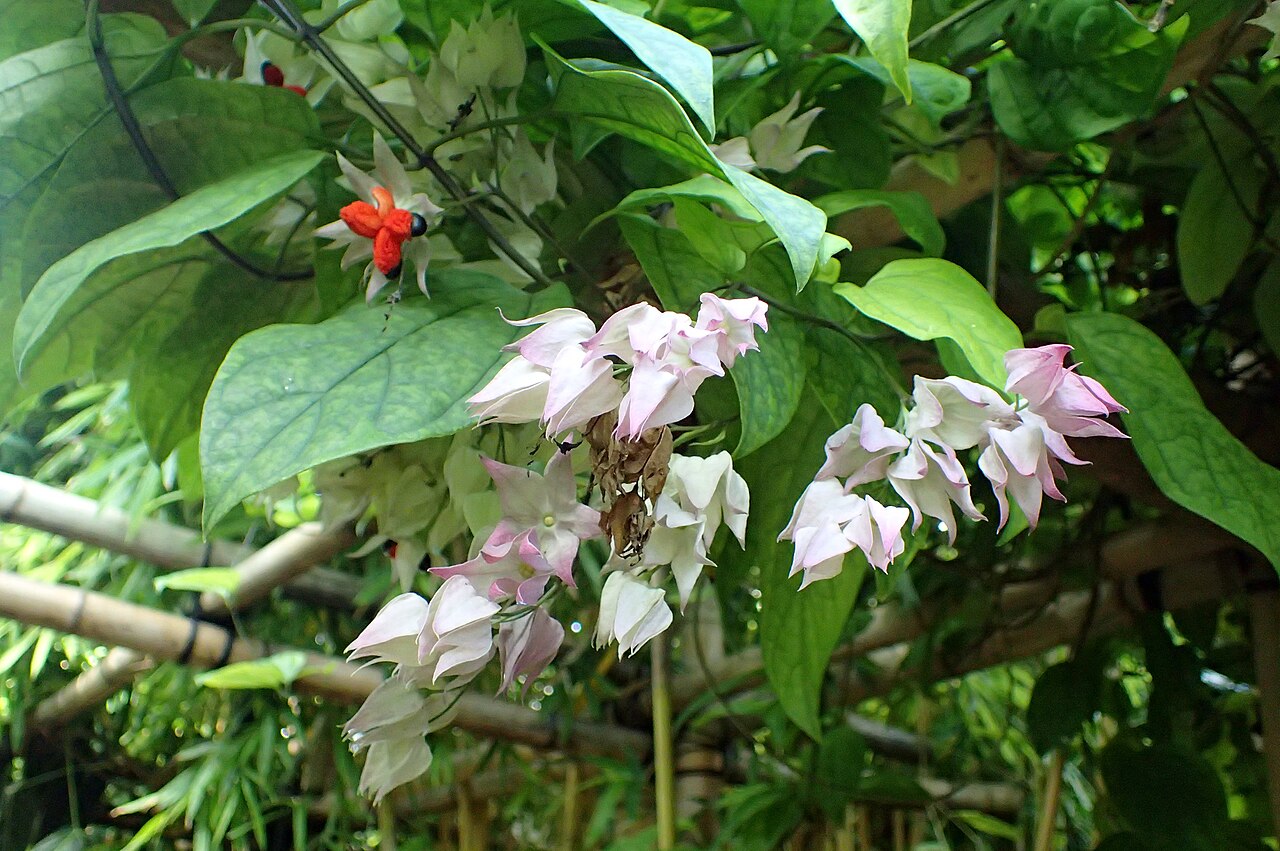
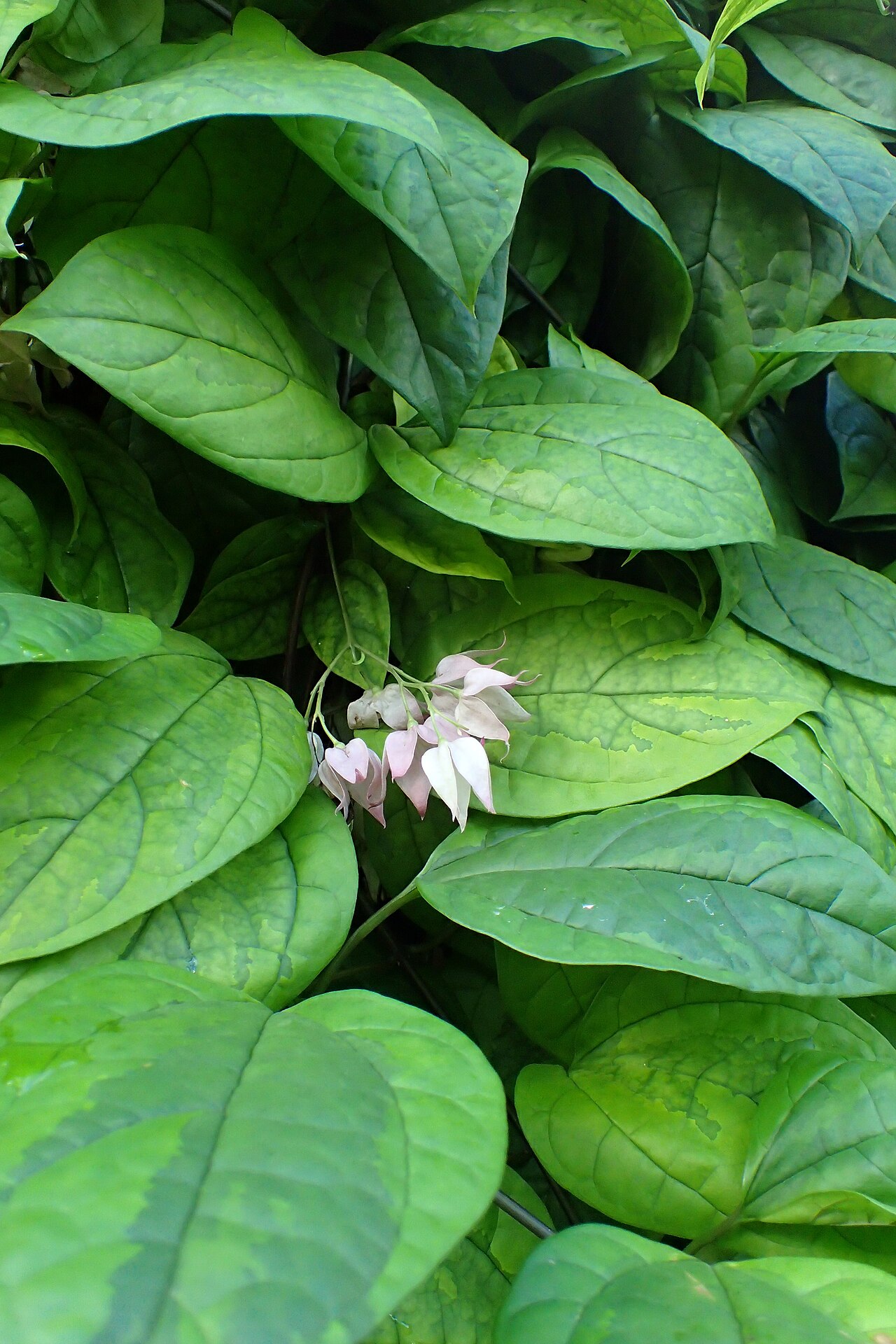
Variegata is the variegated form of the bleeding heart vine — the tropical glorybower, not the woodland bleeding heart, and the distinction matters, because this plant is warmer-blooded by an order of magnitude. Its leaves are marbled creamy white and pale green, showy even when the plant is not in bloom, and its flowers are the classic glorybower display: white, inflated calyces like little hearts, with small red corollas protruding like drops, dangling in clusters through the warm season. It grows as a shrubby vine, 8 to 15 feet with support, and it thrives in containers, which is how most gardeners outside the tropics grow it — a pot, a trellis, and a winter indoors.
The trade-off is variegation’s usual tax: variegated leaves have less chlorophyll than green ones, so Variegata grows a little less vigorously than the green species and wants bright light to hold its variegation — in deep shade it greens up, losing the marbling you bought it for. It is also frost-tender and evergreen, which means a freeze does not make it dormant, it damages it, so in any garden that freezes, Variegata lives in a container that comes indoors for winter, or it lives dangerously. Prune after flowering to keep it shrubby rather than leggy, and give it warmth and bright light year-round if you want continuous bloom.
If you are new to choosing between cultivars, the Varieties Matter guide explains why the name after the plant matters as much as the plant itself. Variegata is a perfect example: it is not just a bleeding heart vine in the abstract, it is a bleeding heart vine with a specific job, a specific history, and specific strengths.
In Florida, Variegata is a real plant, not a trial — with zone honesty: it grows outdoors year-round in zones 9 to 11, which covers South and much of Central Florida, where it can be a shrubby vine on a trellis or fence in morning sun and afternoon shade. In North Florida, grow it in a container and overwinter it indoors or in a protected spot, because a hard freeze will damage or kill it. Everywhere in Florida, give it rich, well-drained soil, steady water, and bright light — and do not confuse it with the woodland bleeding heart, which wants the opposite weather and would fail where Variegata thrives.
How to grow
Plant in a container with a trellis, or in the ground only where frost never comes, in rich, well-drained soil with morning sun and afternoon shade. Work worm castings into the potting mix or bed at planting, water steadily in warm weather, and prune after flowering to keep it shrubby rather than leggy. In any garden that freezes, the container comes indoors for winter — this is a frost-tender evergreen, and a freeze damages it rather than putting it to sleep.
Set plants 3-6 feet apart in soil with a pH around 6.0-7.0. Work worm castings into the bed at planting and mulch to hold moisture. A well-fed bleeding heart vine plant rewards that care directly: steadier growth, better bloom, and a show that actually shows up.
Water & feeding
Keep soil evenly moist in warm weather and barely moist in winter indoors — a tropical vine in a container dries out fast in summer and rots fast in a cold, wet winter. Water at the soil line, feed regularly in the growing season with a balanced liquid feed, and reduce both water and feed when growth slows. A vine that is warm, bright, and steadily watered blooms continuously; a vine that is cold, dark, or dry sulks.
Common problems
- Freeze damage — a frost-tender evergreen, damaged rather than put to sleep by frost; overwinter containers indoors where winters freeze.
- Loss of variegation in deep shade — variegated forms green up without bright light; give Variegata bright indirect light or morning sun.
- Spider mites indoors in dry air — stippled leaves and webbing; raise humidity, blast with water, and encourage predators.
- Leggy growth without pruning — prune after flowering to keep it shrubby; an unpruned vine becomes a tangle with flowers only at the tips.
- Whiteflies and mealybugs on container plants — blast with water, prune badly infested growth, and avoid broad-spectrum sprays indoors.
Harvest
Cut stems for bouquets in the warm season, when white calyces and red corollas are both showing — glorybower flowers are showy in water for a few days and suit tropical-style arrangements. Prune after flowering for shape, cutting back long shoots to keep the plant shrubby rather than leggy. In containers, refresh the potting mix every couple of years and root-prune lightly if the plant becomes pot-bound; in the ground in frost-free zones, cut back hard in spring to refresh growth.
Browse all plant & pest guides
Saving seeds
Variegata is the variegated form of the bleeding heart vine — the tropical glorybower, not the woodland bleeding heart, and the distinction matters, because this plant is warmer-blooded by an order of magnitude. Its leaves are marbled creamy white and pale green, showy even when the plant is not in bloom, and its flowers are the classic glorybower display: white, inflated calyces like little hearts, with small red corollas protruding like drops, dangling in clusters through the warm season. Seed will not repeat the variegation — seedlings come up plain green — so Variegata is kept true by cuttings: take stem cuttings after flowering and root them in rich, well-drained soil. Grow it in a container with a trellis anywhere a freeze comes, and bring it indoors for winter. The full method is in the Propagation section of the Bleeding Heart Vine guide.