
💙 Veronica (Speedwell)
What it looks like
How to grow
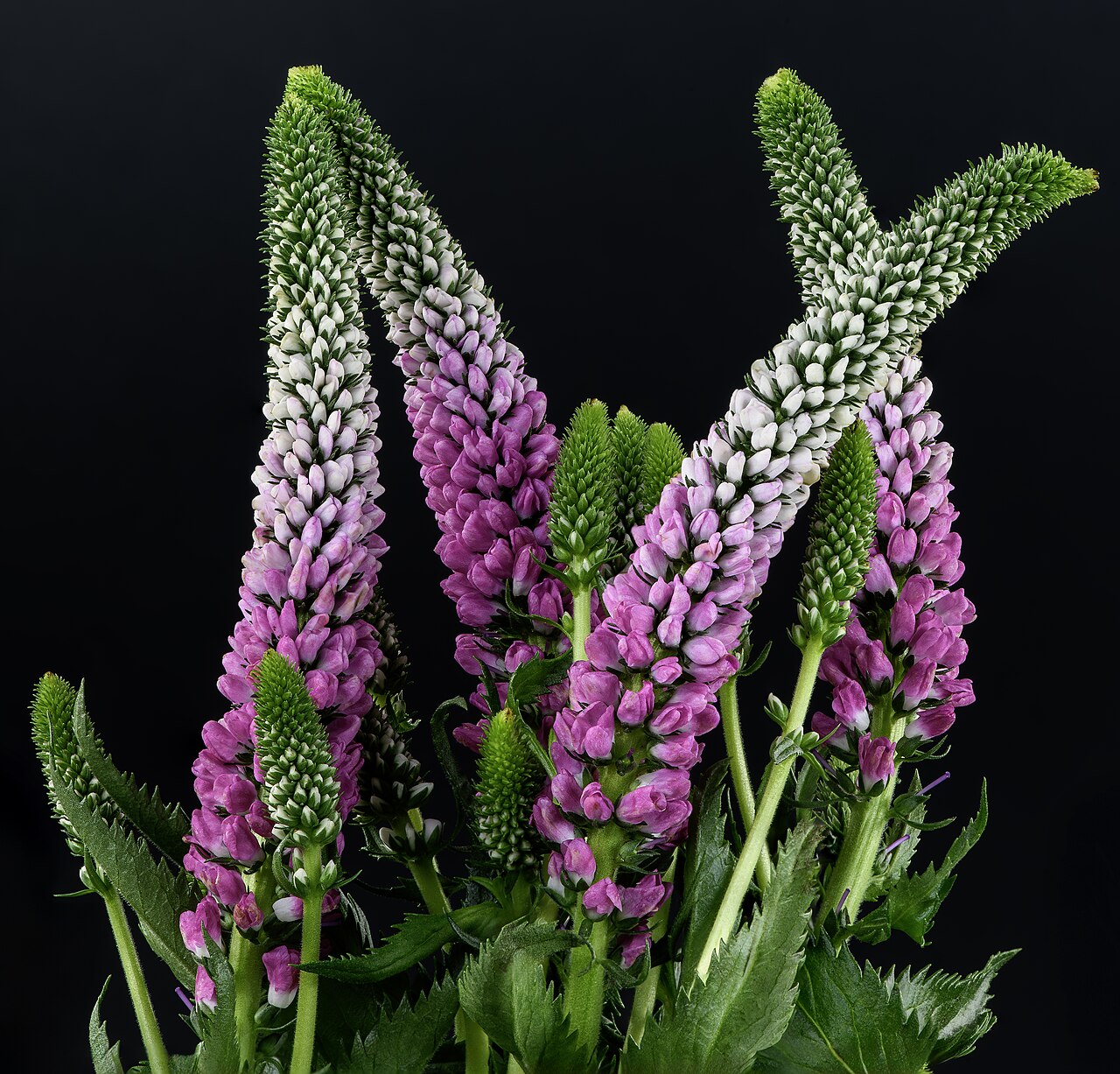
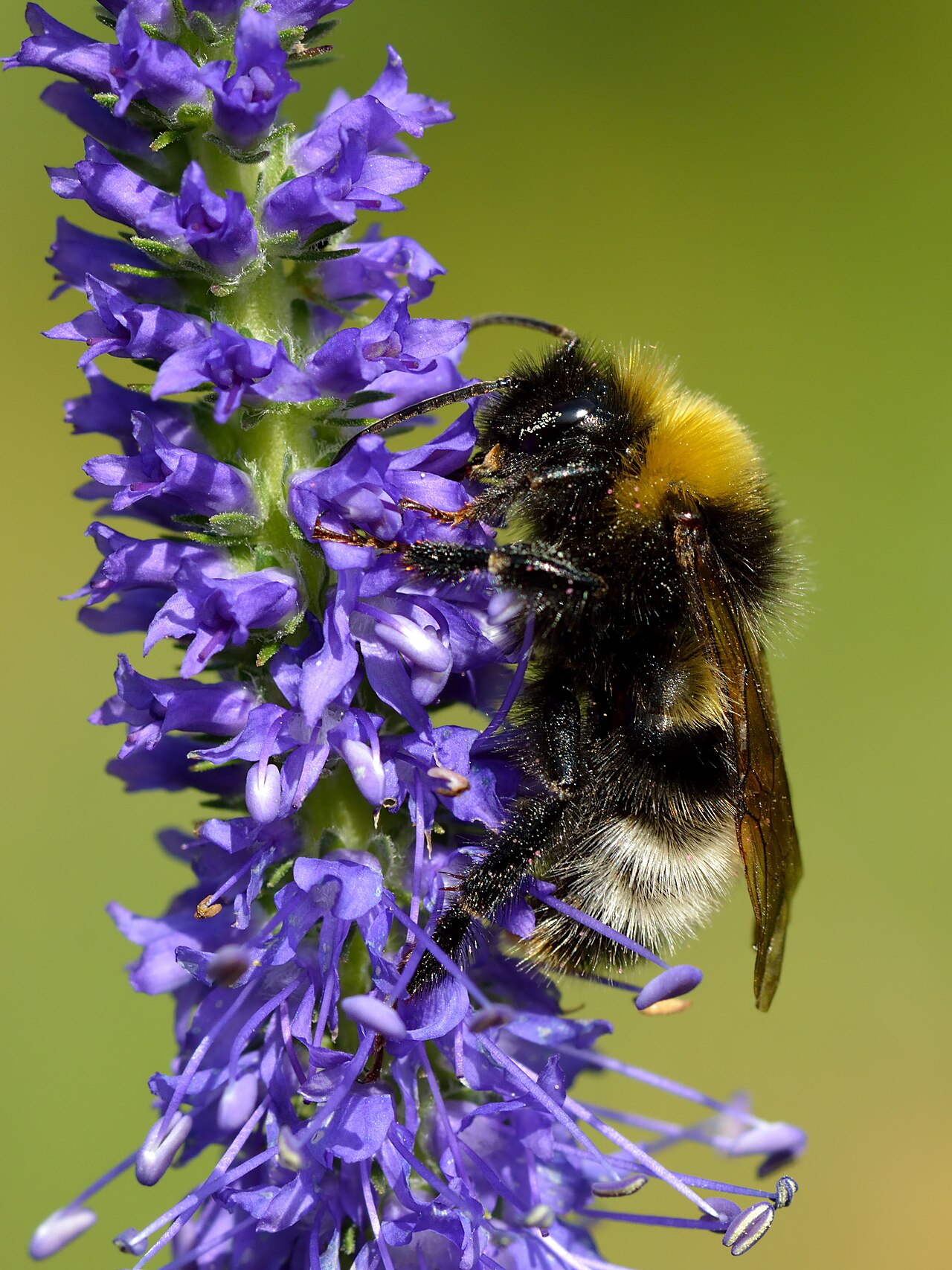
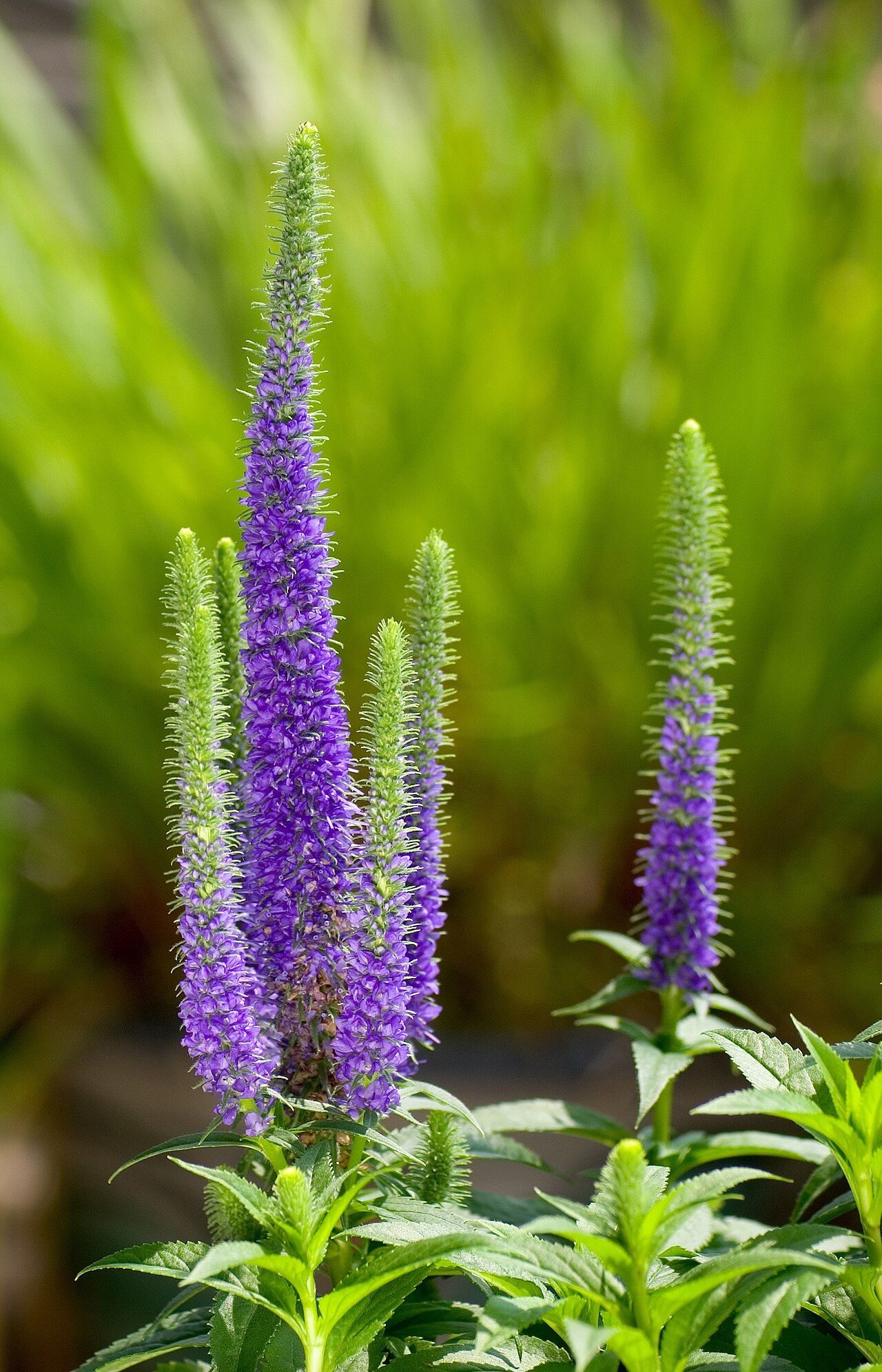
Spike speedwell is a tidy, clump-forming perennial, 1–3 feet tall depending on variety, with dense spikes of small blue, purple, pink, or white flowers rising above low foliage from late spring into summer. It is a border workhorse: long-blooming, deer-resistant, attractive to bees and butterflies, and well-behaved — it forms a clump and stays put rather than running. Plant in spring or early fall in full sun (it flowers best with 6+ hours) and well-drained soil; it tolerates loam, sand, and chalk, but not soggy ground, where crown and root rot follow. Space 12–18 inches apart for air flow, which also keeps foliage diseases down. Creeping veronicas are a different habit (groundcovers) and are not covered by this guide’s spacing.
Water & feeding
Water regularly until established, then about an inch a week in dry weather; mature plants flower best when soil does not stay bone-dry for long, but they will not tolerate waterlogging. Feed lightly in spring with compost or a slow-release fertilizer; heavy feeding makes soft, floppy growth.
Common problems
- Root and crown rot in wet soil — drainage first; do not plant in a low spot.
- Flopping — too much shade or fertilizer; give full sun and cut back after bloom.
- Powdery mildew — give air flow and spacing; remove affected leaves.
- Short bloom — deadhead spent spikes promptly for a second flush.
Notes
After the main flush, cut spent spikes back toward the basal foliage — this often brings a smaller second bloom. Cut the whole plant back in fall, and divide clumps in spring or fall when they get large. Speedwell is a good cut flower: cut spikes when about half the florets are open.
Browse all plant & pest guides
Saving seeds
Speedwell seed is dust — tiny, light-hungry, and easy to lose. Let a few flower spikes ripen on the plant until they are dry and brown, then snip the whole spike into a paper bag over a sheet of white paper. Sow on the surface of moist mix and do not bury the seed at all; it needs light to germinate. Keep it warm, and germination usually comes in one to two weeks. No cold treatment is needed for most species.
It self-seeds lightly, so deadhead if you do not want volunteers, or let a few plants go and see what comes up. Save from the plants with the best flowers — the clearest blues, the fullest spikes — and dry the seed thoroughly before storing; it keeps a few years in a cool, dry jar.
Seedlings will vary, and the named forms come only from cuttings or division. Division is easy for the clump-forming kinds — lift and split in spring or fall, and every piece with roots and shoots attached becomes a plant.
In Florida, speedwell is a cool-season flower for fall through spring, happiest in north and central Florida with sun and moist soil. It is a small, quiet plant that earns its keep at the front of the border, and a plant grown from your own seed is a flower that knows your garden.
Varieties
Every named variety of Veronica (Speedwell) with its own growing guide:
- Red Fox Veronica — The rosy-red speedwell: rich rose-pink spikes on a compact mound — the veronica that is not blue, on purpose.
- Royal Candles Veronica — The compact blue candles: dense spikes of deep blue on a tidy 12- to 15-inch plant — the veronica for edges and pots.
- Sunny Border Blue Veronica — The tall blue: violet-blue spikes on 18- to 20-inch stems — the veronica that anchors a summer border.