
🌾 Wheatgrass
What it looks like
Wheatgrasses are cool-season prairie grasses, and the first thing to know about them is that “wheatgrass” is a job description, not a single plant. The name covers a whole crew of grasses in the tribe Triticeae — the same tribe that gave us wheat, barley, and rye — whose species have been shuffled between the genera Agropyron, Elymus, Pascopyrum, and Thinopyrum so many times that a single plant can have a rap sheet of former names longer than its seed head. Western wheatgrass alone has answered to Agropyron smithii, Elymus smithii, and Elytrigia smithii before settling, for now, as Pascopyrum smithii. If your seed packet, your field guide, and your neighbor all call the same grass by three different Latin names, nobody is wrong. Taxonomy just has not finished arguing yet.
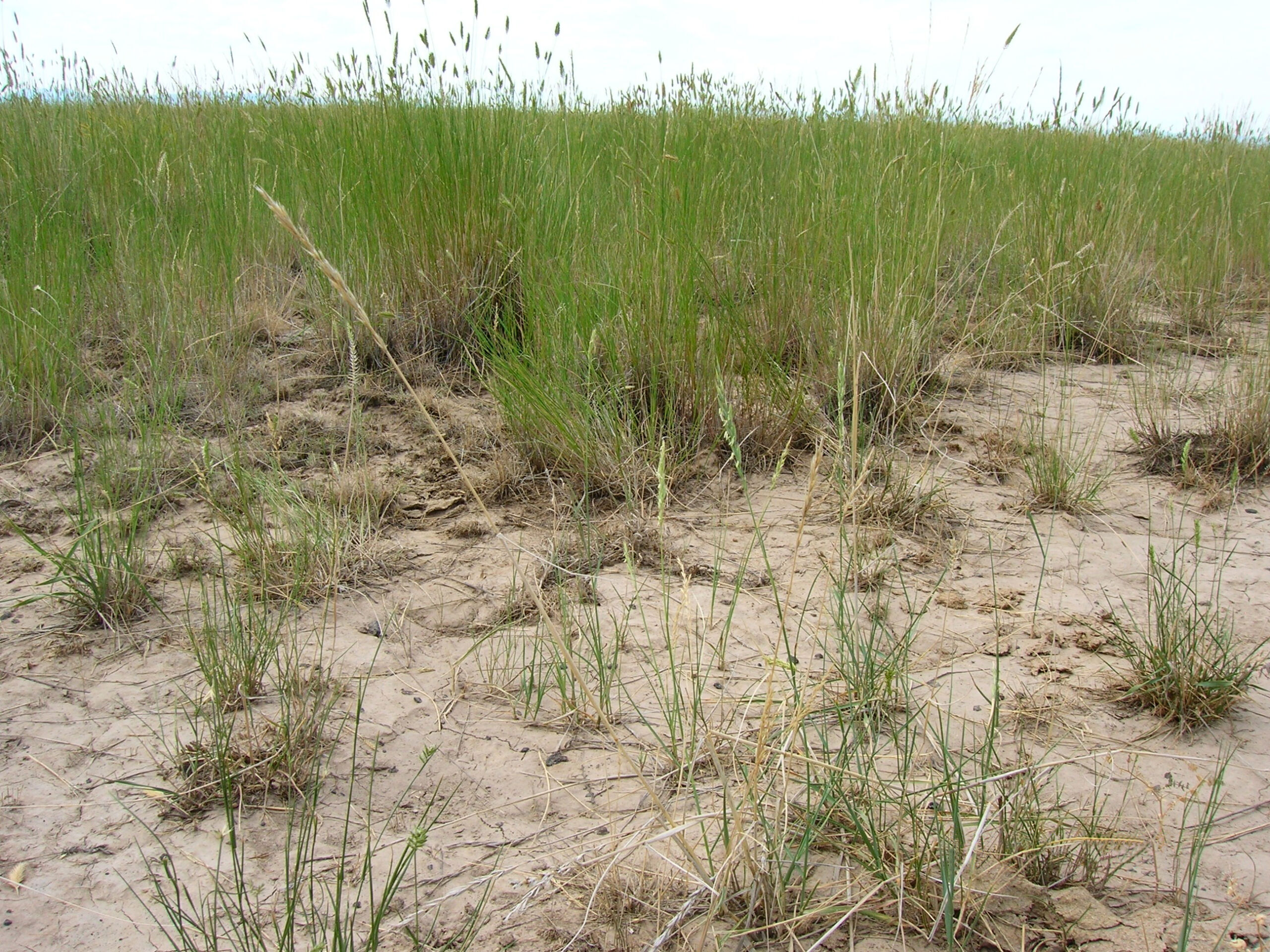
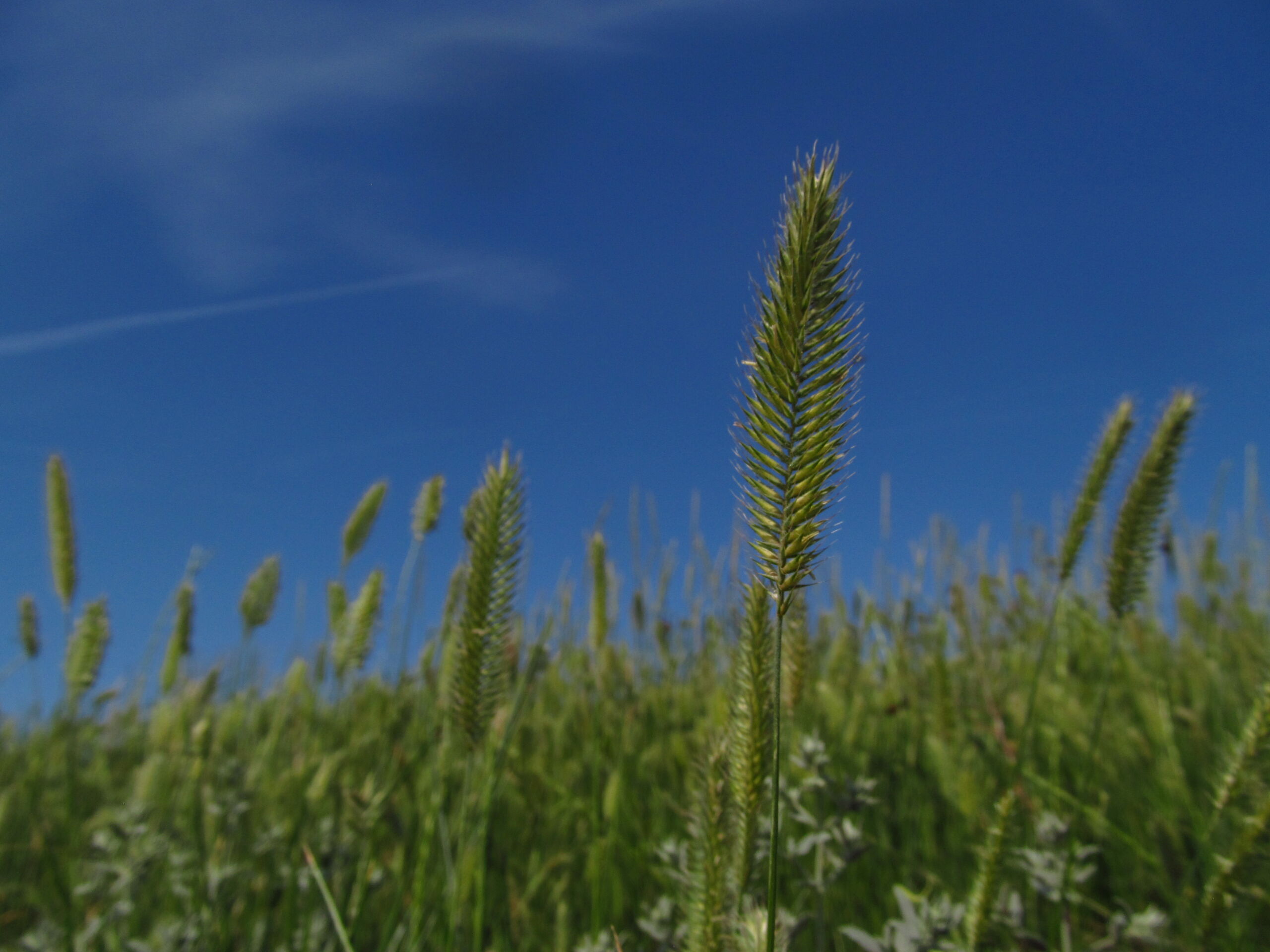
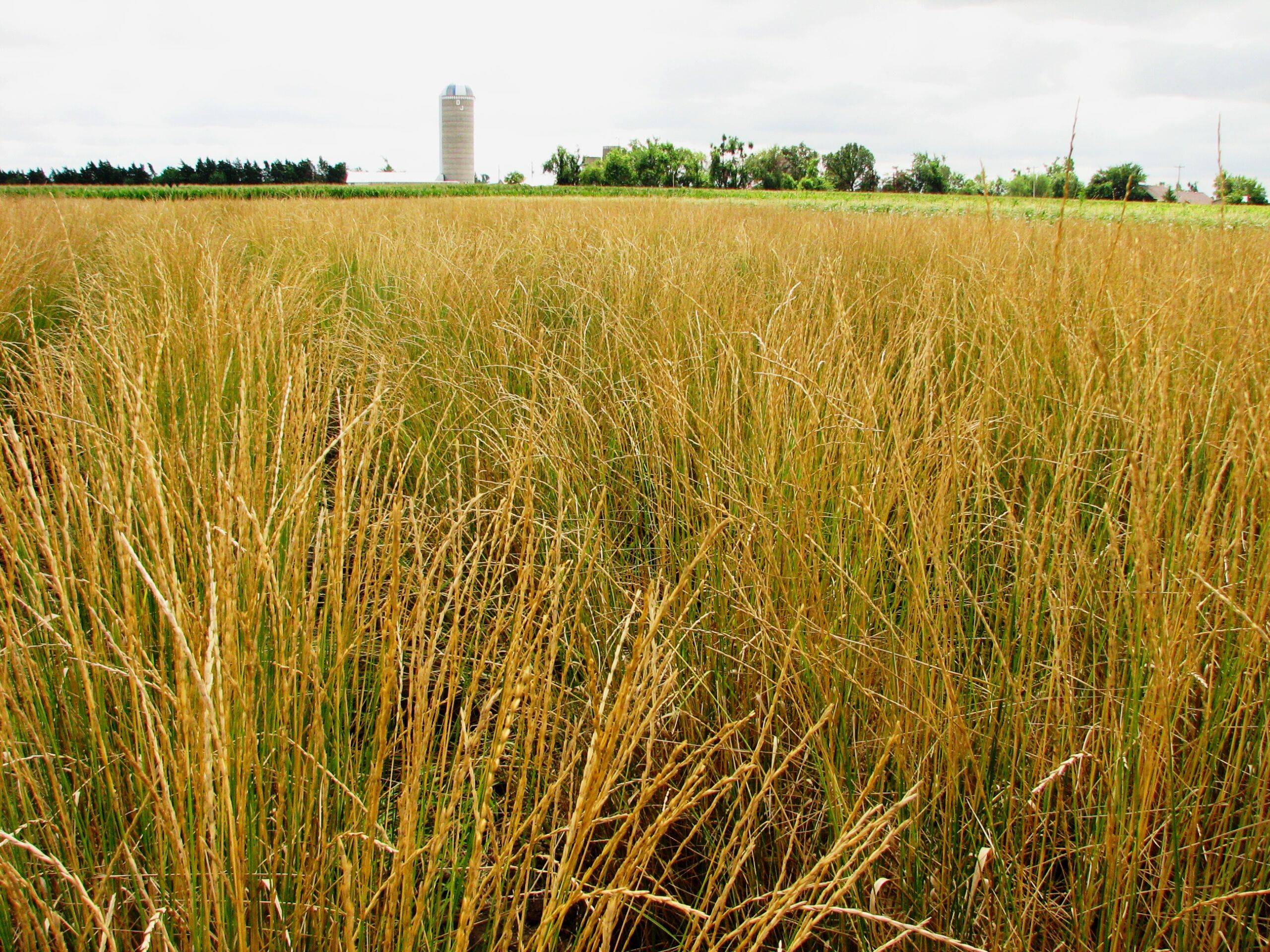
Look past the name tags and the family resemblance is obvious. Wheatgrasses are upright, tufted or sod-forming perennials, mostly 1 to 3 feet tall, with narrow, often blue-green leaves and a single stiff, narrow seed spike at the top of each stem — a spike that looks like a slim, no-nonsense cousin of a wheat ear. Crested wheatgrass wears its spike like a comb, flattened and bristly. Western wheatgrass is the blue-green one, with leaves so waxy-blue you can spot a stand of it from a moving truck, and claw-like purplish auricles that clasp the stem where the leaf meets it. Intermediate wheatgrass is the tall, hayfield one, bred for forage and now famous as the perennial grain crop Kernza’s wild ancestor. They are not lawn grasses and they are not ornamental grasses in the fountain-grass sense. They are working grasses: forage, erosion control, rangeland, and — quietly, at the edges of the field — caterpillar food.
One important case of mistaken identity, settled here before it costs anyone money: the “wheatgrass” sold for juicing and smoothie shots is young common wheat, Triticum aestivum, grown indoors in trays. It is not these grasses. Do not juice your prairie restoration and do not try to restore a prairie with juicing trays. Both are fine pursuits. They are not the same plant.
Florida note: Be honest about geography. Wheatgrasses are cool-season grasses of the Great Plains, the Intermountain West, and other temperate regions. They are not Florida grasses, and they are not a sensible choice for a Florida lawn or a Florida meadow. This guide earns its place because the butterflies that eat these grasses range across the West, and because a gardener anywhere should be able to recognize the group — not because you should sow it in Keystone Heights.
How to grow
Wheatgrasses are cool-season grasses, which sets the calendar the way it does for bluegrass and fescue: they grow hardest in the cool of spring and fall, and they slow down or go dormant in summer heat. Sow in very early spring on heavier soils, or in late fall on lighter soils — that timing comes straight from the USDA Natural Resources Conservation Service plant guide for western wheatgrass — and keep late-summer seeding for irrigated ground only, because a dry September will strand seedlings before they root. Plant seed ¼ to ½ inch deep with good seed-to-soil contact; these are not seeds to scatter on top of thatch and hope for the best. A firm seedbed matters more than a fancy one.
Rates depend on the job, and this is where gardeners used to lawn-seed rates should recalibrate. The USDA guide recommends 8 pounds of pure live seed per acre for western wheatgrass as a single species, rising to 12 pounds per acre on mine lands and other harsh, critical areas, and less when it is one component of a mix. That is rangeland math, not backyard math: a small meadow drift needs ounces, not bags, and a good native-seed supplier will scale the rate for your square footage. Establishment is slow — seed suppliers commonly warn that western wheatgrass can take two to three years to reach its full potential — so judge a new stand in year two, not week six. The first year it may look like not much happened. Underground, it was building the rhizome network that makes the whole thing work.
Soil is the least of your worries, within reason. Western wheatgrass grows on most soil types but does best on medium to clay textures, tolerates salt and moderate acidity, and holds ground on 12 to 20 inches of annual precipitation — dry country, by garden standards. Crested wheatgrass is even tougher and drier-adapted, which is exactly why it needs the caution in the problems section below. Give wheatgrasses full sun and room. They do not want shade, they do not want pampering, and they will sulk in soil that stays soggy. What they want is sun, a firm bed, and to be left alone to do the slow underground work.
Water & feeding
Once established, wheatgrasses are the definition of low-input. Western wheatgrass is drought tolerant, deep-rooted, and strongly rhizomatous, which is why it is a go-to species for stabilizing disturbed soils, ditch banks, dikes, and roadsides. Water to establish — a light irrigation at seeding helps enormously on harsh sites — then back off. Overwatering a native wheatgrass stand does not make it lusher in a good way; it makes it push rank growth that can crowd out the wildflowers you probably planted it alongside, and seed suppliers specifically warn that western wheatgrass can choke out cool-season wildflowers if it is overwatered or sited somewhere moist. Lean is a feature here, not a failure.
Feeding follows the same rule: a rangeland or meadow stand needs no fertilizer program at all, and a hayfield stand needs only what a soil test says it is missing. Do not fertilize a conservation planting into a weed factory. If you are growing wheatgrass for hay, cut it while it is still leafy and palatable — protein levels are highest in spring and fall off as the grass matures and cures — and let the stand rest between cuttings. If you are growing it for wildlife and butterflies, the feeding program is even simpler: none. The caterpillars do not need a nitrogen boost.
Common problems
- Slow establishment: The number one complaint, and it is not a problem with your seed. Western wheatgrass can take two to three years to fill in. Keep weeds down in year one, resist the urge to re-seed in a panic, and judge the stand in its second season.
- Crested wheatgrass getting pushy: Crested wheatgrass (Agropyron cristatum and its close relative standard crested wheatgrass, A. desertorum) is non-native, aggressively competitive, and famous among range managers for forming near-monocultures that squeeze out native plants. Use it only where that persistence is genuinely wanted, and never as a casual “prairie mix” ingredient near native grassland.
- Quackgrass confusion: Quackgrass has itself been called Agropyron repens and Elymus repens over the years, and it looks enough like a wheatgrass to fool a casual eye. It is a weedy, rhizomatous invader of gardens and lawns, not a restoration species. If your “wheatgrass” is rampaging through the vegetable beds, it is probably quackgrass, and the treatment is removal, not admiration.
- Summer dormancy: Cool-season grasses brown out and stall in summer heat. This is dormancy, not death, and the stand usually greens up again with cool weather and rain. Do not water it back to green in August unless you enjoy fighting its nature.
- Wildflower crowding: In a mixed meadow, vigorous wheatgrass — especially western wheatgrass on moist, fertile ground — can outcompete the forbs. Sow it at the mix rate, not the single-species rate, and site it where its vigor is an asset.
Harvest
There are three harvests in a wheatgrass stand, and they belong to three different owners. The hay harvest belongs to you: cut western or intermediate wheatgrass while it is leafy, before it goes fully to seed, and dry it promptly; it makes solid native hay, especially when harvested from moist overflow or run-in sites where it grows best. The seed harvest belongs to next year’s stand: let some spikes ripen fully, and the seed will drop and thicken the sod on its own. And the wildlife harvest belongs to everything else: seed heads left standing into fall and winter feed birds, and the foliage feeds skipper caterpillars — Ridings’ satyr, roadside-skippers, and their western cousins — all summer long. A stand mowed once, late, after seed set, gives you all three in sequence. A stand mowed every week gives you none of them.
Saving seeds
Wheatgrass seed is easy — it is just wheat, grown for the grass instead of the grain. Let the seed heads ripen on the plant until they are dry and golden, then strip them into a paper bag and thresh the grain out by hand. No cold treatment is needed; sow in fall or spring in moist soil, about a quarter inch deep, and germination usually comes in one to two weeks.
Save from the plants with the best growth — the tallest, the greenest, the fastest — and dry the seed thoroughly before storing; wheatgrass seed keeps several years in a cool, dry jar. A single head makes dozens of seeds, so one plant is enough for a tray next year.
Wheatgrass crosses with other wheat and with related grasses, so grow only one type for seed at a time if you want it pure. And a caution: if you are growing wheatgrass for juice, the seed note here is for the garden, not the kitchen — this guide does not give health advice, and the seed is for planting, not for eating raw.
In Florida, wheatgrass is a cool-season crop for fall through spring, happiest in north and central Florida with sun and moist soil. Sow in trays indoors for a steady supply, or in the ground for a cover crop — and let a few plants go to seed in spring to stock next year’s trays.
Species in this group
- Western wheatgrass — Pascopyrum smithii: The blue-green sod-former of the Great Plains. Long-lived, strongly rhizomatous, 1 to 3 feet tall, salt-tolerant, and one of the best-known native grasses in North America. Formerly Agropyron smithii and Elymus smithii. The butterfly guides’ sagebrush-steppe wheatgrasses are this species’ country.
- Crested wheatgrass — Agropyron cristatum: The tough, comb-headed Eurasian introduction, with standard crested wheatgrass (Agropyron desertorum) as its close sibling. Drought-hardy and persistent to a fault; use with the caution described above.
- Intermediate wheatgrass — Thinopyrum intermedium: The tall hayfield wheatgrass, including the pubescent form, and the wild ancestor of the perennial grain Kernza. Formerly Agropyron intermedium and Elytrigia intermedia. Forage first, restoration second.
- Tall wheatgrass — Thinopyrum ponticum: The big one, taller and coarser than intermediate wheatgrass, formerly Agropyron elongatum. Saline-soil tolerant and used for harsh-site reclamation.
- Slender wheatgrass — Elymus trachycaulus: A shorter-lived, bunch-forming wheatgrass, formerly Agropyron trachycaulum, valued as a quick cover in mixes because it establishes faster than its rhizomatous cousins and then yields to them.
- Thickspike and streambank wheatgrass — Elymus lanceolatus: A rhizomatous, drought-tolerant native of the West, with the thickspike and streambank forms as subspecies. Formerly Agropyron dasystachyum and Agropyron lanceolatum in older books.