
🍯 White Sweet Clover
What it looks like
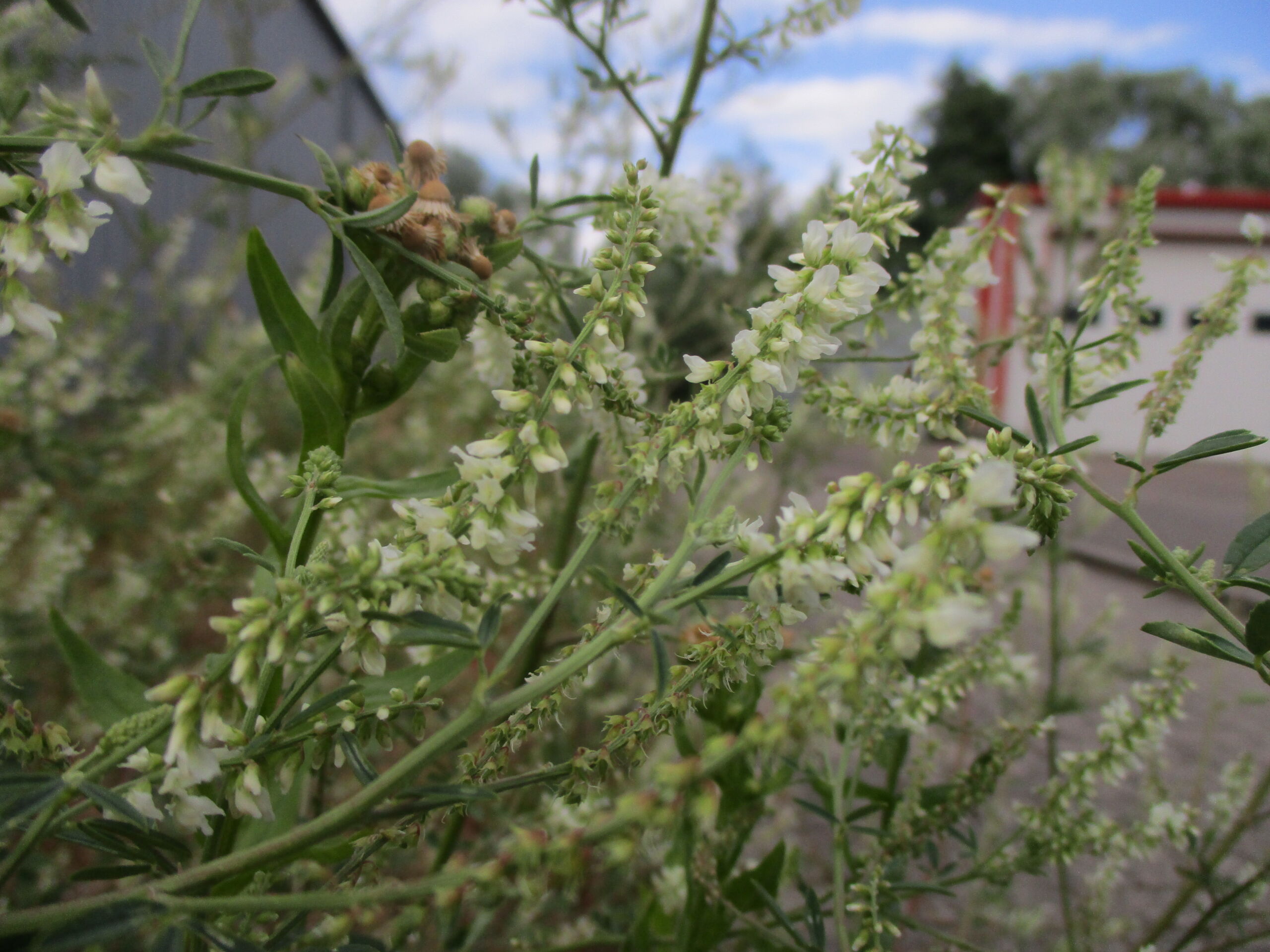
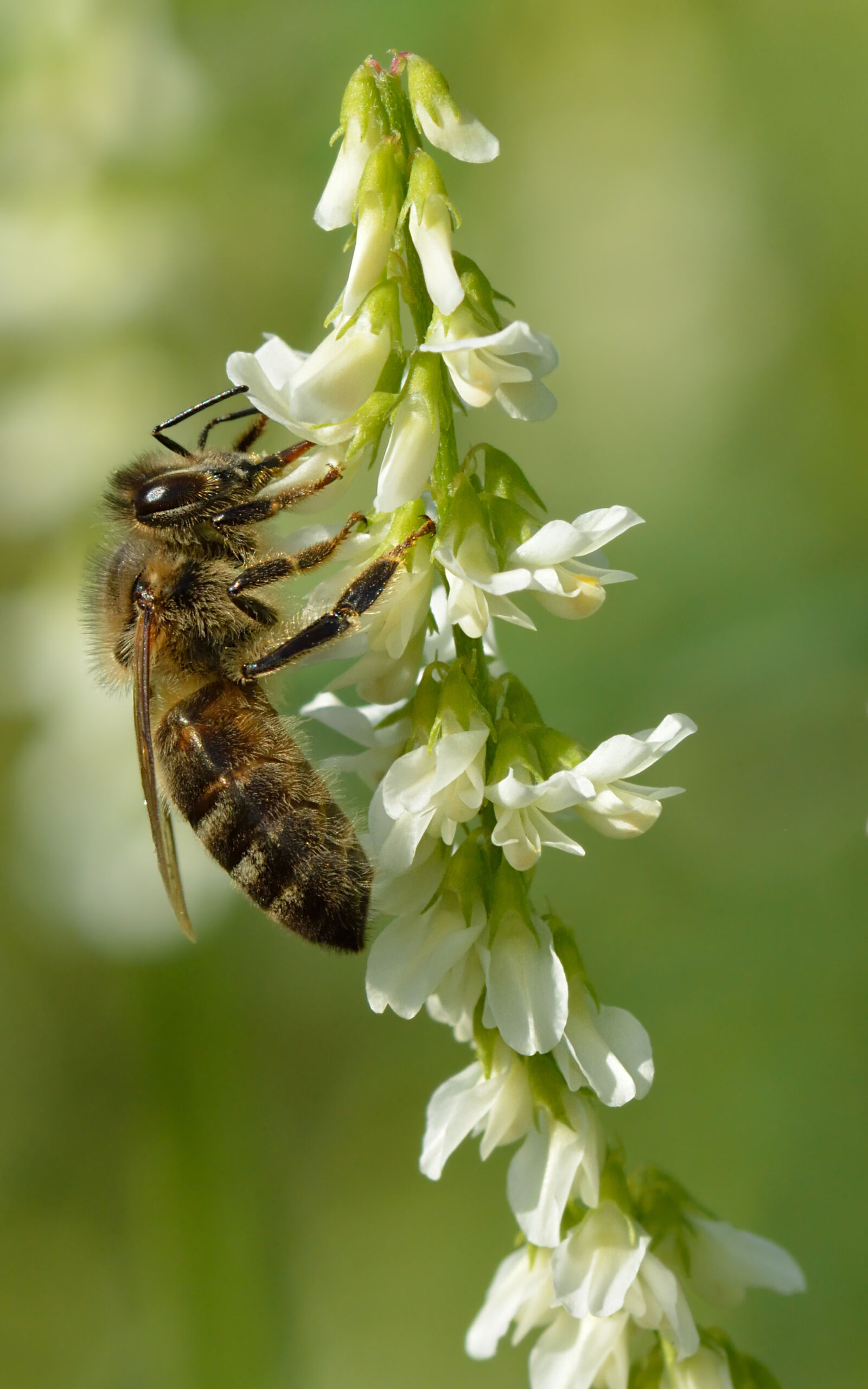
First, the name-clearing: white sweet clover is not a clover. True clovers belong to the genus Trifolium, and the existing Clover guide on this site is about those. Sweet clovers belong to Melilotus, a different genus in the same pea family, Fabaceae, and are more closely related to alfalfa than to the clover in your lawn. The name stuck because the leaves look clover-ish — three leaflets to a leaf — and because, well, gardeners are romantics, not taxonomists.
White sweet clover (Melilotus albus) is usually a biennial: it spends its first year as a leafy rosette and low growth, then in its second year it shoots up, branches enthusiastically, and flowers. Expect 3–5 feet tall in most settings, occasionally taller — sources report anything from about 2 feet on poor ground to 6 feet or more where it is happy. The stems are upright, grooved, and hairless, the leaves are trifoliate with finely toothed leaflets, and the whole plant carries a deep taproot that can reach 3–5 feet down. That taproot is the point of the plant, as we will see.
The flowers are the giveaway: small white pea-flowers, each only about 4–5 mm long, packed into long, slender, spike-like racemes that can carry 20–65 flowers apiece. They bloom in the second year, roughly June through October depending on climate, and they smell wonderful — sweet, hay-like, faintly vanilla. That scent comes from coumarin, a compound that also gives new-mown hay its smell. Bees adore the flowers, and the plant is famous among beekeepers as a honey plant; the honey made from it is light and mild. Butterflies visit too, and sweet clover serves as both a nectar plant and a host plant for several butterfly species.
One more naming note, because butterfly guides use the older name: you will see this plant called Melilotus alba in older books and in the butterfly guides that link here. Modern treatments generally use Melilotus albus. Same plant, two Latin labels — botany’s version of a maiden name.
How to grow
White sweet clover is embarrassingly easy to grow, which is both its charm and its warning label. Sow seed shallowly, about 1/4 inch deep, in late winter or early spring, or in autumn where winters are mild enough for it to overwinter. It can be broadcast over a bed or drilled in rows. It wants full sun — it will not grow in shade — and it prefers well-drained soil. It is famously tolerant of poor, thin, gravelly, or compacted ground, and of drought once established, thanks to that taproot. What it does not tolerate is acid soil: it prefers calcareous or loamy soils with a pH of 6.5 or greater, and sources describe it as intolerant of acidic soils. If your soil is acidic, this is not the cover crop for you unless you lime first.
As a legume, it fixes atmospheric nitrogen through root nodules, in partnership with rhizobia bacteria — the same kind of inoculant group used for alfalfa and clover. If your ground has never grown sweet clover or alfalfa, inoculating the seed helps. The nitrogen it fixes, plus the nutrients its deep taproot hauls up from the subsoil, become available to the next crop when the plants are cut and incorporated into the soil as green manure. It also breaks up compacted layers and hardpans: a taproot drilling 3–5 feet down does what a fork can only dream of.
It is a poor competitor in its establishment year, so give it a reasonably weed-free start, and do not expect it to out-muscle established grass straight away. By year two, the tables turn: it becomes a big, bushy plant that shades its own lower leaves off. Give it room, and do not plant it where its second-year bulk will smother something precious.
Florida note: white sweet clover is a plant of temperate fields, roadsides, and prairies, not a Florida native, and it is not a natural fit for most Florida gardens — it wants cold winters and alkaline soil, and Florida’s heat, humidity, and typically acidic sands are not its happy place. Gardeners in north Florida could trial it as a cool-season cover crop, but treat it as an experiment, not a staple. Do not plant it near natural areas anywhere: it is a vigorous self-seeder, and in many regions it is considered invasive, invading open prairies and disturbed habitats.
Water & feeding
Water to establish, then mostly leave it alone. White sweet clover grows best under cool, fertile, moist conditions, but it tolerates heat and drought once its taproot is down, and it will exploit soil moisture thoroughly — one caution from cover-crop literature is that a vigorous stand can dry the soil enough to depress the yields of following crops if it is left too long. In a garden bed, that translates to: water during dry spells in year one, and cut it down before it drinks the bed dry in year two.
Feeding is largely unnecessary. It generally requires little fertiliser, and on poor soils it is often recommended precisely for regenerating low-fertility ground. Do not feed it nitrogen — a legume that is handed free nitrogen gets lazy about fixing its own, and you lose the soil-building benefit. If anything, it appreciates the lime that brings pH up to its preferred range, and the phosphorus and potassium that support legume growth, but on most soils it will manage without pampering.
Common problems
- It becomes a weed. Prolific seed production and hard seed that persists in the soil for years mean sweet clover volunteers in future crops. If you do not want it everywhere, mow or cut before seed sets. This is the single most important management point.
- Spoiled hay is dangerous to livestock. Fresh sweet clover is fine as forage, but coumarin in the plant can convert to dicoumarol, an anticoagulant, when hay or silage spoils or moulds. Never feed mouldy or spoiled sweet clover hay to livestock. This is a real, documented hazard, not a folk tale — and it is why low-coumarin varieties were bred.
- Bitter older growth. Coumarin also makes older stems and leaves bitter, which reduces palatability to livestock. Young growth is much better forage.
- It is discouraged as a crop in some regions. Because it invades and degrades native habitats, cultivation of sweet clovers is now discouraged in several states and provinces. Check with your local extension service before planting it, especially near prairies or natural areas.
- Weak first year. As noted above, it is a poor competitor while establishing, so weeds can swamp it. A clean seedbed matters more than fertiliser.
Harvest
Harvest depends on what you planted it for. As a cover crop or green manure, cut it several times for compost material through the season and finally incorporate it into the soil before it sets seed — ideally in its second year before flowering finishes, so you capture the biomass and nitrogen without donating thousands of seeds to your future self. As a bee plant, the harvest is the bees’ business: leave the flowers standing through bloom so pollinators can work them, then cut before the seed ripens if you want to limit spread.
Young leaves and flowers have traditionally been eaten in small amounts in salads or dried for tea, and the flowers are sweetly fragrant when dried. Treat this as a curiosity rather than a staple: the plant is bitter when older, and its main value is ecological, not culinary. Do not eat it in quantity, and never use spoiled material for anything.
Seed saving is trivial — almost too trivial. If you let even a few plants go to seed, you will have sweet clover for years, wanted or not. If you do want to save seed, let a plant ripen fully, thresh the small pods, and store the seed dry. Hard seed may benefit from scarification before sowing.
Browse all plant & pest guides
Saving seeds
White sweet clover seed is easy, with one extra step: the hard coat. Nick each seed with a file or rub it with sandpaper, then soak it overnight in warm water; the seeds that swell are ready. Sow in fall or spring in moist soil, barely covered, and germination usually comes in one to two weeks after treatment. Untreated seed can sit in the soil for months and do nothing.
Let the seed pods ripen on the plant until they are dry and brown, then strip them into a paper bag. Dry the seed thoroughly before storing; sweet clover seed keeps several years in a cool, dry jar, and it is famous for staying viable in the soil seed bank for years.
It self-seeds freely, which is a gift if you want a cover crop and a chore if you do not — sweet clover fixes nitrogen, feeds the bees, and improves the soil it grows in. A patch you planted on purpose is a cover crop; a patch you ignored is a weed problem, and sweet clover is weedy enough to earn the name in some places.
And a caution: sweet clover contains coumarin, which can be toxic to livestock if the hay molds — this guide does not give animal-feed advice, and the seed note here is for the garden, not the barn. Grow it for the bees and the soil, and keep it out of the hay.
Varieties
White sweet clover is usually grown as the species, from seed, and most gardeners will never meet a named cultivar. But real named varieties do exist, mostly from agricultural breeding, and they are worth knowing about:
Hubam — the best-known annual form of white sweet clover (Melilotus alba var. annua in older literature). Unlike the usual biennial, Hubam completes its growth in a single summer season, which makes it useful as a quick summer cover in warmer regions. It is famously nectar-rich and was widely promoted for honey production and soil improvement.
Emerald, Floranna, and Israel — other cultivars of the annual form of white sweet clover listed in cover-crop literature.
Arctic — an early-maturing, winter-hardy variety adapted to Canada.
Polara and Denta — low-coumarin varieties, bred to reduce the dicoumarol hazard in hay. Denta is described as a late-maturing, low-coumarin variety.
For most home gardeners, the honest advice is this: buy species seed, not a cultivar, unless you have a specific reason (a quick annual cover, or livestock forage where low coumarin matters). And if you are growing it for bees and soil rather than hay, the species does the job beautifully on its own.