
💛 Wild Indigo
What it looks like
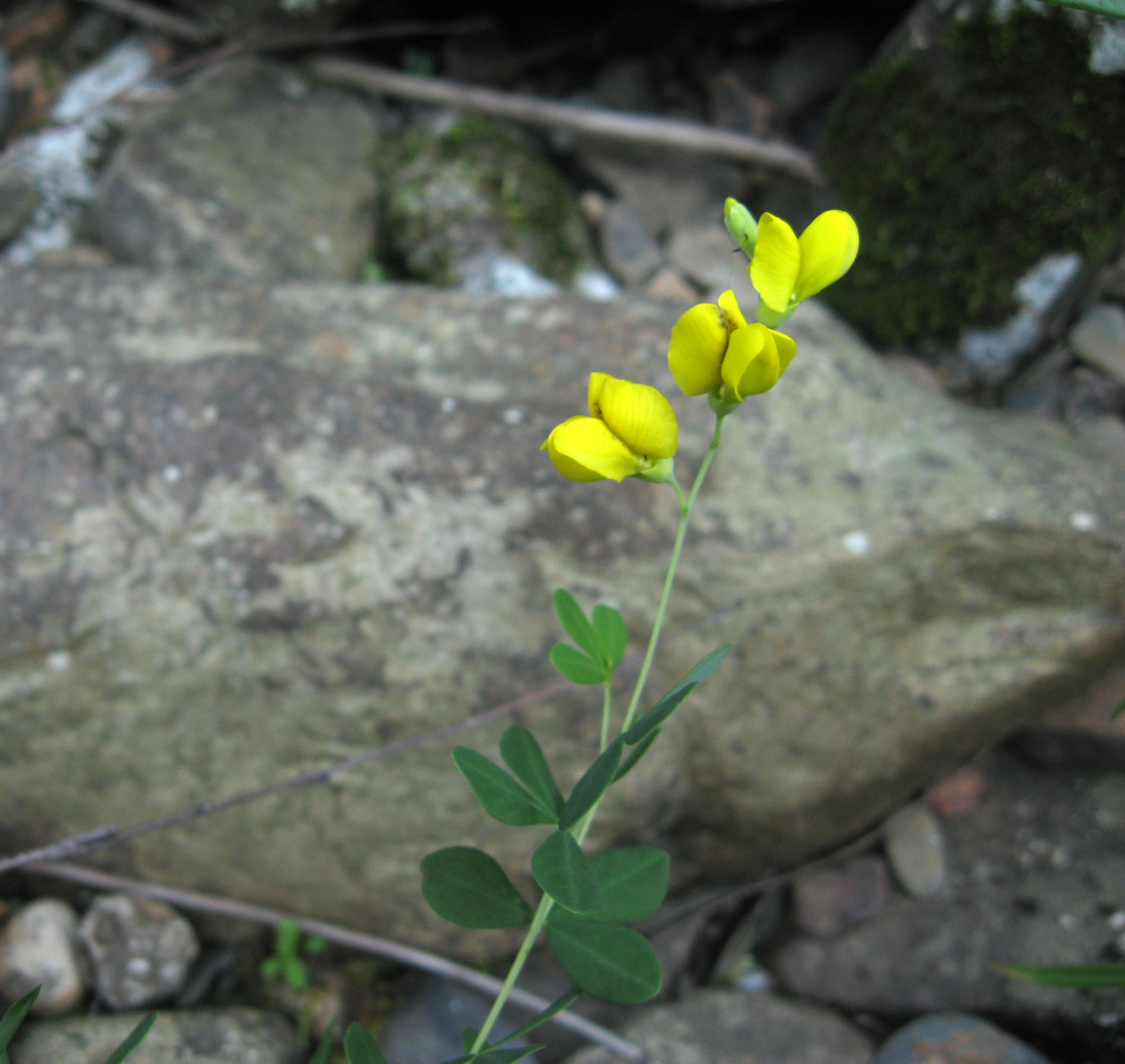
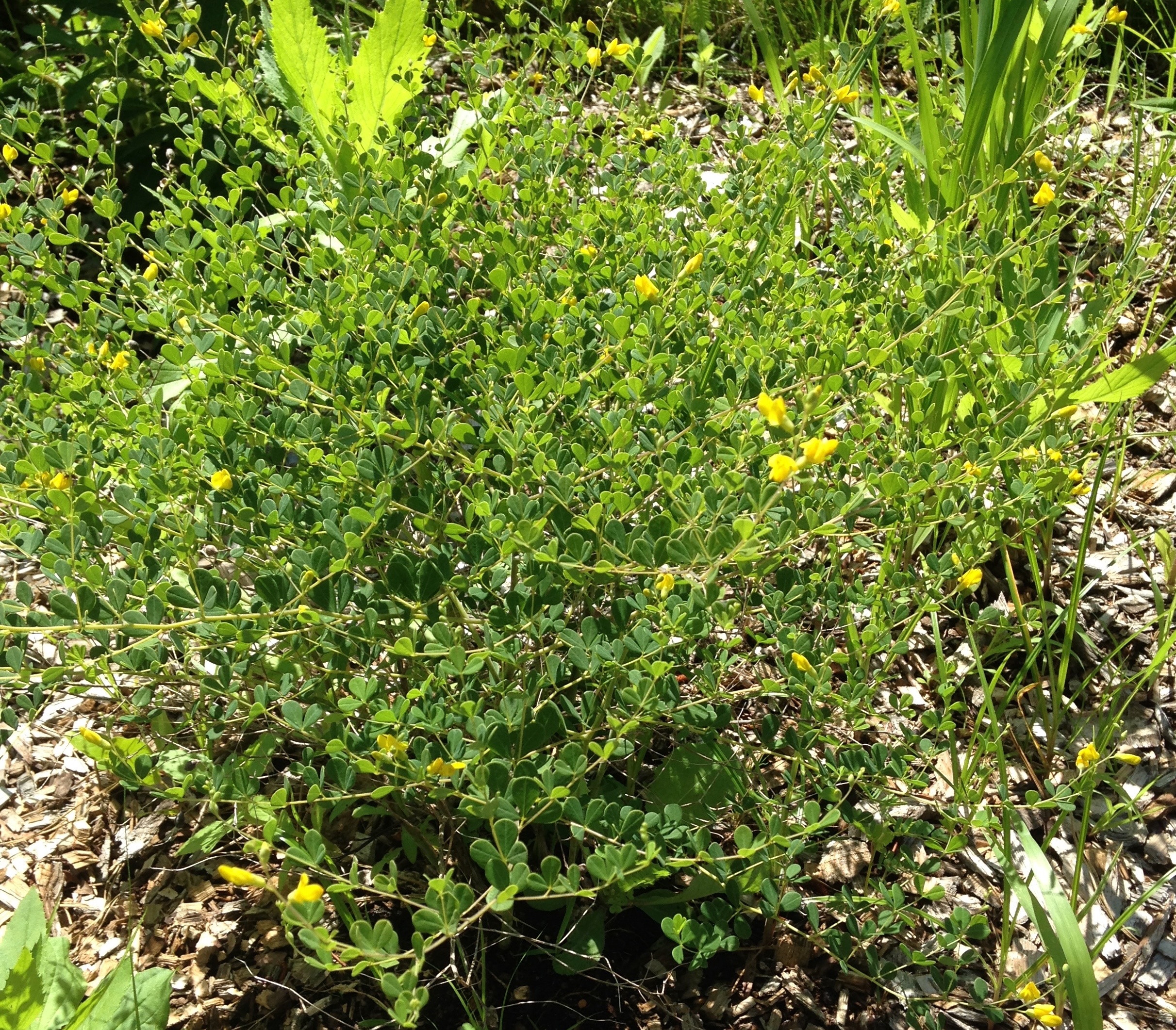
First, a name-sorting exercise, because this plant has been saddled with more aliases than a garden-center spy. Wild indigo is Baptisia tinctoria, a herbaceous perennial in the bean family (Fabaceae) native to eastern North America. It is also called yellow wild indigo, yellow false indigo, horseflyweed, and rattleweed — and here is the important distinction for this guide: this is the yellow one, not the famous blue one. The blue false indigo that dominates garden centers is Baptisia australis, a bigger, showier cousin with its own growing guide. This guide is about the smaller, yellower, wilder species, and it is a different plant, not a color form of the blue one. A separate genus guide for Baptisia as a whole is also a different document from this species guide. If you came here looking for blue spikes, you want the other guide. If you came here looking for a tough, drought-proof, nitrogen-fixing native that glows yellow in early summer, stay.
Wild indigo grows as a bushy, rounded mound of many branching stems, 2 to 3 feet tall and about as wide, with small, gray-green, clover-like leaves. Each leaf is divided into three small leaflets, only about half an inch long, which gives the whole plant a fine, airy, almost skinny look compared with its big-leaved cousins — the North Carolina Extension description calls it open and somewhat skinny, which is refreshingly honest for a plant profile. The flowers are small, bright yellow, pea-shaped blooms carried in loose, scattered racemes at the ends of the branches, mainly in late spring and early summer, though flowering can stretch from April into August. They are not the dense, look-at-me spires of blue false indigo. Instead, when the plant is in full bloom, dozens of little yellow flowers light up all over the top half of the mound, like someone scattered fairy lights across a shrub. After flowering come the seed pods, and here is where the rattleweed name earns its keep: the pods dry, darken, and rattle in the wind, and in some places the dried plant breaks off at the root in autumn and tumbles along as a tumbleweed, seeds and all. A plant that becomes its own seed-dispersal vehicle deserves some respect.
The species name tinctoria means “used for dyeing,” and the plant earned its dyer’s baptisia nickname honestly: it was used as a homegrown substitute for true indigo dye. It will not give you the deep blue of tropical indigo, and nobody should plant it expecting a dye vat revolution, but the name is a little window into a time when a farm family grew its own color. The other half of the name is just as telling. Baptisia comes from a Greek word for dyeing or dipping, so the whole scientific name is essentially “the dye plant for dyeing,” which is either poetic or redundant depending on your tolerance for botanists.
For butterflies, wild indigo punches well above its modest size. In butterfly guides it appears as a host plant for the frosted elfin, the wild indigo duskywing, and the Persius duskywing, and as a nectar plant for the Edwards’ hairstreak and the wild indigo duskywing. That host role is the real story: duskywing caterpillars eat the leaves, and the plant’s habit of growing in dry, sunny, open places is exactly the habitat those butterflies use. The leaves are also eaten by other caterpillars, including the io moth. Planting wild indigo is therefore not just planting a yellow flower. It is planting baby food for a whole cast of Lepidoptera, in a plant that asks almost nothing in return.
How to grow
Wild indigo is a plant for gardeners who forget to water, garden on sand, or own a slope that laughs at topsoil. Give it full sun for the sturdiest stems and the most flowers — it tolerates part shade, but in shade it gets leggier and flowers less — and well-drained soil. It grows best in average to dry soils, including sandy soil, and it tolerates poor soils, dry soils, and erosion-prone ground. What it does not tolerate is rich, soggy, waterlogged soil. North Carolina Extension is blunt on this point: the plant does poorly in excessively rich, loamy, moist, or soggy soils. If your garden is a swamp, this is not your plant. If your garden is a sunny sandpit, it is delighted.
Plant it once, and plant it where you mean it, because wild indigo does not move house gracefully. Like all baptisias, it grows a deep taproot, and that taproot is the source of both its superpowers and its stubbornness. The taproot makes it drought-tolerant once established and nearly impossible to transplant once it has settled in. Young plants spend their first year or two putting energy underground, developing that root system, and flowering usually begins in the second or third year. Gardeners who expect instant gratification will be disappointed. Gardeners who plant it, mulch it, and leave it alone will, in year three, have a long-lived perennial that outlasts most of their other plants and needs almost no attention. Space plants 2 to 3 feet apart, in a woodland edge, cottage garden, native planting, or meadow garden, as a specimen or in small groups. North Carolina Extension notes, with characteristic tact, that showier false indigos are available and that this species may be best used in a naturalized area. Translation: do not put it in the front-row formal border and expect it to behave like a hybrid. Put it where its wildness is a feature.
Because wild indigo is a legume, it fixes atmospheric nitrogen through rhizobium bacteria in nodules on its roots, which means it genuinely improves the soil it grows in rather than just tolerating poor soil. That is the same trick clover and beans use, and it is why wild indigo is a good citizen in a meadow or a native border: it feeds itself, feeds caterpillars, and leaves the soil a little richer than it found it. It is also deer- and rabbit-tolerant, drought-tolerant, and, according to nursery listings, salt-tolerant, which makes it a candidate for tough, sunny, coastal-adjacent spots where fussier perennials sulk.
Florida note: Say this plainly, because sources disagree and you deserve the disagreement, not a smoothed-over answer. Some references describe wild indigo’s range as extending south to Florida, while the Vascular Plants of North Carolina account states it has not yet been recorded from Alabama or Florida. Treat its Florida nativity as unconfirmed rather than settled, and if you garden in Florida, grow it as an interesting, tough, butterfly-friendly perennial for dry, sunny, well-drained spots — not as a documented Florida native. North Florida gardeners in zones 8 to 9 are within its hardiness range; South Florida gardeners should admire it from a distance and choose a Florida-native legume instead.
Water & feeding
Water to establish, then mostly leave it alone. Wild indigo’s deep taproot is a drought-survival system, and once the plant is established it tolerates dry spells that would crisp a hydrangea. Water during the first growing season while the root system develops, and during extended drought if you want the best flowering, but do not keep it constantly moist. Constant wet feet are the fastest way to kill a plant that evolved for dry meadows and open woods. In a normal garden with normal rainfall, the hose can stay in the shed.
Feeding: do not bother, or barely bother. This is a nitrogen-fixing legume growing in poor soil on purpose. Fertilizer, especially rich feeding, produces floppier growth and undermines the whole point of the plant. A light topdressing of compost is more than enough, and in most gardens even that is unnecessary. The soil science here is simple and satisfying: the plant trades sugars from photosynthesis to rhizobium bacteria in its root nodules, the bacteria convert atmospheric nitrogen into a form the plant can use, and when roots and leaves decompose, that nitrogen enters the soil for neighboring plants. Wild indigo is not just surviving on poor soil. It is quietly fertilizing the neighborhood.
Common problems
- It will not transplant. The deep taproot that makes wild indigo drought-proof also makes it resent moving. Plant it in its permanent spot from the start, and buy young plants or sow seed in place rather than planning to shift a mature clump.
- Slow to start. The first year or two are mostly underground. Flowering in year two or three is normal, not a failure. Patience is the required fertilizer.
- Too much kindness. Rich, moist, soggy soil and heavy feeding produce weak growth and can kill it. Lean, sunny, and well-drained is the prescription, not pampering.
- It is not edible. Wild indigo is a dye plant and a wildlife plant, not a vegetable. References derived from Plants for a Future note it is poisonous in large quantities, so admire it, let caterpillars eat it, and do not eat it yourself.
- Self-seeding and tumbling. The rattling pods release seed, and dried plants can break off and tumble in autumn in some regions. In a naturalized area that is charming. In a tidy border, deadhead after flowering if you do not want volunteers.
- Few pests. Wild indigo has no serious insect or disease problems in most gardens. The insects on it are mostly the pollinators and caterpillars you planted it for.
Harvest
Wild indigo’s harvest is not a crop in the usual sense. It is flowers for pollinators, leaves for caterpillars, seed pods that rattle in the autumn wind, and nitrogen quietly banked in the soil. If you want seed, collect the pods after they dry and darken, and sow in fall or spring — the plant self-sows readily enough that you may not need to. Cut stems can be used in dried arrangements, where the dark pods add texture, and the plant’s long life means a clump planted today can still be feeding duskywings decades from now. The simplest harvest of all: stand near it on a June afternoon and watch the small yellow flowers work. That is the crop, and it is a bumper one for butterflies.
Browse all plant & pest guides
Saving seeds
Wild indigo seed is a patience test with a hard coat. Let the seed pods ripen on the plant until they are dry and brown and the seeds rattle inside, then collect them into a paper bag. Nick each seed with a file or rub it with sandpaper, then soak it overnight in warm water; the seeds that swell are ready. Give it a cold, moist chill — a few weeks is the common figure — or sow in fall outdoors and let winter do it. Germination usually comes in two to three weeks after chilling.
Save from the plant with the best flowers — the clearest blues and yellows, the fullest spikes — and dry the seed thoroughly before storing; it keeps several years in a cool, dry jar. Sow more than you need, since germination is uneven even after scarifying.
Seedlings will vary, and the named forms come only from cuttings or division. Division is tricky — wild indigo grows a deep taproot and resents being moved — so seed is the way to grow more of it, and the way to keep the species going. A seedling takes two to three years to flower, so this is the patient gardener’s plant.
Wild indigo is a Florida native for sun and well-drained soil, a butterfly host and a bee plant, happiest in a dry, sunny spot where other flowers give up. Plant it where the ground is poor and the sun is strong, and let it be the tough native it wants to be.
Varieties of this species
No named garden cultivars of Baptisia tinctoria were verified for this guide. Unlike its blue cousin, which has a whole nursery trade of named hybrids and selections, wild indigo is grown and sold as the straight species. If a seller offers you a named variety of this species, check it carefully — it may be a hybrid or a different Baptisia species wearing a convenient label. For this plant, the species itself is the variety, and it needs no improvement.