
🌺 Wild Petunia
What it looks like
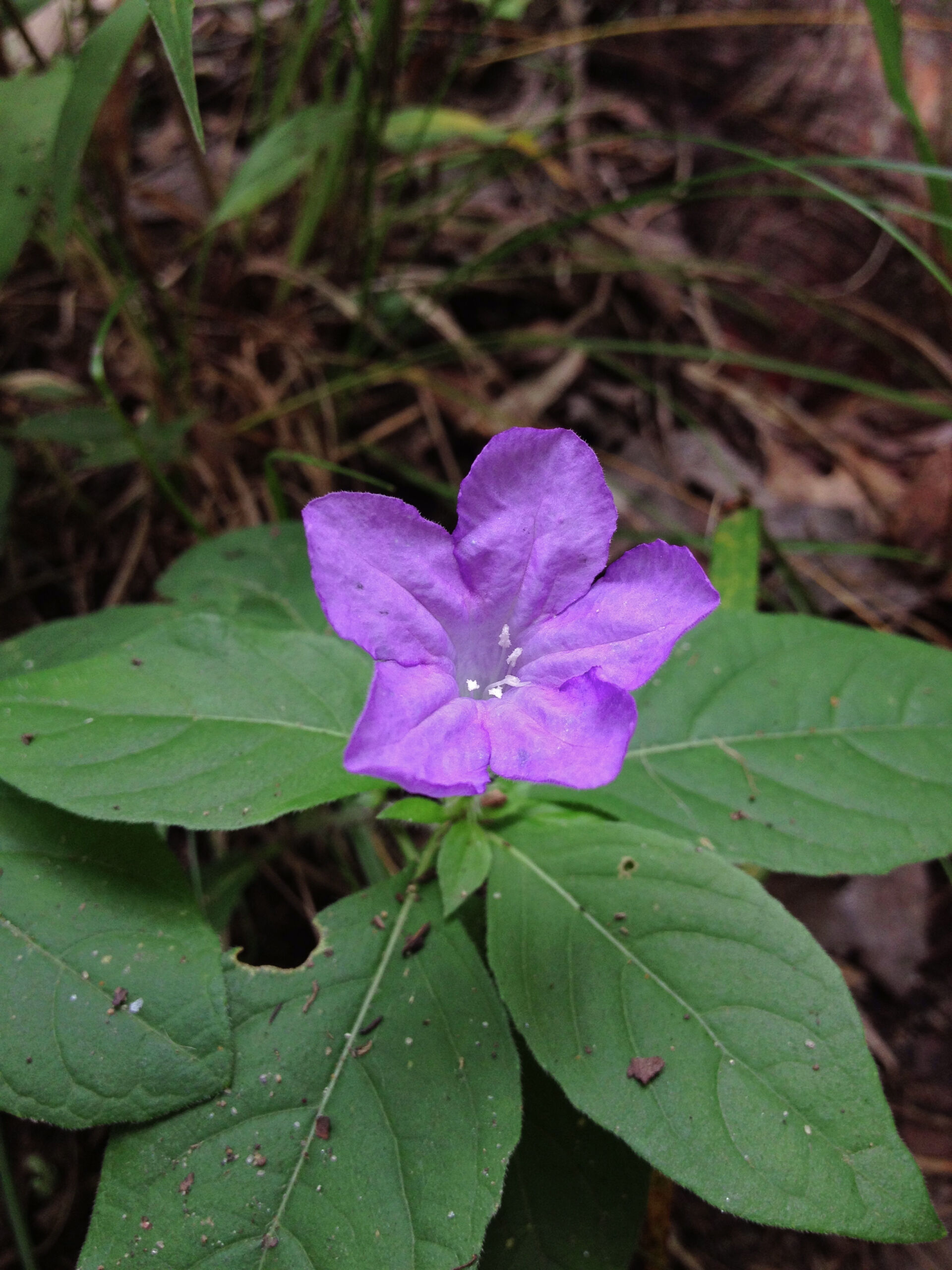
Wild petunia, properly Carolina wild petunia, is a long-lived native perennial of moist hammocks, flatwoods, sandhills, and roadsides, and it is not a petunia at all: true petunias belong to the nightshade family, while Ruellia belongs to the acanthus family, so the resemblance is convergent evolution doing a very convincing costume job. The flowers are five-petaled, funnel-shaped trumpets in purple, lavender, pink, or white, about two inches across, opening fresh each morning and collapsing by afternoon like a firework that only does matinees, and a healthy plant keeps producing new flowers through spring, summer, and fall, so the daily collapse never means a flowerless day.
The plant grows as a shrubby perennial or subshrub, generally 12 to 24 inches tall for the native species, with broader, softer leaves than the narrow, willow-like leaves of the famous Mexican petunia, Ruellia simplex, which is the invasive cousin gardeners must not confuse it with. Carolina wild petunia is the well-behaved native; Mexican petunia is the one that refuses to leave Florida alone, spreading aggressively and escaping into natural areas. Buy by the Latin name, Ruellia caroliniensis, and check the leaves, and you will buy the right plant.
Why this variety
Choose wild petunia when you want a native flower that blooms for months, feeds pollinators, and hosts butterflies, without the invasive baggage of Mexican petunia. The flowers are visited by butterflies, hummingbirds, and long-tongued bees that can reach down the slender corolla tube, and the foliage is a caterpillar host: crescents and peacocks lay eggs on Ruellia, and their caterpillars eat the leaves, which makes a patch of native ruellia a small butterfly nursery disguised as a flower bed.
It is also adaptable in a way that matters in Florida: it grows in dry or moist, well-drained sandy soil, in full sun to fair shade, in hammocks and flatwoods and roadsides alike. That adaptability means it fits a butterfly garden, a woodland edge, or a sunny border, as long as the soil drains and the plant is not the invasive simplex.
How to grow
Plant in spring or fall in full sun to part shade and well-drained sandy soil, spacing 18 to 24 inches apart. Water to establish, then moderately; it tolerates dry or moist soil once rooted, but it will not thrive in soggy ground. Cut back in late winter to renew the plant, and deadhead only if you want to limit self-seeding, though the native species seeds modestly compared to its invasive cousin. Do not plant Mexican petunia, Ruellia simplex, in its place, and do not buy a plant labeled only as ruellia without checking the species: caroliniensis is the native, simplex is the invader.
Florida note: Carolina wild petunia is a Florida native, and it is a genuine Florida plant for butterfly gardens statewide in its zone range. It is the ruellia to plant in Florida, full stop. If a nursery sells you a ruellia that spreads aggressively and pops up everywhere, you bought simplex, not caroliniensis, and you should remove it before it escapes into a natural area.
Water & feeding
Water regularly until established, then moderately. Wild petunia tolerates dry or moist, well-drained sandy soil once rooted, but it does not want standing water. Compost at planting is enough fertilizer; heavy feeding makes it leggy.
Common problems
Confusion with Mexican petunia: the main risk, and it is a buying risk, not a growing risk. Check the Latin name, Ruellia caroliniensis, before you buy.
Legginess in shade or rich soil: full sun and lean soil keep it compact. Cut back in late winter to renew.
Short flower life: each trumpet lasts a day, which is normal. A healthy plant makes new flowers daily through the season, so a flowerless plant is usually a dry or shaded plant, not a spent one.
Self-seeding: modest for the native species, but deadhead if you do not want seedlings.
Harvest
No food harvest. The harvest is the daily trumpet show: cut stems for short-lived but beautiful bouquets, leave flowers for hummingbirds and long-tongued bees, and leave foliage for crescent and peacock caterpillars, which is the point of planting a host plant. For propagation, take cuttings or divide in spring, or sow seed and let the plant renew itself.
Browse all plant & pest guides
Saving seeds
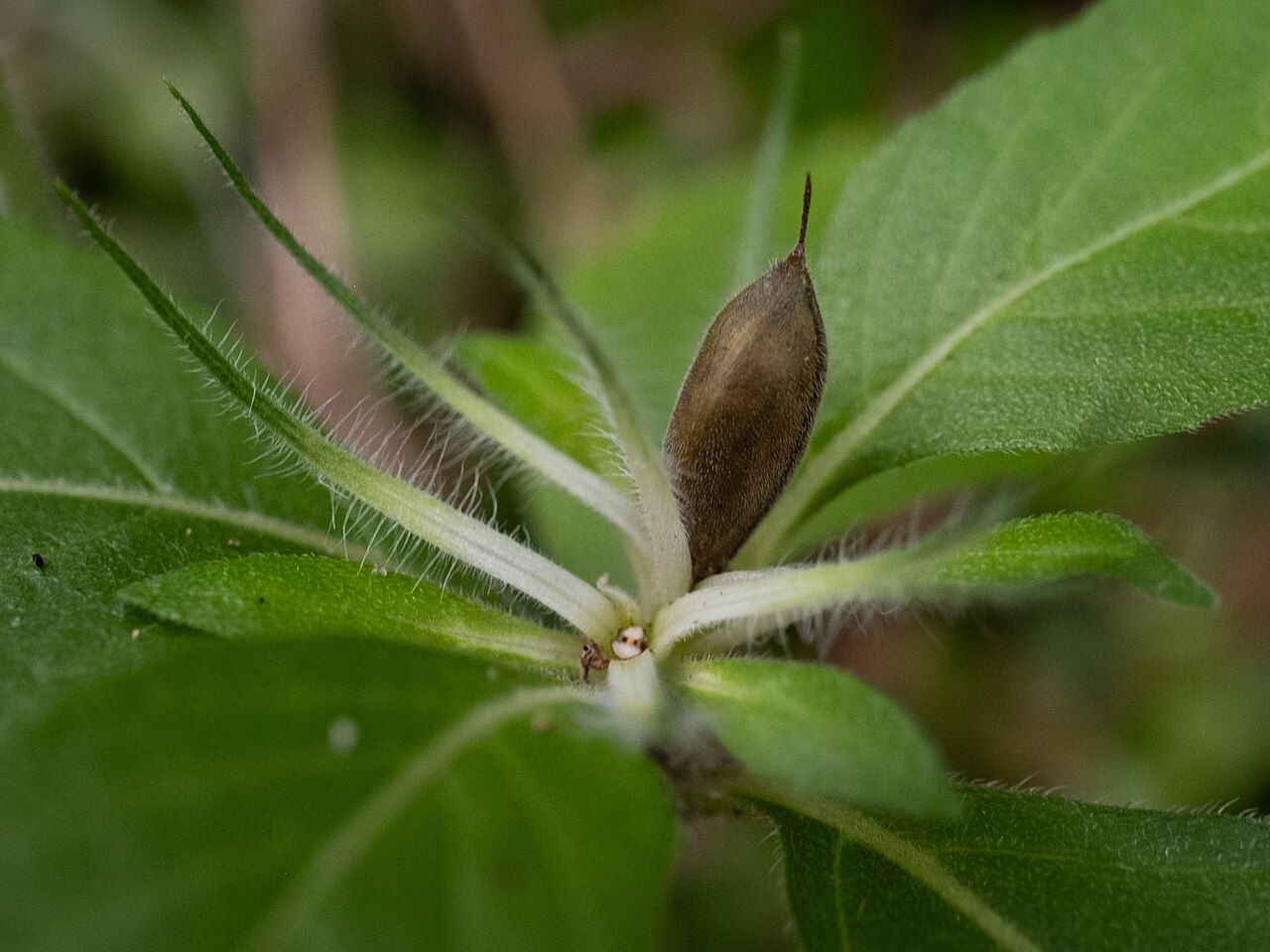
Wild petunia seed is easy, and the capsules do half the work. Let the seed capsules ripen on the plant until they are dry and brown and beginning to split, then collect them into a paper bag before they pop — the capsules open explosively and scatter the seed, which is how the plant spreads itself. Sow on the surface of moist mix, because the seed needs light, and keep it warm. Germination usually comes in one to two weeks. No cold treatment is needed.
It self-seeds freely, which is a gift if you want a native groundcover and a chore if you do not — wild petunia will colonize any bare soil it finds. Deadhead if you want to keep it in bounds, or let it go and pull the volunteers you do not want. Save from the plants with the best flowers — the clearest purples, the fullest blooms — and dry the seed thoroughly before storing; it keeps a few years in a cool, dry jar.
Seedlings will vary in color, since wild petunia crosses freely, so if you want a pure color, grow only one type for seed. Cuttings are also easy — a stem cutting roots in weeks and is a clone of the parent.
Wild petunia is a Florida native for sun or part shade with moist soil, a butterfly host and a bee plant, happiest in a damp spot where other flowers give up. Plant it where the ground stays moist, and let it be the low, purple-flowered native it wants to be.