
💜 Wild Violet
What it looks like
First, a necessary sorting-out, because the violet family loves a good identity crisis. This guide covers the wild violets: the genus Viola as it grows in woods, meadows, lawns, and rock gardens, with all its scrappy native species. It is not the bedding viola guide. That guide covers a different plant, the garden bedding viola/pansy hybrid Viola × wittrockiana, a single hybrid species bred for flower beds and window boxes. Think of it this way: the bedding viola is the cousin who went to horticulture school and came home in a blazer; the wild violets are the cousins who never left the woods and are perfectly happy about it.
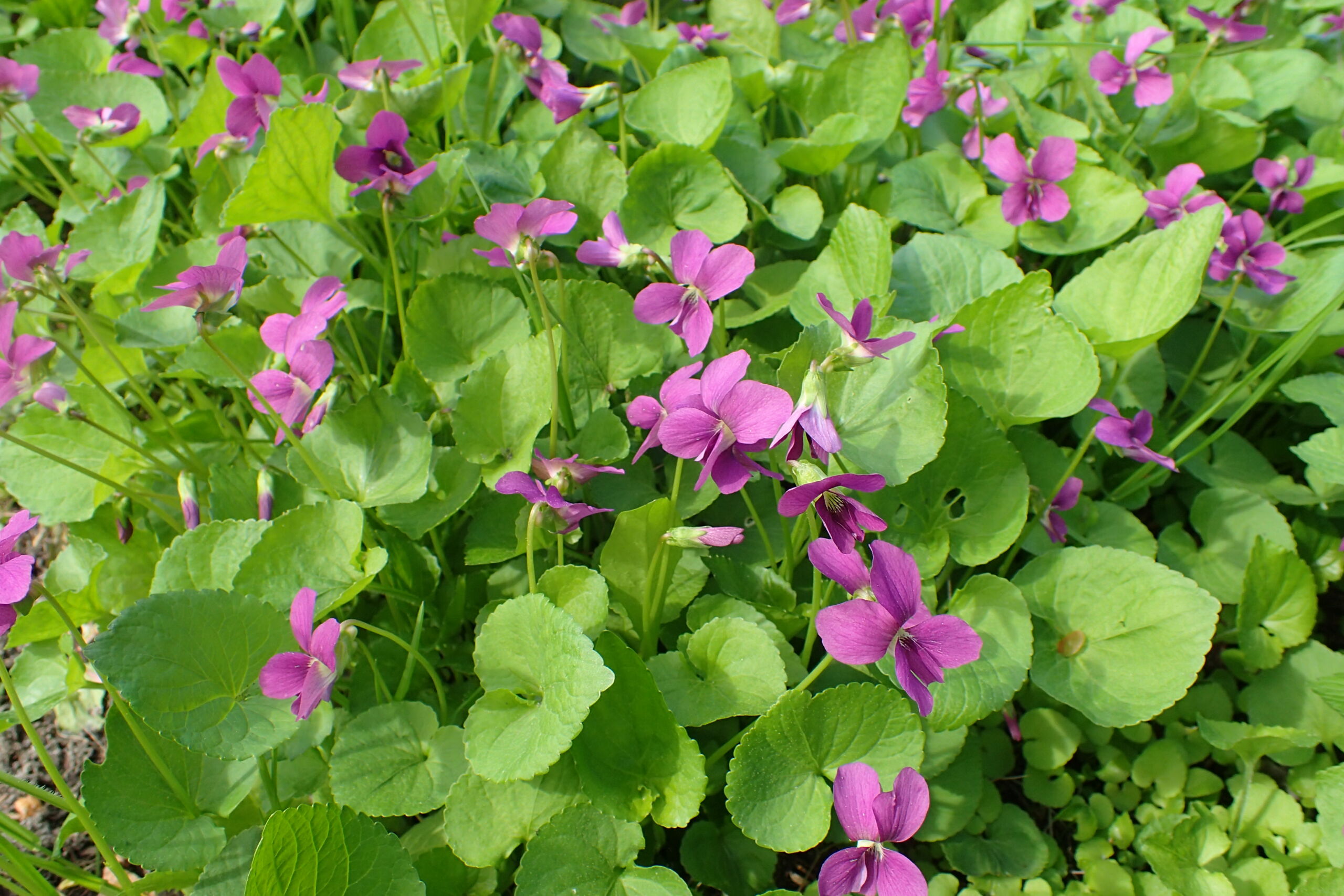
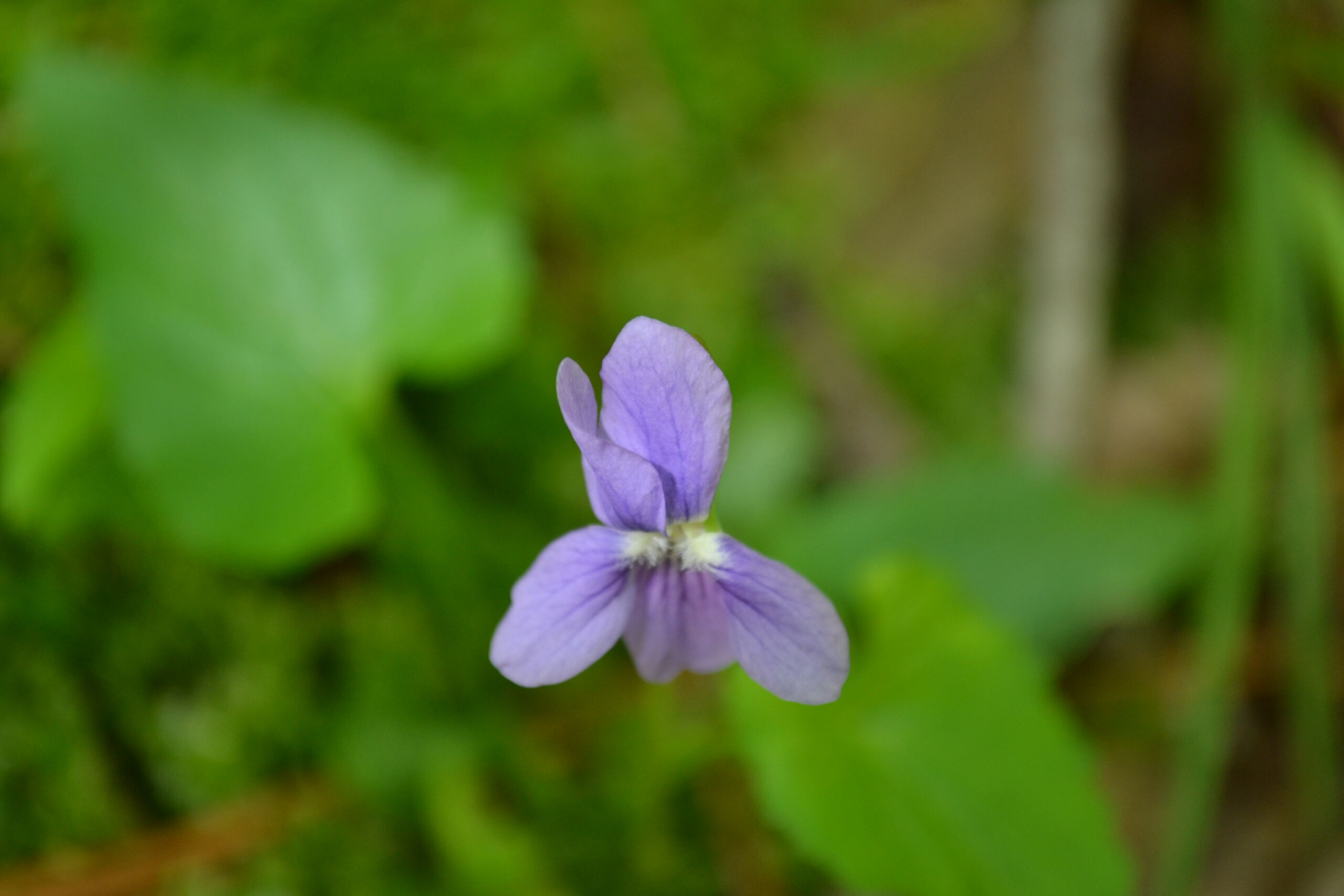
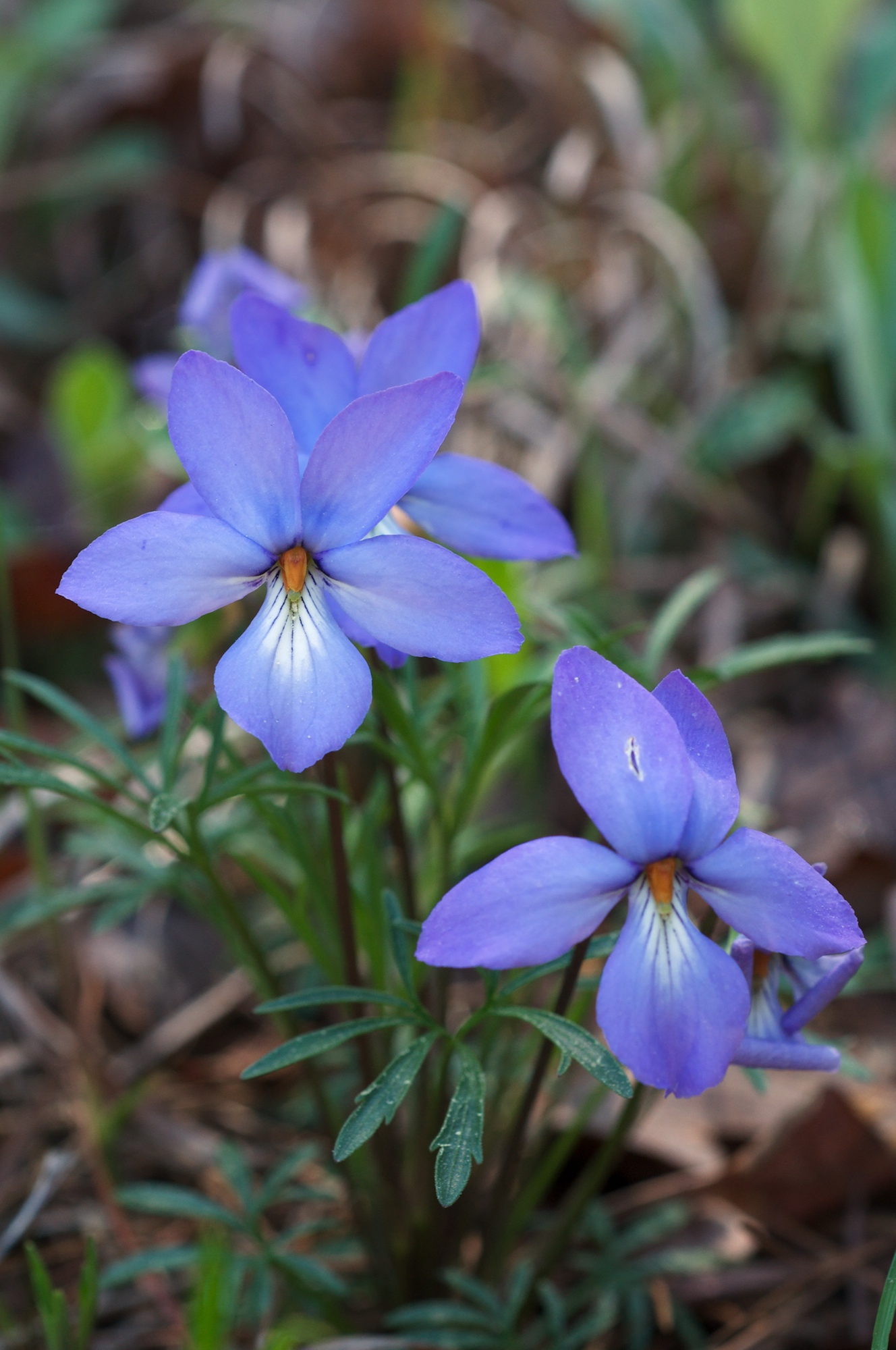
Wild violets are small, stemless or short-stemmed perennials, usually 3 to 8 inches tall, though a happy clump in moist soil can stretch a little taller. The classic picture is the common blue violet, Viola sororia: heart-shaped leaves with scalloped edges, and five-petaled flowers in violet-blue, purple, pink, or white, blooming from spring into early summer. Look closely and you will see the violet’s signature: two upper petals, two side petals, and one lower petal that acts as a landing pad, often marked with darker veins that work as nectar guides pointing pollinators toward the goods. Some species break the heart-leaf mold entirely. Bird’s-foot violet, Viola pedata, has leaves divided into narrow lobes like a bird’s foot, and flowers so large and vivid they look Photoshopped. Sweet violet, Viola odorata, is the perfumed one, the violet of old-fashioned nosegays. Yellow violet, Viola lobata, brings sunshine to a genus that usually leans purple.
Underground, violets are quietly ambitious. Many spread by short rhizomes and by seed, and they have a second trick up their sleeve: cleistogamous flowers. These are small, closed, petal-less flowers that never open at all — they simply fertilize themselves and make seed anyway. It is the plant equivalent of doing your homework in your pajamas and still getting full marks. The result is a plant that colonizes bare ground, path edges, and lawns with cheerful disregard for your garden plan.
How to grow
Wild violets are, by temperate-garden standards, almost embarrassingly easy. Give them what their woodland home gives them and then get out of the way. They like moist, humus-rich, well-drained soil, and they are forgiving about the rest: sources report them growing in loam, clay, and sand, in full sun, part shade, and even deep shade, though flowering is best where they get at least some sun, especially spring sun before the trees leaf out. Space plants 6 to 12 inches apart if you are planting a groundcover on purpose; if you are planting one violet, do not be surprised when it becomes several. That is not a bug. That is the plant.
Plant in spring or fall, water them in well, and mulch lightly with leaf litter — which, conveniently, is also what fritillary caterpillars want to overwinter in (more on that below). Violets are generally unbothered by deer, though rabbits are fond of them, and they tolerate mowing and foot traffic better than most wildflowers, which is why they show up in lawns. If you want a tidy lawn, violets are your nemesis. If you want a living groundcover that laughs at shade, they are your best friend. Pick a side before you plant, because once violets like a spot, evicting them means digging out every bit of rhizome, and they will still send a few volunteers to the going-away party.
Most wild violets are hardy across a wide range. Published zones for common blue violet vary by source — some say zones 3–8, others 3–9, and one extension source gives 3–7 — so treat the hero stat of 3–9 as the broadest honest range and check the species you actually buy, since a desert-edge species like Nuttall’s violet and a woodland species like common blue violet do not want the same garden. Florida gardeners, take note: wild violets are temperate woodland plants, and most of Florida sits at or beyond the warm edge of their comfort zone. Treat them as a north-Florida woodland experiment rather than a statewide groundcover, and buy from a native-plant source that can tell you what actually grows near you.
Water & feeding
Violets like their soil moist but not soggy. Think wrung-out sponge, not puddle. Water during dry spells in their first season, and after that most established clumps look after themselves in a normal temperate garden, wilting in a hard drought and bouncing back when the rain returns. They do not need fertilizer. In fact, rich soil and heavy feeding mostly buy you floppy leaves and fewer flowers, which is the opposite of the deal you wanted. A yearly top-dressing of leaf mold or compost in fall is plenty — it feeds the soil food web, holds moisture, and mimics the woodland floor violets evolved on. That is the whole feeding program. The microbes do the rest, and they do not charge extra.
If you grow violets in containers, use a humus-rich potting mix, keep it evenly moist, and give the pot afternoon shade in hot climates. Do not let pots dry out completely in summer; a violet in a dry pot goes dormant and sulks, and while it may return, it will not forgive you quickly.
Common problems
- They spread too well. The number one violet problem is success. Deadhead the showy spring flowers if you want fewer seedlings, but remember the hidden cleistogamous flowers will still make seed, so deadheading only slows the parade. For real control, grow them where spreading is a feature — under trees, along paths, in a woodland bed — and edge the bed firmly.
- Slugs and snails. They chew violet leaves, especially in damp shade. The damage is usually cosmetic, and the plants outgrow it.
- Rabbits. Rabbits love violets. If your clump keeps getting mowed to the ground by something with long ears, that is not a disease — that is dinner. Protect young plants until established if rabbits are thick on the ground.
- Powdery mildew and leaf spot. These show up in crowded, damp, airless spots. Improve airflow, avoid overhead watering late in the day, and accept a few spotted leaves in late summer; violets are perennials and will return fresh next spring.
- Disappearing act. Some violets go quiet in summer heat, especially after flowering. They are not dead, just resting. Leave the crowns alone and watch for fresh growth when temperatures cool.
Harvest
There is no vegetable-style harvest here, and that is part of the charm. The “harvest” is the spring flower show, the groundcover that fills in bare shade, and the wildlife value. If you want more plants, the easiest propagation is division in spring or fall, or simply letting them self-sow and moving the volunteers to where you want them. Seeds ripen in small three-valved capsules that pop open and fling seed a short distance; ants then carry some seeds further, which is why violets turn up in the most surprising corners of a garden. Violet flowers have traditionally been used as an edible garnish, but this guide makes no eating recommendation: identify your species with certainty and consult a reliable foraging source before eating any wild plant, and never eat a plant from a sprayed lawn.
The wildlife harvest matters more. Violets are the required larval host plants for fritillary butterflies: great spangled fritillary, Aphrodite fritillary, regal fritillary, variegated fritillary, and others lay eggs near violets in late summer, the tiny caterpillars overwinter in leaf litter, and they feed on violet leaves in spring. No violets, no fritillaries — it really is that direct. So if something is chewing holes in your violet leaves in spring, check before you reach for a spray: it may be a spiny, dark fritillary caterpillar doing exactly what violets are for. Adult fritillaries take nectar from many flowers, but their caterpillars eat violets and essentially nothing else. Leaving leaf litter around your violet patch through winter is one of the simplest butterfly-conservation acts a gardener can do. It costs nothing, it looks like laziness, and it is secretly heroism.
Browse all plant & pest guides
Saving seeds
Wild violet seed is easy, and the ants do half the work. Let the seed capsules ripen on the plant until they are dry and beginning to split, then collect them into a paper bag — the capsules pop open and scatter, and the ants carry the seed away to plant it themselves, which is why wild violets pop up in the oddest places. Sow on the surface of moist mix, because the seed needs light, and give it a cold, moist chill of a few weeks first, or sow in fall outdoors and let winter do it. Germination usually comes in two to three weeks after chilling.
It self-seeds freely, so deadhead if you do not want a carpet of it everywhere, or let it go and pull the volunteers you do not want. Save from the plants with the best flowers — the clearest purples and whites, the sweetest scent — and dry the seed thoroughly before storing; it keeps a few years in a cool, dry jar.
Seedlings will vary in color and form, since wild violets cross freely, so if you want a pure color, grow only one type for seed. Division is also easy for the clump-forming kinds — lift and split in spring or fall.
Wild violet is a Florida native for shade and moist soil, a butterfly host — the fritillaries lay their eggs on it — and a bee plant, happiest under a live oak where the ground stays damp. Plant it where the shade is deep, and let it be the low, purple-flowered native it wants to be.
Species in this group
Common blue violet (Viola sororia) — The classic wild violet: heart-shaped leaves, violet-blue to white flowers, 3–8 inches tall, spreads freely by rhizomes and seed; the workhorse fritillary host of eastern and central North America.
Bird’s-foot violet (Viola pedata) — Deeply lobed, bird’s-foot leaves and large, vivid flowers; prefers sun and sandy or rocky, well-drained soil; slower and better-mannered than common blue violet.
Early blue violet (Viola adunca) — A western violet of open ground and woodland edges; one of the violets named in butterfly host lists, and a reminder that “early blue violet” is also used for other violets, so buy by Latin name.
Nuttall’s violet (Viola nuttallii) — A yellow-flowered violet of western prairies and open ground; tougher and drier-tolerant than the woodland violets, and a good example of why species choice matters.
Yellow violet (Viola lobata) — A yellow-flowered western violet with lobed leaves; grows in woodland and scrub, and shows the genus is not all purple all the time.
Sweet violet (Viola odorata) — The fragrant European violet of gardens and old walls; perfumed flowers, heart-shaped leaves, and a long history in nosegays and gardens.
Johnny-jump-up (Viola tricolor) — The small, cheerful, purple-yellow-and-white flower of fields and gardens; short-lived and self-sowing, it jumps up wherever it pleases, hence the name.