
🌿 Wild Yam
What it looks like
How to grow
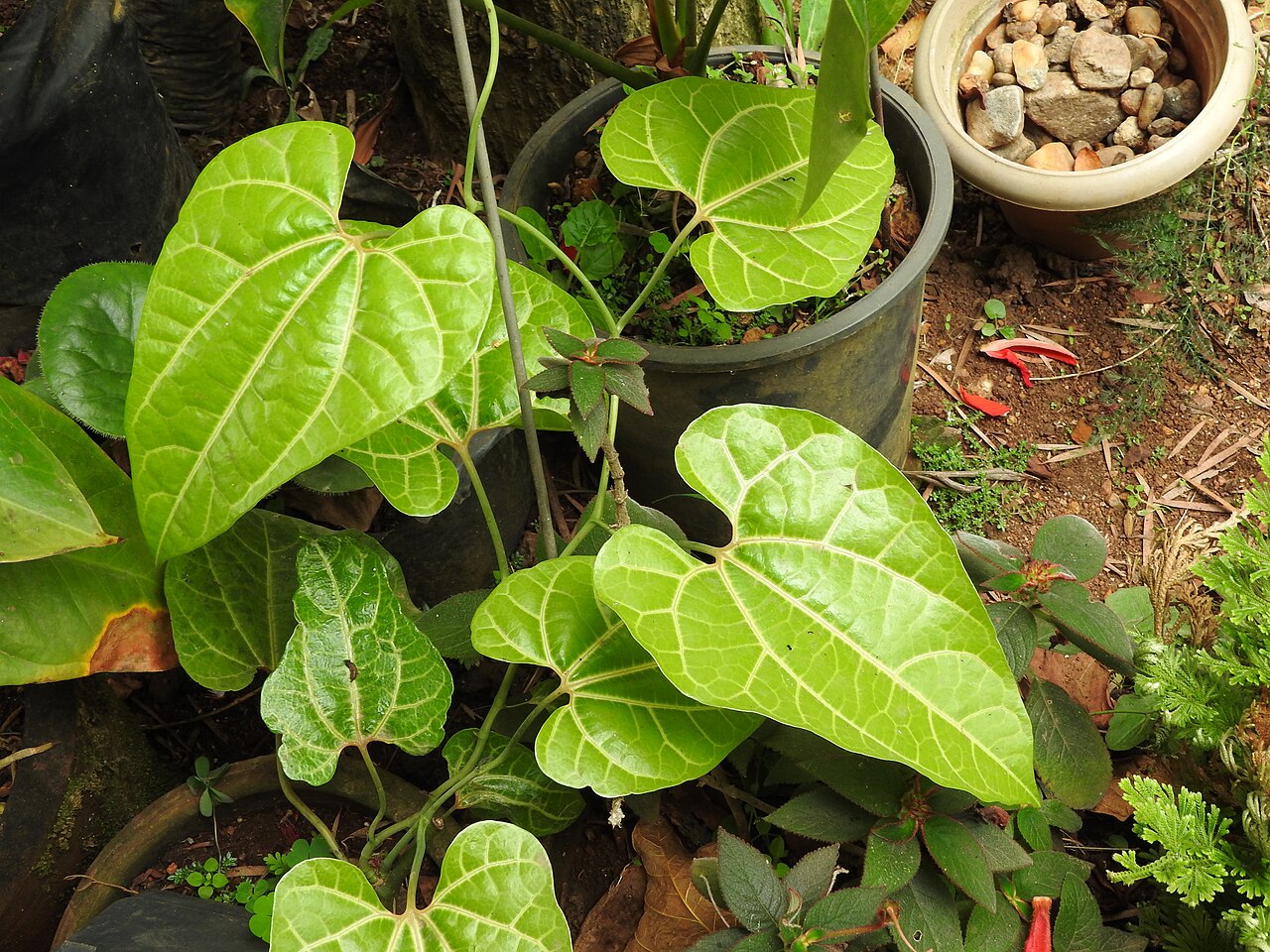
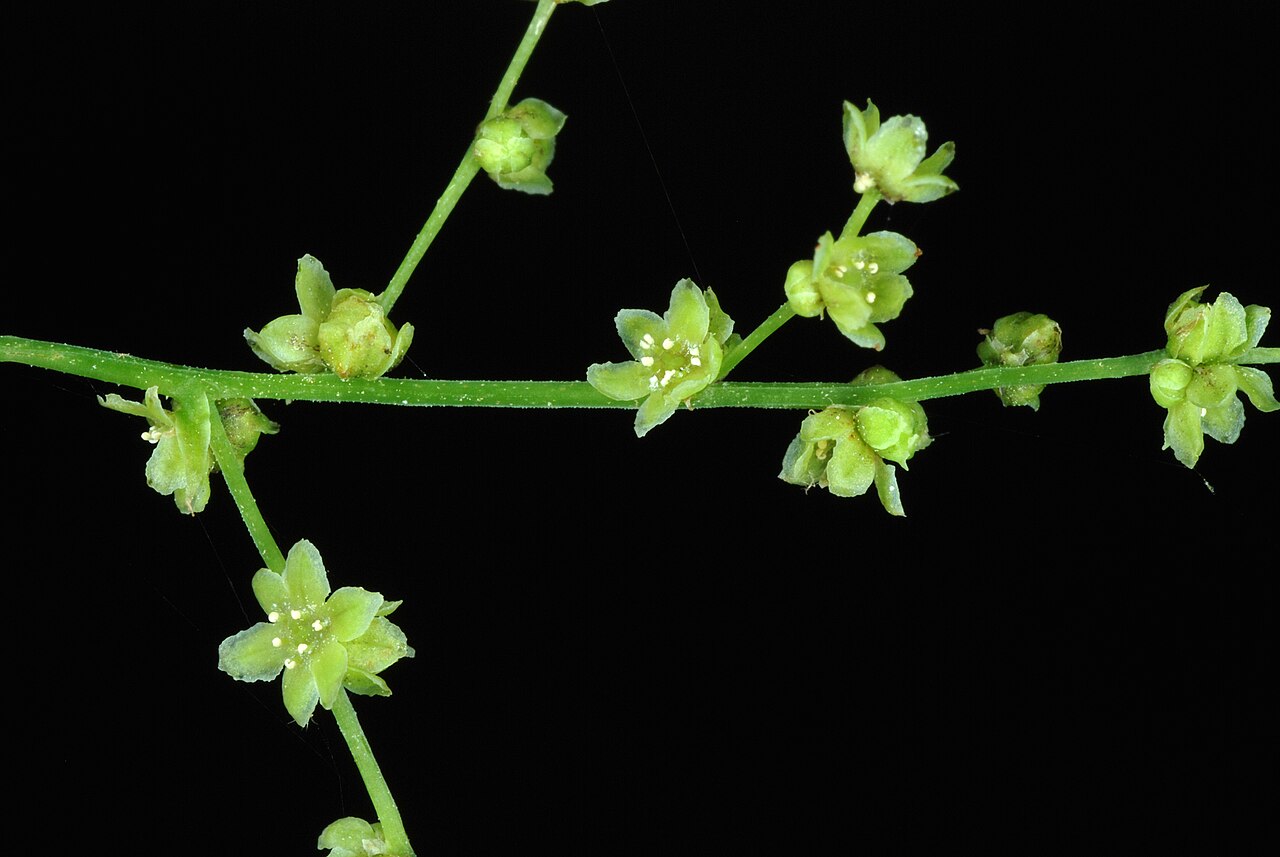
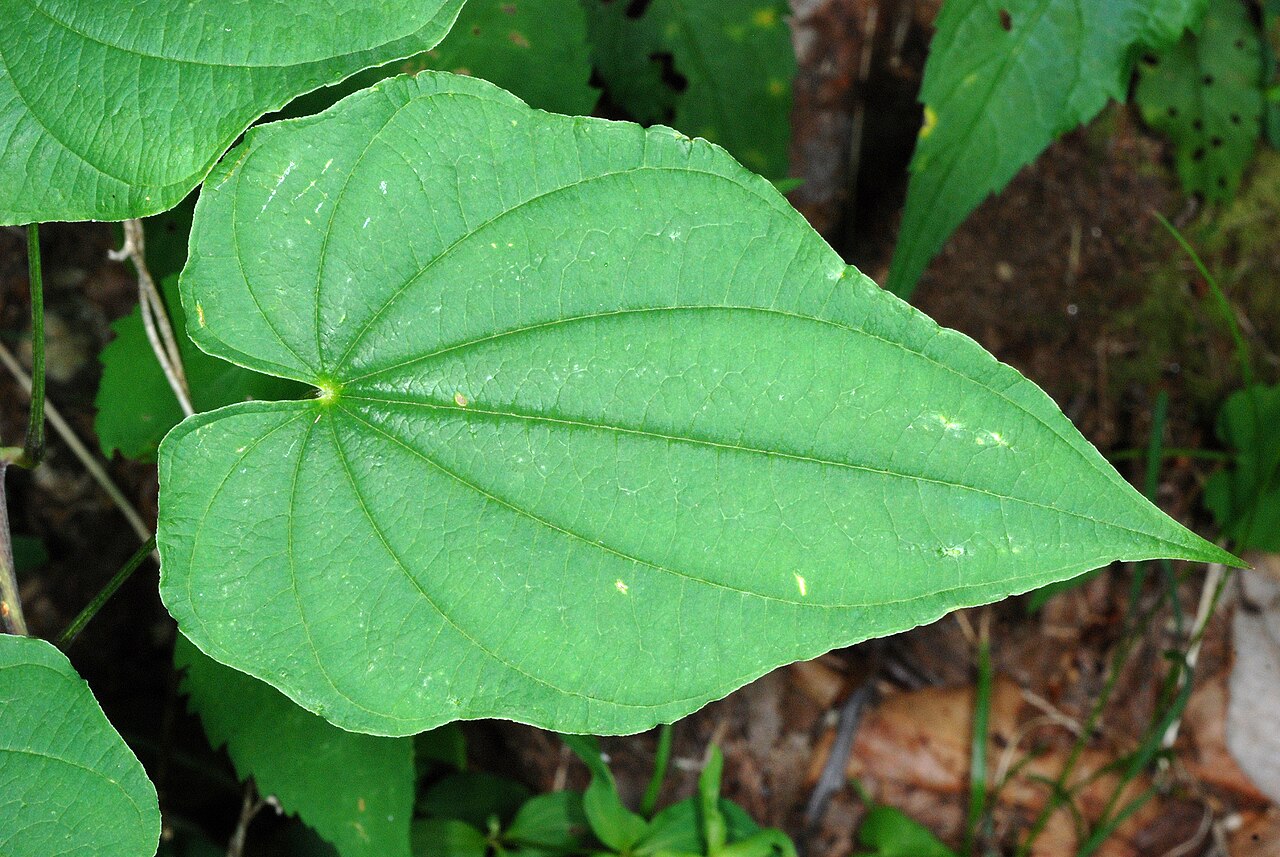
Wild yam is a slender, twining woodland vine, 6-15 feet in a season, with heart-shaped leaves, small greenish-yellow flowers, and a knobby, branching rhizome — the part traditionally harvested. Start from rhizome pieces with buds in spring or fall — the reliable route — or from nursery plants, and plant in part shade in rich, moist, well-drained woodland soil, with a trellis, fence, or shrub to climb; wild yam needs support and will twine up anything nearby. It wants steady moisture and cool roots, and it goes dormant in winter, resprouting from the rhizome in spring. Do not confuse it with two other plants: grocery-store yams are actually sweet potatoes (Ipomoea batatas), a different plant entirely, and air potato (Dioscorea bulbifera) is an invasive vine in Florida and the Southeast that should never be planted — wild yam’s leaves are heart-shaped and its vine is slender, while air potato’s leaves are larger and it produces aerial bulbils that spread aggressively. If a seller cannot tell them apart, do not buy it.
Water & feeding
Keep soil consistently moist — wild yam is a woodland plant that wilts in drought and needs water in dry spells, especially in the first year. Mulch with leaf litter to hold moisture, top-dress with compost in spring, and do not fertilize heavily; rich, humusy soil is enough. Water deeply during establishment, and keep the bed weed-free by hand so you do not disturb shallow rhizomes.
Common problems
- Confusion with air potato — the main risk. Learn wild yam’s slender vine and heart-shaped leaves, and never plant air potato, which is invasive in much of the Southeast.
- Drought stress — leaves wilt and growth stalls; water deeply, mulch, and add shade.
- Slugs on young shoots in damp shade — hand-pick at dusk; established vines outgrow minor damage.
- Slow establishment — expect a year or two of modest growth before the vine hits its stride; do not disturb the rhizome in the meantime.
Harvest
Dig rhizomes only from second- or third-year plants in fall, after the tops die back, and replant pieces with buds to keep the patch going. Wash well and dry thoroughly before storing. This guide is about growing only: wild yam has a long traditional herbal history, and it is widely sold as a supplement — but it does not contain progesterone, despite old claims, and any medicinal use deserves a clinician’s input first. In the garden, its value is as a graceful, native woodland vine for a shady trellis, and a lesson in why plant names matter: wild yam, grocery yam, and air potato are three different plants, and only one belongs in your garden.
Browse all plant & pest guides
Saving seeds
Wild yam seed needs winter. Let the seed capsules ripen on the vine until they are dry and brown and beginning to split, then collect them into a paper bag before they scatter — the winged seed is built to fly. Give it a cold, moist chill — a few weeks is the common figure — by mixing seed with damp mix in a bag and refrigerating it, or by sowing in fall outdoors and letting winter do it. Sow on the surface of moist mix, keep it warm, and germination usually comes in a few weeks after chilling.
Tubers are the practical route: lift the tuber in fall, cut it into pieces with a growing point each, and replant. Every piece is a clone of the parent, and it gives you a plant far sooner than a seedling — which takes two to three years to size up. Seed is for starting from scratch and for the patient gardener.
Sow fresh if you can; wild yam seed does not store well, and dried seed may never germinate. Dry the seed thoroughly before storing, and keep it cool — it keeps a year at most, and viability drops fast if it is stored warm or damp.
And a caution: wild yam is a medicinal plant with real hormonal effects — this guide does not give medical advice, and the seed note here is for the garden, not the medicine cabinet. Grow it for the vine and the flowers, and leave the medicine to the professionals.