
🌾 Wrinkleleaf Goldenrod
What it looks like
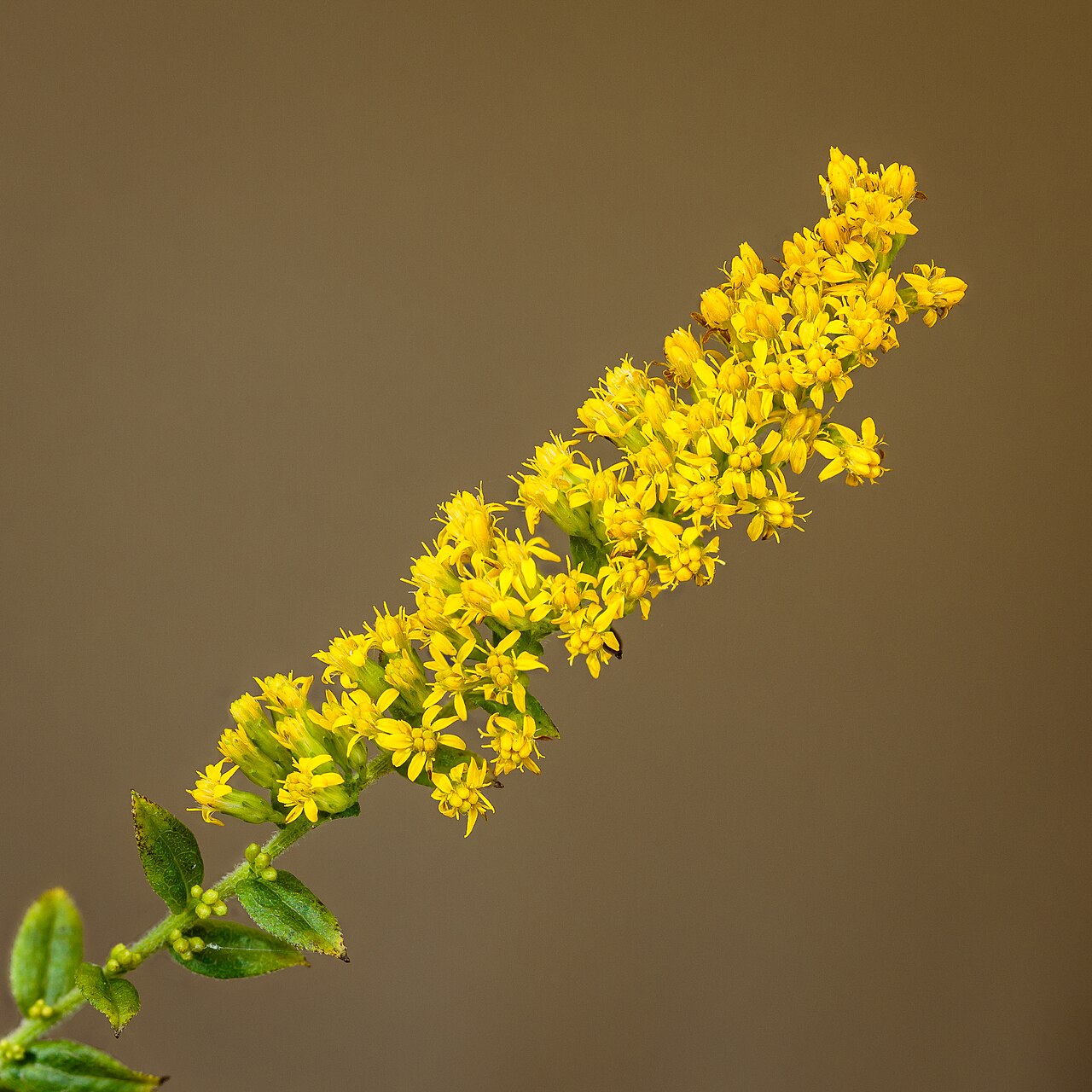
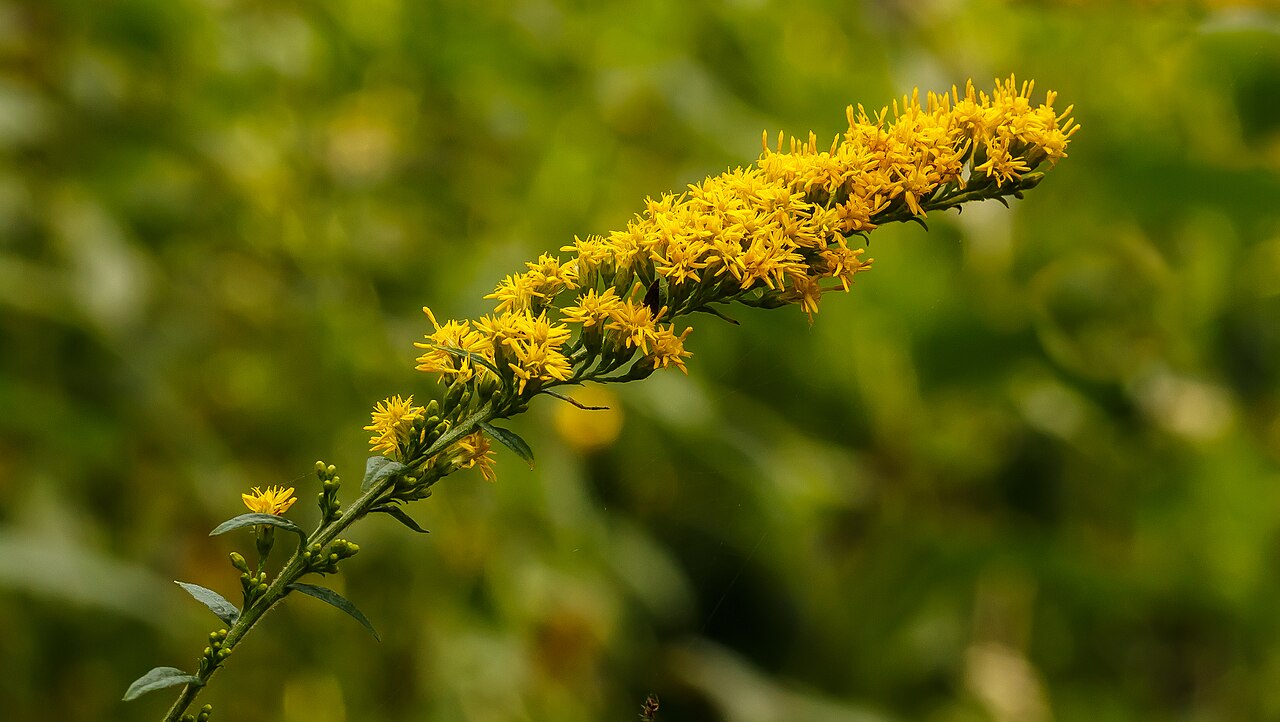
Wrinkleleaf goldenrod, also called rough-stemmed goldenrod, is the wild species behind the Fireworks cultivar, and it looks like a wilder, taller version of its child: 3 to 6 feet tall and 2 to 4 feet wide, with branching flower inflorescences of yellow, dark green, wrinkled leaves that give it its name, and a preference for wet habitats that sets it apart from drier goldenrods. The leaves are rough and deeply veined, almost quilted, and the flower sprays arch and branch in a way that reads as a golden fountain in late summer and fall.
In the garden it is a meadow and border-back plant, not a front-of-border plant: tall, bold, and happiest where it has room to arch and where its moist-soil preference is met. In a naturalized area, a rain garden edge, or a moist meadow, it is magnificent; in a small, dry border, it will be leggy and disappointing, which is why the cultivar Fireworks exists for smaller gardens.
Why this variety
Choose wrinkleleaf goldenrod when you want the species, not the cultivar, for a naturalistic planting, a restoration, or a moist meadow where a tall goldenrod belongs. It is the parent plant, with all the ecological value that implies: late-season nectar and pollen for native bees, butterflies, and migrating monarchs, host value for goldenrod-specialist insects, and seed for songbirds into winter. It is also the plant to grow if you want to understand Fireworks: plant them side by side, and you will see what selection for compactness and clumping actually changed.
It is not the goldenrod for a small, dry garden, and this guide does not pretend it is. It is the goldenrod for a moist site with room, where its height and arch are assets, not problems.
How to grow
Plant in spring or fall in full sun and moist, well-drained soil, spacing 2 to 3 feet apart. It tolerates both dry and wet soils once established, but it grows best with consistent moisture and full sun. Cut back in late winter, divide in spring every few years if clumps grow crowded, and deadhead only if you want to limit self-seeding. Pair it with asters and grasses in a moist meadow planting, and give it the back of the border, where its height will not hide shorter plants.
Florida note: wrinkleleaf goldenrod is a central and eastern North American native, not a Florida native, and in Florida it is best trialed in north Florida moist gardens with consistent water. In central and south Florida, plant Florida’s own seaside, anise-scented, or Leavenworth’s goldenrods instead, which are built for Florida heat and will outperform it. If you grow Fireworks, you already grow a selected form of this species; grow the species itself only if you have the moist, roomy site it wants.
Water & feeding
Water regularly until established, then moderately, keeping soil moist. Wrinkleleaf goldenrod likes moist, well-drained soil and tolerates wet feet better than most goldenrods, but it will not thrive in a bog or in a dry bed. Compost at planting is enough fertilizer.
Common problems
Flopping in shade or dry soil: full sun and moist soil keep it upright. Cut back by half in early summer if it grows leggy.
Size: at 3 to 6 feet it needs a large site. Do not plant it in a small border; plant Fireworks instead.
Self-seeding: it seeds freely in moist soil. Deadhead if you do not want seedlings.
Hay fever blame: goldenrod does not cause hay fever. Ragweed does.
Harvest
No food harvest. The harvest is the late-season display and the ecological value: cut arching sprays for fall bouquets, leave seed heads for birds, and divide clumps in spring to share. The species’ yield is measured in pollinators fed and in the understanding it gives you of what Fireworks was selected from.
Browse all plant & pest guides
Saving seeds
Wrinkleleaf goldenrod seed is dust — tiny, light-hungry, and easy to lose. Let a few flower heads ripen on the plant until they are dry and fluffy, then strip them into a paper bag over a sheet of white paper. Sow on the surface of moist mix and do not bury the seed at all; it needs light to germinate. Give it a cold, moist chill of a few weeks first, or sow in fall outdoors and let winter do it. Germination usually comes in two to three weeks after chilling.
It self-seeds freely, so deadhead if you do not want a patch of it everywhere, or let it go and pull the volunteers you do not want. Save from the plants with the best flowers — the fullest plumes, the clearest golds — and dry the seed thoroughly before storing; it keeps a few years in a cool, dry jar.
Seedlings will vary, and the named forms come only from cuttings or division. Division is easy for the clump-forming kinds — lift and split in spring or fall, and every piece with roots and shoots attached becomes a plant.
Wrinkleleaf goldenrod is a Florida native for sun and moist soil, a butterfly host and a bee plant, happiest in a damp spot where other flowers give up. Plant it where the ground stays moist, and let it be the tall, golden native it wants to be.