
💛 Yellow Jessamine
What it looks like
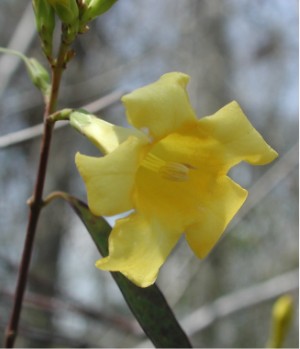
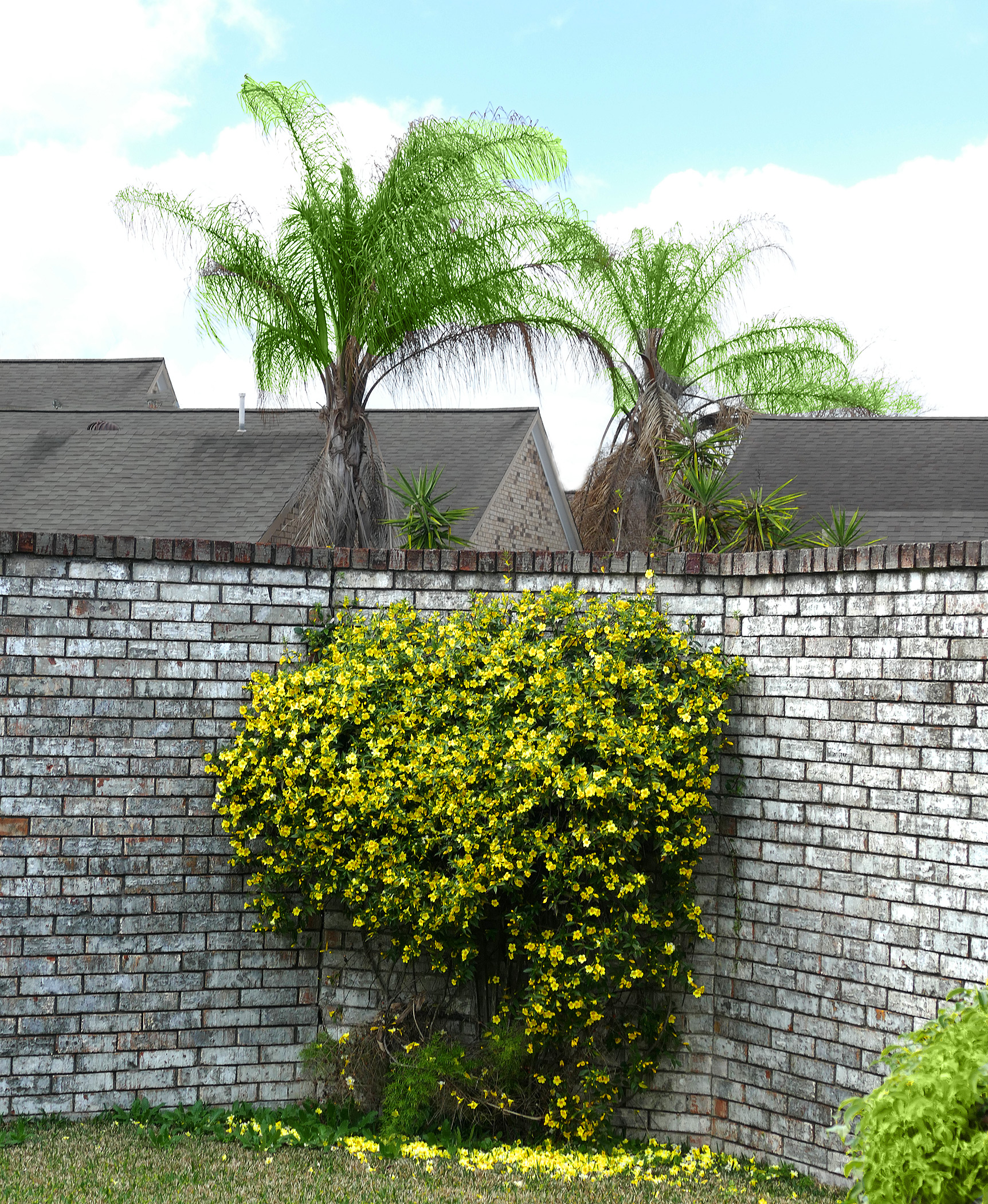
Yellow jessamine, also called Carolina jessamine, is an evergreen vine with slender, twining stems and narrow, glossy leaves that stay green through winter. In late winter and spring it covers itself in clusters of fragrant, trumpet-shaped yellow flowers that smell sweet from several feet away, and it is one of the first vines to flower in the year.
It climbs by twining, reaching 10 to 20 feet up a fence, arbor, or tree, and it stays evergreen in mild winters, giving a garden green structure when most vines are bare. Its flowers are the show, but its winter leaves are the backbone.
Why this variety
Choose yellow jessamine when you want fragrance and early flowers on a fence or arbor, and you understand the plant’s one serious rule: every part of it is poisonous, so it must be planted where it will not be eaten, brewed, or handled by children. With that rule respected, it is a superb vine.
It is also a native vine that flowers when little else does, feeding early pollinators in late winter and giving a garden color and scent in the dullest months. A fence that smells sweet in February is a fence worth planting, if it is planted safely.
How to grow
Plant in sun to part shade in well-drained soil, in fall or spring. Dig a hole twice the pot width, water deeply, mulch, and train the first stems onto the support. Wear gloves when you handle it, and wash your hands after, even though skin contact is not the main risk: the risk is ingestion.
Prune after flowering to keep it in bounds, cutting back long shoots to a side branch. Do not let it climb into trees where it will drop flowers and leaves into areas where children or animals might pick them up, and do not compost prunings where they might be mistaken for something else.
Water & feeding
Water deeply once a week while it establishes, then water in dry spells. Yellow jessamine tolerates short dry spells once rooted, but it flowers best with even moisture in late winter and spring.
Feed with compost in spring. Heavy fertilizer grows leafy stems at the expense of flowers, and yellow jessamine does not need pushing.
Common problems
Toxicity: all parts of yellow jessamine are poisonous if eaten, including flowers, leaves, and roots, and it has caused serious poisoning in people and animals. Do not eat it, do not brew it as tea, do not let children play with it, and do not plant it where grazing animals can reach it. This warning is the most important part of this guide.
Confusion with true jasmine: yellow jessamine is not jasmine, and it is not edible like some jasmines. Buy it by its scientific name, Gelsemium sempervirens, and do not confuse it with edible or tea plants.
Overgrowing its support: prune after flowering. Do not let it mat at the top of a support, where it shades its own lower leaves.
Leaf drop in cold winters: in the north of its range, it can lose leaves in a hard winter. This is normal. Wait until spring growth shows before cutting.
Harvest
There is no edible harvest, and there must never be one. Yellow jessamine is not food, not tea, and not medicine, despite old folk uses that are dangerous and should not be repeated.
The harvest is fragrance and early flowers, enjoyed from a distance, on a fence or arbor where the vine can be seen and smelled but not picked. A yellow jessamine in full flower, smelled from the path, is the garden at its most fragrant, and that is enough.
Browse all plant & pest guides
Saving seeds
The poison warning comes first: yellow jessamine is toxic. Every part of the plant — the flowers, the leaves, the roots, the nectar — contains gelsemine, which is poisonous to people, pets, and livestock if eaten. Do not eat it, do not let children pick the flowers, and do not plant it where livestock graze. The bees visit it, and the hummingbirds drink from it, but you should not.
Yellow jessamine seed is easy. Let the seed capsules ripen on the vine until they are dry and brown and beginning to split, then collect them into a paper bag before they scatter — the winged seed is built to fly. Sow on the surface of moist mix, because the seed needs light, and give it a cold, moist chill of a few weeks first, or sow in fall outdoors and let winter do it. Germination usually comes in a few weeks after chilling.
Seedlings will vary, and the named forms come only from cuttings. Cuttings root readily in warm, moist mix, and every cutting is a clone of the parent. Seed is for the species itself and for the patient gardener. A seedling will be a yellow jessamine, but it will not be a named cultivar.
Yellow jessamine is a Florida native for sun or part shade with moist soil, a butterfly host and a hummingbird plant, happiest on a fence or an arbor where it can climb. Plant it where the flowers can be admired from a distance, and let it be the bright, yellow-flowered native it wants to be.