
🫐 Bailey Compact Highbush Cranberry
What it looks like
Why this variety
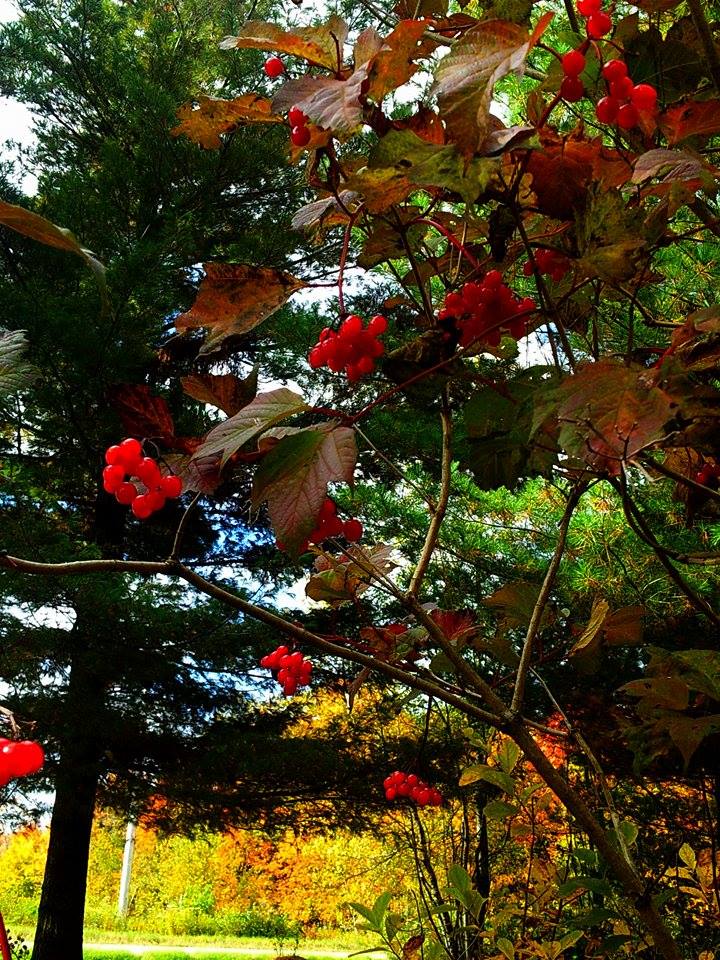
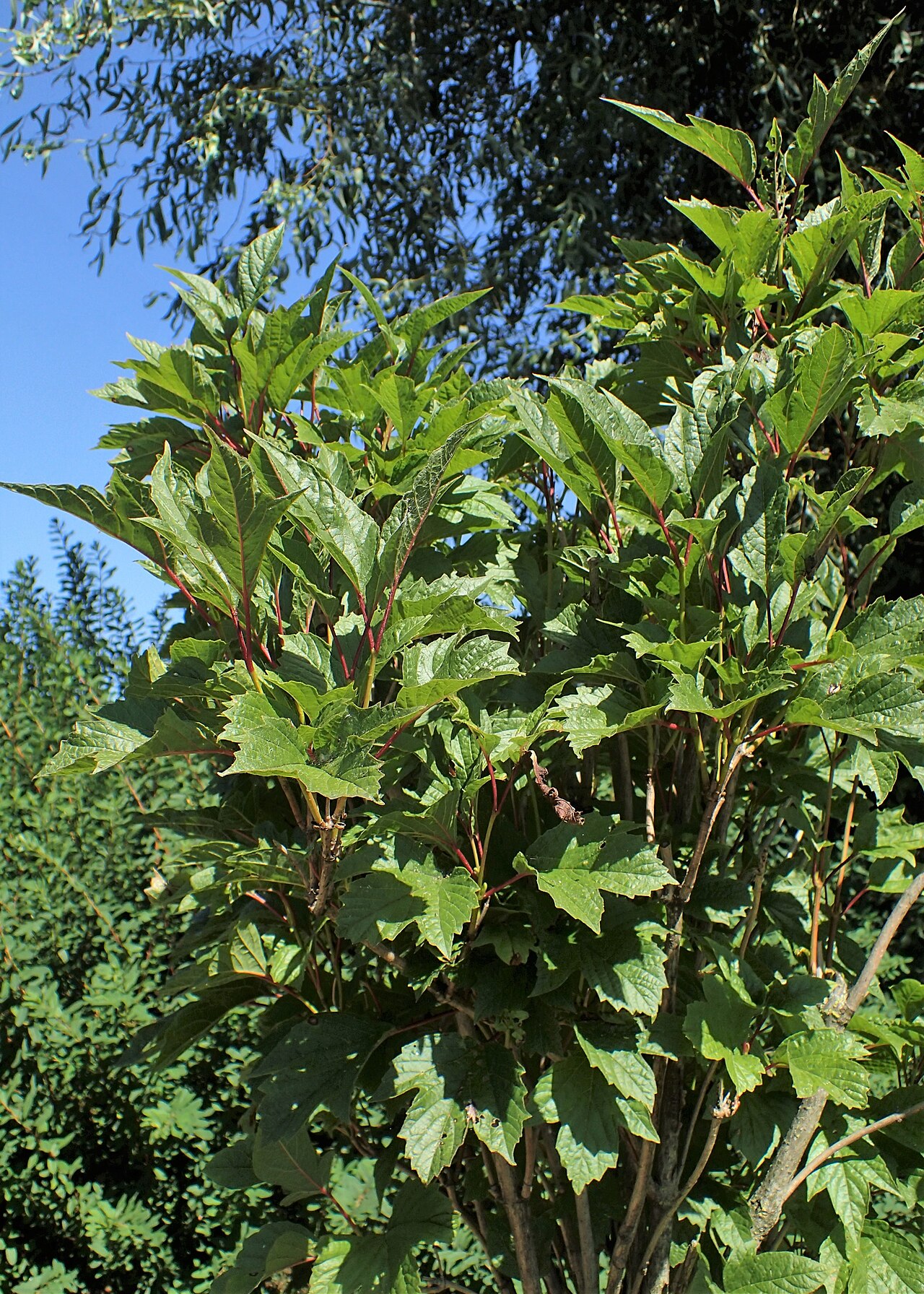
Bailey Compact is the highbush cranberry for gardens without room for a giant: a dense, compact selection of the American cranberrybush viburnum that stays around five to six feet tall and wide, carrying the same white lacecap flowers in spring, red berries in fall, and red-purple fall foliage as the species, in a package that fits a foundation bed or a mixed border. Birds do not care that it is small — they visit a six-foot Bailey Compact as eagerly as a ten-foot species plant — and its tighter habit means less pruning and a neater silhouette through the season.
The trade-off is simply fruit volume in reverse: Bailey Compact will never give you the massive berry clusters of Wentworth, and in rich, moist soil with plenty of water it can still push past its advertised size. It also shares the species’ needs — winter chill for good fruiting, and moist soil for good growth — so it is still a North Florida trial, not a statewide shrub. Cut it back lightly after fruiting if it outgrows its space, and do not plant it where you wanted a screen: this is a specimen and a bird plant, not a hedge.
If you are new to choosing between cultivars, the Varieties Matter guide explains why the name after the plant matters as much as the plant itself. Bailey Compact is a perfect example: it is not just a highbush cranberry in the abstract, it is a highbush cranberry with a specific job, a specific history, and specific strengths.
Florida honesty: highbush cranberry is a North Florida trial, not a statewide promise, and Bailey Compact is the trial for the smaller North Florida yard — the Panhandle, where winter actually arrives. Even there, a warm winter can thin the berries, and summer heat and drought stress the plant. Plant it in sun with moist, rich soil, mulch to hold moisture, and count a red-berried fall as the payoff. South of North Florida, admire cranberrybush in photographs and plant a fruiting shrub that does not need chill.
How to grow
Plant dormant bare-root or container shrubs in fall or early spring in full sun to part shade and rich, moist soil — highbush cranberry wants sun for fruit and moisture for growth, not a dry corner. Work worm castings and compost into the planting hole, water deeply to establish, and mulch to hold moisture, because a cranberrybush that dries out fruits thinly. Prune little: remove dead wood and crossing branches in late winter, and thin old stems only if the shrub gets congested. Plant the American species (Viburnum trilobum), not the European look-alike, and give it room — this is a large shrub, not a filler.
Set plants 5-6 feet apart in soil with a pH around 5.5-7.0. Work worm castings into the bed at planting and mulch to hold moisture. A well-fed highbush cranberry plant rewards that care directly: steadier growth, better bloom, and a show that actually shows up.
Water & feeding
Keep soil evenly moist but not waterlogged — highbush cranberry wants damp-meadow moisture, tolerates wet sites, and sulks in drought, especially while fruiting. Water at the soil line, mulch deeply to hold moisture, and feed lightly: castings and compost at planting plus a spring top-dress. In a dry spell, water deeply and regularly, because berry size and set depend on steady moisture; in a wet season, drainage matters less than for most shrubs, but a cranberrybush that stands in stagnant water will still show root problems eventually.
Common problems
- Failure to fruit without winter chill — a warm winter means few berries; in Florida this limits cranberrybush to a North Florida trial, and that is weather, not gardener failure.
- Viburnum leaf beetle skeletonizing leaves — handpick or treat with horticultural oil; healthy shrubs usually outgrow light damage.
- Aphids on new growth — blast with water and encourage ladybugs; avoid broad-spectrum sprays on a bird-friendly shrub.
- Dry soil thinning fruit — water consistently through fruit set; a cranberrybush that dries out drops berries first.
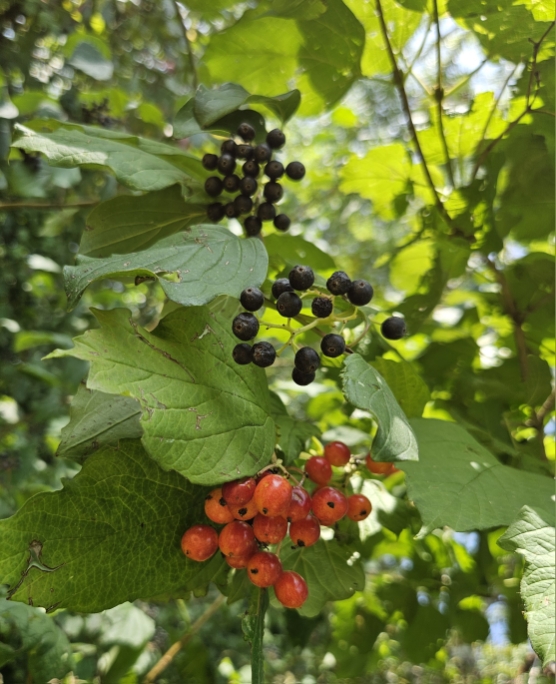
- Confusion with European cranberrybush — buy Viburnum trilobum by Latin name; the European V. opulus looks similar and is invasive in some regions.
Harvest
Pick berries in fall, when they are fully red and slightly soft — highbush cranberries are tart raw and meant for cooking, so harvest into a bucket, strip clusters by hand, and cook the same week into jelly, sauce, or syrup with sugar, or freeze berries on trays before bagging. Leave some clusters on the shrub for birds, which eat them eagerly through winter, and prune out old wood in late winter so next year’s crop has light and air. Do not confuse your harvest with the European cranberrybush: the American species’ berries are the ones for the pot, and the shrub’s fall color is the bonus harvest.
Browse all plant & pest guides
Saving seeds
Bailey Compact is a compact selection, so seed saved from it won’t come true — buy a nursery shrub instead. The Saving seeds section of the Highbush Cranberry guide covers seed for the straight species.