
🫐 Cascade Sunrise Salal
What it looks like
Why this variety
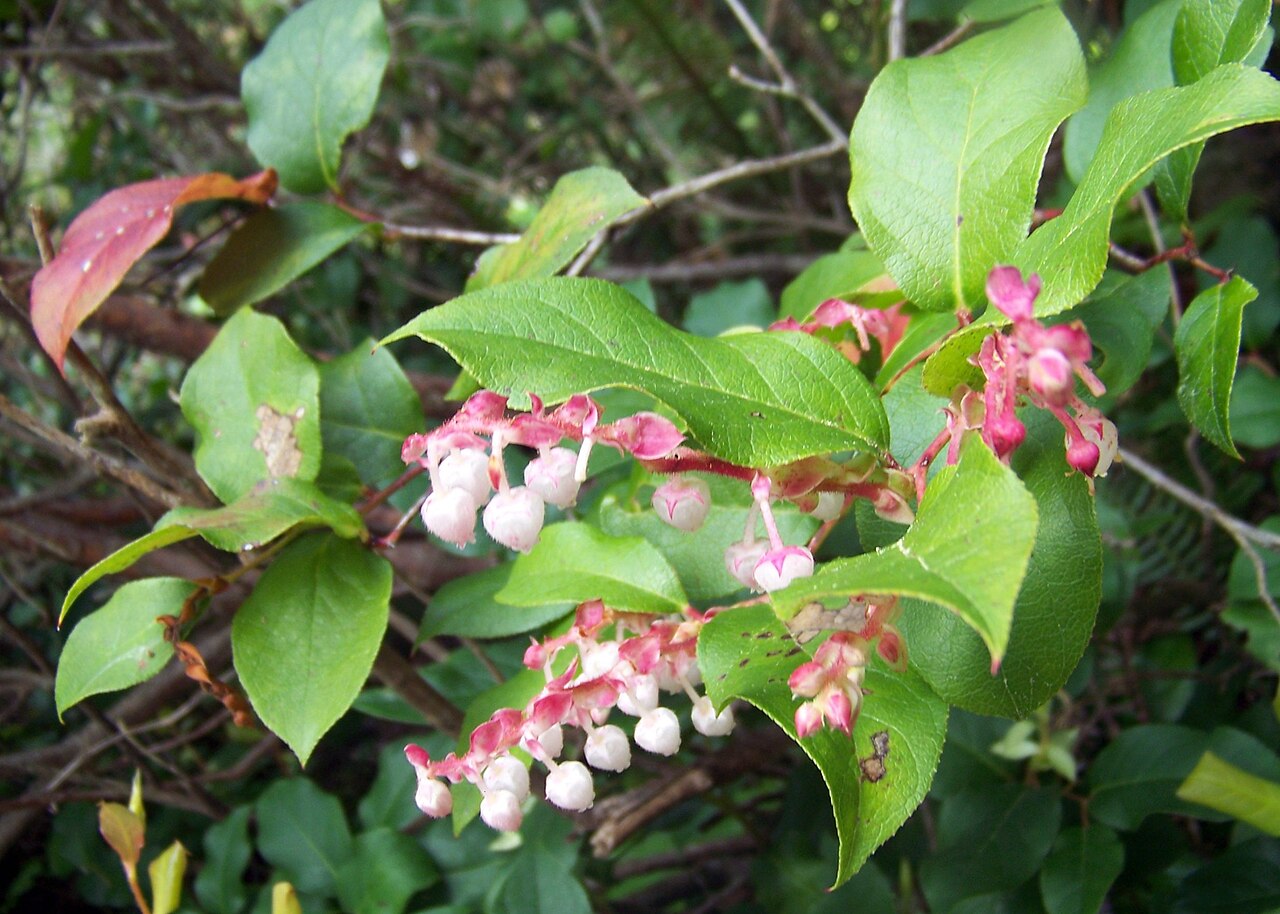
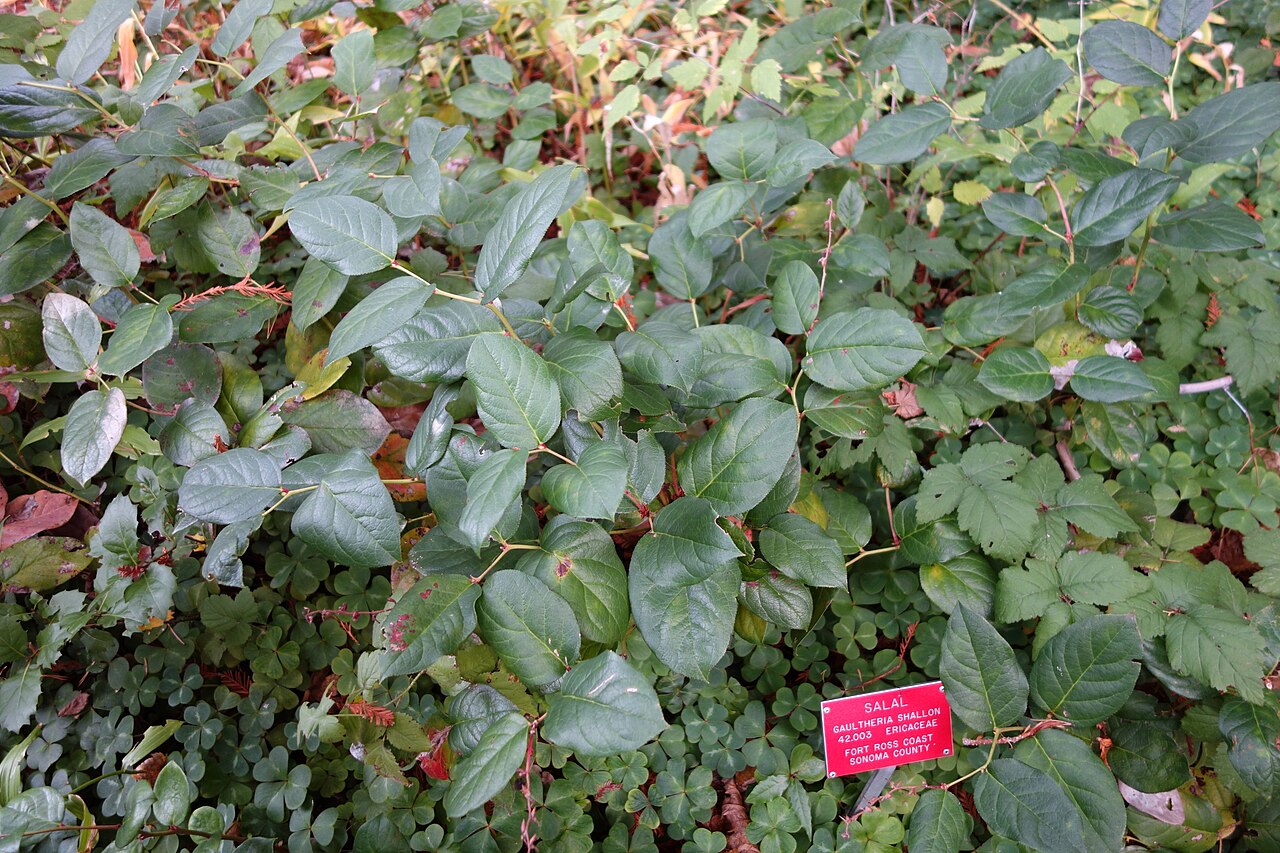
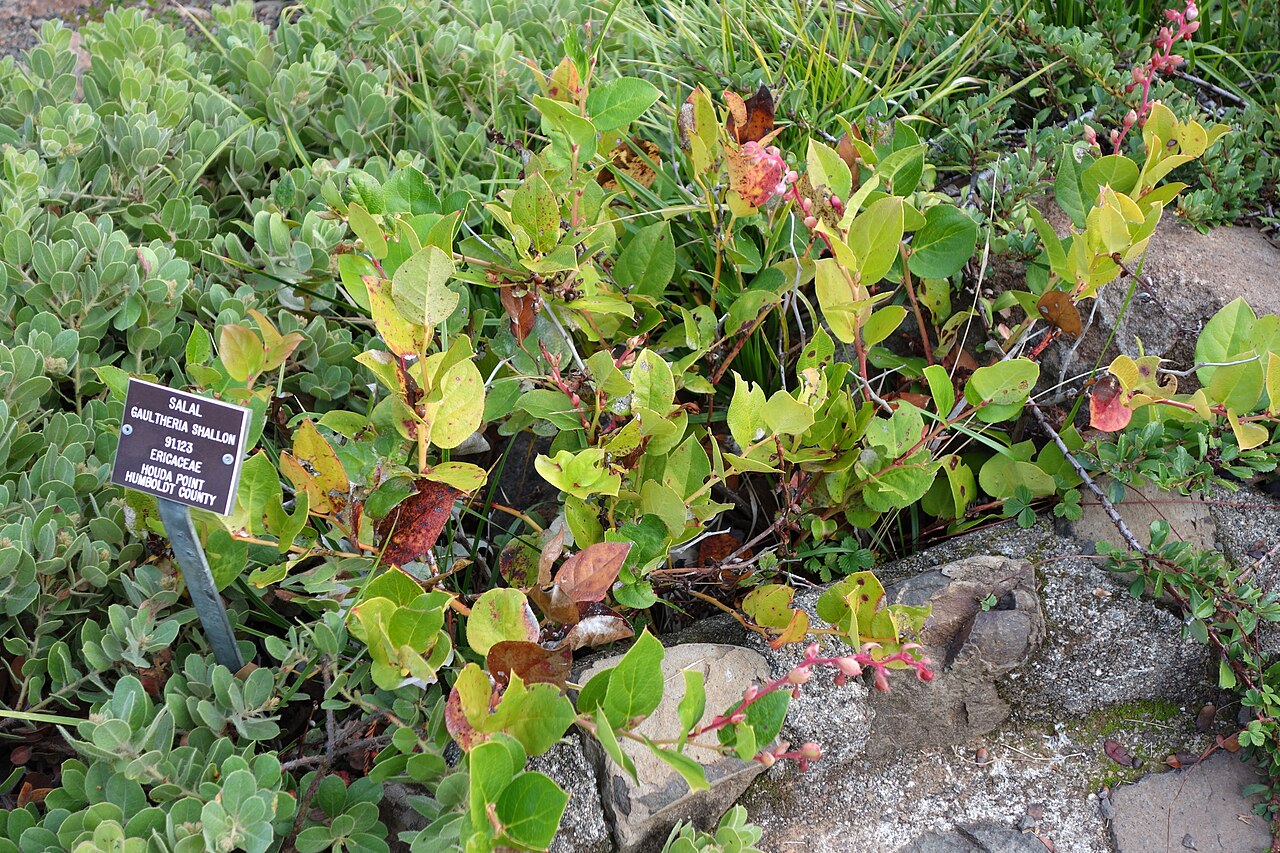
Cascade Sunrise is the salal for gardeners who want salal with a second season of color: a patented selection, USPP 34,625, bred for an upright, evergreen habit 2 to 3 feet tall, with narrower, more tapered leaves than the species and vivid orange-red new growth that contrasts against the dark green mature foliage. It keeps everything that makes salal worth growing — pale urn-shaped spring flowers, edible blue-black berries in summer, leathery evergreen leaves for arrangements — and adds a flush of sunset color every time it grows. If you want salal as an ornamental shrub rather than just a woodland groundcover, Cascade Sunrise is the named selection to plant.
The trade-off is that Cascade Sunrise is still a salal, with salal’s demands: acid soil, consistent moisture, shade, and cool roots, and it is still slow to establish. Give it part to full shade, humus-rich acidic soil, thick mulch, and steady water through the first year, and do not judge it in season one. In warm climates, afternoon shade and cool, mulched roots are the difference between a thriving shrub and a scorched one, and alkaline soil will yellow it no matter how much you water. Plant it where its orange new growth can be seen — along a shady path, not hidden in a back corner — and let it earn its patent.
If you are new to choosing between cultivars, the Varieties Matter guide explains why the name after the plant matters as much as the plant itself. Cascade Sunrise is a perfect example: it is not just a salal in the abstract, it is a salal with a specific job, a specific history, and specific strengths.
Florida honesty, stated plainly: salal is a North Florida trial only, and a hard one — it wants cool, moist, acidic shade, and most of Florida offers heat, humidity, and alkaline sand. In North Florida, try Cascade Sunrise in the shadiest, coolest, most humus-rich spot you have, in amended acidic soil or a container of ericaceous mix, with mulch and steady water. South of North Florida, do not bother; plant a heat-proof evergreen instead. This guide is honest about that, because a salal sold as a statewide promise would be a lie.
How to grow
Plant nursery stock in spring or fall, in part shade and moist, acidic, humus-rich, well-drained soil — salal is a Pacific Northwest evergreen shrub that wants cool roots, shade, and acid soil, and it sulks in hot sun and alkaline soil. Work worm castings and compost into a wide planting hole, mulch thickly with bark or leaves, space for a spreading shrub, and do not plant it in a hot, dry, sunny bed. Water deeply at planting, because salal’s fine roots dry out fast, and keep the root zone mulched and cool through the first year.
Set plants 3-4 feet apart in soil with a pH around 4.5-5.5. Work worm castings into the bed at planting and mulch to hold moisture. A well-fed salal plant rewards that care directly: steadier growth, better bloom, and a show that actually shows up.
Water & feeding
Keep soil consistently moist but never waterlogged — salal wants damp, humus-rich soil, like a woodland floor, and it wilts and browns in drought. Water at the soil line, mulch thickly to hold moisture and keep roots cool, and feed lightly: castings and compost in spring is usually enough, because rich fertilizer burns fine roots. In a dry spell, water deeply, and do not let a young shrub bake dry; in a wet spell, drainage is the care program, because crown rot in stagnant water kills salal outright.
Common problems
- Drying out — the signature failure; browned, crispy leaves mean the roots dried. Water deeply, mulch thickly, and give it shade.
- Chlorosis in alkaline soil — yellow leaves with green veins mean the pH is too high; salal wants acid soil, so amend with sulfur and organic matter or grow in a container of ericaceous mix.
- Leaf scorch in sun and heat — salal burns in hot sun; give it part to full shade, especially afternoon shade, in warm climates.
- Root rot in waterlogged soil — salal wants moisture, not standing water; do not plant where rain ponds.
- Slow establishment — salal is slow to settle and may sulk for a season; keep it watered and mulched, and do not judge it in year one.
Harvest
Pick berries in late summer, when they turn dark blue-black and soft — salal berries are sweet and mealy, about the size of a blueberry, and they make good jams, jellies, and pies, especially mixed with sharper berries. Pick in clusters, eat fresh out of hand, or dry berries for winter use like raisins. Leaves can be cut for evergreen arrangements and wreaths, which is the floral trade’s main use for salal, and a mature shrub gives both berries and foliage for years with almost no pruning — just remove dead wood in spring.
Browse all plant & pest guides
Saving seeds
Cascade Sunrise is a patented selection, so seed saved from it won’t come true — buy nursery plants instead. The Saving seeds section of the Salal guide covers seed for the straight species.