
🌺 Pride of Barbados
What it looks like
Quick facts
- Sun: Full sun (tolerates a little partial shade, but blooms best in blazing sun)
- Soil: Well-drained; tolerant of acidic to alkaline soil and poor soil once established
- Spacing: 4–6 feet apart for a hedge or screen; give a specimen room to reach 6–10 feet wide
- Height: 3–10 feet in most Florida gardens; up to 15–20 feet in truly frost-free tropics
- Life cycle: Evergreen to deciduous woody shrub (or small tree, if pruned that way); killed to the ground by hard freezes in zone 8–9, regrows from the roots
- Zones: USDA 8–11 (best in 9–11)
- Bloom: Late summer into fall in North Florida; nearly year-round where frost never visits
- Florida: A UF/IFAS Florida-Friendly Landscaping recommended plant, assessed as “not a problem species” for invasiveness
What it is
Pride of Barbados is the plant that makes visitors ask what it is, which is fitting, because it answers to half a dozen names: dwarf poinciana, Mexican bird of paradise, peacock flower, Barbados flower-fence, and red bird of paradise. Botanically it is Caesalpinia pulcherrima, a member of the legume family, native to the West Indies and tropical America, where it has been cultivated and spread for so long that its exact original home is a matter of scholarly shrugging.
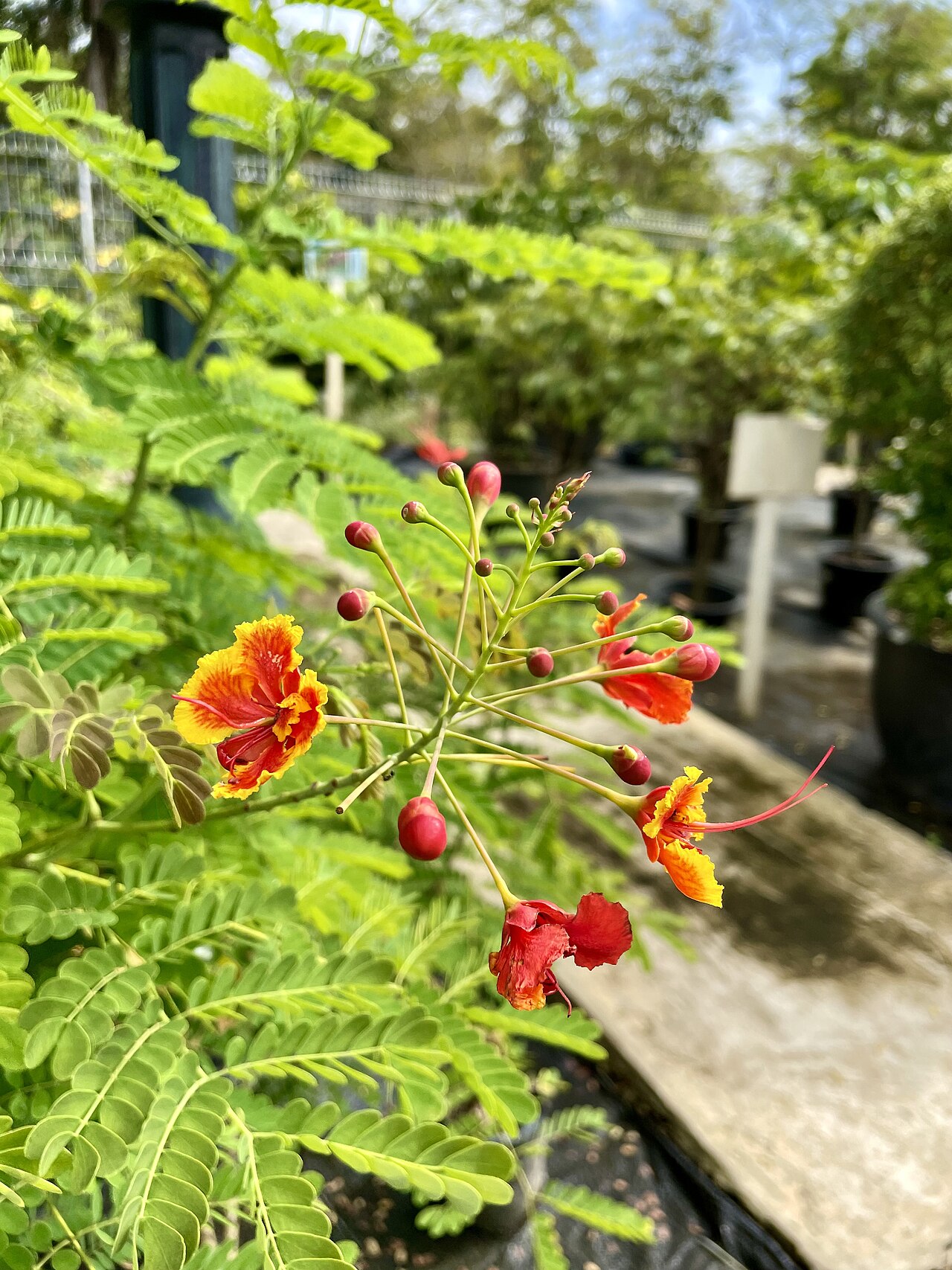
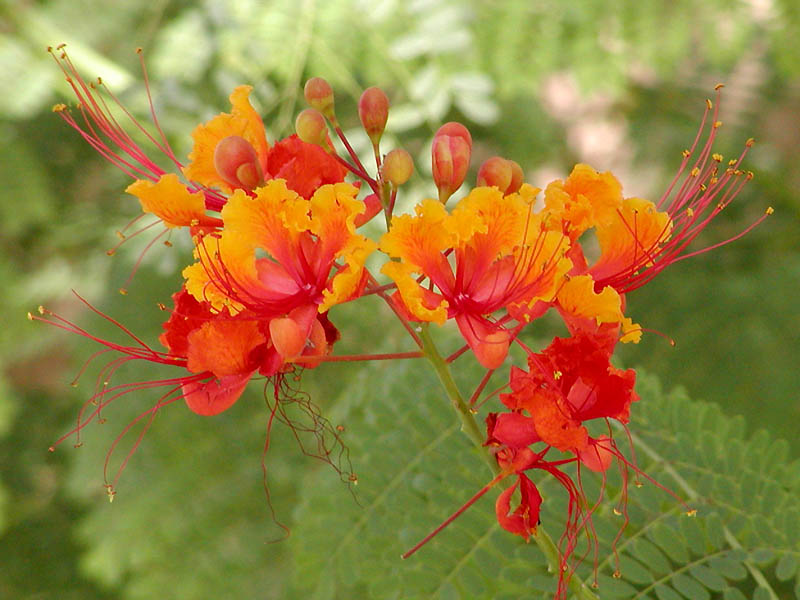
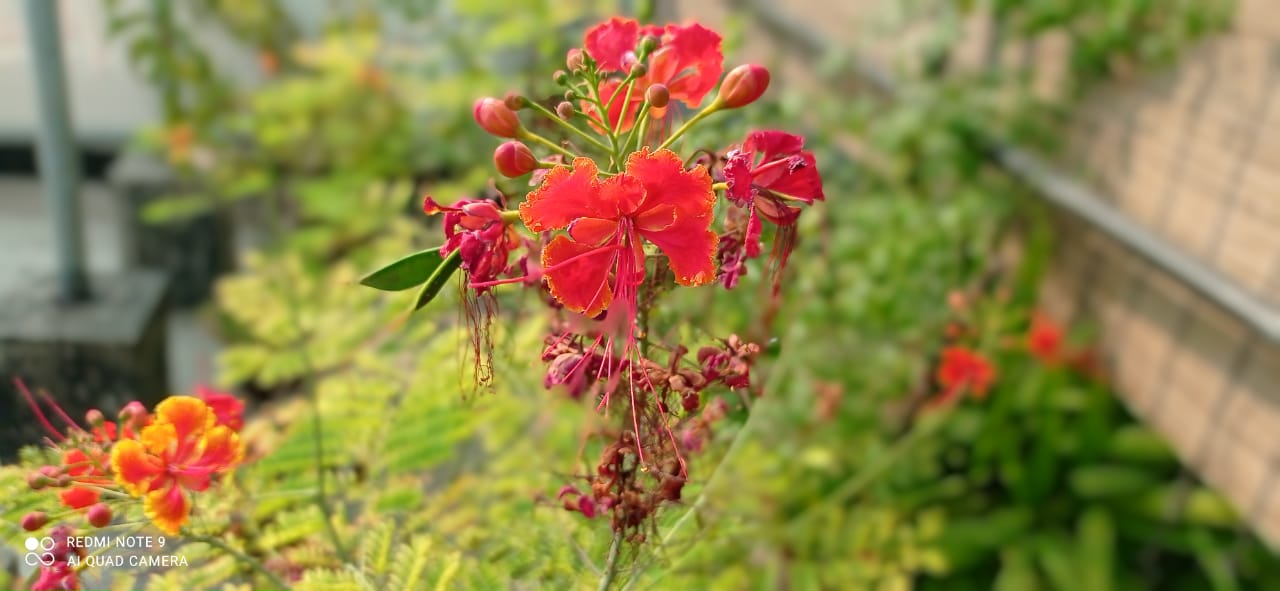
What it looks like is unmistakable: delicate, fern-like leaves on stems with sharp spines, topped by clusters of two- to three-inch flowers in red, orange, and yellow, each with long red stamens sticking out like sparklers. Hummingbirds, butterflies, and bees all show up for the show. There is an all-yellow form called ‘Lutea’ and a pink one called ‘Compton’, for gardeners who want the same fireworks in a different colorway.
Do not confuse it with royal poinciana (Delonix regia), the giant flame tree. Pride of Barbados is the dwarf cousin: shrub-sized, faster to bloom, and far more at home in an ordinary yard. The site’s Royal Poinciana guide covers the big tree; this guide is for the shrub your neighbors can actually fit.
Growing pride of Barbados in Florida
Florida is prime territory for this plant, with one honest caveat: cold. Pride of Barbados is damaged around 32°F and killed to the ground around 17°F. In frost-free South Florida it is an evergreen shrub or small tree that can bloom nearly year-round. In Central Florida it is typically a deciduous shrub that drops leaves in winter and comes roaring back in spring. In North Florida’s zone 8–9 gardens, treat it as a returning perennial: a hard freeze will kill the top growth, and the plant will regrow from the roots and flower again as warm weather returns. Gardeners in the coldest pockets can also grow it in a pot and bring it under cover for freezes, or grow it as a fast annual, since it blooms in its first year from seed.
Sun is non-negotiable. This plant needs hot, sunny sites to bloom well; it will tolerate a bit of shade, but shade is how you get a green shrub with no fireworks. It also needs heat: mild-summer climates that never get properly hot will leave it underwhelming, which is one problem Florida definitely does not have.
Soil should drain well. Pride of Barbados tolerates poor soil and a wide range of pH, acidic to alkaline, but poor drainage is its real enemy: wet feet encourage mushroom root rot, which is the one disease worth worrying about. Sandy Florida soil is usually an advantage here, as long as the spot does not puddle after summer storms. Once established it is drought tolerant and moderately salt tolerant, which makes it a solid choice for coastal yards that are not right on the beach.
Planting
Plant in spring, after the last frost, in the sunniest well-drained spot you have. Space plants 4–6 feet apart if you want an informal screen or hedge; give a single specimen plenty of elbow room, since a happy plant reaches 6–10 feet wide. Keep it away from sidewalks and patios: the stems carry sharp spines, and nobody wants to meet them on the way to the mailbox.
From seed, nick the hard seed coat or soak seeds in hot water before planting; both tricks improve germination, which is otherwise slow and patchy. Sow after the last frost, or start indoors and transplant out once nights are reliably warm. From a nursery pot, plant at the same depth it was growing, water deeply to settle it in, and then leave it to the sun.
Care and pruning
Water infrequently but deeply during the growing season. Established plants tolerate drought, but they will not bloom well if kept too dry, so a deep weekly watering in dry spells is the sweet spot: enough to fuel flowers, not so much that the roots sit wet. Feed lightly, if at all; this plant does fine in poor soil, and heavy feeding buys leaves at the expense of bloom.
Pruning is where you decide what shape this plant is. Left alone, it is a loose, open shrub. Pruned into a small tree, with lower stems removed and a single trunk encouraged, it becomes a small-space accent that fits where a royal poinciana never could. For a more compact shrub, prune severely in winter or very early spring, before new growth starts; it responds to hard pruning with vigorous regrowth and a fresh round of flowers. Deadheading spent clusters keeps it tidy and can encourage more bloom, though it is not required.
Pests are rarely serious. The spines deter most browsers, and the plant is generally vigorous. The main thing to watch is drainage, as above: if a plant yellows and declines in a low, wet spot, suspect root rot before anything else, and consider moving it to higher ground.
One safety note, stated plainly
The seeds are toxic if eaten. This matters in a garden where children or pets might be tempted by the long seed pods. Grow it where pods are out of easy reach of small hands, or deadhead the pods before they ripen if that is a concern in your yard. The flowers and foliage are the show; the seeds are not a snack.
Uses in the garden
As a single specimen, it is a summer centerpiece that earns its water bill. As an informal hedge or screen, spaced 4–6 feet apart, it gives you privacy with flowers instead of a green wall. As a small tree, it fits courtyards and tight corners. Butterflies, hummingbirds, and bees work the flowers all season, so it pulls double duty as a pollinator plant. And because it is a legume, it fixes a little of its own nitrogen, which is one more reason it shrugs at poor soil.
Related reading: the Royal Poinciana guide, for the big tree it is so often confused with, and the site’s pollinator-friendly planting guides if you are building a whole hummingbird border around it.
Problems, honestly stated
- Freeze damage: damaged at 32°F, killed to the ground at 17°F. In zone 8–9, expect dieback and regrowth, not evergreen permanence.
- Root rot in wet soil: poor drainage is the main killer. Plant high, not in a puddle.
- Spines: keep it away from paths, patios, and play areas.
- Toxic seeds: not for eating; deadhead pods where children or pets roam.
- Too little sun or heat: shade and cool summers mean few or no flowers. This plant wants the hottest spot you have.
Saving seeds
Pride of Barbados seed comes in flat pods that split open when they are dry, flinging the hard, dark seed a surprising distance — so slip a small mesh bag over a ripening pod, or check the plant every few days once the pods start to brown. Collect the seed as soon as the pods split, and dry it fully before storing. One shrub makes plenty of seed, so be picky: save from the plant with the best flowers and the healthiest growth.
The seed coat is hard and waterproof, and scarification is the step that matters. Rub the seed gently with sandpaper, nick it with a knife, or clip a small piece off the tip with a nail clipper — just enough to let water in, taking care not to damage the embryo or the hilum. Then soak the scarified seed in room-temperature water for 12 to 24 hours; it should swell, and if it does not, scarify a little more and soak again. Sow about a quarter to a half inch deep in well-draining mix, keep it warm — 70 to 85°F, with 80°F or so ideal — and evenly moist. Germination takes 7 to 21 days when conditions are right, though some seed takes up to 4 weeks, so give the tray a full month before you give up on it.
Read this before you handle the seed much: pride of Barbados seed and other parts of the plant are poisonous if eaten, so wear gloves, keep the seed away from children and pets, and label the envelope clearly. The plant is also spiny, so long sleeves are worth it when you collect pods.
Seedlings vary in flower color — red, orange, and yellow all appear — and a seedling will not necessarily match its parent, though it will be showy regardless. If you want an exact color, take cuttings instead. In Florida, pride of Barbados grows well in zones 8 to 11 in full sun and well-draining soil, and it freezes back in a hard winter in North Florida, regrowing from the roots in spring. Grow seedlings in pots for their first season, plant out after the last frost, and give them room: this shrub wants to be big.