
🌸 Royal Poinciana
What it looks like

How to grow
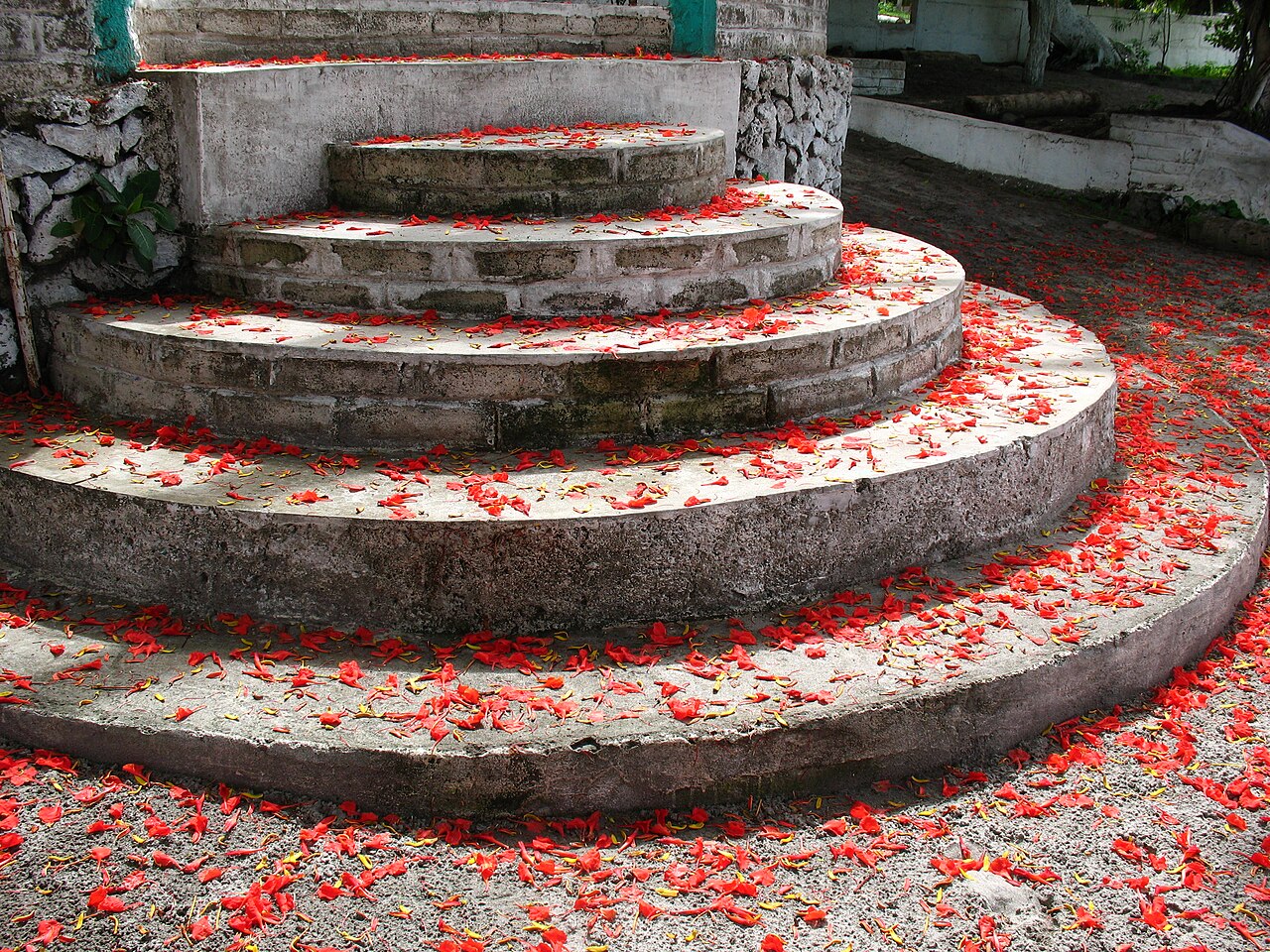
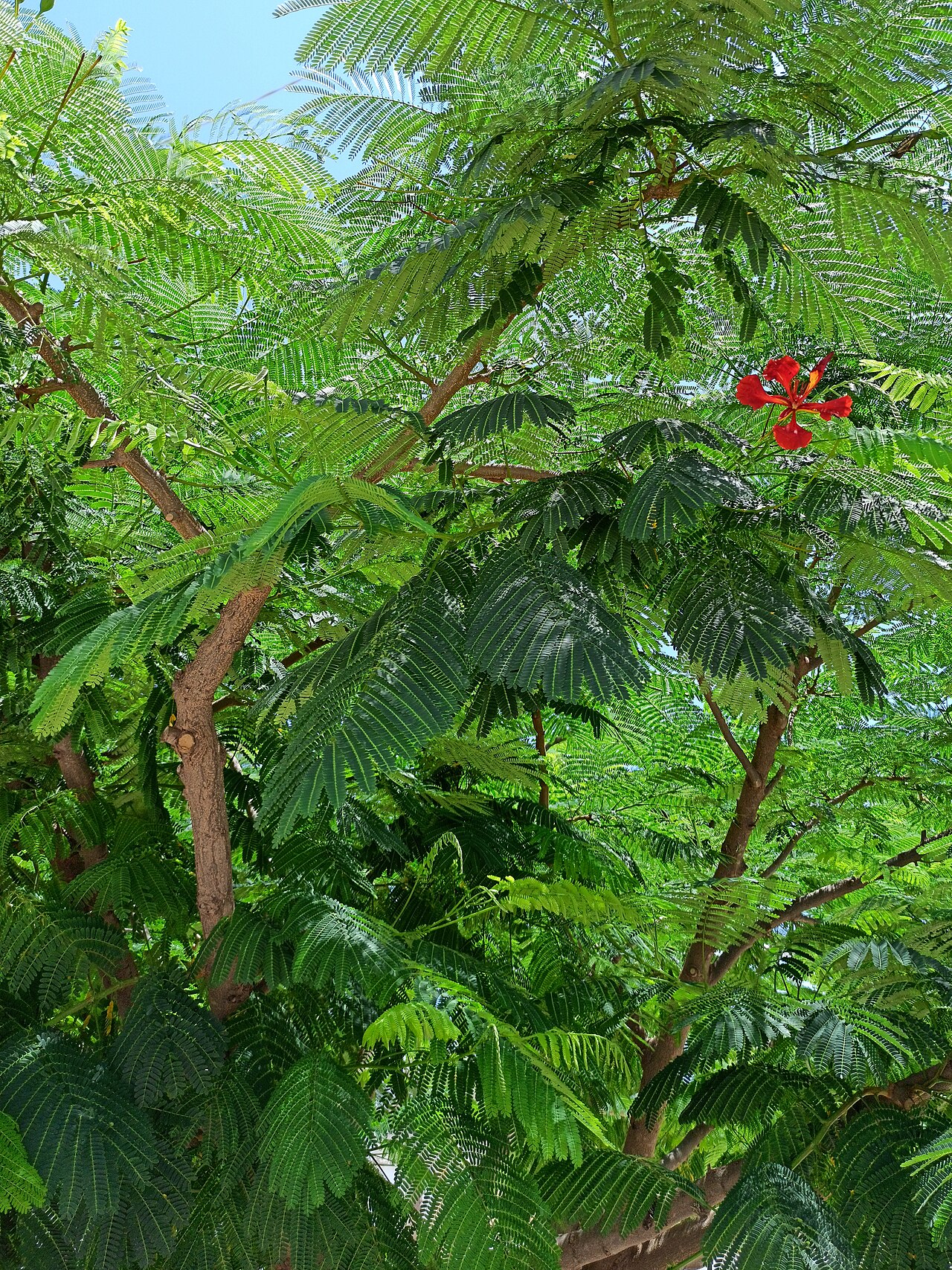
Royal poinciana, also called flamboyant or flame tree, is a tropical flowering tree, 35-40 feet tall and broader than tall, with a flat, umbrella-like crown, fern-like bipinnate leaves and brilliant scarlet-orange flower panicles from May to July that cover the whole crown. It grows only in frost-free climates, USDA zones 10b-11 in the United States — southern Florida, Hawaii and similar spots — and it needs full sun for full flowering. Plant in well-drained soil of almost any type, at least 10 feet from paving and sidewalks, because its large surface roots lift pavement, and train young trees early: prune to strong, well-attached limbs high enough for clearance, because poinciana wood is brittle and weak branch attachments break in storms.
Water & feeding
Water well until established, then water only in severe drought; royal poinciana is very drought tolerant once settled and rots in waterlogged soil. Feed lightly in spring if growth is weak, and mulch to hold moisture while young, keeping mulch off the trunk.
Common problems
- Frost — the hard limit; a single hard freeze can kill or severely damage this tree.
- Weak wood and storm breakage — prune young trees for structure and keep limbs less than half the trunk’s diameter.
- Surface roots lifting paving — site it well away from drives, walks and pools.
- Seed pods littering the ground in spring — long, dark pods hang all winter, then fall; site it over lawn, not paving.
Notes
Royal poinciana is the signature shade tree of tropical streets, giving dappled shade under a crown of fire for months each summer. Its long pods persist through winter and its fine leaves let light through, so grass grows poorly beneath it — plant it as a freestanding specimen in a large, open lawn, where it can be admired from a distance.
Browse all plant & pest guides
Saving seeds
Royal poinciana seed is big, hard, and built to wait — and the wait is the whole lesson. After the scarlet flowers fade, long flat woody pods form, and they stay on the tree for months, turning dark brown and rattling when the seeds inside are ripe. Collect the pods when they are fully dry and woody, crack them open, and save the large flat seeds inside. A single pod makes a generous handful. Store the seed in a paper envelope in a cool, dry place; poinciana seed keeps for years when it is dry.
The seed coat is the obstacle. It is hard and waterproof, and seed sown without treatment may sit for months or years before it sprouts — or never sprout at all. Scarify it: nick the coat with a file or a knife, taking care not to damage the embryo inside, or pour boiling water over the seeds and let them soak in the cooling water overnight. You will know it worked when the seeds swell. Then sow about an inch deep in a warm, well-draining mix and keep it moist and warm, around 75 to 85°F. Germination usually comes in one to three weeks after scarification, and seedlings grow fast once they are up — poinciana is a fast-growing tree, and a seedling can reach several feet in its first season.
The honesty part is the same one that applies to most flowering trees: seedlings vary, especially in flower color. A seedling from a scarlet poinciana may bloom scarlet, orange, or yellow, and it will take several years to flower before you find out. Named selections are propagated by grafting or air layering for a reason. Seed is for the experiment and for a free tree that will still be spectacular, even if it is not the exact tree you started from.
Save seed from a healthy tree with the flower color you love, and sow more than you need. In Florida, royal poinciana is a warm-climate tree for zones 10 to 11, happiest in the southern part of the state, so start seedlings in pots and keep them sheltered through their first cool season. And give the tree room: a mature poinciana spreads wide, and it does not ask permission first.
Varieties
Every named variety of Royal Poinciana with its own growing guide:
- Flavida Royal Poinciana — The yellow flame tree: all the fern leaves and umbrella crown, with golden-yellow flowers instead of scarlet.