
🏛️ Oriental Plane
What it looks like
Quick facts
- Sun: Full sun
- Soil: Deep, moist, well-drained soil; native to river valleys and floodplains, tolerant of a range of soils in cultivation
- Spacing: 50 to 70 feet — a very large tree at maturity
- Height: 65 to 100 feet, with a crown as wide as it is tall
- Life cycle: Long-lived deciduous tree; some specimens are centuries old
- Zones: A temperate-zone tree; best where summers are warm but not tropical, with a cool season
- Florida: NOT a Florida planting recommendation — a Eurasian temperate tree unsuited to hot, humid lowland Florida
What it is
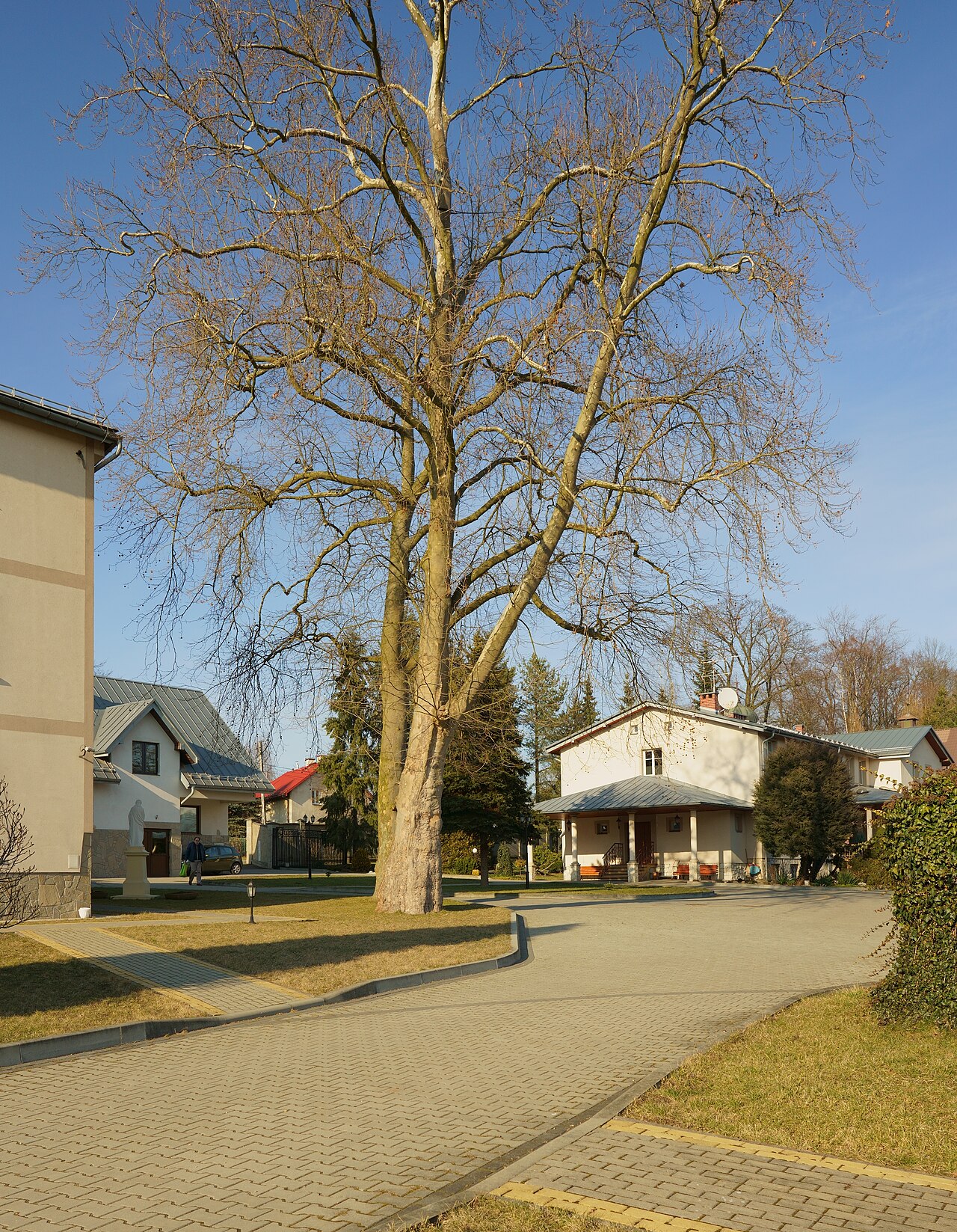
The Oriental plane is one of the oldest cultivated shade trees in the world, and its Latin name is confirmed across references: Platanus orientalis, the type species of its genus. It is native to river valleys and floodplains from the Balkans and Greece through Turkey and the Levant to Iran and Central Asia, where it grows along water with its roots in reach of the water table. It has been planted around villages, mosques, and squares across the Mediterranean and the Middle East for so long that in many places it is hard to tell native groves from ancient plantings — a tree can be a landmark for so long that it becomes part of the place.
The most famous specimen story is the tree of Kos: tradition holds that Hippocrates taught his students under a plane tree on the island of Kos, and a great plane still stands there, tended as a descendant of that tree. Whether the lineage is literal or loving, the story captures what this tree is for: shade deep enough to teach under, a trunk massive enough to lean on, a canopy that turns a square into a room.
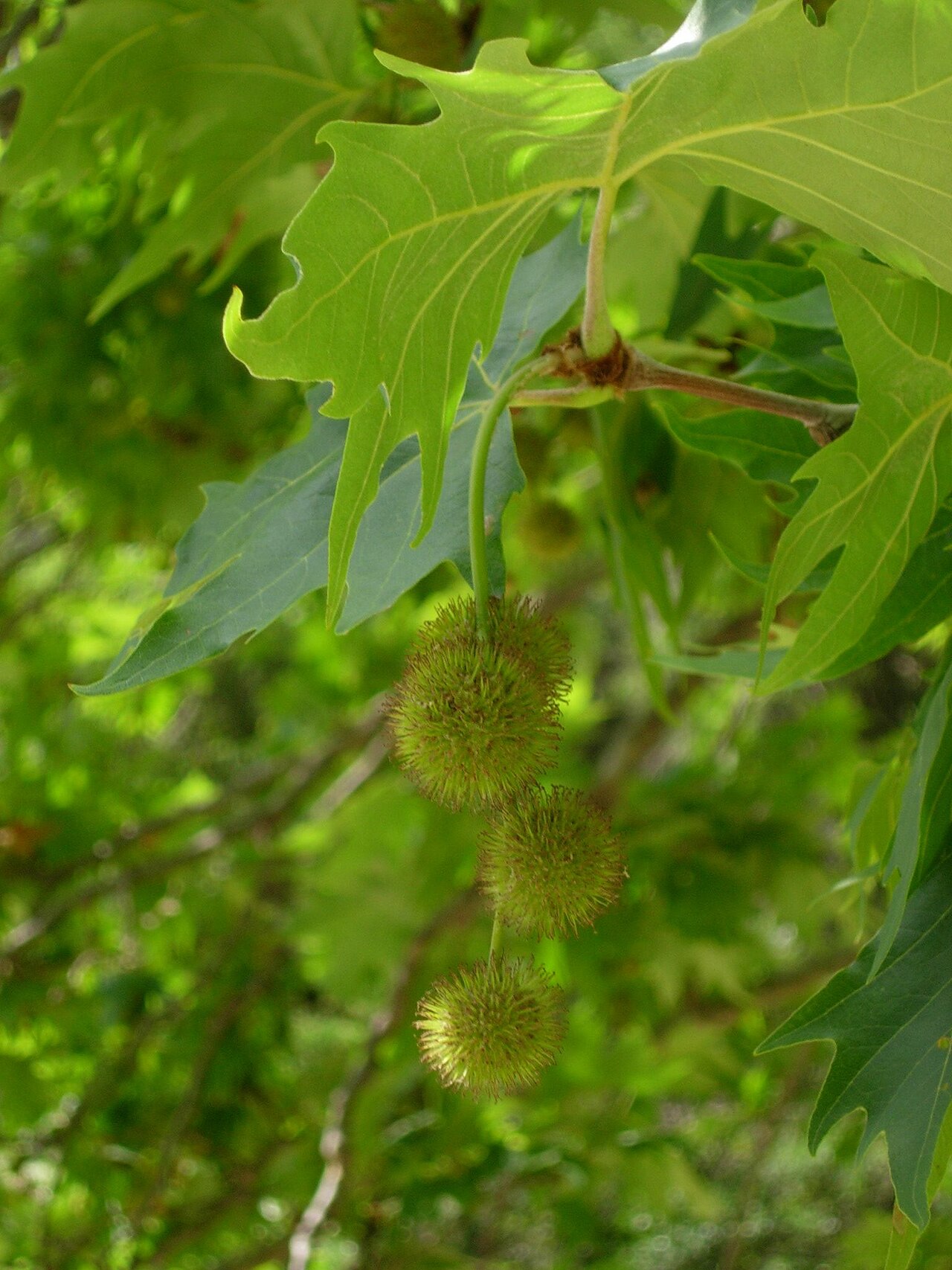
Botanically, it is a large deciduous tree with mottled, flaking bark (in smaller flakes than its hybrid offspring), deeply lobed leaves — 5 to 7 lobes, narrower and deeper-cut than London planetree’s — and clusters of 3 to 6 round fruit balls per stalk, versus London plane’s usual two. It is, with the American sycamore, one of the two parents of the London planetree hybrid, contributing tolerance of pruning and pollution to that famous city tree.
Growing Oriental plane — and the honest Florida verdict
In a temperate climate with a real winter and a water supply it can reach, Oriental plane is a magnificent, long-lived shade tree: full sun, deep soil, room for a crown as wide as the tree is tall, and water through dry spells. It tolerates pruning well — pollarding is traditional — and it lives for centuries where it is happy. Some of the great specimens of the Mediterranean are older than the buildings beside them.
The Florida verdict is plain: do not plant Oriental plane in Florida. It is a Eurasian temperate tree whose needs — cool winters, moderate summers, a river-valley water regime — are the opposite of lowland Florida’s long hot humid summers, sandy soils, and hurricane-season deluges alternating with drought. Zone numbers alone do not capture this: even where winter cold would technically allow it, the summer climate works against it, and disease pressure in humid heat is high. This guide exists because the tree deserves a proper account — it is a parent of one of the world’s great city trees, and a landmark species in its own right — not because it belongs in a Florida yard. If you want its look and its shade in Florida, plant a tree native to Florida’s rivers instead, and admire the Oriental plane on a trip, under a village square, the way it was meant to be admired.
Problems and legacy
Where it grows well, Oriental plane is tough, with anthracnose, powdery mildew, and cankerstain as the diseases to watch, plus the usual plane-tree mess of leaves, twigs, and fruit balls. Old trees develop massive, sometimes burr-covered trunks and hollow cavities that become wildlife habitat — a veteran plane is an ecosystem with bark on. Its timber is used, its shade is legendary, and its hybrid offspring shades half the cities of the temperate world. That is a legacy most trees would envy, and it is enough: not every great tree needs to grow in your yard to matter to your garden education.
Where this guide came from
Oriental plane is named in the group guide as London planetree’s parent. See also the Sycamore guide, which surveys the whole group this plant belongs to.
Saving seeds
Oriental plane is an ancient tree of river valleys and village squares, and this guide is a reference guide with an honest Florida verdict — so the seed advice comes with the same honesty: this is a tree for where it grows, not a Florida planting recommendation. If you garden where oriental plane thrives, the seed is straightforward to save.
The seed hangs in balls through winter — round, brown, fuzzy ornaments that break apart into thousands of tiny seeds. Collect the balls in late winter or early spring, before they shatter on their own, and crush them in a paper bag to release the seed. The fluff is irritating to skin and lungs, so wear gloves and a mask while you work, and do it outdoors.
The seed needs a cold period before it will sprout. Mix it with damp sand or vermiculite, seal it in a bag, and refrigerate it for 30 to 60 days, or sow it in fall outdoors and let a real winter do the stratifying. Surface-sow the stratified seed on a moist, well-draining mix — it is tiny and wants light — and keep it moist and bright. Germination usually comes within a few weeks, and the seedlings grow fast once they get going.
The honest headline is the usual one for a tree with named selections: seed-grown oriental plane will vary, and the named cultivars will not come true from seed, so cuttings or grafting are the routes for an exact clone. Save seed from a healthy, well-formed tree, and keep it dry and cool — Florida humidity is the enemy of stored seed, so dry it thoroughly, jar it with a silica gel packet, and keep it in a cool, dark place.
Varieties
Every named variety of Oriental Plane with its own growing guide:
- Digitata Oriental Plane — The finger-leaved plane: deeply cut, finger-shaped leaf lobes on the ancient Eurasian shade tree — a reference tree with an unmistakable silhouette.
- Minaret Oriental Plane — The columnar plane: a slender, dense, upright Oriental plane — the ancient shade tree, edited to fit a narrow street.