
🌳 Sycamore
What it looks like

How to grow
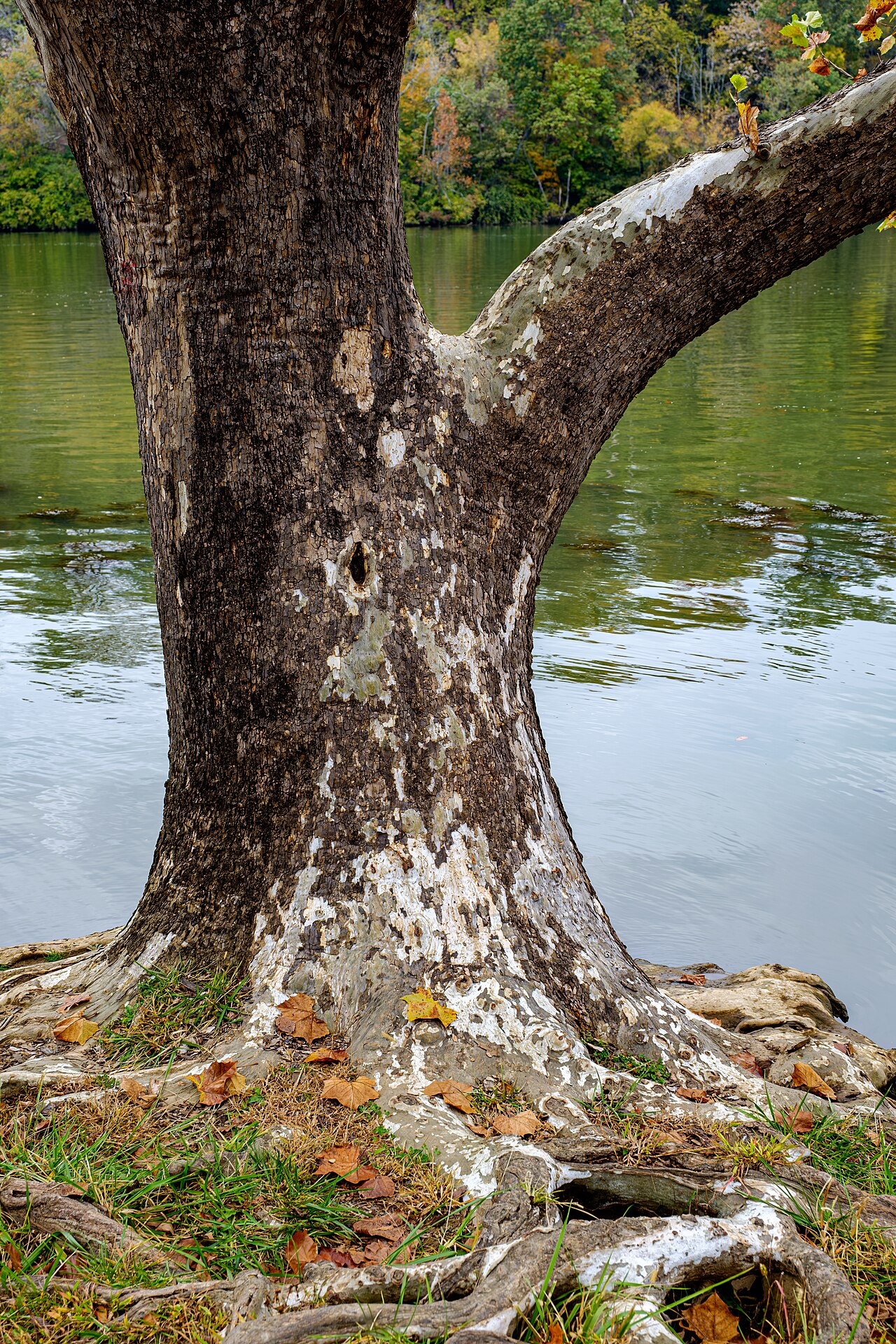
American sycamore is one of the largest native eastern trees, 75-100 feet tall with a broad crown and unmistakable mottled bark that peels in patches of cream, tan and grey. It is a bottomland tree by nature, happiest in deep, moist, fertile soil along streams, but it tolerates clay, flooding, compaction and city pollution once established. Plant in full sun in fall or early spring, at least 40-50 feet from buildings, drives and power lines, because its roots are strong and its canopy is huge. London planetree, a hybrid of American sycamore and Oriental plane, is the tougher city cousin and the better choice for tight urban sites.
Water & feeding
Water generously while establishing and in drought; sycamore grows fastest with steady moisture and will slow markedly if dry. Feed only if growth is poor — compost in spring is enough — and prune in late winter to remove dead or crossing wood while young.
Common problems
- Anthracnose in wet springs — leaves brown and drop, then regrow; unsightly but rarely fatal on a vigorous tree.
- Sycamore lace bug stippling leaves in summer — cosmetic in most years; healthy trees outgrow it.
- Hollow trunks with age — have old trees inspected, and enjoy the wildlife habitat a hollow tree provides.
- Litter — leaves, seed balls and peeling bark; site it over lawn, not over a pool or patio.
Notes
Sycamore wood is hard and handsome, used for butcher blocks and furniture, and its hollow trunks have sheltered everything from owls to, in legend, a frontier family or two. It is a park tree, a river tree and a shade tree for the largest yards, and it should be planted as such.
Browse all plant & pest guides
Saving seeds
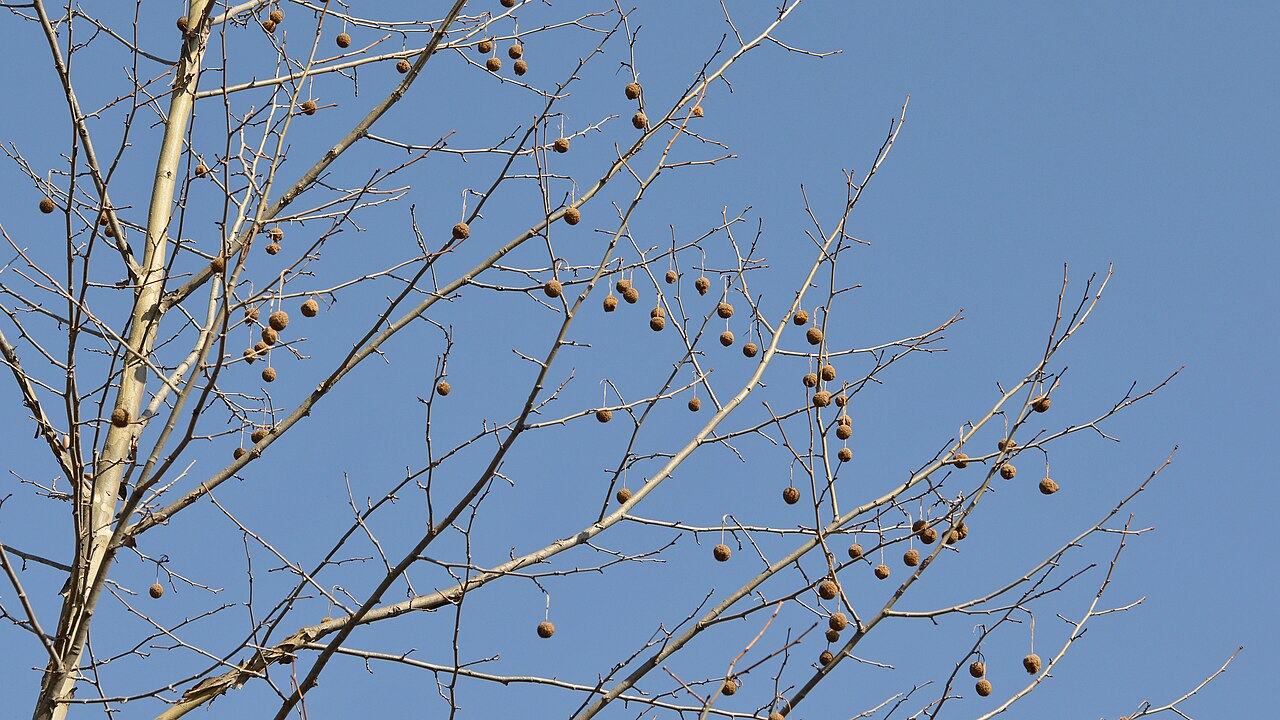
Sycamore seed is easy, if you can stand the mess. The seed balls ripen in fall and hang on the tree through winter, breaking apart into hundreds of fluffy seeds. Collect a few balls in late fall or winter, let them dry in a paper bag, and crush them gently to release the seed. No cold treatment is strictly needed, though a short chill does not hurt — sow in spring in moist mix, barely covered, and germination usually comes in two to three weeks.
Sow more than you need, since germination is uneven, and thin to the strongest seedlings. Seedlings grow fast in their first year — sycamore is a fast tree even by tree standards — but give them a year or two in pots before planting them out, because a seedling in the open ground is a snack for everything that eats green things.
Seedlings will vary, and the named forms come only from cuttings or grafting. Sycamore seed is also a mess in the garden: the balls break apart in winter and the fluff gets everywhere, which is the price of the shade. If you do not want volunteers, rake up the fallen balls before they break apart.
Sycamore is a Florida native for wet ground and full sun, a big, fast, long-lived tree that wants room — do not plant it near a house, a driveway, or a septic field, because the roots will find them. Plant it where it can become the tree it wants to be, and let it be.